
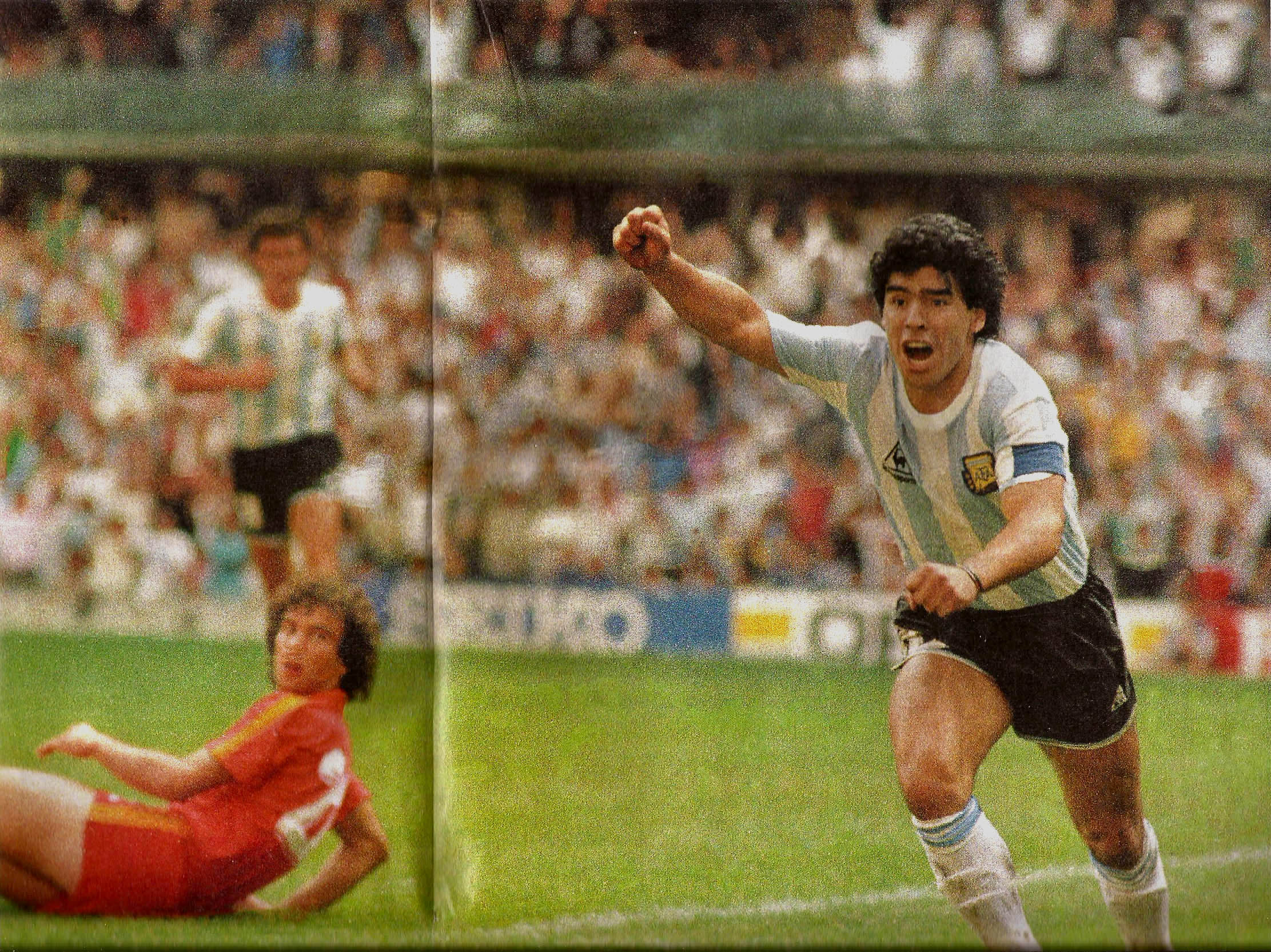
Diego Maradona hoisted the FIFA World Cup trophy after Argentina defeated West Germany in the 1986 tournament final [1].
The victory cemented Maradona's status as a global sporting icon and remains a defining moment in Argentinian national history. The win in Mexico City served as the pinnacle of a tournament characterized by some of the most famous individual performances in soccer history.
The final took place on June 29, 1986 [1]. The match was held at the Estadio Azteca in Mexico City, Mexico [1]. Argentina's victory over West Germany secured the championship for the nation and marked a historic achievement for the squad led by Maradona [1].
Maradona's influence during the 1986 campaign is often cited as a primary driver for the team's success. His ability to dictate the pace of the game and create scoring opportunities led Argentina through the bracket to the final stage in Mexico [1].
The image of Maradona lifting the trophy remains one of the most enduring symbols of the sport. This moment captured the intersection of athletic brilliance and national pride, a combination that elevated the 1986 victory beyond a simple sporting result [1].
By securing the title on June 29, 1986 [1], Argentina established a legacy of dominance that would inspire future generations of players. The event solidified the Estadio Azteca's reputation as a venue for historic sporting milestones [1].
“Diego Maradona hoisted the FIFA World Cup trophy after Argentina defeated West Germany”
The 1986 World Cup victory represents more than a tournament win; it established Diego Maradona as a singular force in sports history. By winning in Mexico City, Argentina created a cultural touchstone that continues to influence the nation's identity and the global perception of soccer excellence.


