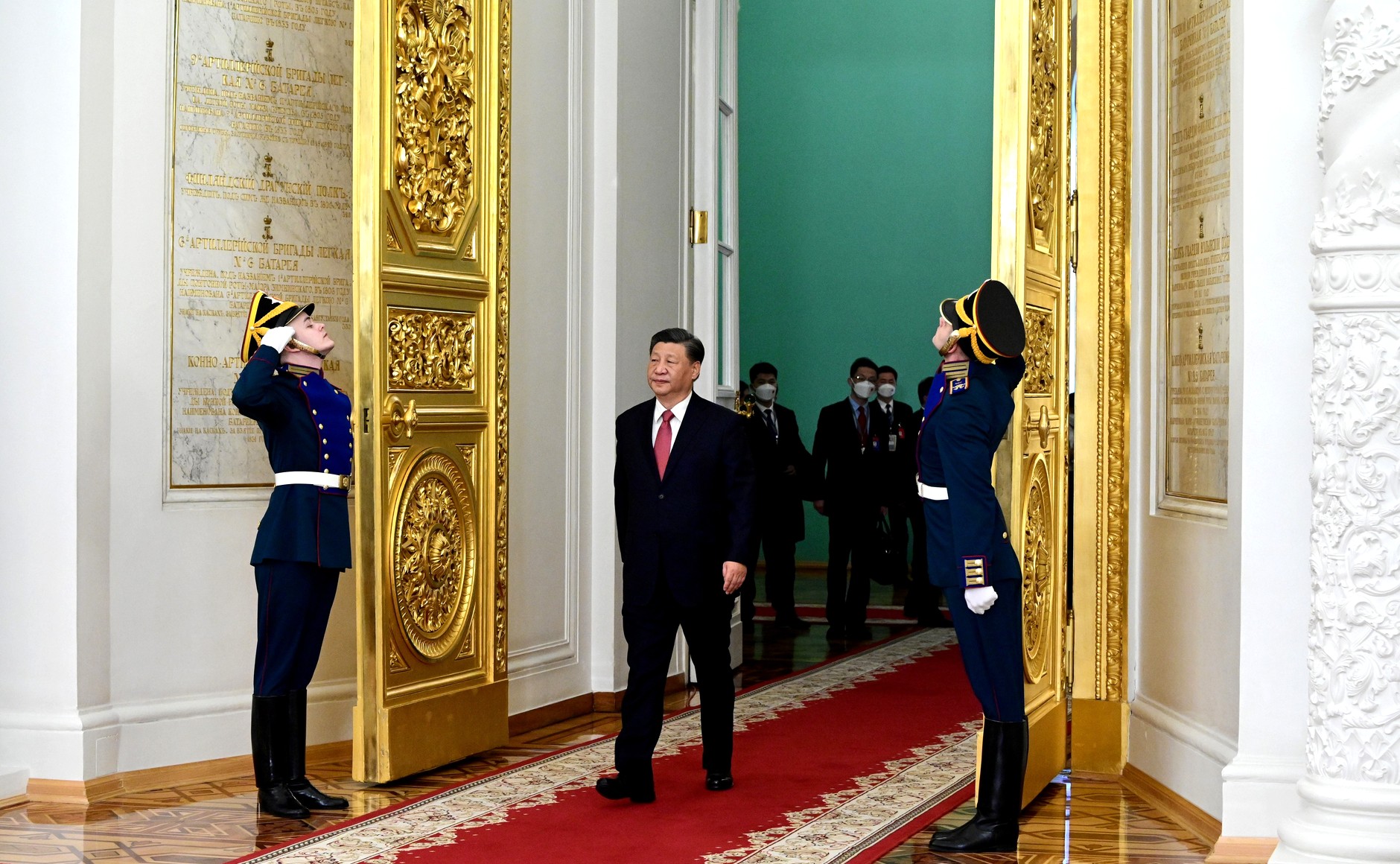
Chinese President Xi Jinping and North Korean leader Kim Jong Un held a bilateral summit in Pyongyang to strengthen their comprehensive strategic partnership [1, 2].
The meeting signals a deepening of political, economic, and security ties between the two nations at a time of regional tension. By reinforcing this alliance, both leaders aim to consolidate a united front against external pressures.
The summit took place from Oct. 5–6, 2024 [1, 2]. The visit served as the first foreign trip of the year for President Xi, who chose Pyongyang as his destination [3]. The event coincided with the 75th anniversary of diplomatic relations between the two countries [1].
During the talks, both leaders pledged to expand cooperation across multiple sectors. Xi said, "We will continue to develop our comprehensive strategic partnership and deepen cooperation in all fields" [1]. The discussions focused on enhancing the stability of the region through a reinforced bilateral bond.
Kim Jong Un emphasized the enduring nature of the relationship between the two states. He said the friendship between their peoples is a rock that will continue to support peace and stability in the region [1].
The partnership, which spans 75 years [1], involves a complex web of economic interdependence, and security agreements. The summit serves as a public reaffirmation of these ties—demonstrating that despite international sanctions on North Korea, China remains a critical partner for the Pyongyang government.
Both nations have historically maintained a strategic alignment to balance influence in East Asia. This latest meeting underscores a commitment to maintain that alignment through shared diplomatic, and economic goals [1, 2].
“We will continue to develop our comprehensive strategic partnership and deepen cooperation in all fields.”
The reaffirmation of the China-North Korea alliance during this 75th anniversary summit suggests a strategic pivot toward greater regional cohesion. By deepening security and economic cooperation, both nations are signaling to the international community that their partnership remains resilient despite diplomatic pressure and sanctions, potentially complicating efforts to achieve denuclearization on the peninsula.