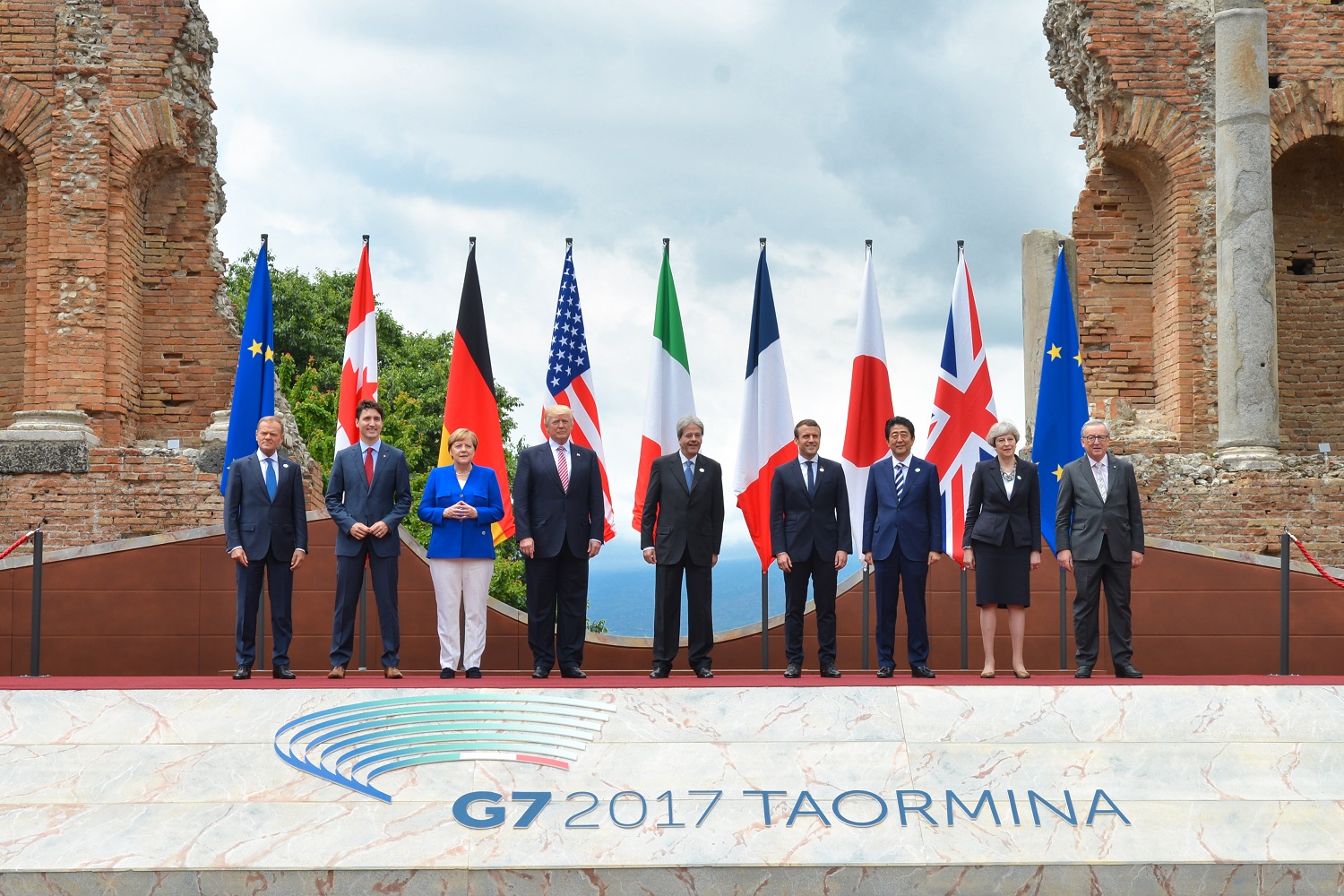
World leaders gathered for a family photo on Tuesday in Evian‑les‑Bains, France, as part of the 2026 G7 summit schedule [1, 2].
The meeting marks a significant diplomatic juncture as the G7 nations address critical maritime security and international stability. The summit brings together the world's leading economies to coordinate responses to global crises.
Indian Prime Minister Narendra Modi and U.S. President Donald Trump were among the leaders on stage [1, 2]. This encounter represents the first in-person interaction between Modi and Trump since 2025 [3]. The two leaders exchanged greetings during the event, marking their first interaction in 16 months [4].
Other leaders in attendance included French President Emmanuel Macron, along with representatives from Japan, Canada, Germany, the United Kingdom, and Italy [1, 2]. The gathering also included leaders from Egypt, Brazil, and Kenya [1, 2].
Beyond the ceremonial photo, the summit's agenda shifted toward urgent geopolitical tensions. The day's working lunch focused on the safe reopening of the Strait of Hormuz [1]. This discussion follows a partial closure of the waterway by Iran [1].
The Strait of Hormuz remains one of the world's most strategic chokepoints for oil and gas shipments. Any prolonged disruption to the passage of vessels through the region threatens global energy prices and supply chains.
Delegates are expected to continue bilateral talks throughout the summit to resolve the maritime impasse. The presence of non-G7 nations like India and Brazil suggests an effort to broaden the coalition supporting a return to stability in the region [1, 2].
“First in-person interaction between Modi and Trump since 2025”
The focus on the Strait of Hormuz indicates that the G7 is prioritizing the stability of global energy markets over purely symbolic diplomacy. By including a wide array of non-member nations in these discussions, the summit is attempting to build a multilateral front to pressure Iran into reopening the waterway, signaling that maritime security is now viewed as a collective global economic necessity rather than a regional dispute.


