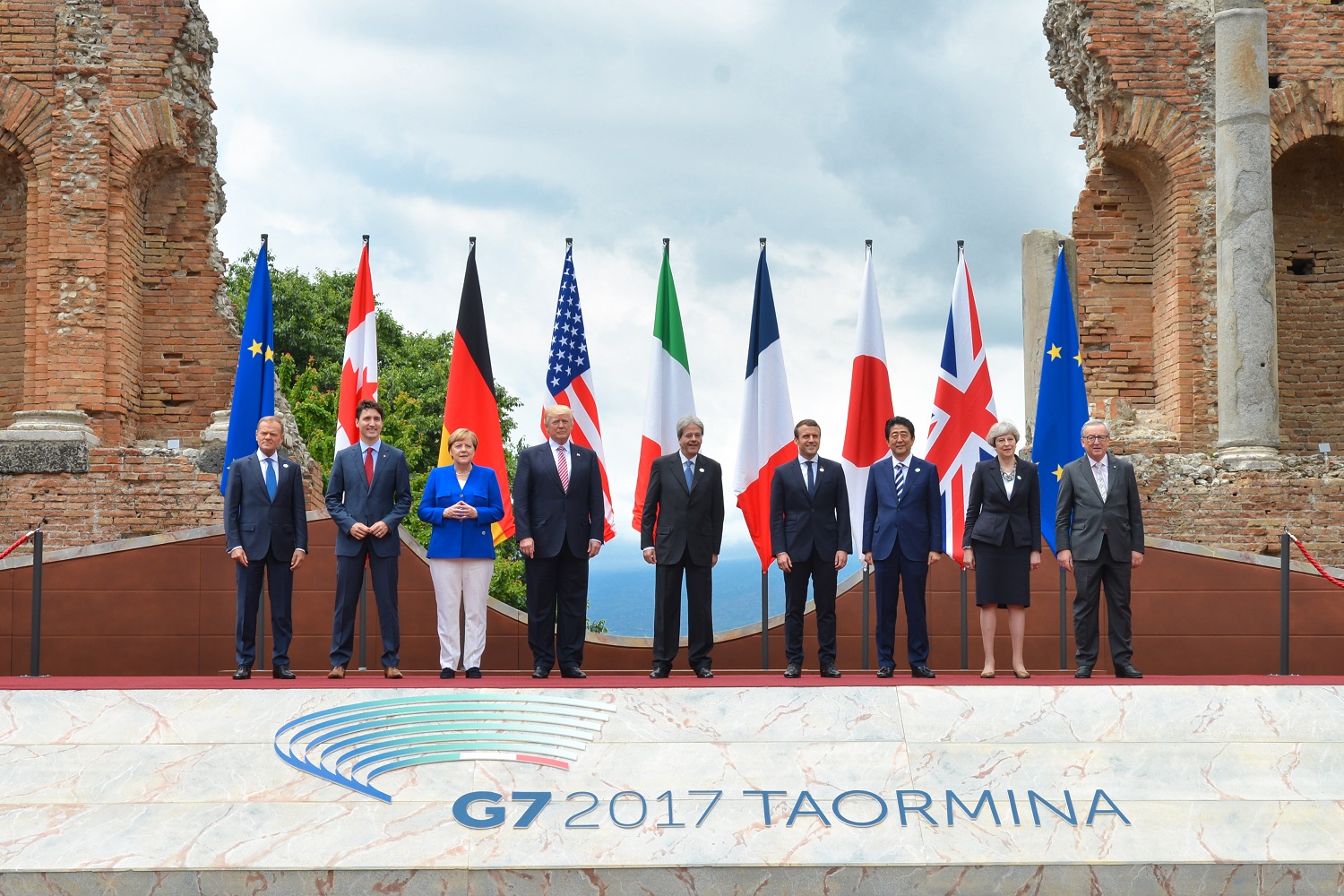
G7 leaders are proceeding cautiously with U.S. President Donald Trump during the summit in Italy to secure his support for a Ukraine peace deal [1, 2].
The approach is critical because the U.S. position remains pivotal to any successful negotiation between Ukraine and Russia. Leaders are attempting to persuade the president to back a resolution without provoking him, as his cooperation is essential for the diplomatic effort [1, 2].
Ukrainian President Volodymyr Zelenskyy is involved in these discussions as the summit continues this week [1, 2]. The strategy involves a delicate balance of urging a peace deal while avoiding actions that might antagonize the U.S. administration [1, 2].
While the summit focuses on geopolitical stability, other reports highlighted during the period indicate significant domestic and international shifts. Data shows the death rate in U.S. immigration centers has doubled since Trump took office [1]. Additionally, a private investment fund outlined in a U.S.-Iran deal totals $300 billion [1].
In unrelated global news, sports milestones and visa disputes have surfaced. Lionel Messi scored a hat-trick to equal the all-time World Cup scoring record [1]. Meanwhile, the mother of a Cape Verde goalkeeper must post a $15,000 visa bond to attend the World Cup [1].
Diplomats at the summit said the priority remains the conflict in Ukraine. The G7 members are working to ensure that the U.S. remains aligned with the collective goal of ending the war through a structured peace agreement [1, 2].
“G7 leaders are proceeding cautiously, trying not to provoke Trump”
The cautious demeanor of G7 leaders suggests a shift in diplomatic power dynamics, where the stability of the Western alliance depends heavily on the personal cooperation of the U.S. president. By prioritizing the avoidance of provocation, these leaders are signaling that a peace deal for Ukraine is only viable if it aligns with Trump's specific requirements and vision for the conflict.


