
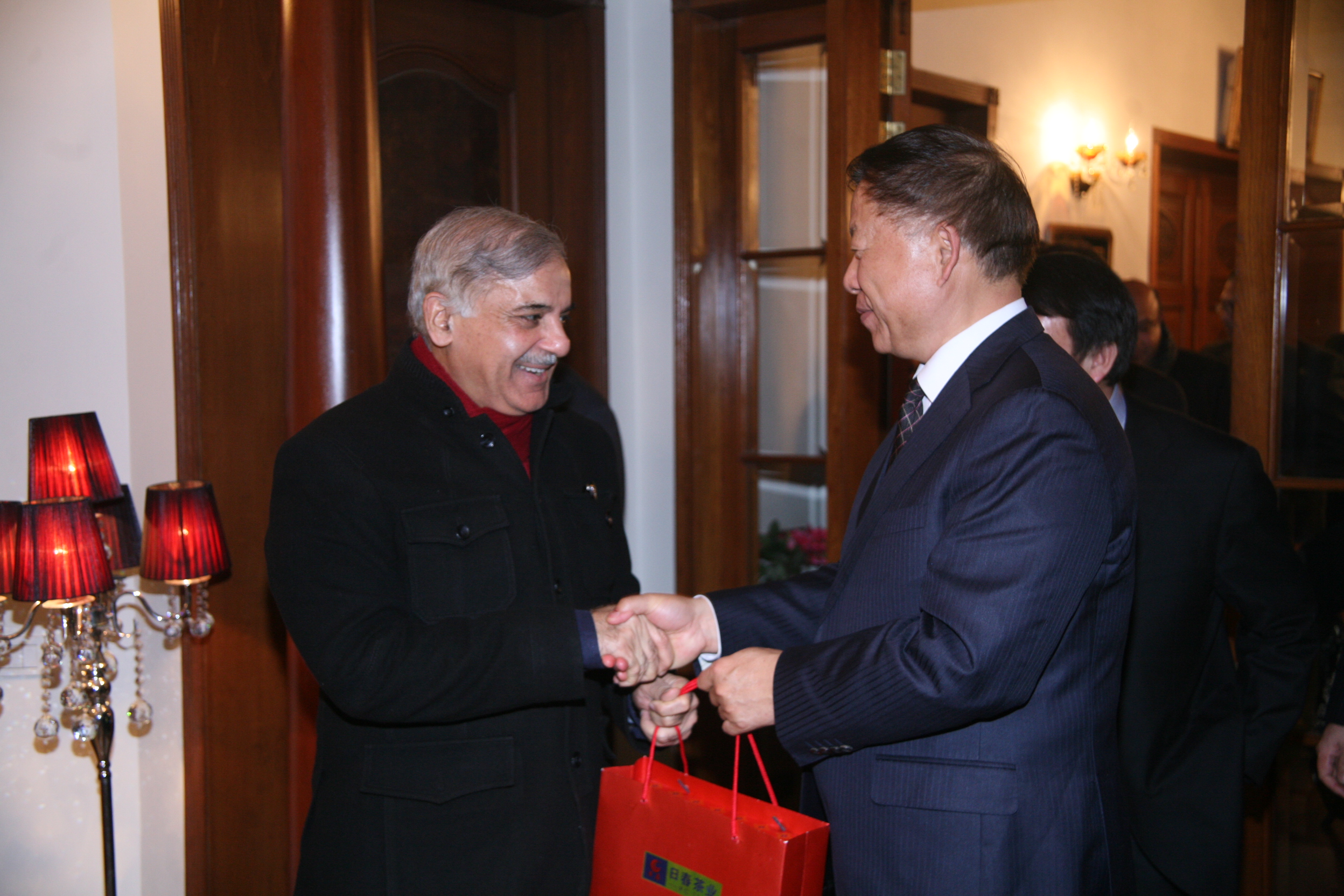
Prime Minister Shehbaz Sharif reaffirmed Pakistan's strategic cooperation with China and pledged to accelerate the next phase of the China-Pakistan Economic Corridor [1].
The commitment signals a deepening of bilateral ties as Pakistan seeks to transition its economic relationship with Beijing toward a more business-led partnership. This shift aims to stabilize the regional economy through increased infrastructure and industrial investment.
During an official visit to Beijing from May 23 to 26, 2026 [2], Sharif said that Pakistan will back China's core interests and drive the next phase of CPEC [3]. The visit followed a statement on May 21 where the prime minister reaffirmed unwavering support for the partnership [2].
Chinese President Xi Jinping welcomed Sharif and described the relationship as an "unbreakable traditional friendship," he said [4]. This sentiment was echoed by Mohammad Ishaq Dar, who said that the "iron brotherhood" is strengthening as political parties provide support for CPEC 2.0 [5].
Economic cooperation is moving beyond state-funded infrastructure. Officials highlighted a push for a business-led partnership, with potential joint venture values reaching $1 billion [5]. This transition is intended to diversify the economic impact of the corridor and increase private sector participation.
Beyond economic ties, Sharif discussed regional stability. He said that Pakistan played a sincere role in mediation efforts between the U.S. and Iran [6]. This positioning underscores Pakistan's ambition to act as a diplomatic bridge between major global powers while maintaining its primary strategic alliance with China.
“Pakistan will back China's core interests and drive CPEC's next phase.”
The transition to 'CPEC 2.0' and the pursuit of $1 billion in joint ventures indicate a strategic pivot from purely state-driven infrastructure projects to a commercial, investment-heavy model. By coupling this economic shift with mediation efforts between the US and Iran, Pakistan is attempting to balance its critical dependency on Chinese capital with a role as a regional diplomatic stabilizer.


