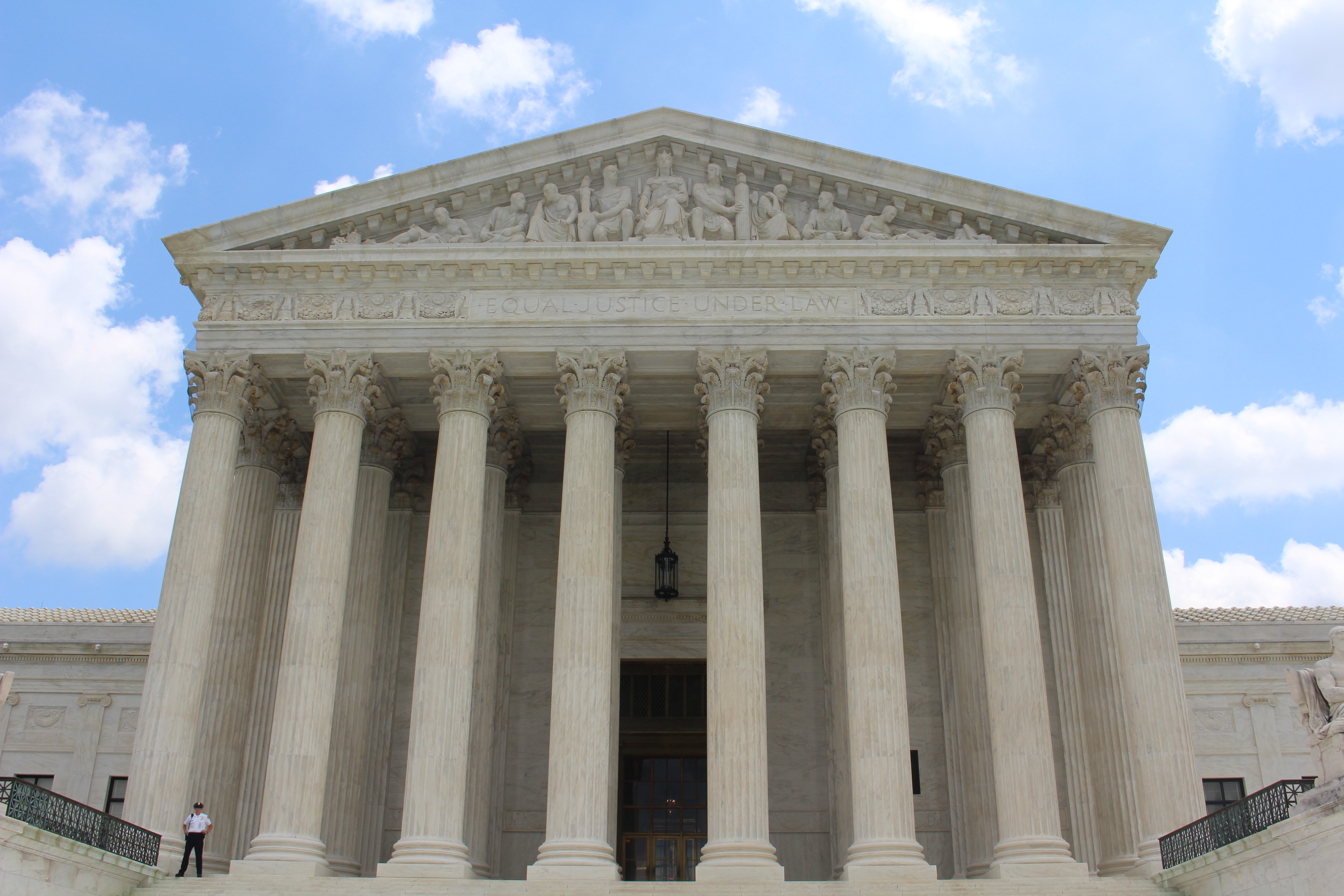
Sarah Isgur discussed the inner workings of the U.S. Supreme Court during a Q&A session regarding her upcoming book, "Last Branch Standing" [1].
As a senior editor at The Dispatch and editor of SCOTUSblog, Isgur occupies a unique position to analyze the court's current term. Her insights provide a bridge between complex legal proceedings and public understanding of how the highest court in the land operates.
The event took place on May 4 [2] in Washington, D.C., hosted by the American Enterprise Institute. The discussion, recorded by C-SPAN, focused on the dynamics of the current term and the specific cases currently shaping the legal landscape [1]. Isgur said the platform allowed her to offer a behind-the-scenes perspective on the judicial process, a central theme of her new work.
Her book, "Last Branch Standing," is scheduled for publication in 2026 [2]. The text aims to demystify the Supreme Court's decision-making processes and the roles of the justices. During the session, Isgur said the court's current term is complex and that specific case dynamics influence broader legal precedents [1].
By examining the intersection of law and public perception, Isgur highlighted the challenges the court faces in maintaining its institutional legitimacy. The discussion emphasized that the court does not operate in a vacuum, but rather within a broader political and social context that affects how its rulings are received across the U.S. [1].
The event served as both a promotional vehicle for the 2026 release and a deep dive into the current state of the judiciary [2]. Isgur's analysis of the court's term provides a framework for understanding the legal tensions currently defining the American judicial system [1].
“Sarah Isgur discussed the inner workings of the U.S. Supreme Court during a Q&A session.”
The release of "Last Branch Standing" and Isgur's public analysis suggest an increasing effort to translate the opaque operations of the Supreme Court for a general audience. As the court faces heightened public scrutiny, such works serve to contextualize judicial behavior and the strategic nature of case selection and ruling.

