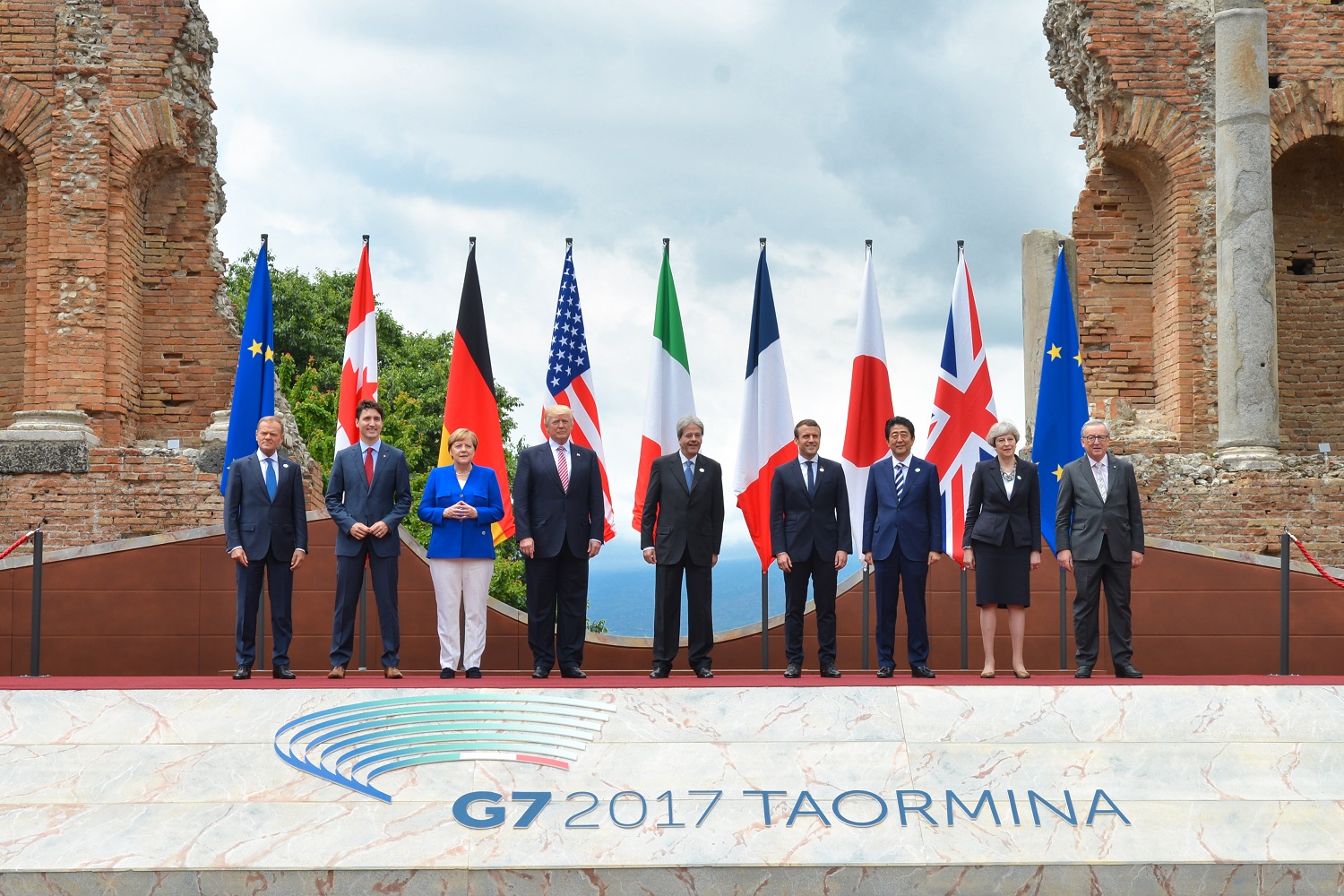
President Donald Trump arrived at the Group of Seven summit in France on Monday, June 15, 2026 [1], following his announcement of a deal with Iran [2].
The arrival comes at a critical moment for international diplomacy as the U.S. seeks to pivot its strategy in the Middle East. The agreement is intended to end the U.S.–Iran war and stabilize one of the world's most volatile geopolitical corridors [4].
Trump traveled to Evian‑les‑Bains in the French Alps [5] to meet with other G7 leaders. He said the deal will help restore regional stability and ensure the continued flow of shipping through the Strait of Hormuz [4]. The summit serves as a primary venue for Trump to promote the terms of the agreement to his global allies.
According to reports, Trump carries significant momentum into the summit after the announcement [3]. The focus of his agenda in France involves securing international cooperation to maintain the terms of the deal, and preventing further escalation in the region [4].
The G7 summit brings together the leaders of the world's largest advanced economies to coordinate policy on security and economics [2]. Trump's arrival on June 15 [1] marks the beginning of high-level discussions regarding the implementation of the new U.S.–Iran framework.
While the specific details of the agreement have not been fully released, the administration emphasizes the goal of ending active conflict [2]. The president said the deal is a necessary step toward long-term peace in the region [4].
“Trump arrived at the G7 summit in France on Monday, June 15, 2026.”
The timing of this announcement ahead of the G7 summit suggests a strategic effort by the U.S. administration to present a diplomatic victory to allied leaders. By linking the deal to the security of the Strait of Hormuz, the U.S. is framing the agreement not just as a bilateral peace treaty, but as a move to protect global energy markets and maritime trade.


