
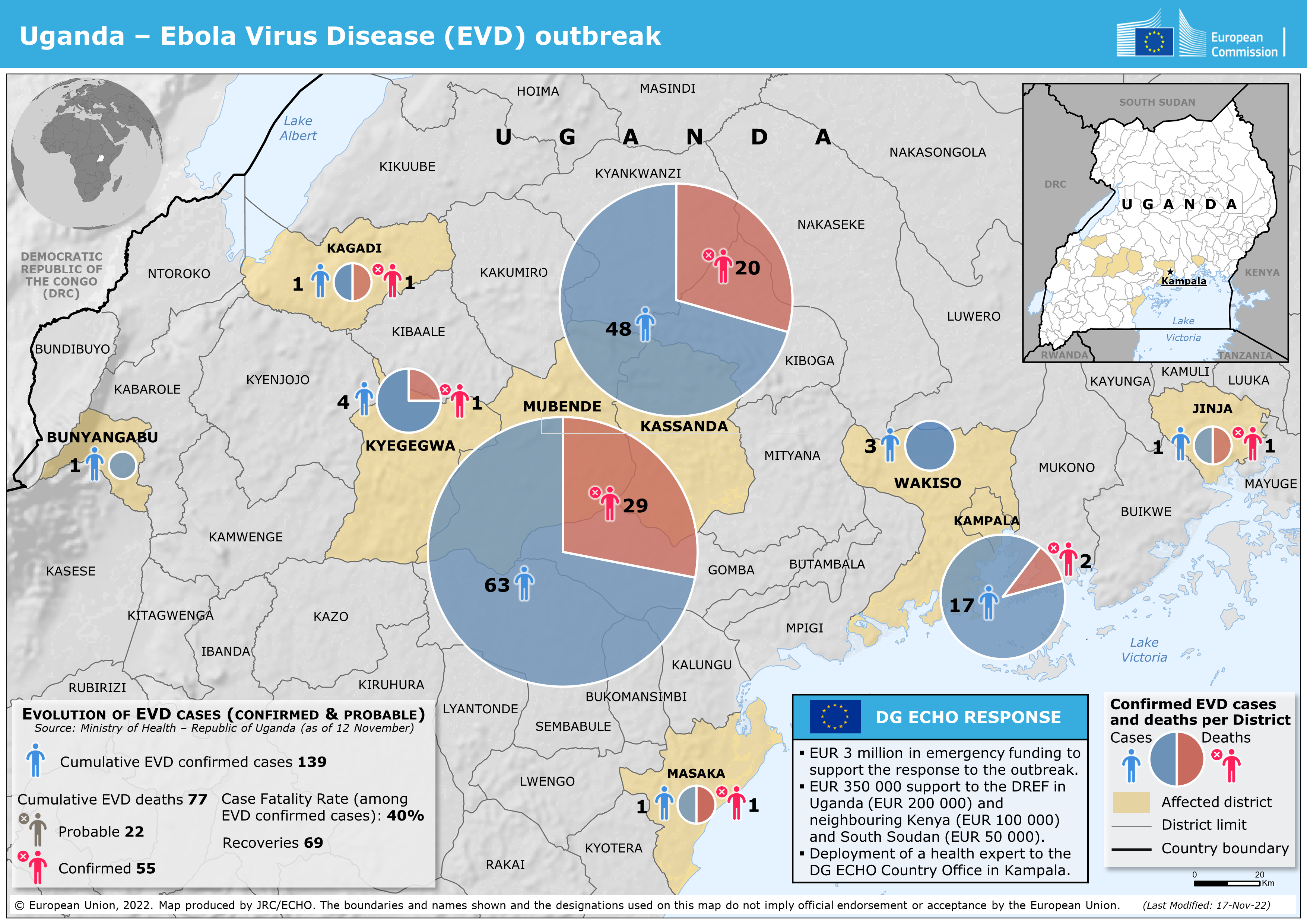
World Health Organization Director-General Tedros Adhanom Ghebreyesus has declared the Ebola outbreak in the Democratic Republic of Congo and Uganda a public health emergency of international concern.
The declaration signals an urgent need for coordinated global intervention to prevent the virus from establishing a permanent foothold in densely populated urban centers. Rapid, undetected transmission in these areas increases the risk of a wider regional catastrophe.
Speaking from WHO headquarters in Geneva on Tuesday, Tedros said he is deeply concerned about the scale and speed of the current outbreak [1, 2]. The organization has convened an emergency committee to manage the response and coordinate medical resources across the affected borders [3, 4].
Health authorities report that suspected cases have risen above 500 [1, 5]. Specifically, reports indicate that 531 people have been infected [4]. The speed of the transmission has outpaced initial containment efforts, leading to a significant rise in fatalities.
Death toll estimates vary slightly across reporting agencies. The Guardian reported at least 130 deaths [3], while NBC News cited 131 fatalities [4]. The Hill provided a higher estimate of 134 deaths [5]. These triple-digit figures indicate that the virus is spreading through populations with limited access to immediate care.
Tedros said the urgency of the situation requires immediate international support. The WHO's designation as a public health emergency of international concern allows the agency to mobilize funding and technical expertise more rapidly than under standard protocols [1, 3].
Efforts are now focused on tracking the movement of the virus between the DRC and Uganda. Officials are working to identify undetected clusters in urban environments to stop the chain of transmission before it expands further into neighboring countries [4, 5].
“"I am deeply concerned about the scale and speed of this Ebola outbreak."”
The classification of this outbreak as a public health emergency of international concern is the highest level of alarm the WHO can sound. By highlighting the 'speed' of transmission and the presence of the virus in urban areas, the WHO is acknowledging that traditional rural containment strategies are insufficient. This shift suggests that the outbreak has reached a tipping point where local healthcare systems in the DRC and Uganda can no longer manage the surge without significant external medical and logistical support.


