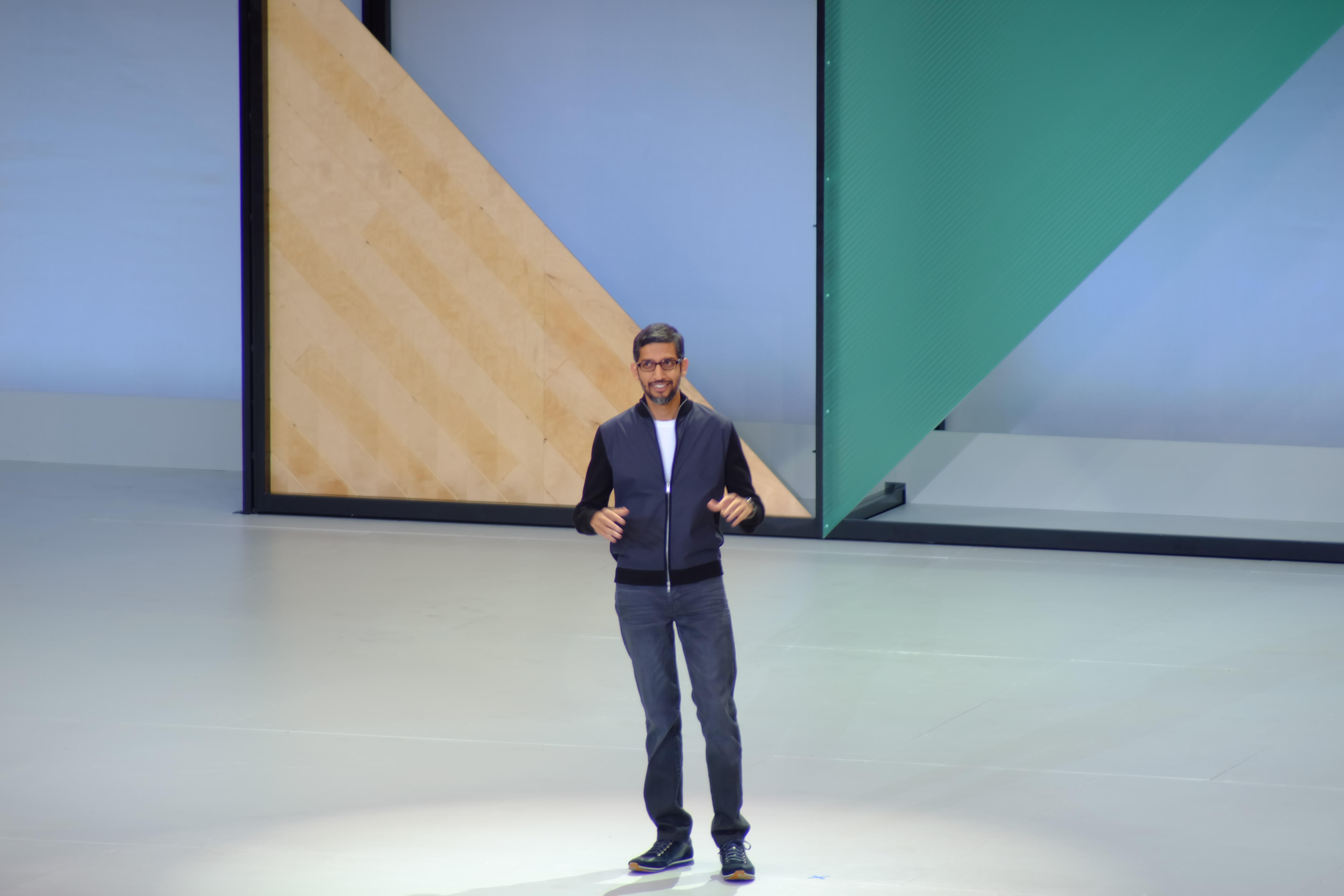
Google held its I/O 2026 opening keynote on May 19, 2026 [1], to reveal new artificial intelligence features and hardware prototypes.
This event serves as the primary roadmap for the company's ecosystem, signaling how AI will be integrated into billions of devices worldwide.
The virtual event, streamed online [2], focused heavily on the evolution of Google's AI capabilities. Executives introduced updates to Gemini [4], the company's AI model, aimed at improving performance and utility across its software suite. These upgrades are designed to make the AI more intuitive and deeply embedded in the user experience.
Beyond software, Google presented prototypes for Android XR [3]. This new hardware venture seeks to position the company in the extended reality market, competing with other spatial computing platforms. The prototypes demonstrate how the company intends to merge digital information with the physical environment through wearable technology.
Google also provided a first look at the next version of its mobile operating system, Android 17 [3]. The update focuses on refining the interface and expanding the ways AI interacts with system-level functions. While some reports said the event took place only on May 19 [1], other sources said the full conference ran from May 19 to May 20, 2026 [2].
The company used the keynote to emphasize a transition toward an "AI-first" future. By combining the new Android 17 operating system, Gemini upgrades, and XR hardware, Google is attempting to create a seamless loop between mobile phones, wearable glasses, and cloud-based intelligence.
“Google held its I/O 2026 opening keynote on May 19, 2026”
The convergence of Android 17, Gemini, and XR hardware suggests Google is moving away from treating AI as a standalone tool and toward treating it as the core operating layer. By developing its own XR hardware, Google is attempting to secure the hardware gateway to the next generation of computing, ensuring it does not rely on third-party devices to deliver its AI services.