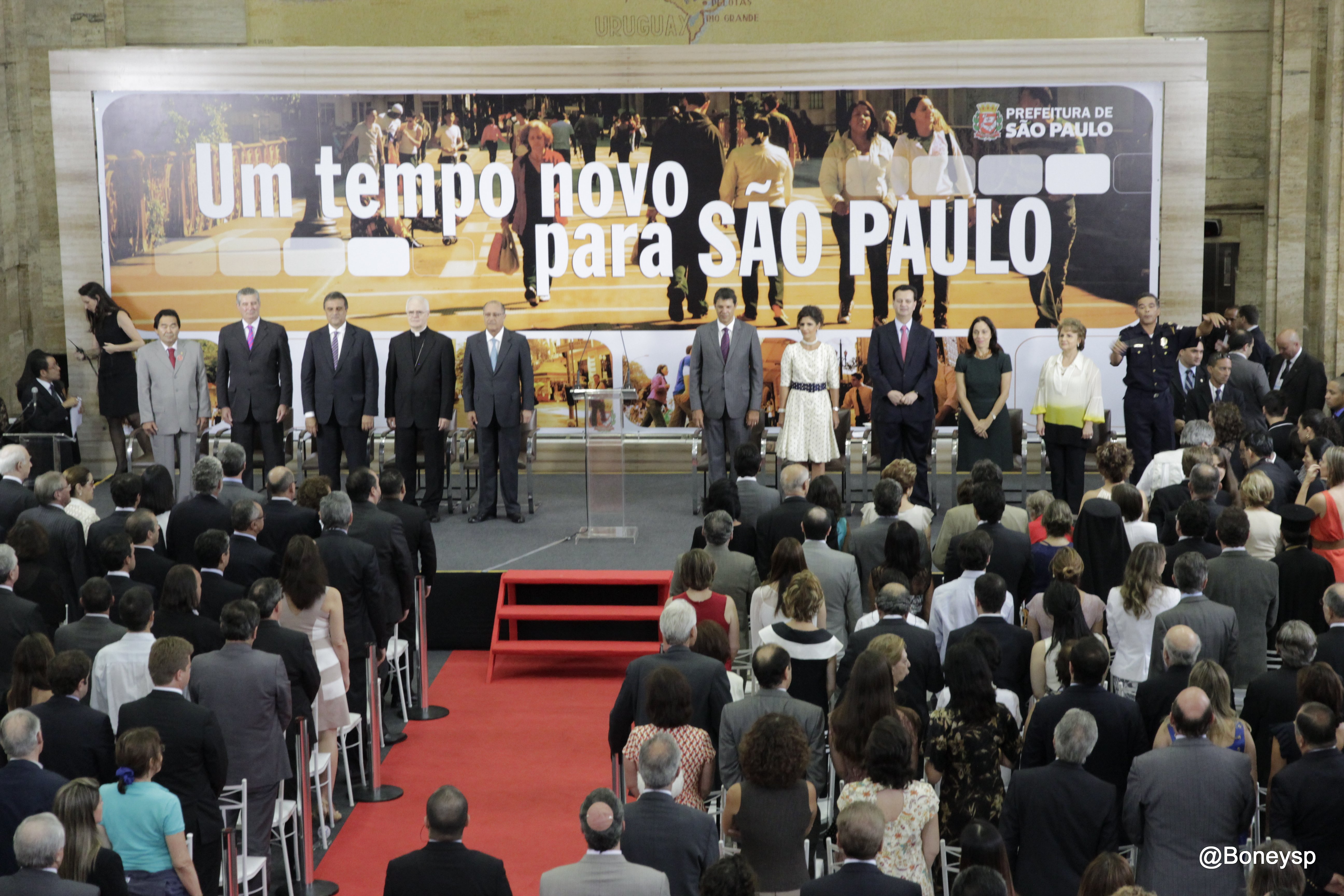
Fernando Haddad (PT) defended the federal tax on international purchases during a press event in São Paulo on Monday, May 23, 2026 [1].
The dispute highlights a growing friction between the federal government and the state's leadership over fiscal policy and economic growth. As Brazil navigates complex tax reforms, the disagreement reflects a broader political struggle over how to balance national revenue needs with regional economic competitiveness.
Haddad said the tax was a collective decision made by Brazil's governors and must be maintained [1]. He countered criticisms from Governor Tarcísio de Freitas (Republicanos), who said the policy negatively impacts the economy of São Paulo [2].
During the exchange, Haddad targeted the governor's administration. He said São Paulo is "perdendo tração" — or losing traction — under Tarcísio [3]. The former finance minister said the state's fiscal situation would be more dire without federal assistance.
"Situação de SP só não é pior por causa da ajuda de Lula," Haddad said [4]. He said São Paulo would be in a difficult fiscal position without the support of the federal government [5].
The political tension comes as polling indicates a competitive race in the region. Recent data shows Haddad leads in the São Paulo capital with 47% voting intention, compared to 41% for Tarcísio [6].
The events unfolded across multiple locations, including a press conference at the Palácio dos Bandeirantes and an event at the Federal University of São Carlos (UFSCar) [1, 7]. While Tarcísio has continued to critique the federal tax's impact on local commerce, the federal government said the measure is necessary for national fiscal stability [2].
“"São Paulo está 'perdendo tração' com Tarcísio"”
This confrontation signals a shift from administrative cooperation to open political rivalry between the PT and Republicanos in Brazil's most populous state. By framing the state's fiscal health as dependent on federal aid, Haddad is attempting to undermine the governor's image as an efficient manager ahead of upcoming electoral cycles.


