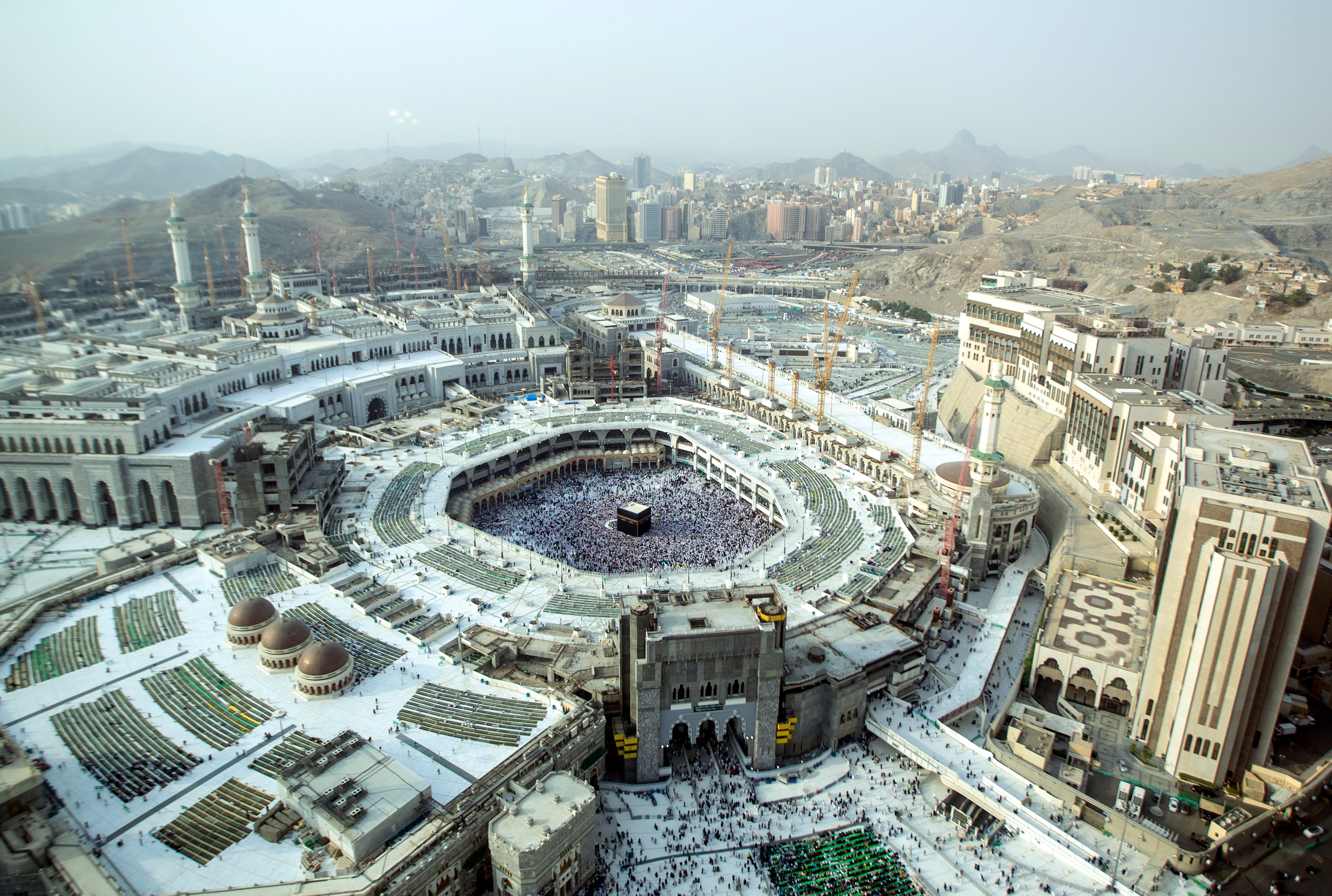
More than 1.5 million Muslim pilgrims began the annual Hajj pilgrimage in Mecca on Sunday [1].
The event marks the fulfillment of one of Islam’s Five Pillars, representing a core religious duty for millions of believers worldwide. This year's gathering occurs as regional instability and ongoing Middle East conflicts create a tense backdrop for the spiritual journey.
Pilgrims gathered at the Masjid al-Harām, also known as the Great Mosque, to perform the Tawaf Al Qudum [1]. This arrival circumambulation serves as the opening rite of the pilgrimage, where worshippers circle the Kaaba. The atmosphere in Mecca remained focused on devotion despite the geopolitical concerns surrounding the region.
Saudi authorities managed the influx of more than 1.5 million people [1] as they arrived in the city. The scale of the gathering requires significant logistical coordination to ensure the safety of the crowds during the rituals. This year, the process has been further complicated by sweltering heat and the psychological weight of war concerns affecting many of the participants.
The Hajj is a period of intense prayer and reflection. For many, the ability to travel to Saudi Arabia during a time of conflict is seen as a testament to the enduring nature of their faith. The pilgrimage continues over several days, involving a series of specific rituals across different sites in and around Mecca.
“More than 1.5 million Muslim pilgrims began the annual Hajj pilgrimage in Mecca”
The commencement of the Hajj during a period of regional volatility underscores the intersection of religious obligation and geopolitical tension. While the pilgrimage is a spiritual endeavor, the massive scale of the gathering—exceeding 1.5 million people—serves as a focal point for both Saudi logistical capabilities and the collective emotional state of the global Muslim community amid Middle East conflicts.