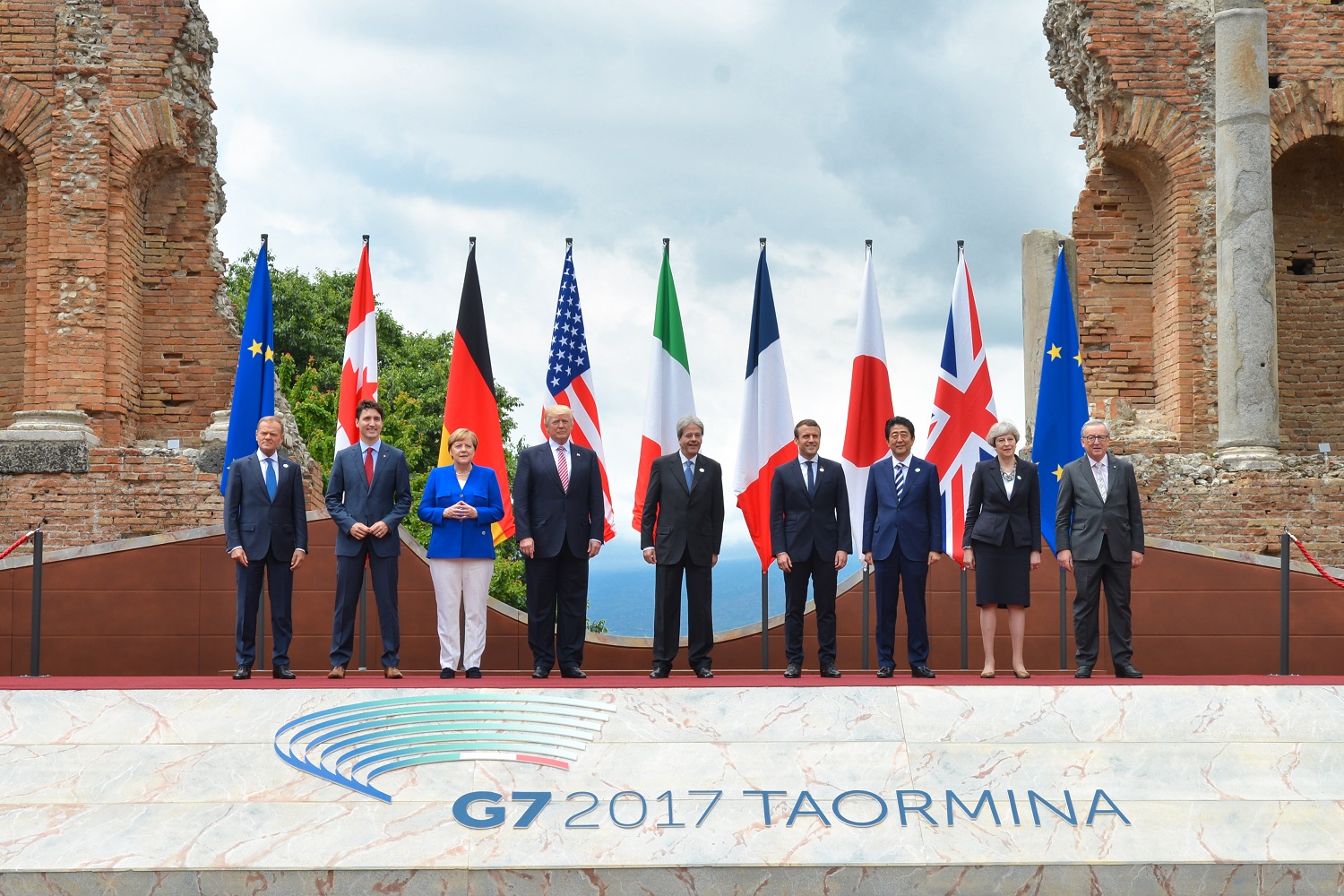
President Emmanuel Macron said the G7 summit was a success, describing the gathering as a moment of unity and cooperation [1].
The summit's outcomes are significant as they signal a coordinated Western front regarding global security threats. By aligning their strategies on Russia and Iran, the G7 nations aim to project a unified diplomatic and economic wall against these actors.
Macron said that the member countries mobilised to increase pressure on Russia [1]. This coordinated effort is intended to further isolate Moscow and limit its ability to sustain current geopolitical strategies. The French leader said that the summit served as a critical point for the G7 to synchronize their approach to the ongoing conflict in Ukraine [2].
Beyond the pressure on Russia, the G7 leaders focused on the practicalities of military and economic aid. Macron said that the nations agreed to boost defense support for Ukraine [2]. This commitment ensures that Kyiv continues to receive the necessary resources to defend its territory, a key priority for the alliance.
Diplomatic efforts also extended to the Middle East. The G7 leaders discussed and pursued an agreement with Iran [2]. This focus suggests a broader strategy to stabilize the region and prevent further escalation through multilateral diplomacy.
Macron said the atmosphere of the summit was one of cooperation. He said, "It is a moment of unity and cooperation between the G7 countries" [1]. The president said that the collective action of the group is essential for addressing international instability.
As the summit concluded in June 2026, the emphasis remained on the strength of the coalition. Macron said the G7 countries mobilised to increase the pressure on Russia to ensure a more stable international order [1].
“It is a moment of unity and cooperation between the G7 countries.”
The emphasis on 'unity' suggests that the G7 is attempting to mitigate internal fractures to present a cohesive front. By simultaneously addressing the war in Ukraine and the nuclear or regional concerns surrounding Iran, the group is positioning itself as the primary coordinator of Western foreign policy in an increasingly multipolar world.