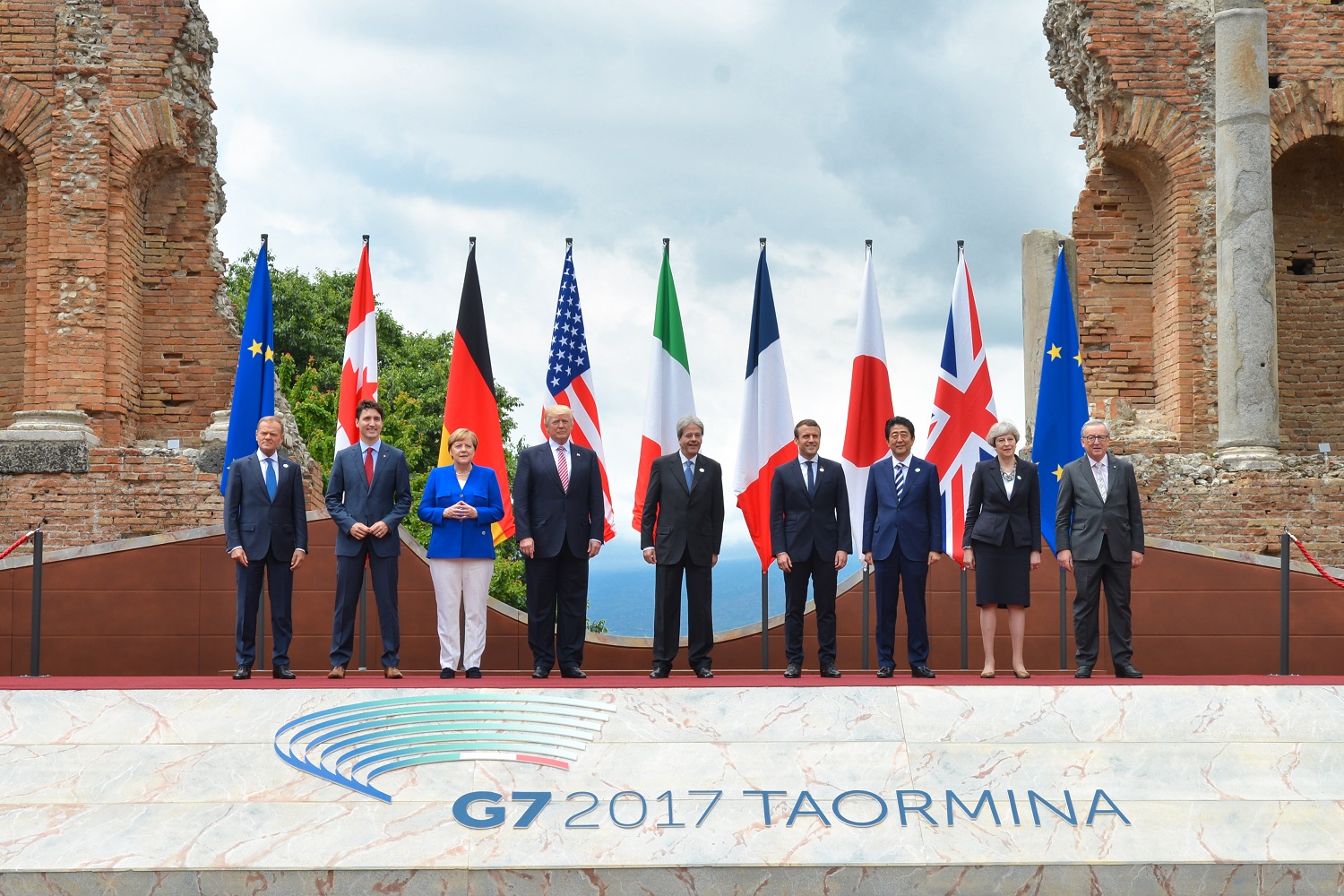
President Donald Trump said on Tuesday that Iran must never acquire a nuclear weapon during a meeting at the G7 summit [1].
The statement reaffirms the U.S. position under an interim memorandum of understanding that prohibits Tehran from developing nuclear weaponry. By issuing this warning during a high-profile international summit, the president aims to maintain pressure on Iran while signaling the red lines of U.S. foreign policy.
Trump said during a bilateral meeting with the Emir of Qatar in Evian-les-Bains, France [1]. He said that preventing a nuclear-armed Iran is his primary objective in the region. "The only thing that really matters to me is that Iran will never have a nuclear weapon," Trump said [1].
The president used stark language to describe the potential response to a breach of the current agreement. He said that "all hell will rain down" if Iran attempts to obtain a nuclear weapon [2]. He further said the potential results of such an attempt are "ultimate consequences" [1].
While focusing on Iran, Trump also addressed other regional tensions during the summit. He said he is dissatisfied with the current military actions of the Israeli government in the Middle East. "I'm not happy with Israel about Lebanon," Trump said [3].
This public critique of Israel's offensive in Lebanon coincides with the president's efforts to manage the broader geopolitical stability of the region. The G7 summit serves as the backdrop for these assertions, placing the U.S. stance on nuclear proliferation, and regional conflict at the center of the diplomatic agenda [1, 3].
“"The only thing that really matters to me is that Iran will never have a nuclear weapon."”
This rhetoric signals a continuation of a 'maximum pressure' approach toward Tehran, utilizing the G7 platform to synchronize international opposition to an Iranian nuclear program. Simultaneously, the president's criticism of Israel's actions in Lebanon suggests a willingness to distance U.S. policy from Israeli military strategy to avoid a wider regional escalation that could destabilize the interim nuclear understanding.