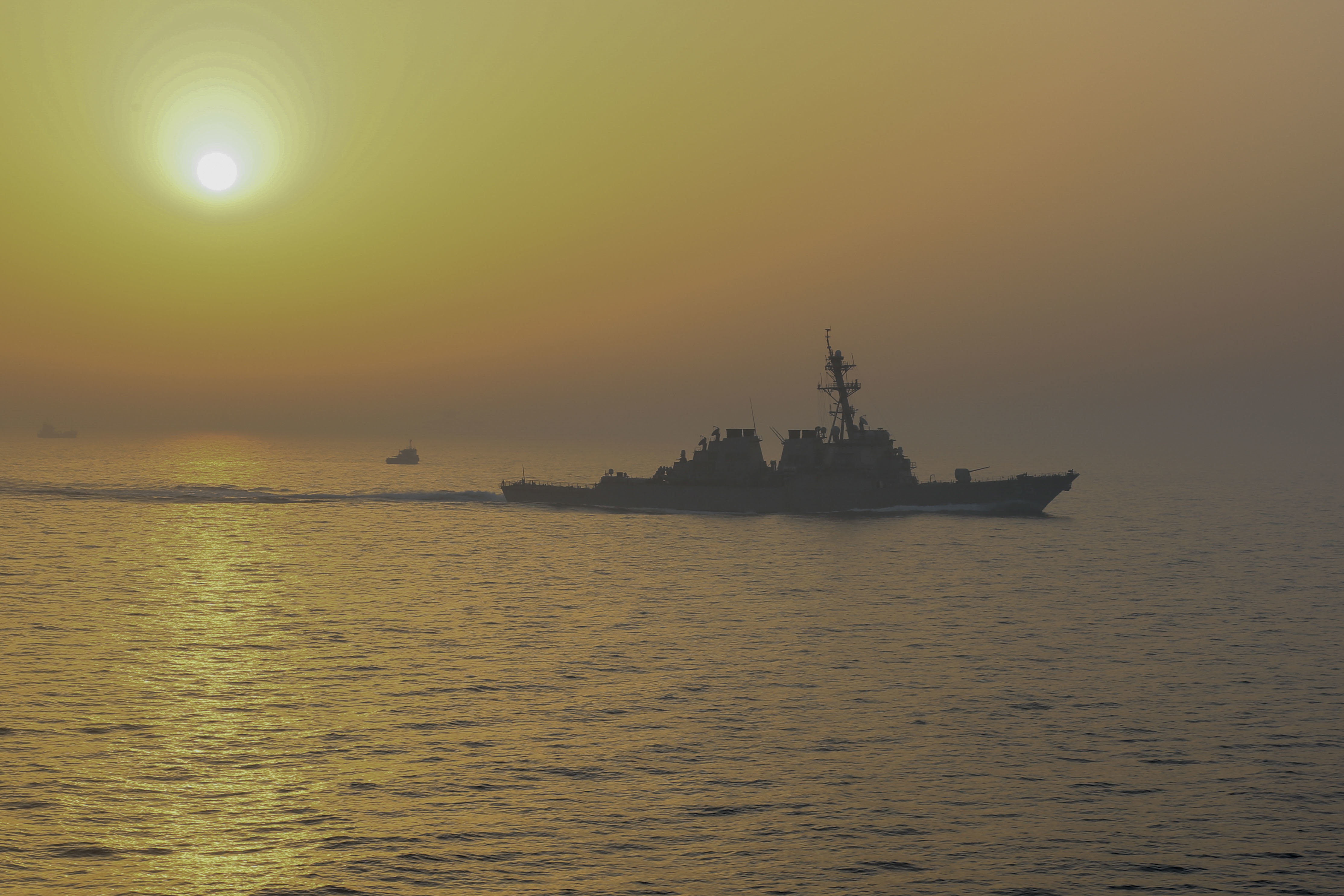
President Donald Trump announced Monday that the Strait of Hormuz will be completely open this Friday following a U.S.–Iran agreement to end the Middle East war [1, 2, 3].
The reopening of the narrow waterway between Oman and Iran is critical for global energy markets, as the regional conflict had previously limited shipping through the strategic bottleneck [1, 2].
Trump said the deal is signed and that the waterway is already experiencing a gradual transition. "The deal is all signed and the Strait of Hormuz is partially opened," Trump said [3].
According to the president, some maritime activity has already resumed. "The Strait of Hormuz is partially open and ships are starting to go out now," Trump said [2].
Despite these statements, reports on the current state of shipping are mixed. While the president indicated that ships are beginning to move, some reports suggest most vessels are staying put despite the announced reopening [5].
Trump said that the full restoration of access will be completed by Friday, June 19 [2, 4]. This move follows the signing of the U.S.–Iran deal intended to lift the restrictions that had hampered the flow of goods and oil through the region [1, 5].
"The Strait of Hormuz will be completely open on Friday," Trump said [2].
“"The Strait of Hormuz will be completely open on Friday."”
The full reopening of the Strait of Hormuz represents a significant shift in geopolitical tensions between the U.S. and Iran. Because a vast majority of the world's seaborne oil passes through this narrow corridor, the transition from a war footing to an open shipping lane could reduce global energy price volatility and signal a broader stabilization of the Middle East region.