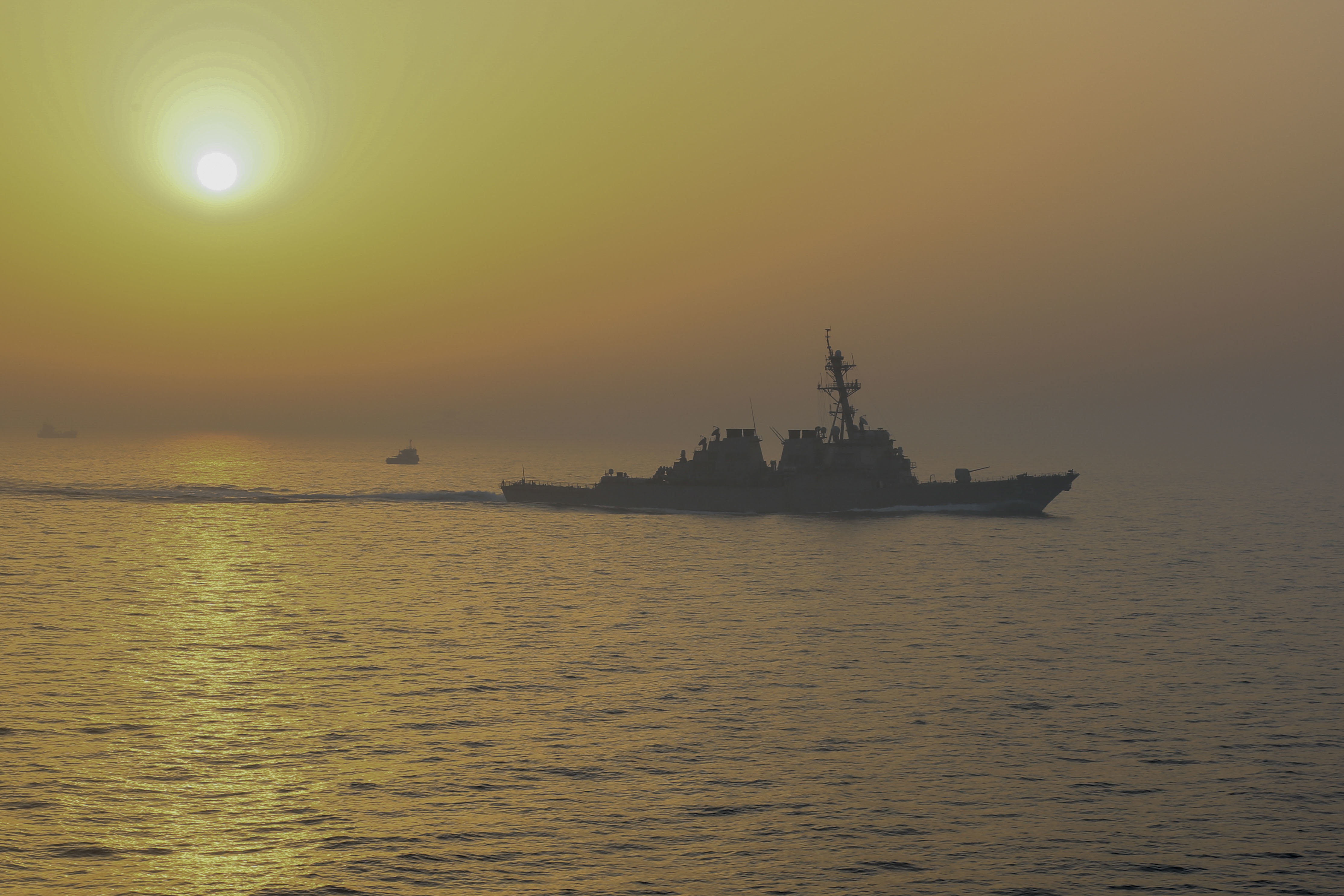
The United States and Iran engaged in missile strikes and naval maneuvers Tuesday as both nations fought for control of the Strait of Hormuz.
The standoff threatens global energy security because approximately 20% [2] of the world's oil transits through this strategic waterway. Any prolonged disruption to shipping could trigger severe international economic instability.
U.S. forces conducted air strikes against Iranian targets for five hours [1] on Tuesday. These attacks followed a U.S. naval blockade and an Iranian effort to re-impose strict control over the strait. Reports indicate that Iranian missiles also targeted a U.S. air base in Jordan.
President Donald Trump (R-FL) responded to the escalation by saying that military options remain on the table. He dismissed the Iranian government's posture, saying, "Iran can't blackmail us."
The conflict has been intensified by disputes over the movement of commercial shipping. While some reports indicate the U.S. and Iran are at odds over the implementation of tolls for ships passing through the waterway, other reports suggest Trump has backed off from a plan to charge such tolls.
Iran has justified its recent military actions as a response to the U.S. blockade and perceived attempts by the American administration to regulate the passage of vessels. The U.S. maintains that its operations are necessary to protect global shipping, and pressure the Iranian government to cease its hostile actions in the region.
The current volatility in the strait marks a significant escalation in direct military confrontation between the two powers, moving beyond proxy conflicts to direct strikes on sovereign territory and strategic maritime corridors.
“"Iran can't blackmail us."”
This escalation represents a shift from diplomatic tension to active kinetic warfare over one of the world's most critical chokepoints. By targeting both naval routes and regional air bases, the conflict risks expanding beyond the Strait of Hormuz, potentially forcing global oil markets to price in a total blockade of the waterway.


