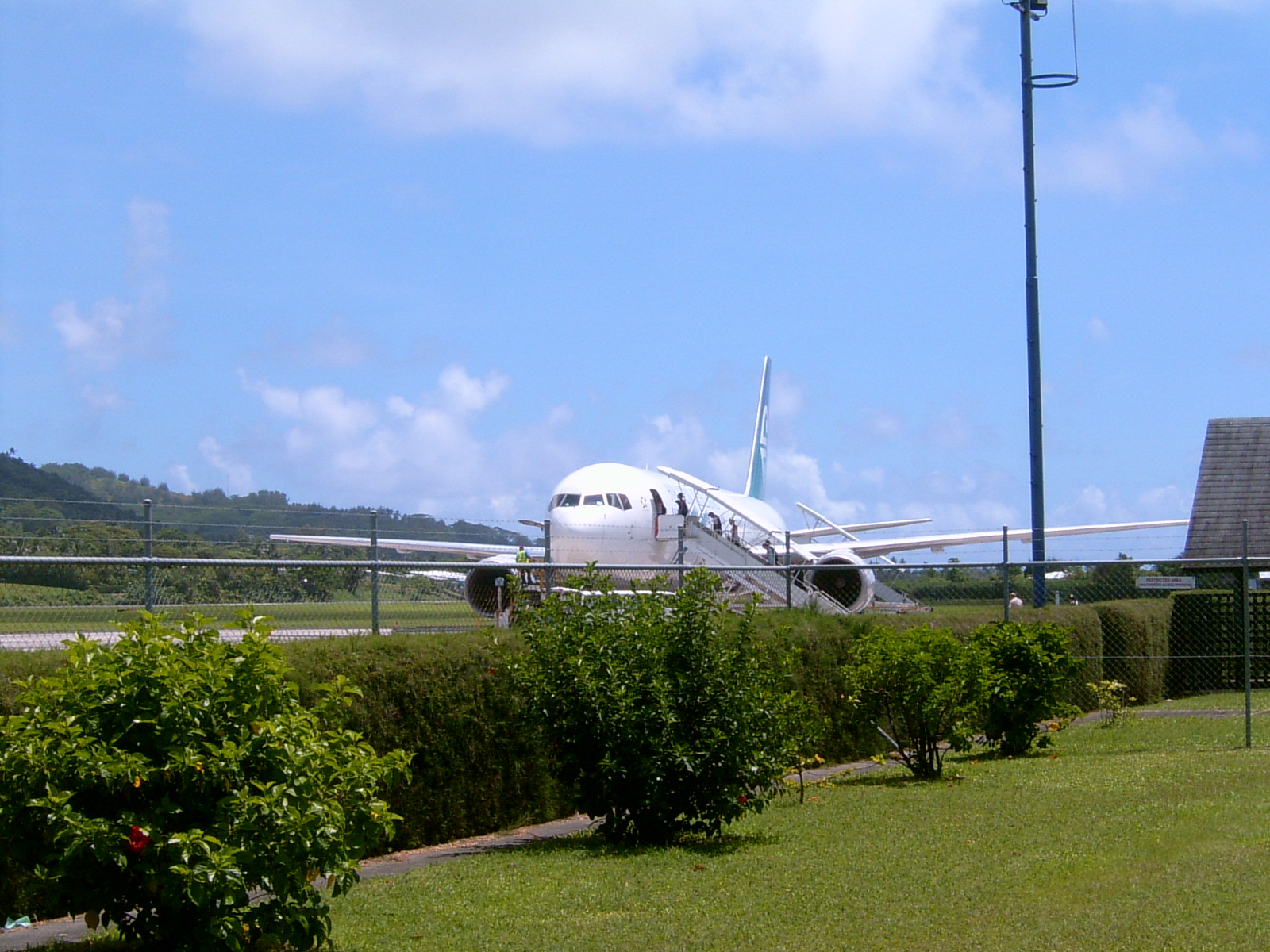
A single remote airport in the South Pacific allows Airbus A350 aircraft to operate long-haul flights across the region [1].
This capability is significant because it expands the operational reach of wide-body aircraft in one of the world's most isolated maritime environments. By providing a critical stopover or emergency point, the facility makes challenging trans-Pacific crossings feasible for the A350 fleet [2].
The Airbus A350 is designed for extreme long-range efficiency, but the vast distances of the South Pacific still require strategic infrastructure. The existence of this specific airfield removes a primary geographical barrier for operators planning routes between the South Pacific and other global destinations [1].
Simple Flying said this is "the single remote airport that makes a South Pacific crossing on the Airbus A350 possible" [2]. The airport serves as a linchpin for aviation logistics in the area, ensuring that aircraft have the necessary support to navigate the crossing safely [1].
Industry observers note that such infrastructure is vital for maintaining connectivity in remote regions. MSN said that this island airport holds significance for long-haul flights in its vicinity [3]. Without this facility, the operational risks and fuel requirements for the A350 would likely limit the number of viable routes across the southern ocean [1].
The strategic placement of the runway allows airlines to optimize payload and fuel loads. This ensures that the A350 can maintain its performance standards while traversing the distance between the South Pacific and mainland hubs [2].
“This island airport holds significance for long-haul flights in its vicinity.”
The reliance on a single remote airfield highlights the fragility of long-haul aviation infrastructure in the South Pacific. While the Airbus A350 possesses advanced range capabilities, the lack of redundant landing sites means that a single point of failure in regional infrastructure could disrupt trans-Pacific logistics and connectivity.


'%2F%3E%0A%20%20%20%20%3Crect%20width%3D'1600'%20height%3D'900'%20fill%3D'url(%23v)'%2F%3E%0A%20%20%20%20%3Cg%20opacity%3D'0.08'%20fill%3D'%23ffffff'%3E%0A%20%20%20%20%20%20%3Ccircle%20cx%3D'1420'%20cy%3D'180'%20r%3D'220'%2F%3E%0A%20%20%20%20%20%20%3Ccircle%20cx%3D'1500'%20cy%3D'760'%20r%3D'120'%2F%3E%0A%20%20%20%20%3C%2Fg%3E%0A%20%20%20%20%3Cline%20x1%3D'80'%20y1%3D'172'%20x2%3D'220'%20y2%3D'172'%20stroke%3D'%23ffffff'%20stroke-width%3D'3'%20stroke-opacity%3D'0.6'%2F%3E%0A%20%20%20%20%3Ctext%20x%3D'80'%20y%3D'140'%20font-family%3D'Inter%2C%20-apple-system%2C%20Helvetica%2C%20sans-serif'%20font-weight%3D'700'%20font-size%3D'28'%20fill%3D'%23ffffff'%20letter-spacing%3D'6'%3EHANNA%20%C2%B7%20NEWS%3C%2Ftext%3E%0A%20%20%20%20%3Ctext%20x%3D'80'%20y%3D'230'%20font-family%3D'Inter%2C%20-apple-system%2C%20Helvetica%2C%20sans-serif'%20font-weight%3D'600'%20font-size%3D'40'%20fill%3D'%23ffffffb3'%20letter-spacing%3D'4'%3EBUSINESS%3C%2Ftext%3E%0A%20%20%20%20%3Ctext%20x%3D'80'%20y%3D'694'%20font-family%3D'Playfair%20Display%2C%20Georgia%2C%20serif'%20font-weight%3D'800'%20font-size%3D'110'%20fill%3D'%23ffffff'%20letter-spacing%3D'-1'%3EManipal%20Health%20Enterprises%3C%2Ftext%3E%3Ctext%20x%3D'80'%20y%3D'820'%20font-family%3D'Playfair%20Display%2C%20Georgia%2C%20serif'%20font-weight%3D'800'%20font-size%3D'110'%20fill%3D'%23ffffff'%20letter-spacing%3D'-1'%3ELaunches%20%E2%82%B98%2C000%20Crore%20IPO%3C%2Ftext%3E%0A%20%20%20%20%3Ctext%20x%3D'80'%20y%3D'870'%20font-family%3D'Inter%2C%20-apple-system%2C%20Helvetica%2C%20sans-serif'%20font-weight%3D'500'%20font-size%3D'22'%20fill%3D'%23ffffff66'%20letter-spacing%3D'2'%3Enews.hanna-ai.com%3C%2Ftext%3E%0A%20%20%3C%2Fsvg%3E)