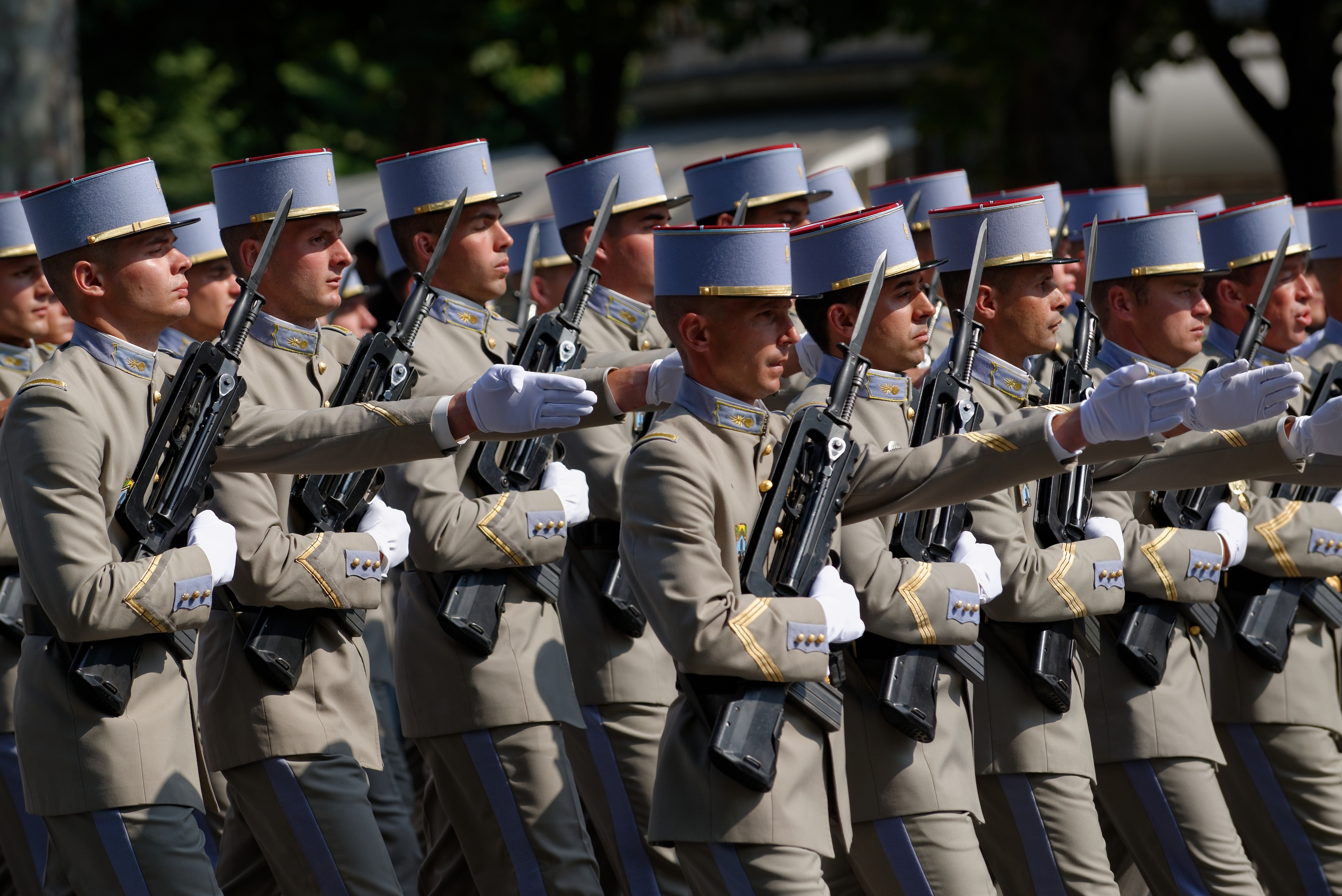
President Emmanuel Macron hosted a military parade in Paris on July 14 [1] to showcase collective European military strength.
The event serves as a strategic signal to Russian President Vladimir Putin. By aligning military assets and leadership during a national holiday, European nations intend to demonstrate a unified front in support of Ukraine and a shared stance against Russian aggression [2, 3, 4].
The parade featured a diverse array of allies. Among the attendees were the UK's Sir Keir Starmer and Ukrainian President Volodymyr Zelensky [1, 2]. The streets of Paris became a staging ground for a display of interdependence, moving beyond symbolic gestures to a visible manifestation of security cooperation [2, 4].
Troops from Ukraine and members of the "Coalition of the Willing" marched alongside French forces [1, 2]. This inclusion of Ukrainian personnel in the traditional Bastille Day celebrations marks a significant shift in the visibility of the conflict's frontline forces within Western European capitals [2, 4].
Bastille Day is held each year on July 14 [1]. While typically a celebration of French national identity, this year's iteration focused on a broader continental identity. The presence of multiple European leaders suggests a coordinated effort to project stability and resolve [2, 3].
Observers said that the scale of the military hardware and the diversity of the participating nations were intended to contrast with the isolation of the Russian leadership. The parade functioned as both a celebration and a deterrent, emphasizing that the support for Ukraine remains a collective European priority [3, 4].
“European nations intend to demonstrate a unified front in support of Ukraine”
The inclusion of Ukrainian troops and the 'Coalition of the Willing' in a sovereign French national parade signals a transition from indirect support to an overt military partnership. By utilizing a high-visibility event like Bastille Day, European leaders are attempting to establish a psychological deterrent against Russia, suggesting that the defense of Ukraine is now inextricably linked to European security architecture.


