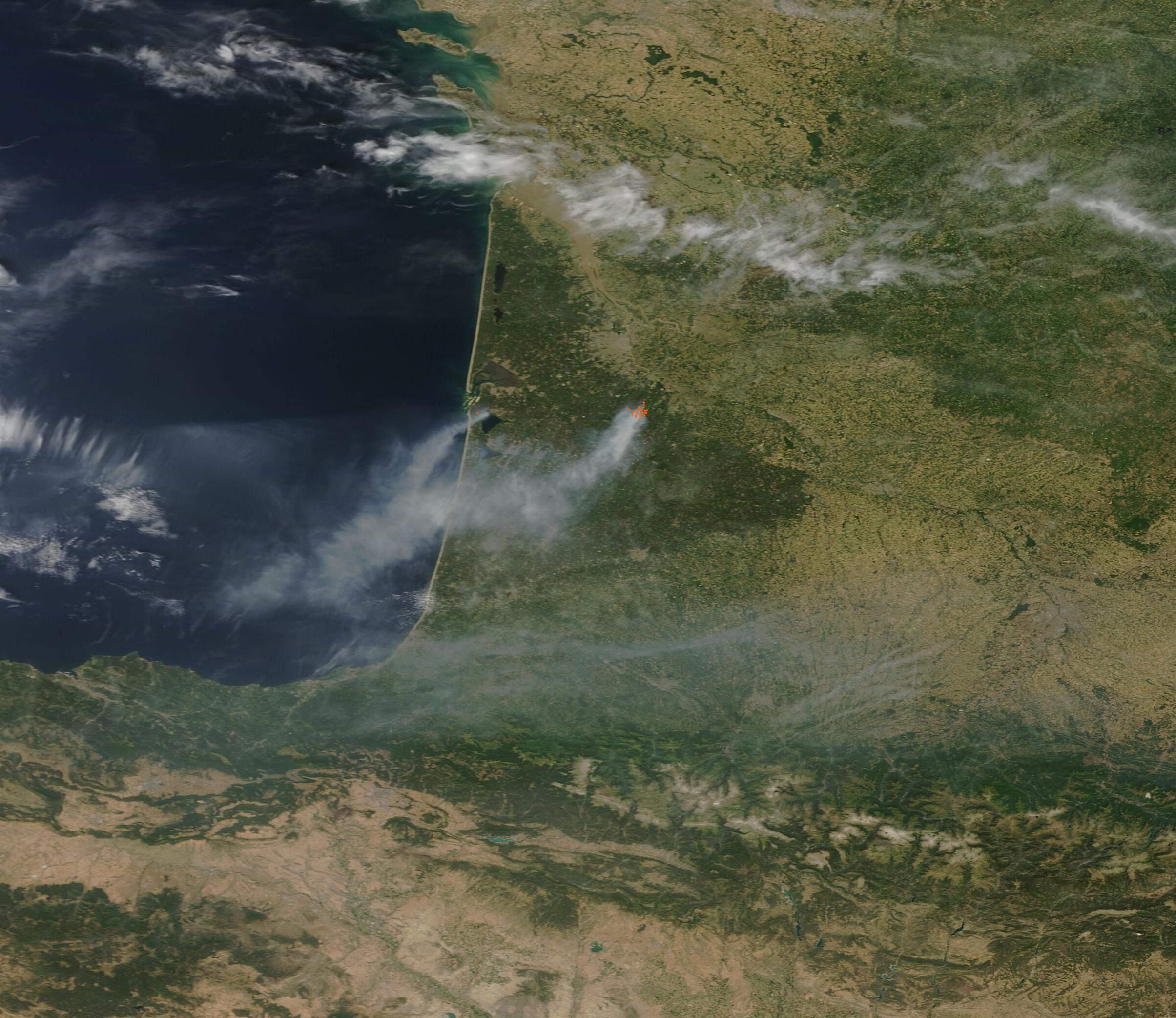
Wildfires are raging across parts of France, Spain, and Italy as an extreme heatwave grips Europe [2, 3, 4].
The scale of the fires demonstrates the increasing volatility of European summers, where severe heat domes create tinder-box conditions that threaten residential areas and critical infrastructure.
In southwestern France, specifically west of Bordeaux, the situation has forced the evacuation of more than 10,000 residents [1]. The toll on emergency responders has been severe, with reports indicating that two firefighters died in France [2].
Spain is facing similar crises in Castilla y León and along the Madrid-Toledo border [4]. Some reports also include Portugal in the list of affected nations as the region braces for further heat [4].
Italy has seen significant activity in the south, particularly in Sicily. Around 6,000 firefighters and civil protection personnel were deployed to the island to combat the blazes [5]. One firefighter died in Italy during the response efforts [2].
Meteorologists said the disaster is linked to a severe heat dome and climate change [6]. This atmospheric phenomenon has pushed maximum temperatures to over 40°C [5], making conditions ripe for fast-spreading fires that can outpace containment efforts.
Emergency crews continue to battle the flames as the heatwave persists. The coordination of thousands of personnel across multiple borders highlights the regional nature of the current climate crisis.
“More than 10,000 residents [were evacuated] in southwestern France”
The simultaneous occurrence of catastrophic wildfires across multiple Mediterranean countries suggests a systemic shift in regional weather patterns. The presence of a heat dome, a high-pressure system that traps heat, indicates that extreme temperature spikes are becoming more entrenched, increasing the frequency and intensity of fire seasons in areas previously less prone to such volatility.