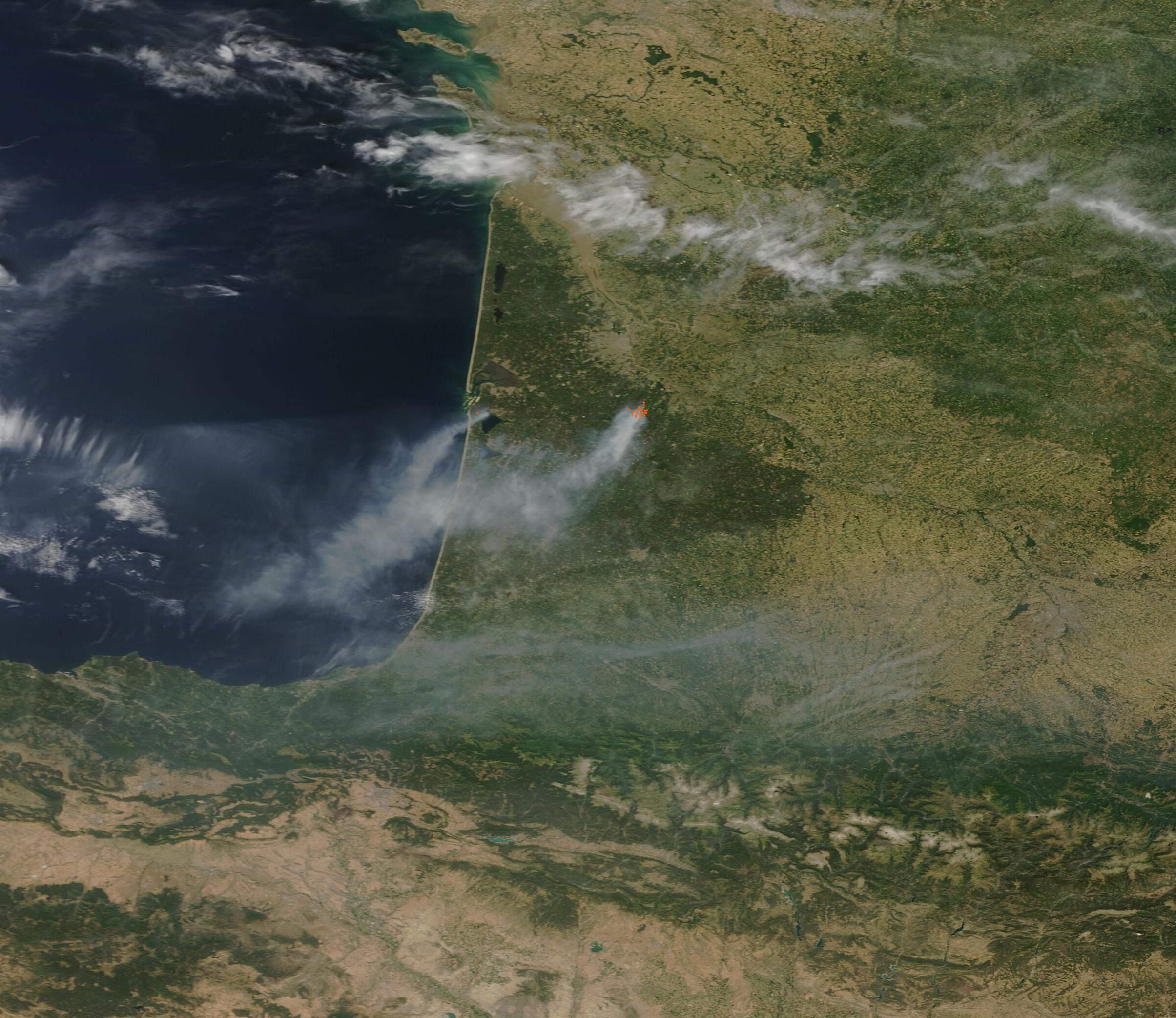
Wildfires on the French Atlantic coast have forced more than 160,000 people to evacuate their homes and hotels [1].
The scale of the disaster underscores the increasing vulnerability of coastal tourist hotspots to extreme weather. Fast-moving flames have cut off land routes, forcing residents and visitors to use boats to reach safety.
Emergency operations centered on the Cap Ferret peninsula in southwestern France, where dry vegetation and unpredictable wind conditions fueled the blaze [1], [2]. Authorities declared emergencies as the fires swept through forests and residential areas, threatening thousands of families and tourists [2], [5].
Reports on the total number of displaced people vary across regions. While more than 160,000 people were evacuated from the French Atlantic coast alone [1], some reports indicate that more than 250,000 people were forced to flee their homes across both France and Spain [3]. Other estimates place the combined number of evacuees from both countries at approximately 92,000 [4].
The crisis began in late June, with major evacuations occurring on a Friday as the fires intensified [6], [7]. Extreme heat and a lack of moisture in the soil created a tinderbox effect, allowing the fires to spread rapidly across the landscape [5].
In Spain, central regions also faced similar threats, leading to a national emergency declaration as the Mediterranean climate drove temperatures to dangerous levels [5]. The coordinated effort to move people by sea reflects the severity of the land-based threats, as smoke plumes obscured visibility and blocked primary evacuation roads [1].
“More than 160,000 people have been evacuated from the French Atlantic coast.”
The necessity of maritime evacuations in a high-density tourist area like Cap Ferret indicates that traditional land-based emergency plans may be insufficient for the speed of modern wildfires. The disparity in evacuation numbers—ranging from 92,000 to over 250,000—highlights the chaos of real-time disaster tracking across international borders during simultaneous climate events in France and Spain.


