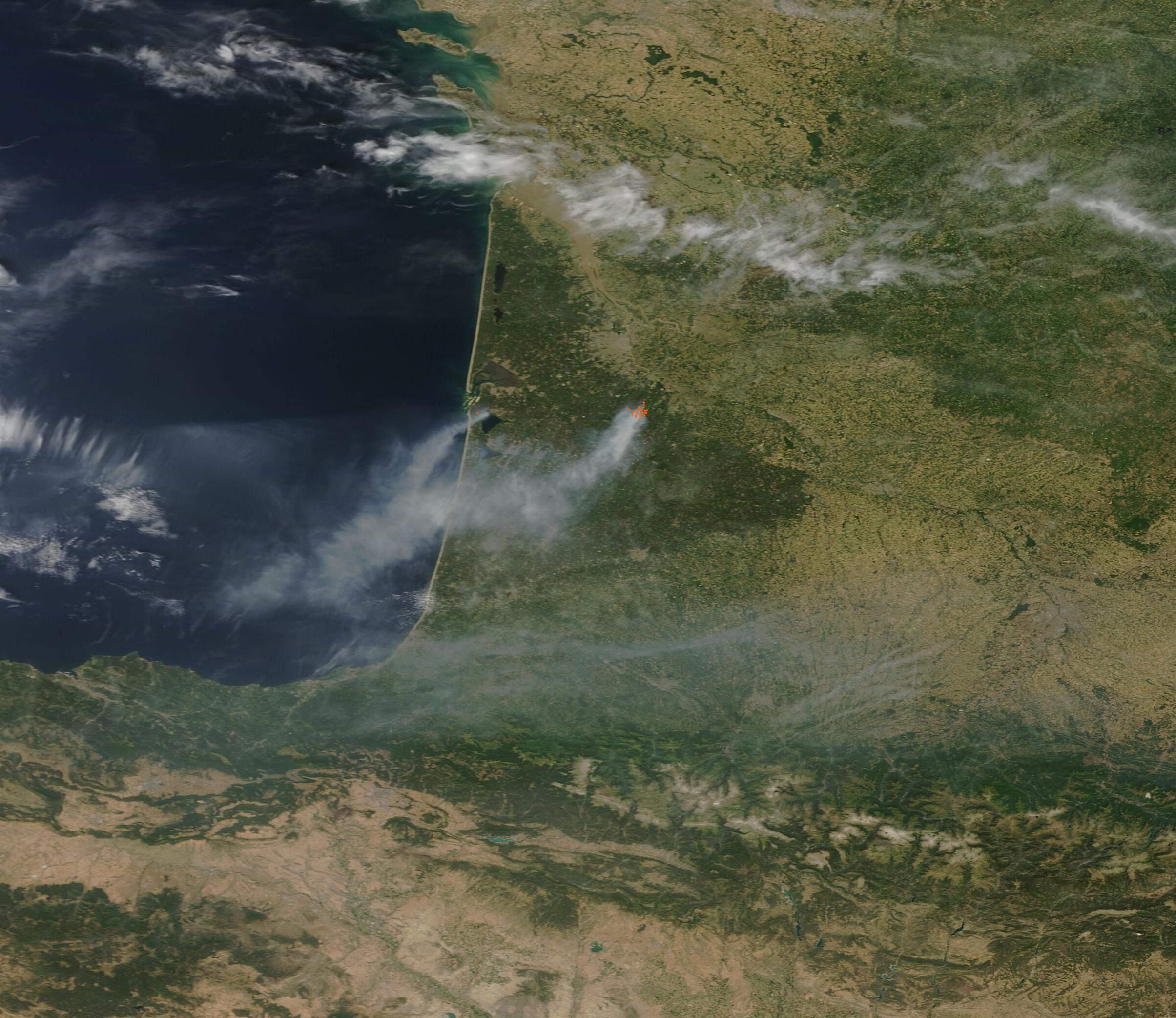
Wildfires continue to rage across the southwest Gironde region near Bordeaux, forcing tens of thousands of residents to evacuate their homes on Tuesday [1].
The scale of the displacement highlights the increasing vulnerability of Southern Europe to extreme weather. As temperatures soar and rainfall remains scarce, the region has become a tinderbox, making it difficult for emergency services to contain the perimeter of the flames [2].
Emergency services and local civilians are battling the blazes in an effort to protect residential areas [1]. The human toll of the disaster is significant, though reports on the total number of displaced persons vary. Some authorities estimate 220,000 people have been displaced [2], while other reports indicate more than 360,000 people have been evacuated [3]. Other estimates suggest more than 300,000 people were forced to flee [4], with AP News reporting that hundreds of thousands have been affected [5].
In the most recent wave of activity, 55,000 additional people were evacuated as the fire spread [2]. These evacuations come amid severe environmental conditions characterized by successive heat waves and record-breaking temperatures [2]. Forecasts for the period have indicated maximum temperatures exceeding 40 °C [6].
Firefighters are racing against time to prevent the fires from reaching more densely populated centers near Bordeaux. The combination of scant rainfall and high heat has created a volatile environment where fires can jump containment lines rapidly [2]. Local authorities continue to monitor the wind patterns and temperature spikes to coordinate the movement of residents out of the danger zones [1].
“Wildfires continue to rage across the southwest Gironde region near Bordeaux.”
The discrepancy in evacuation numbers—ranging from 200,000 to over 360,000—reflects the chaotic nature of rapid-onset wildfires and the difficulty of tracking displaced populations in real-time. The intersection of record heat and prolonged drought in the Gironde region suggests a systemic shift in fire seasonality, where traditional containment strategies are increasingly overwhelmed by extreme climate conditions.


'%2F%3E%0A%20%20%20%20%3Crect%20width%3D'1600'%20height%3D'900'%20fill%3D'url(%23v)'%2F%3E%0A%20%20%20%20%3Cg%20opacity%3D'0.08'%20fill%3D'%23ffffff'%3E%0A%20%20%20%20%20%20%3Ccircle%20cx%3D'1420'%20cy%3D'180'%20r%3D'220'%2F%3E%0A%20%20%20%20%20%20%3Ccircle%20cx%3D'1500'%20cy%3D'760'%20r%3D'120'%2F%3E%0A%20%20%20%20%3C%2Fg%3E%0A%20%20%20%20%3Cline%20x1%3D'80'%20y1%3D'172'%20x2%3D'220'%20y2%3D'172'%20stroke%3D'%23ffffff'%20stroke-width%3D'3'%20stroke-opacity%3D'0.6'%2F%3E%0A%20%20%20%20%3Ctext%20x%3D'80'%20y%3D'140'%20font-family%3D'Inter%2C%20-apple-system%2C%20Helvetica%2C%20sans-serif'%20font-weight%3D'700'%20font-size%3D'28'%20fill%3D'%23ffffff'%20letter-spacing%3D'6'%3EHANNA%20%C2%B7%20NEWS%3C%2Ftext%3E%0A%20%20%20%20%3Ctext%20x%3D'80'%20y%3D'230'%20font-family%3D'Inter%2C%20-apple-system%2C%20Helvetica%2C%20sans-serif'%20font-weight%3D'600'%20font-size%3D'40'%20fill%3D'%23ffffffb3'%20letter-spacing%3D'4'%3EWORLD%3C%2Ftext%3E%0A%20%20%20%20%3Ctext%20x%3D'80'%20y%3D'694'%20font-family%3D'Playfair%20Display%2C%20Georgia%2C%20serif'%20font-weight%3D'800'%20font-size%3D'110'%20fill%3D'%23ffffff'%20letter-spacing%3D'-1'%3EEF-3%20Tornado%20Hits%3C%2Ftext%3E%3Ctext%20x%3D'80'%20y%3D'820'%20font-family%3D'Playfair%20Display%2C%20Georgia%2C%20serif'%20font-weight%3D'800'%20font-size%3D'110'%20fill%3D'%23ffffff'%20letter-spacing%3D'-1'%3ENortheastern%20Wisconsin%3C%2Ftext%3E%0A%20%20%20%20%3Ctext%20x%3D'80'%20y%3D'870'%20font-family%3D'Inter%2C%20-apple-system%2C%20Helvetica%2C%20sans-serif'%20font-weight%3D'500'%20font-size%3D'22'%20fill%3D'%23ffffff66'%20letter-spacing%3D'2'%3Enews.hanna-ai.com%3C%2Ftext%3E%0A%20%20%3C%2Fsvg%3E)