
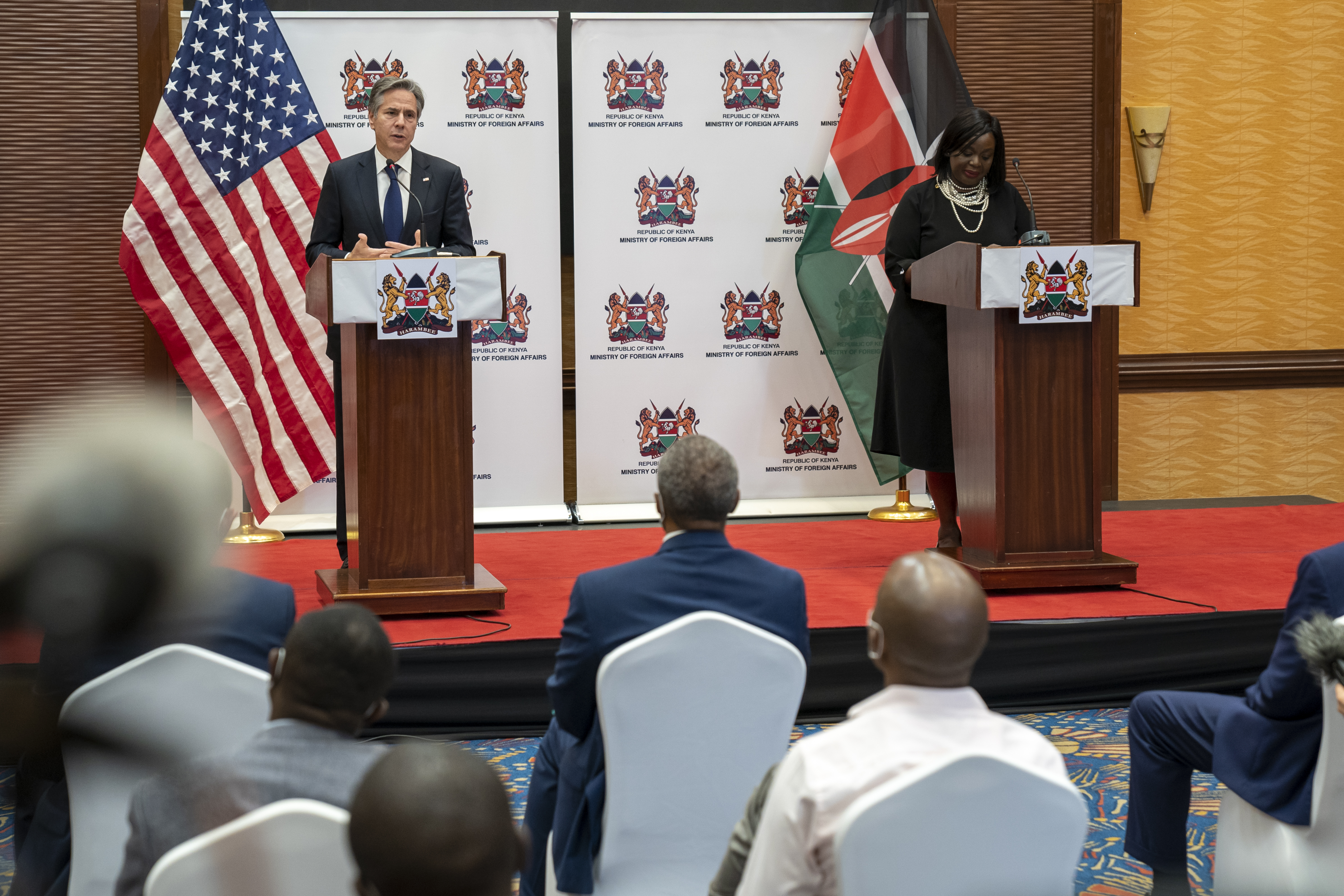
A Kenyan court temporarily halted the opening of a U.S.-built Ebola quarantine facility intended for American citizens arriving from the Democratic Republic of Congo [1].
The ruling follows significant public backlash and legal challenges regarding the safety of the Kenyan population. Because Kenya has no known cases of Ebola, the prospect of hosting a quarantine center for exposed individuals raised fears of a domestic outbreak [2].
The facility was constructed by the U.S. military on a Kenyan air base [3]. The suspension comes after a rights group filed a petition with the High Court to block the operation of the site [1].
According to the petition, the presence of the facility posed an unacceptable risk to the local community [2]. The court's decision to suspend the opening reflects the legal tension between international health cooperation and national biosafety concerns [4].
U.S. officials said they planned to use the site to isolate and monitor American citizens who had been exposed to the virus while working or traveling in the Democratic Republic of Congo [3]. The facility was designed to provide a secure environment for medical observation before patients returned to the U.S. [4].
Local rights advocates said the arrangement failed to account for the potential of the virus to spread beyond the confines of the military base [2]. The court will now consider the merits of the petition to determine if the facility can ever legally operate on Kenyan soil [1].
“A Kenyan court temporarily halted the opening of a U.S.-built Ebola quarantine facility”
This legal intervention highlights the friction between U.S. strategic health logistics and the sovereignty of host nations. By prioritizing local biosafety over a bilateral military-health agreement, the Kenyan court establishes a precedent that public health risks may override diplomatic arrangements for foreign military infrastructure.


