
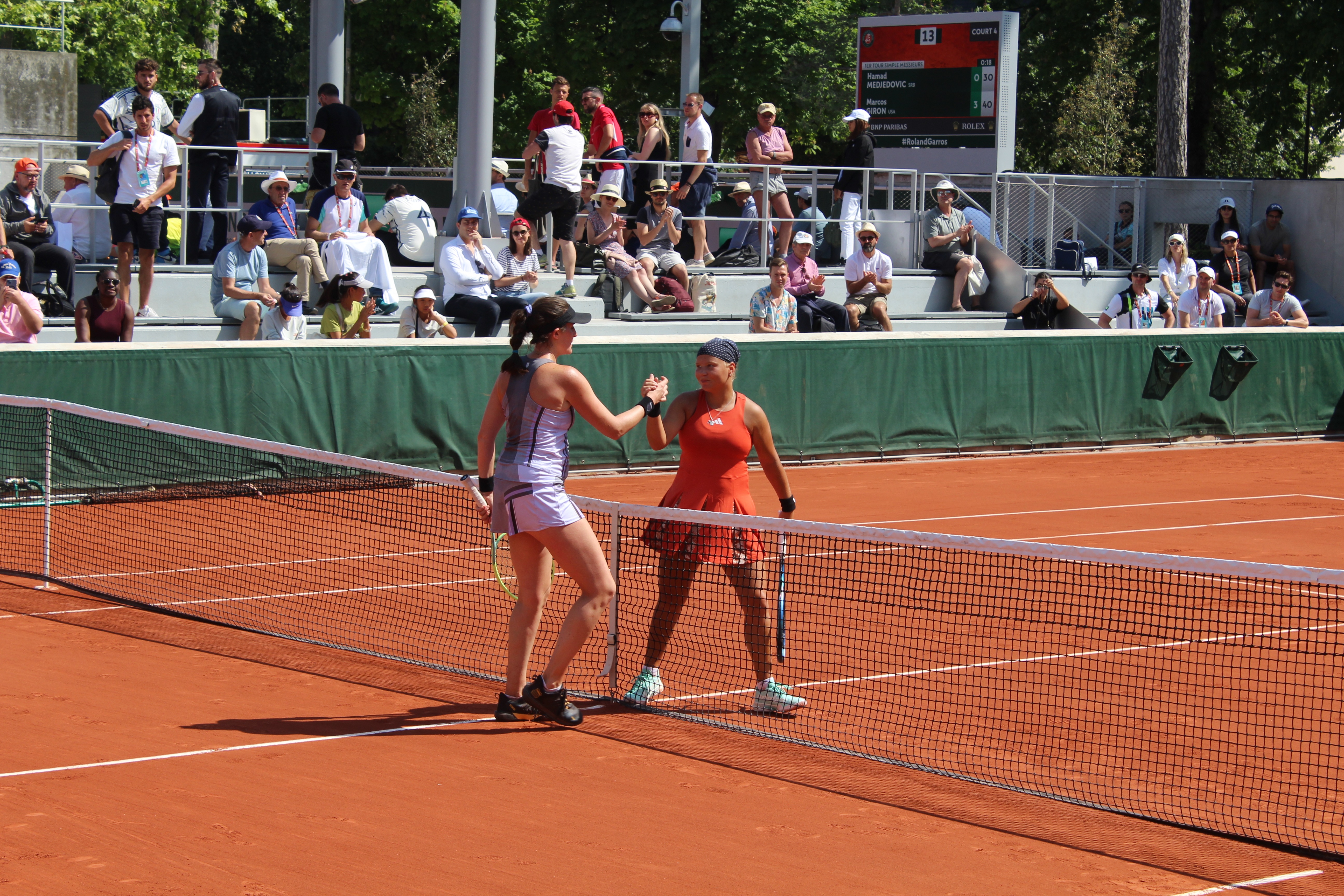
Maja Chwalinska defeated Diana Shnaider in straight sets to advance to the 2026 Roland-Garros final [1].
The victory marks a rare achievement in professional tennis, as Chwalinska entered the tournament as a qualifier. Her run to the championship match disrupts the traditional dominance of seeded players and highlights a significant shift in the tournament's competitive landscape.
Chwalinska secured her spot in the final after winning nine matches leading up to the championship [1]. The Polish athlete navigated a grueling path through the qualifying rounds before entering the main draw, which consists of 128 players [2].
The semifinal match in Paris saw Chwalinska maintain control against Shnaider, closing out the contest in straight sets [1]. By defeating Shnaider, Chwalinska became one of the few players in the history of the tournament to transition from the qualifying brackets to the final match.
This performance places Chwalinska in a position to make further history at the French Open. The tournament, held at the Roland-Garros grounds in Paris, has seen various upsets this year, but few as improbable as a qualifier reaching the final stage [2].
Chwalinska now prepares to face her final opponent to determine the 2026 champion. Her journey from the qualifying rounds to the final has drawn international attention to the viability of lower-ranked players in Grand Slam events [1].
“Maja Chwalinska defeated Diana Shnaider in straight sets to advance to the 2026 Roland-Garros final”
Chwalinska's ascent from a qualifier to a Grand Slam finalist is an anomaly in modern tennis, where the gap between top seeds and qualifiers is typically wide. This run suggests a high level of volatility in the 2026 women's draw and demonstrates that the qualifying system can still produce a championship contender capable of defeating established professionals in straight sets.


