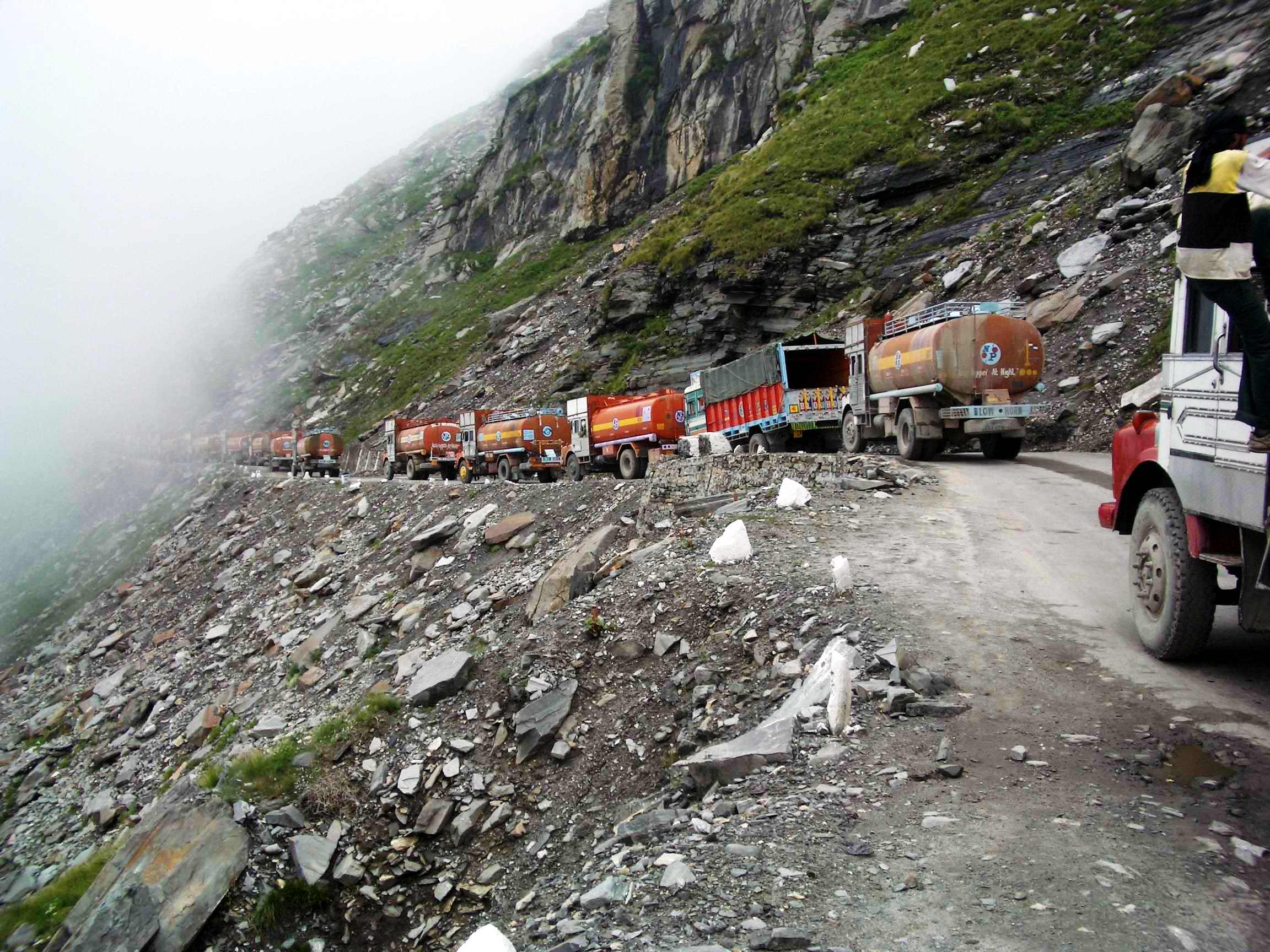
Massive crowds of tourists caused severe traffic congestion on the Manali-Rohtang and Shimla-Manali routes in Himachal Pradesh during a recent long weekend [1], [2].
The gridlock highlights the ongoing struggle of hill stations to manage seasonal surges that overwhelm local infrastructure and disrupt transportation for residents and visitors alike.
Thousands of tourists [3] flooded the roads, leading to a state of chaos on the highways. Drone footage captured the extent of the snarls, showing vehicles crawling for hours on Saturday night in late May 2026 [4], [5]. The congestion was particularly acute on the Manali-Rohtang stretch, which covers 50 km [1].
For many travelers, the 50-km journey on the Manali-Rohtang route took up to eight hours to complete [1]. Reports said the congestion led to fights among drivers in the middle of the traffic jams on the Shimla-Manali routes [6].
There are differing accounts regarding the primary driver of the influx. Some reports said a heatwave drove people to seek cooler climates in the hills [5]. Other reports said the snow-covered Rohtang stretch specifically attracted the rush of visitors [7].
Local traffic authorities attempted to manage the flow of vehicles as the influx peaked during the holiday period [1], [5]. The situation underscores the volatility of tourism in the region, where a single weekend can trigger a systemic collapse of road mobility [2], [4].
“A 50-km journey on the Manali-Rohtang route took up to eight hours for many travelers.”
The recurring nature of these gridlocks suggests that Himachal Pradesh's tourism infrastructure is currently unable to scale for peak-demand events. When environmental factors—such as heatwaves or fresh snowfall—coincide with long weekends, the result is a predictable failure of traffic management that impacts both the local economy and public safety.


