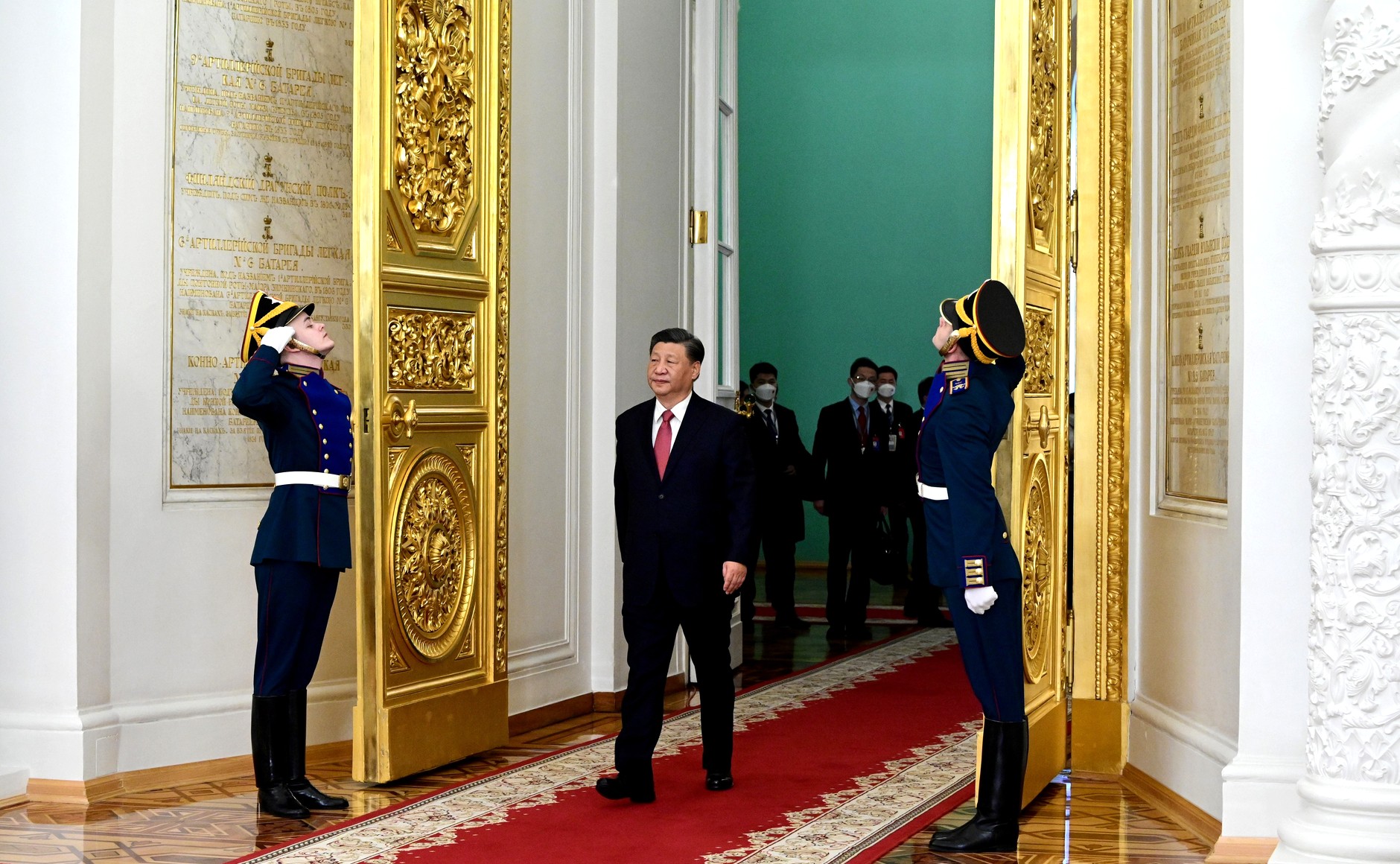
Russian President Vladimir Putin departed Beijing on Wednesday after concluding a day of talks [2] with Chinese President Xi Jinping.
The meeting signals a deepening of the strategic partnership between the two nations as they navigate global unrest and shifting geopolitical dynamics. By coordinating on energy trade and regional security, Moscow and Beijing aim to present a unified front against Western influence.
During the visit on May 20, 2026 [3], the leaders focused on reinforcing the Russia-China alliance. Their discussions centered on expanding energy trade and addressing various points of global instability. Both leaders called for an end to hostilities in the Middle East as part of their diplomatic efforts to stabilize the region.
This visit is part of a broader pattern of frequent engagement between the two heads of state. The leaders have met dozens of times [1] over the past years to align their foreign policy objectives and economic interests.
The talks in Beijing emphasized a shared commitment to a multipolar world. By increasing the volume of energy exports from Russia to China, both nations seek to insulate their economies from external pressures and sanctions. The brief nature of the visit, lasting only one day [2], suggests a highly focused agenda aimed at maintaining momentum in their bilateral relations.
While the specific details of the energy agreements were not fully disclosed, the public emphasis on trade expansion indicates a strategic shift toward Asian markets. The collaboration extends beyond economics, as both leaders expressed a desire to coordinate their responses to international conflicts and regional security threats.
“The Russian and Chinese leaders met Wednesday to strengthen their strategic alliance.”
The continued alignment between Putin and Xi Jinping underscores a strategic pivot toward a non-Western axis of power. By prioritizing energy trade and joint diplomatic stances on Middle East hostilities, Russia and China are creating an interdependent economic and political bloc designed to counter U.S. hegemony and mitigate the impact of international sanctions.