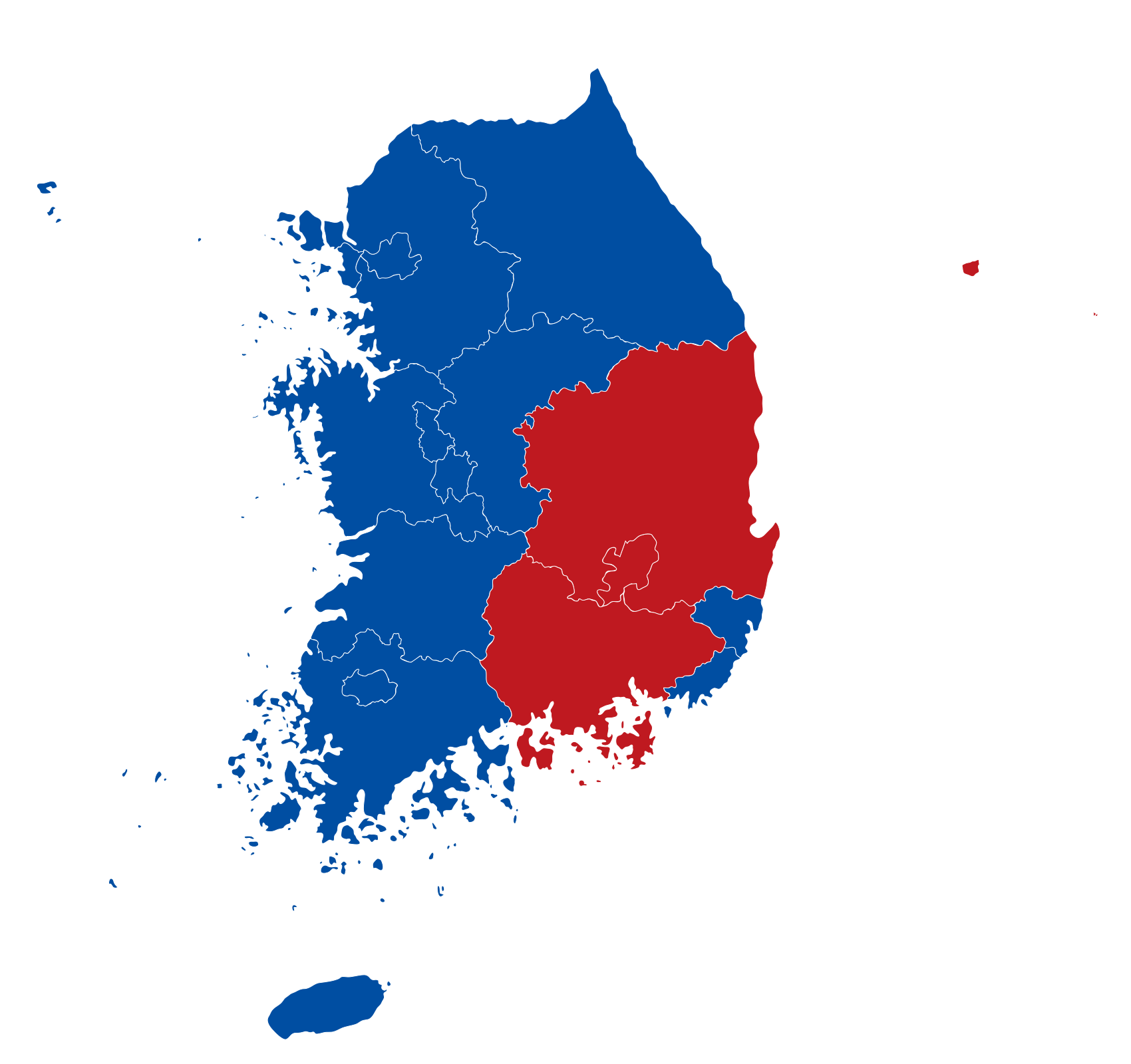
Thousands of South Korean citizens have filed constitutional complaints following a ballot paper shortage during local elections on June 3, 2024 [1].
The legal challenges seek to determine if the administrative failure constituted a violation of fundamental voting rights. Because the shortage prevented some residents from casting their votes, the cases question whether the election process remained fair and constitutional.
Residents of Jamsil-7-dong in Seoul were among those affected by the shortage. This incident prompted voters to seek recourse through both the court system and the Constitutional Court to address the perceived infringement of their suffrage [2].
Shin Gwi-hye of YTN News said the legal actions are split by objective. While the courts are asked to determine if the election itself remains valid, the Constitutional Court is asked to evaluate whether basic rights were violated during the process [2].
A total of four constitutional complaints have been filed with the Constitutional Court [1]. Three of these complaints were filed by individual citizens [1]. The fourth complaint represents a larger group of approximately 30,000 people, including the residents of Jamsil-7-dong [1].
"The courts are asked if the election itself is valid, and the Constitutional Court is asked to examine if there was a violation of basic rights in the process of the election," Shin said [2].
The scale of the fourth complaint highlights the intensity of the grievance among the Jamsil-7-dong community. The residents argue that the lack of materials did not merely cause a delay, but actively stripped them of their constitutional right to participate in the democratic process [2].
“A total of four constitutional complaints have been filed with the Constitutional Court.”
This legal battle centers on the distinction between administrative error and constitutional violation. If the Constitutional Court rules that a shortage of physical materials constitutes a breach of fundamental rights, it could set a precedent requiring stricter safeguards for election logistics to prevent future disenfranchisement.


