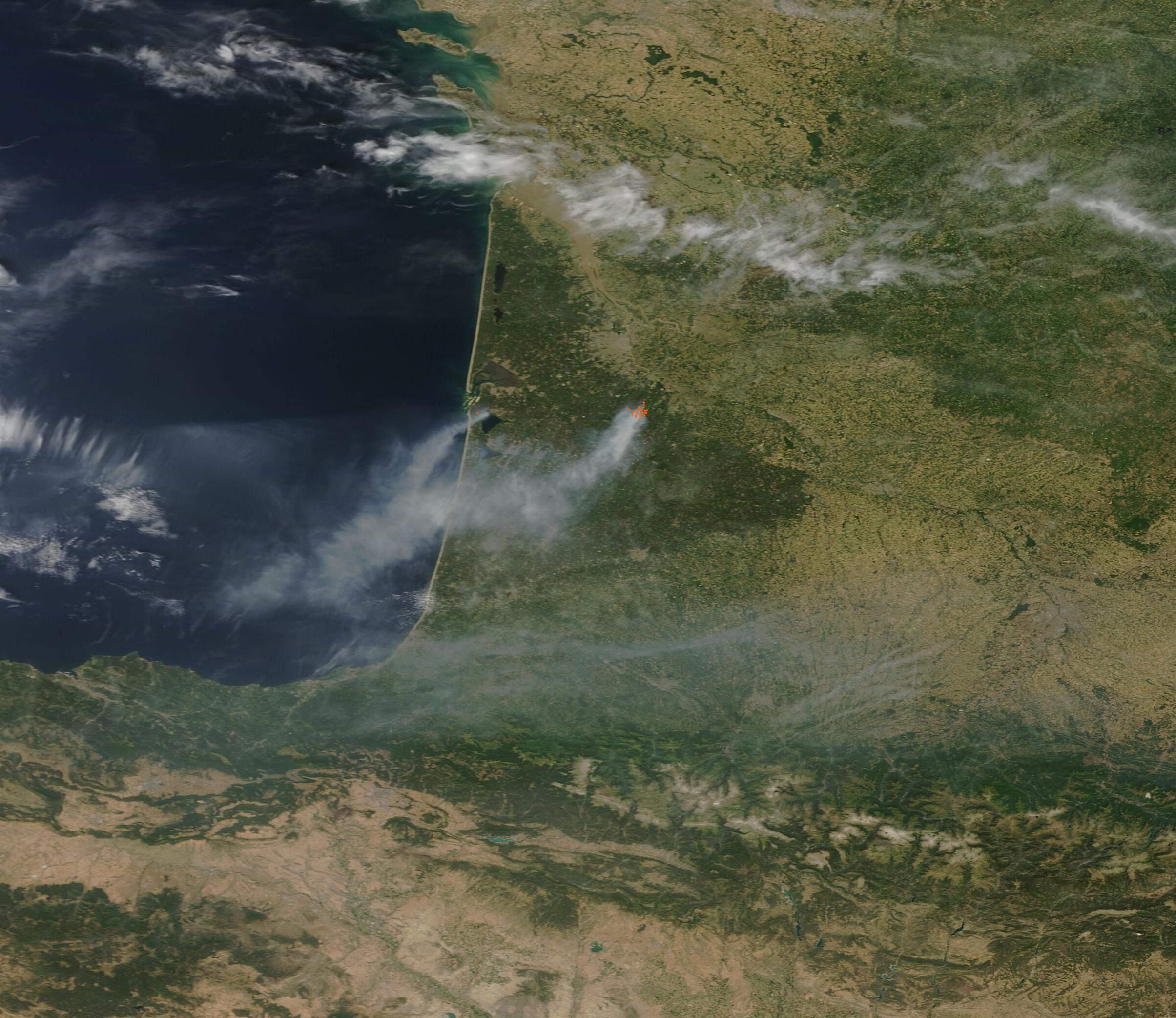
Wildfires in central Spain and southwestern France have killed at least 12 people and displaced approximately 330,000 residents [3, 4].
The scale of the destruction highlights the increasing vulnerability of Southern Europe to extreme weather. These blazes have disrupted major international events and forced mass evacuations across two nations.
In Spain, fires ravaged the province of Almería, specifically the Los Gallardos area. Reports on the death toll in that region vary between 11 [5] and 12 [4] people. The fires in Spain burned an estimated 77,000 hectares [1].
Across the border in France, the Gironde department faced similar devastation. Firefighters worked to contain blazes that burned 42,000 hectares [1]. The impact reached the Tour de France, where officials closed the third stage to the public on July 5 [6] due to the proximity of the fires.
Officials said the rapid spread of the flames was due to a severe heat wave and prolonged dry conditions [7, 8]. These factors created an environment where vegetation became highly combustible, allowing small ignitions to grow into uncontrollable forest fires.
Emergency services in both countries managed the displacement of roughly 330,000 people [3] as flames threatened residential areas. The combined loss of over 119,000 hectares of land represents a significant ecological and economic blow to the region's agricultural and natural landscapes.
“Wildfires in central Spain and southwestern France have killed at least 12 people”
The simultaneous occurrence of devastating fires in Spain and France suggests a regional climate pattern rather than isolated accidents. The displacement of over 300,000 people and the necessity of closing a Tour de France stage indicate that current emergency infrastructure is struggling to keep pace with the intensity of modern heat waves in Southern Europe.

