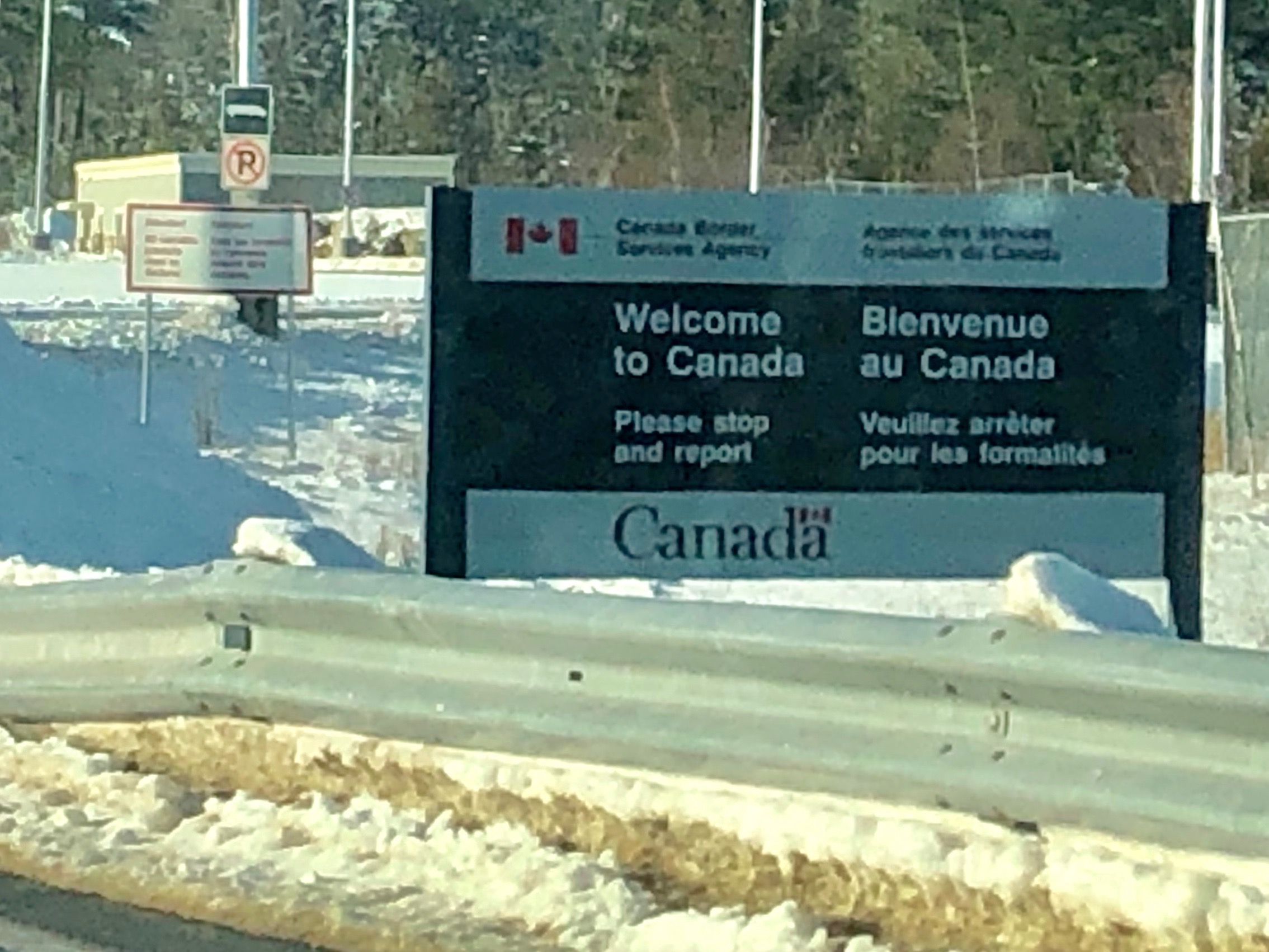
U.S. President Donald Trump suggested Monday that the United States could impose tariffs on Canada due to damage caused by drifting wildfire smoke [1].
The proposal marks a significant escalation in cross-border tensions, potentially linking environmental phenomena to trade penalties and economic sanctions.
Speaking at Joint Base Andrews in Maryland, Trump said, "We’re going to look at tariffs on Canadian goods because the smoke has unnecessarily invaded our country" [1]. He said that Canadian wildfires are causing unnecessary smoke damage to the U.S., and that Canada should be held financially liable [1].
Ontario Premier Doug Ford responded during a press conference in Ontario on July 20, 2026 [1]. Ford said he rejected the suggestion that Canada should pay for the environmental impact of the fires.
"Canada will not be paying for smoke that drifts across the border; this is nonsense," Ford said [1].
Environmental experts have challenged the premise of the president's claim. Dr. Jane Smith, a B.C. ecologist, said that wildfire smoke routinely crosses the border in both directions, making the act of blaming Canada alone scientifically inaccurate [1].
The dispute centers on whether a natural disaster can be treated as a trade violation. While Trump views the smoke as an invasion of U.S. airspace, Canadian officials and scientists describe the movement of smoke as a natural cross-border phenomenon that is not a matter for payment [1].
“"We’re going to look at tariffs on Canadian goods because the smoke has unnecessarily invaded our country."”
This dispute signals a shift toward treating environmental externalities as trade leverage. By framing natural disaster effects as actionable damages, the U.S. administration is expanding the scope of its tariff strategy beyond traditional trade deficits and industrial policy into the realm of climate-driven events.


