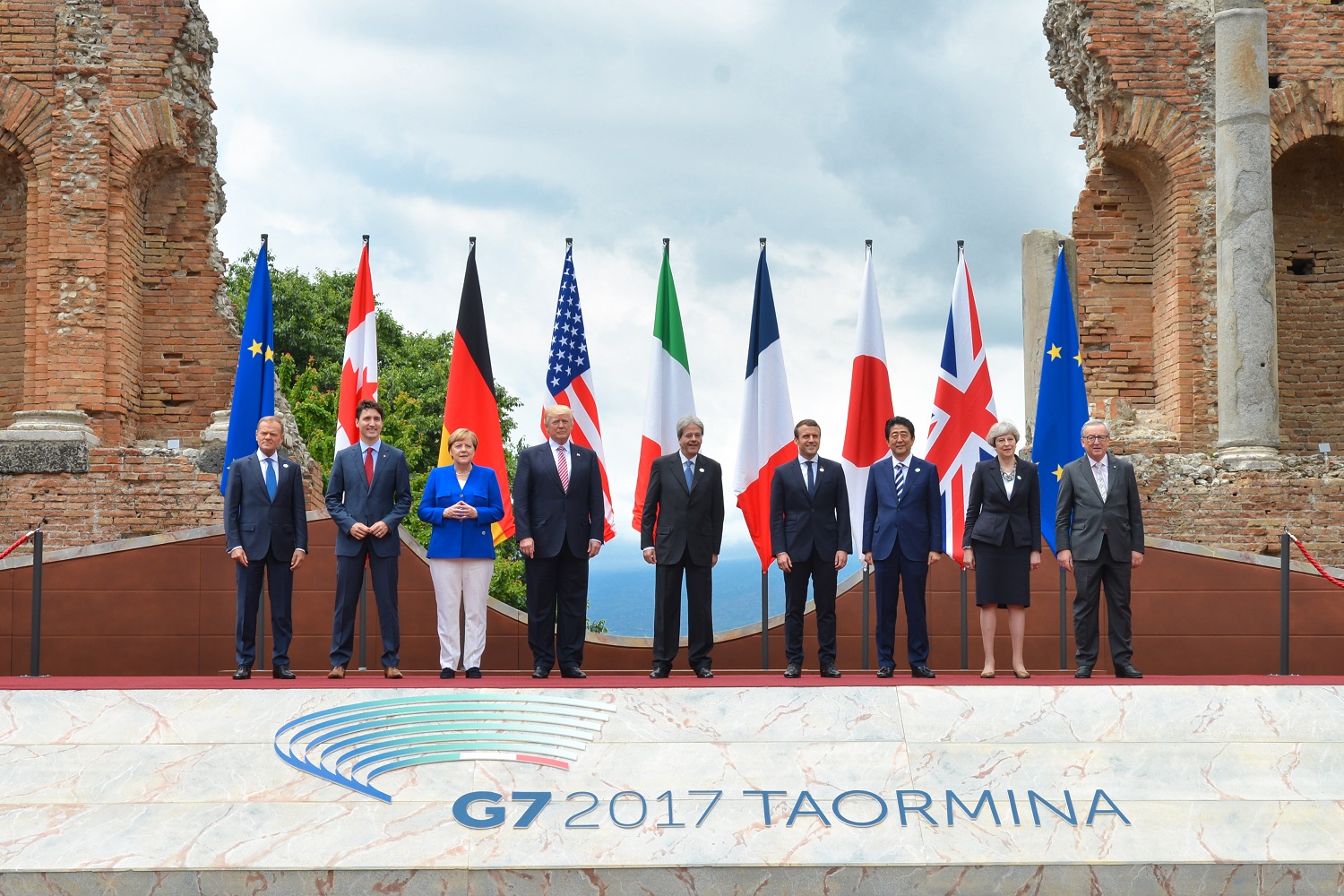
U.S. President Donald Trump and Italian Prime Minister Giorgia Meloni are engaged in an escalating public feud over a disputed photograph [1].
The dispute threatens the diplomatic rapport between the two right-wing leaders, as the disagreement shifted from a personal slight to a public exchange of insults regarding political standing.
The tension intensified over two consecutive days [2] following a meeting at the G7 summit in Italy [3]. The conflict began when Trump alleged that the Italian leader sought a photo opportunity with him. "She begged me to take a picture with her," Trump said [1].
Meloni denied the claim and said the remarks were "senseless, constant, unprovoked attacks" [3]. The Italian Prime Minister rejected the narrative that she had pursued the U.S. president for a photograph, framing the accusation as an unfounded strike against her leadership.
As the spat escalated on Sunday, Meloni shifted her focus toward the U.S. president's domestic standing. She said the press that Trump should "focus on his own popularity" [4]. This response marked a sharp departure from the usual diplomatic decorum maintained between the two heads of state.
The friction has already led to tangible diplomatic fallout. Italy canceled a scheduled visit from a U.S. envoy after Meloni said she was stunned by the remarks [3]. The exchange highlights a volatile period in the bilateral relationship, characterized by public contradictions, and personal grievances rather than policy disputes.
Reports on the matter continued through Monday, June 22, 2026 [1], as both administrations faced questions about the stability of the U.S.-Italy partnership. While both leaders have historically shared ideological similarities, the current row over a social interaction at the G7 has created a visible rift in their professional alliance.
“"She begged me to take a picture with her."”
This conflict signals a potential breakdown in the personal chemistry between two of the West's most prominent right-wing leaders. When diplomatic relations are based on ideological alignment and personal rapport rather than institutional treaties, personal slights can lead to immediate policy consequences, such as the cancellation of envoy visits.


