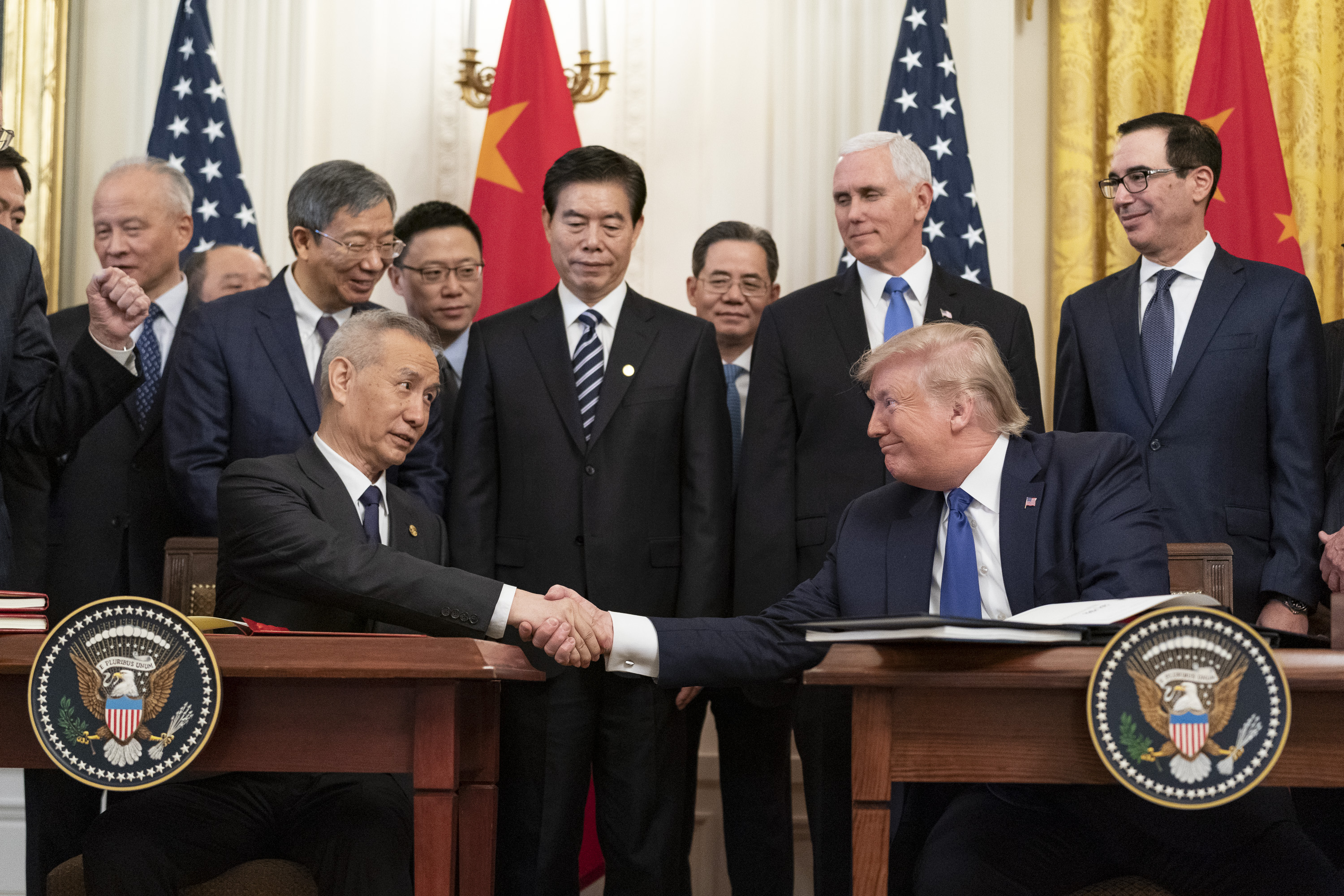
President Donald Trump and Iranian officials signed a memorandum of understanding on Wednesday to end the war and lift the U.S. naval blockade [1].
The agreement represents a significant shift in geopolitical tensions, aiming to stabilize global energy markets by reopening the strategic Strait of Hormuz [2].
The 14-point memorandum of understanding outlines a framework to ease sanctions, and facilitate the reconstruction of Iran [3]. As part of the deal, a reconstruction plan valued at $300 billion will be provided to Iran [4].
Reports indicate the signing ceremony took place at Versailles Palace, though some sources did not specify the exact location [3, 5]. The agreement focuses on ending active hostilities and restoring maritime access to one of the world's most critical oil transit chokepoints [2].
President Trump said the memorandum was defended amid criticism regarding the terms of the deal [6]. The agreement seeks to resolve the conflict through a combination of financial investment and the removal of military barriers [4].
By lifting the naval blockade, the U.S. intends to normalize shipping lanes and reduce the risk of further escalation in the region [2]. The memorandum serves as an initial step toward a broader peace process between Washington and Tehran [2].
“The agreement represents a significant shift in geopolitical tensions.”
The reopening of the Strait of Hormuz and the provision of massive reconstruction funds signal a pivot toward economic engagement over military containment. If successfully implemented, this deal could lower global oil price volatility and fundamentally alter the security architecture of the Middle East.


