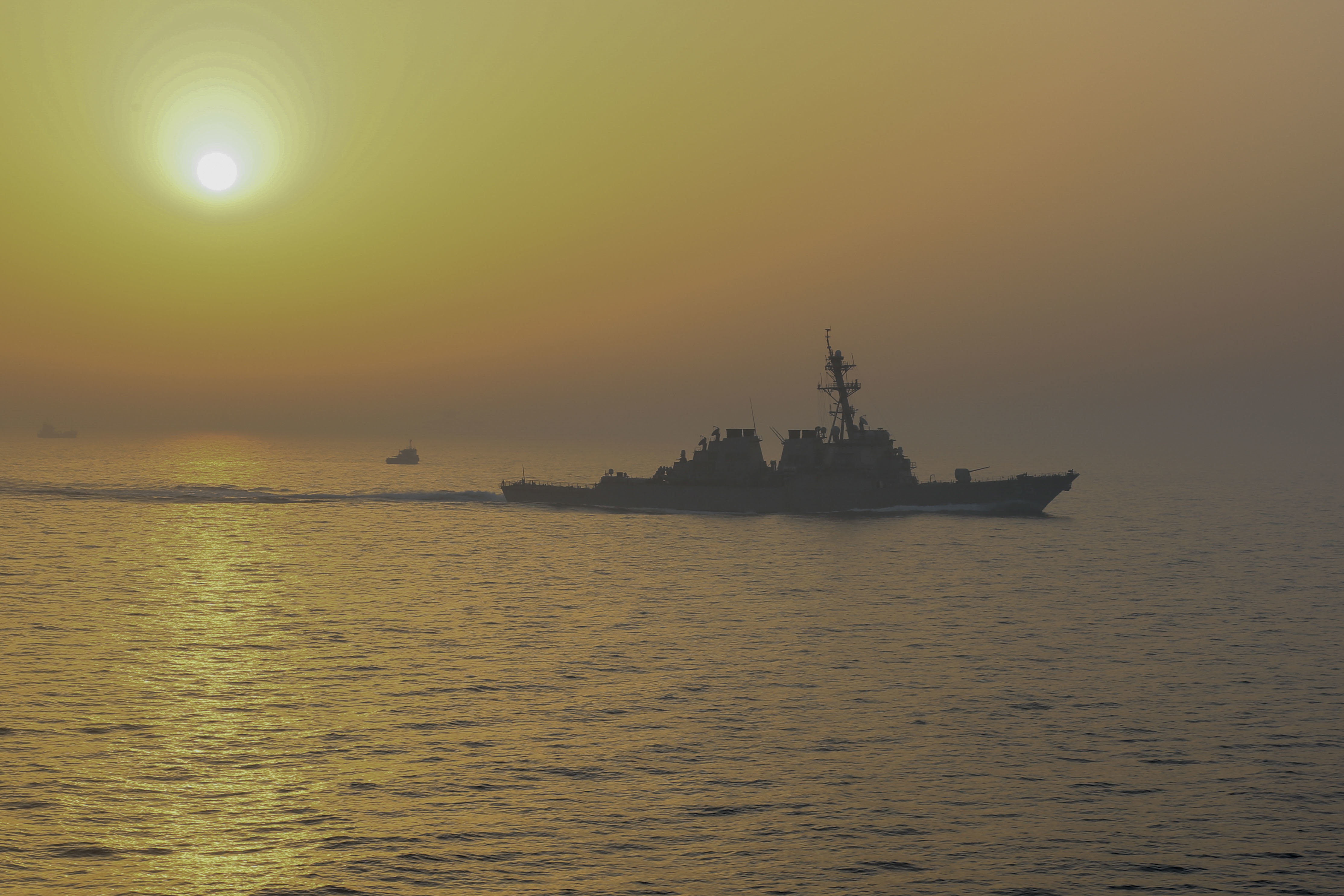
The U.S. military launched additional airstrikes against Iranian targets in the Strait of Hormuz region this weekend following an attack on a container ship.
This escalation threatens one of the world's most critical oil transit chokepoints. The volatility in the region risks disrupting global energy markets and expanding a localized military confrontation into a broader regional conflict.
U.S. forces carried out the operations after Iran fired projectiles at military sites, including targets on Qeshm Island. The U.S. military said it launched strikes to deter further aggression. Overnight operations targeted approximately 140 Iranian sites [1].
Iran's governor of Qeshm Island reported the projectile attacks on military targets, though officials said there were no casualties [2]. The strikes follow a pattern of increasing tension in the Strait of Hormuz, triggered by the initial Iranian attack on a commercial container ship.
Reports on the aftermath of the U.S. strikes vary. Some reports indicate Iran responded with attacks on Bahrain, Kuwait, Qatar, Jordan, and Oman [3]. Other reports focus on the initial projectile fire at military targets without mentioning further regional retaliation [2].
In the United Arab Emirates, authorities warned the public of incoming missile and drone attacks. Explosions were also heard in Qatar during the period of escalation [4]. The U.S. military continues to maintain a presence in the region to secure maritime lanes.
“The U.S. military said it launched strikes to deter further aggression.”
The scale of the U.S. response—targeting over 100 sites—indicates a shift from tactical defense to a broader strategy of degradation against Iranian capabilities in the Strait of Hormuz. Because the region is vital for global oil shipments, any sustained conflict here could trigger immediate spikes in energy prices and force international shipping companies to reroute, increasing global inflation.


