
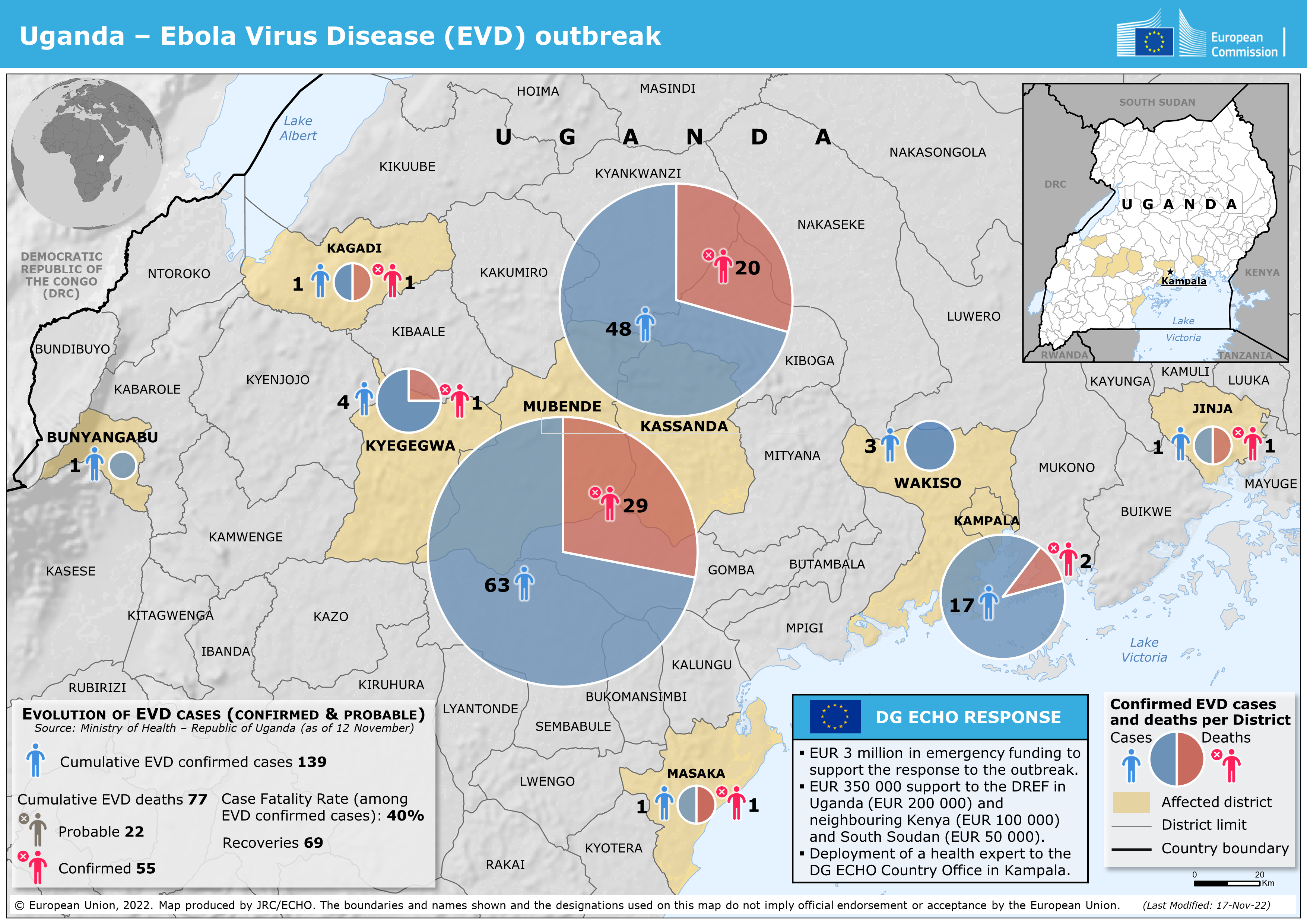
The World Health Organization declared the Ebola outbreak in the Democratic Republic of the Congo and Uganda a Public Health Emergency of International Concern this month [1, 2].
The declaration signals a critical need for coordinated international resources to contain the rare Bundibugyo strain before it spreads further across Central Africa. While the emergency status triggers global alerts, the WHO said that the situation is not a pandemic emergency [3, 4].
Director-General Tedros Adhanom Ghebreyesus said that risks from the Ebola outbreak in Congo and Uganda are high at the national and regional levels, and low at the global level [1]. The agency said that the outbreak does not meet the criteria for a pandemic [4].
Health officials are monitoring a significant number of infections. Reports on the toll vary, with some sources citing more than 250 suspected cases [2]. Death tolls have been reported as at least 80 [2], though other reports indicate nearly 90 deaths [2]. A separate report from the Africa CDC cited 33 cases [5].
Ebola is a rare but severe illness that causes hemorrhagic fever. The current outbreak involves the Bundibugyo strain, which poses a specific threat to the regional population due to its virulence and the potential for rapid local transmission.
WHO spokespeople said the emergency designation is a tool to mobilize funding and technical support, not an indication of a worldwide threat [3]. The organization continues to work with local governments to implement containment strategies and monitor cross-border movement between the Congo and Uganda.
“Risks from the Ebola outbreak in Congo and Uganda are high at the national and regional levels, and low at the global level.”
The distinction between a Public Health Emergency of International Concern (PHEIC) and a pandemic is critical for global markets and travel. By labeling this a regional emergency rather than a pandemic, the WHO is attempting to prevent global panic and unnecessary economic disruption while still securing the legal and financial mechanisms required to stop the virus within the affected borders of the Congo and Uganda.


