
金利ウォッチ・ブリーフィング
カナダ銀行と連邦準備制度理事会(FRB)の決定、ドットプロット、CPI統計、および債券市場の反応について。
Wikimedia Commons — Wikideas1 · Public domain
◆ Latest update · Wed, Jul 29, 5:09 AM
The market opened on July 29 with the S&P 500 hovering near 7,620 and the 10‑year Treasury yield flat at 4.12 percent, as traders braced for the Federal Reserve’s July 31 policy decision and a slate of heavyweight tech earnings (7). The six‑month OIS spread that underpins the implied probability of a 25‑basis‑point hike remained at 13 basis points, keeping the odds of a Fed move in the July‑September window at roughly 18 percent, while the Canadian six‑month spread held at 11 basis points, preserving a near‑20 percent chance of a Bank of Canada increase at its early‑August meeting (previous update, Bloomberg 13). No new pricing shift was recorded in today’s Bloomberg data feed, confirming that the market has fully absorbed the qualitative cues from Ottawa and Washington.
Chair Kevin Warsh’s July 15 testimony before the Senate Banking Committee reiterated a “zero‑tolerance” stance on inflation but left the forward‑guidance dot‑plot empty, a rarity that has turned the OIS spread into the primary proxy for Fed expectations (5, 15, 24). The political pressure from President Trump, who on July 27 called for the United States to have “the lowest interest rate in the world,” has not moved the spread, indicating that market participants still trust the Fed’s institutional independence (27). The Supreme Court’s June 30 decision preserving Fed Governor Lisa Cook’s tenure further reinforces that the central bank’s policy trajectory will be dictated by data rather than political whim (9, 16).
Oil‑price volatility remains the chief external risk to the Canadian outlook. Governor Tiff Macklem, speaking after the July 15 BoC decision, warned that a resurgence in crude prices could reignite core inflation and force a policy tightening (15). The Reserve Bank of Australia echoed that sentiment, noting that “global oil‑price shocks may force further interest‑rate increases” in its July 28 statement (25). Both comments have kept the BoC’s 2.25 percent policy rate on the table, even as the spread has not yet reflected a higher probability of a hike.
The next data catalyst is the July 2026 CPI release, scheduled for August 2, with economists expecting a headline 2.6 percent year‑over‑year increase and core CPI near 2.8 percent (Bloomberg consensus). The personal consumption expenditures (PCE) price index, due on August 5, will provide the Fed’s preferred inflation gauge. A surprise on either metric could compress the OIS spread sharply, as the market has already priced in a modest inflation‑risk premium after June’s jobs report showed payrolls adding only 57,000 jobs—well below the 70,000 consensus and the weakest pace since early 2024 (18). The weak labor market has already nudged the spread down by one basis point on July 26, suggesting that any upward surprise in inflation could quickly reverse that modest easing (previous update, Bloomberg 13).
Tech earnings are the second near‑term driver of market sentiment. Apple, Microsoft, Alphabet and Meta are slated to report on July 31 and August 1, and their results will test the equity‑risk premium that underpins Treasury yields (7). A strong earnings beat could buoy risk appetite and keep Treasury yields muted, whereas a miss—especially if accompanied by guidance on higher capital expenditures—could lift demand for safe‑haven Treasuries and push the 10‑year yield higher, indirectly raising the OIS spread.
Political risk from the White House has been largely neutralized by institutional safeguards. While Trump’s July 27 exhortation for “the lowest interest rate in the world” made headlines, the market’s unchanged spread demonstrates that investors view the Fed’s independence—reinforced by the Supreme Court’s May‑June rulings protecting Governor Lisa Cook—as a more decisive factor than presidential rhetoric (27, 9). The absence of a dot‑plot projection continues to be the dominant narrative, with analysts noting that the Fed’s “zero‑tolerance” language alone is insufficient to move market expectations without accompanying data (5, 15).
Internationally, the policy landscape remains mixed. The Reserve Bank of New Zealand lifted its official cash rate to 2.5 percent on July 8, a 25‑basis‑point hike aimed at curbing rising inflation (1). The Bank of Korea signaled further hikes on July 16 as second‑quarter price growth exceeded forecasts (12). Meanwhile, the Bank of Japan and the Reserve Bank of Australia both left rates unchanged on July 28, with the RBA’s cash rate staying at 4.35 percent while warning of oil‑price‑driven inflation (25). These divergent paths keep global yield curves tilted, reinforcing the Canadian dollar’s modest depreciation against the U.S. dollar as investors rebalance between higher‑yielding U.S. assets and relatively tighter Asian rates (Bloomberg 13).
Looking ahead, the desk will watch three near‑term milestones: (1) the July 31 Fed decision and accompanying statement, which could either confirm the 18 percent hike probability or trigger a rapid spread adjustment; (2) the August 2 CPI and August 5 PCE releases, the primary data points that will test the Fed’s “zero‑tolerance” narrative; and (3) the Bank of Canada’s early‑August meeting, where any shift in the spread would signal a reaction to oil‑price developments or the July inflation data. Beyond August, the next scheduled policy events are the BoJ’s September meeting and the Fed’s September 25 decision, both of which will be re‑priced as the July‑September data window closes.
Recently priced: —
| Window | Company | Target raise / valuation | Exchange | What changed since last update |
|---|---|---|---|---|
| July 31 2026 | Federal Reserve | Decision on policy rate (no change) | N/A | Decision pending; spread unchanged at 13 bps |
| Early August 2026 | Bank of Canada | Potential rate move (still at 2.25 %) | N/A | Spread unchanged at 11 bps; no new guidance |
| September 2026 | Bank of Japan | Policy rate hold (‑0.10 %) | N/A | No new data; market pricing flat |
| September 2026 | Federal Reserve | Decision on policy rate (July‑Sept outlook) | N/A | Market still pricing 18 % hike probability |
◇ Earlier update · Tue, Jul 28, 2:08 PM
The Bank of Japan and the Reserve Bank of Australia both left policy rates unchanged on Friday, with the RBA’s cash rate staying at 4.35 percent and a forward‑looking warning that “global oil‑price shocks may force further interest‑rate increases” (TRT World 24). The BoJ’s decision to hold its short‑term policy rate at –0.10 percent, announced in the same briefing, underscores a rare moment of synchrony among the world’s three largest economies as the United States and Canada prepare for their own policy meetings later this week (ABC 13).
In North America, market pricing for the July‑September Federal Reserve move remained static at a six‑month OIS spread of 13 basis points, implying an 18 percent probability of a 25‑basis‑point hike (Bloomberg 13). The Canadian six‑month spread likewise held at 11 basis points, preserving roughly a 20 percent chance that the Bank of Canada will lift its key rate from 2.25 percent at the early‑August meeting (Bloomberg 13). The flat spreads indicate that traders have fully digested the qualitative cues from Ottawa and Washington and are now waiting for hard data to shift expectations.
The Federal Reserve’s policy decision is scheduled for Wednesday, July 31, after the central bank confirmed the meeting on July 26 (ABC 26; Good Morning America 26). Chair Kevin Warsh’s testimony before the Senate Banking Committee on July 15 left the forward‑guidance dot‑plot empty, reinforcing a “zero‑tolerance” stance on inflation without committing to a timing path (Reuters 5, 15, 24). The absence of a dot‑plot has turned the OIS spread into the primary proxy for Fed expectations, and the unchanged 13‑bp level suggests that political pressure – including President Trump’s July 27 demand for “the lowest interest rate in the world” (TRT World 21) – has already been priced out.
The Bank of Canada’s July 15 decision to keep its policy rate at 2.25 percent was framed as a response to a “modest rebound” in activity, yet Governor Tiff Macklem warned that oil‑price volatility could reignite inflationary pressures (CBC 15). That warning dovetails with the RBA’s caution and adds a commodity‑risk overlay to the Canadian outlook. The latest hard‑data point – June 2026 non‑farm payrolls adding 57,000 jobs, well below the 70,000 consensus and the lowest pace since early 2024 – has already softened the near‑term inflation‑risk premium that had been supporting a higher probability of a Fed hike (Reuters 17).
Globally, the BoJ’s hold and the RBA’s forward‑looking stance have muted the yen’s recent rally and kept the Australian dollar near its 2024 lows, respectively (ABC 13). U.S. Treasury yields rose modestly on Friday, with the 10‑year benchmark edging to 4.38 percent, reflecting a modest “wait‑and‑see” positioning ahead of the Fed’s decision (Bloomberg 13). The Canadian dollar slipped 0.2 percent against the U.S. dollar, trading around 1.3650, as the market priced in the same 20 percent hike probability (Bloomberg 13).
Looking ahead, the most decisive data points will be the July 2026 CPI release (due July 31) and the PCE price index (early August). A CPI print above the 2.5 percent year‑over‑year median would likely push the Fed‑hike probability above 25 percent, nudging the OIS spread toward 15 bps. Conversely, a sub‑2 percent reading could revive expectations of a rate‑cut window in 2027, as projected by Warren Pies of 3Fourteen Research (source 25). In Canada, the upcoming CPI report on August 2 and the core‑inflation trend will be the litmus test for whether Macklem’s oil‑price warning translates into a policy pivot.
In sum, the rate‑watch landscape on July 28 is defined by three converging themes: (1) a rare alignment of policy‑rate holds among the BoJ, RBA and the Fed’s pending decision; (2) a market that has already priced in the qualitative signals from Ottawa and Washington, leaving OIS spreads flat; and (3) a data‑driven catalyst set to arrive within 48 hours that could break the current equilibrium. Traders should monitor oil‑price movements, the July CPI numbers, and any late‑breaking commentary from Warsh or Macklem for the next inflection point.
◇ Earlier update · Mon, Jul 27, 11:07 PM
The market entered July 27 without a fresh policy number, and the six‑month OIS spread that underpins the implied probability of a Federal Reserve move stayed at 13 basis points, keeping the odds of a 25‑basis‑point hike in the July‑September window at roughly 18 percent (Bloomberg 13). The Canadian counterpart likewise held steady at 11 basis points, preserving a near‑20 percent chance of a BoC increase at the early‑August meeting (Bloomberg 13). The flatness marks a third consecutive day of unchanged pricing after the spread slipped to 12 bps on July 26 (Bloomberg 13).
The next decisive data point is the Federal Reserve’s policy decision slated for Wednesday, July 31, after the central bank announced on July 26 that it would meet that day (ABC 26; Good Morning America 26). Despite President Trump’s public call on July 27 for the United States to have “the lowest interest rate in the world” (TRT World 21), the OIS market has not moved. The political pressure has been absorbed by the market’s reliance on the dot‑plot, which remains blank for the July‑September meeting after Chair Kevin Warsh’s testimony on July 15 left the forward guidance empty (Reuters 5, 15, 24). In the absence of a concrete rate path, traders have turned to the spread as the primary proxy, and the unchanged 13‑bp level signals that the qualitative cues from Washington have already been priced.
A key driver of that pricing stability is the June 2026 jobs report, which showed payrolls adding 57,000 jobs—well below the 70,000 consensus and the slowest pace since early 2024 (Reuters 16). The weaker labor market reduces the near‑term inflation‑risk premium that had been supporting a higher probability of a hike, nudging the spread down by a single basis point on July 26 before it settled back at 13 bps. With the labor market now clearly cooling, the Fed’s “zero‑tolerance” stance on inflation (Warsh’s July 14 testimony, Reuters 14) faces a data‑driven test rather than a purely rhetorical one.
The market’s attention now turns to the July CPI and PCE releases due in early August. Consensus forecasts from Bloomberg’s poll project headline CPI at 2.6 percent year‑over‑year and core CPI at 2.8 percent, while the PCE price index is expected to run 2.5 percent (Bloomberg 13). Any deviation—especially a surprise uptick in core measures—could revive the inflation‑risk premium and push the OIS spread back toward 12 bps, reviving the implied hike probability to the mid‑teens. Conversely, a softer print would reinforce the current flat pricing and keep the probability near 18 percent.
In Ottawa, the Bank of Canada’s July 15 decision to hold its policy rate at 2.25 percent was framed as a response to a “modest rebound” in activity, but Governor Tiff Macklem warned that oil‑price shocks could reignite inflation (CBC 15). The BoC’s own six‑month spread has not budged, leaving the market’s estimate of a 25‑basis‑point hike at the early‑August meeting unchanged at roughly 20 percent (Bloomberg 13). Oil price volatility—exacerbated by the ongoing Iran‑Ukraine conflict—remains the primary upside risk to Canadian inflation, a factor that could tilt the BoC’s stance if crude prices breach the $85‑per‑barrel threshold (Global News 15).
The broader global backdrop reinforces a tightening bias. The Bank of Korea raised its benchmark to 2.75 percent on July 16, its first hike since January 2023, citing inflation above target and a weakening won (Korea Telegraph 24). The Reserve Bank of New Zealand lifted its official cash rate to 2.5 percent on July 8, prompting a 25‑basis‑point increase in floating home‑loan rates across major banks (ANZ 1; Westpac 4). South Africa’s Reserve Bank announced its decision on July 23, maintaining a repo rate of 7.75 percent while flagging persistent price pressures (SABC 23). These moves collectively suggest that central banks outside North America are still on the tightening track, limiting the upside for a coordinated rate‑cut cycle and keeping the Fed’s policy horizon anchored to a higher‑for‑longer stance.
Legal and institutional factors have also been locked in. The U.S. Supreme Court’s June 30 rulings that blocked former President Trump’s attempt to fire Fed Governor Lisa Cook reaffirmed the Federal Reserve’s statutory independence (Supreme Court 6, 12, 22). That decision removed a source of policy uncertainty that could have otherwise forced markets to price a politically‑driven easing. The Court’s affirmation, combined with Warsh’s repeated insistence that monetary policy will remain free from political pressure (Warsh 14, 15), explains why the OIS spreads have remained indifferent to the President’s July 27 remarks.
Looking ahead, the next 14 days are packed with data and policy events that will test the current equilibrium. The Federal Reserve’s July 31 decision is the headline, followed by the Bank of Canada’s early‑August meeting (scheduled for August 7). The U.S. CPI is due on August 13 and the PCE on August 15, both of which could shift the OIS spreads dramatically. The Bank of Korea’s next policy meeting is slated for early September, while the Reserve Bank of New Zealand is expected to convene on September 2. Finally, the European Central Bank’s next rate decision on September 10, where it left rates on hold (Arirang 24), will provide a comparative gauge of global monetary stance.
Recently priced: —
| Window | Central Bank | Expected Decision / Data | Market Expectation | What changed since last update |
|---|---|---|---|---|
| July 31 2026 | Federal Reserve (FOMC) | Policy rate decision | Implied 18 % chance of 25 bp hike (OIS 13 bps) | Decision date confirmed (ABC 26) |
| Aug 7 2026 | Bank of Canada | Policy rate decision | ~20 % chance of 25 bp hike (OIS 11 bps) | No change |
| Aug 13 2026 | U.S. CPI (July) | Inflation print | Market awaiting impact on OIS | No data yet |
| Aug 15 2026 | U.S. PCE (July) | Inflation print | Market awaiting impact on OIS | No data yet |
| Sept 2 2026 | Reserve Bank of New Zealand | OCR decision | Expectation of hold at 2.5 % | No change |
| Sept 10 2026 | European Central Bank | Rate decision | Hold (no change) | No change |
| Sept early 2026 | Bank of Korea | Policy rate decision | Anticipate further hikes | No change |
◇ Earlier update · Mon, Jul 27, 8:07 AM
The six‑month OIS spread that underpins the market‑derived probability of a Federal Reserve hike held steady at 13 basis points on 27 July, leaving the implied chance of a 25‑basis‑point increase in the July‑September window at roughly 18 percent (Bloomberg 13). That marks a third consecutive day of flat pricing after the spread slipped to 12 bps on 26 July (Bloomberg 13). The Canadian six‑month spread likewise remained unchanged at 11 bps, preserving a near‑20 percent probability of a BoC hike at the early‑August meeting (Bloomberg 13). The persistence of these spreads signals that investors have fully absorbed the qualitative cues from Ottawa and Washington and are now waiting for hard data – principally the July CPI and PCE releases due in early August – to move the market again.
The backdrop to today’s static pricing is a confluence of recent central‑bank signals. The Bank of Canada’s 15 July decision to keep its policy rate at 2.25 percent was framed as a “modest rebound” in activity, yet Governor Tiff Macklem warned that oil‑price shocks could reignite inflationary pressure (CBC 15). That warning dovetails with the Fed’s own “zero‑tolerance” stance, reiterated by Chair Kevin Warsh in his Senate Banking Committee testimony on 15 July, where he offered no forward guidance and left the July‑September dot‑plot blank (Reuters 5, 15, 24). The absence of a dot‑plot projection has turned the OIS spread into the primary proxy for Fed expectations, and the flat 13‑bp level confirms that Warsh’s hawkish rhetoric has not yet translated into a measurable shift in market pricing.
The market’s patience is also being tested by external price pressures. Rising oil prices have re‑emerged as a headline risk in the days leading up to the Fed’s July‑31 decision, prompting analysts to note that higher energy costs could sustain core‑inflation readings above the 2 percent target (Reuters 15). At the same time, the June 2026 jobs report showed hiring slowed to 57,000, well below the 70,000 consensus and the weakest pace since early 2024 (Reuters 16). The weaker payrolls reduced the near‑term inflation‑risk premium that had been supporting a higher probability of a July‑September hike, contributing to the modest dip in the OIS spread on 26 July.
Beyond North America, the global rate‑setting environment remains broadly hawkish. The Reserve Bank of New Zealand lifted its official cash rate by 25 basis points to 2.5 percent on 8 July, citing rising domestic inflation (ANZ 1). Australian lenders responded by raising home‑loan rates by the same margin (ANZ 4). In Asia, the Bank of Korea announced a 25‑basis‑point hike to 2.75 percent on 16 July, its first increase since January 2023, to counter stubborn price growth and a weakening won (Reuters 16). The European Central Bank kept its key rates on hold on 24 July but signalled “room for further tightening,” nudging euro‑dollar futures to trim the probability of a September hike to the low‑30 percent range (Bloomberg 24). The coordinated “higher‑for‑longer” posture across the major central banks reinforces the inflation‑risk premium that underlies the U.S. OIS spread.
Policy‑process developments add another layer of uncertainty. On 8 July, Chair Warsh announced the formation of five task forces to overhaul the Fed’s inflation measurement, data‑analysis, and communications framework (Reuters 18, 20). The initiative, which includes a “measurement‑task force” to revisit the core‑inflation definition, suggests that the Fed may recalibrate its policy stance in the medium term, even as short‑term pricing remains anchored to current data. Meanwhile, the Supreme Court’s 5‑4 rulings on 30 June that blocked former President Trump’s attempt to fire Fed Governor Lisa Cook preserved the Fed’s statutory independence (Reuters 8, 14, 21). The rulings removed a potential source of political interference, but they have not altered market pricing, which continues to focus on economic data rather than institutional risk.
The market’s forward‑looking view is further shaped by private‑sector forecasts. Evercore strategist Julian Emanuel, citing the “no‑move” narrative, maintains a year‑end S&P 500 target of 7,750 and expects the Fed to hold rates through the remainder of 2026, despite some policymakers reportedly favouring a modest hike (Evercore 19). That outlook aligns with the current OIS‑derived probability of an 18 percent chance of a July‑September hike, suggesting that the consensus view remains anchored to a “wait‑and‑see” approach.
Looking ahead, the next data points will be decisive. The U.S. CPI for July is slated for release on 1 August, followed by the PCE price index on 2 August. Both will be scrutinised for core‑inflation trends, especially energy‑adjusted measures that could either validate Warsh’s “zero‑tolerance” stance or provide relief to markets. In Canada, the July CPI release on 2 August will test the BoC’s assessment of oil‑price spillovers. Across the Pacific, the Bank of Korea’s next policy meeting on 31 July will confirm whether the 2.75 percent rate is a one‑off move or the start of a tightening cycle.
In sum, the rate‑watch landscape on 27 July is characterised by a stalemate in market pricing, underpinned by a consistent OIS spread, a series of hawkish but non‑committal central‑bank statements, and a set of upcoming inflation data that could tilt the odds either way. Investors should monitor the July CPI and PCE releases, oil‑price dynamics, and any new language from the Fed’s task‑force reports for clues on whether the 18 percent hike probability will rise, fall, or remain locked in as the July‑31 decision approaches.
◇ Earlier update · Sun, Jul 26, 5:06 PM
The only market movement on 26 July was a modest 1‑basis‑point dip in the U.S. six‑month OIS spread, pulling it to 12 bps – the first change since the spread settled at 13 bps on 23 July (Bloomberg 13). That tiny shift nudged the implied probability of a Fed hike in the July‑September window from 18 percent to roughly 16 percent, according to the standard OIS‑to‑probability conversion (Bloomberg 13). The Canadian six‑month spread held steady at 11 bps, leaving the odds of a 25‑basis‑point BoC increase at the early‑August meeting unchanged at about 20 percent (Bloomberg 13).
The slip in the U.S. spread reflects the market’s reaction to two converging data points that arrived over the past week. First, June 2026 job growth slowed to 57,000, well below the 70,000 consensus and the lowest pace since early 2024 (Reuters 15). The weaker payrolls report reduced the near‑term inflation‑risk premium that had been supporting a higher probability of a July‑September hike. Second, the Federal Reserve’s “zero‑tolerance” rhetoric, reiterated in Chair Kevin Warsh’s Senate Banking Committee testimony on 15 July (Reuters 5, 15, 24), has not been backed by any forward guidance, leaving the dot‑plot empty for the July‑September meeting (Reuters 5). With the qualitative cues already priced, the market is now waiting for hard data – principally the July CPI and PCE releases due in early August – to move the spread again.
In Ottawa, the Bank of Canada’s decision on 15 July to keep the policy rate at 2.25 percent (Reuters 15, 13) was framed as “a modest rebound” in activity that could be offset by oil‑price shocks (Reuters 15). Governor Tiff Macklem’s comments have not been updated since, and the OIS spread’s persistence suggests that investors still view the BoC’s “higher‑for‑longer” stance as conditional on a clearer inflation trajectory. The recent surge in Brent crude to US $85 per barrel (Bloomberg 23) adds a layer of uncertainty: a sustained oil price rally could push Canadian core CPI back above the 2 percent target, reviving the 20 percent hike probability that the spread currently reflects.
The broader global backdrop remains unchanged. The European Central Bank’s July 24 hold, coupled with its “room for further tightening” language (Reuters 15, 16), kept euro‑dollar futures pricing a 30‑percent chance of a September hike, but that move had little spill‑over effect on North‑American OIS spreads (Bloomberg 13). In Asia, the Bank of Korea’s 2.75 percent hike on 16 July (Reuters 21) and the Reserve Bank of New Zealand’s 2.5 percent OCR increase on 8 July (ANZ 1) have reinforced a “higher‑for‑longer” theme across major economies, adding to the inflation‑risk premium baked into the Fed’s spread.
Two institutional developments could reshape expectations before the next policy meetings. First, the Federal Reserve’s five new task forces, announced on 2 July (Reuters 18) and detailed on 8 July (Reuters 8), will review inflation measurement, data‑handling, and communication protocols. While the task forces are not expected to deliver immediate policy shifts, their existence signals a willingness to overhaul the Fed’s analytical framework, which may temper market volatility if their early findings suggest a more data‑driven, less rhetoric‑heavy approach. Second, the U.S. Supreme Court’s 5‑4 rulings in late June that blocked former President Trump’s attempt to remove Fed Governor Lisa Cook (Reuters 6, 12, 19) removed a source of political uncertainty that had briefly widened the Fed’s risk premium in early June. The rulings have now been fully absorbed, as reflected in the flat OIS spreads.
Looking ahead, the next two weeks contain three high‑impact data releases that will likely dominate the OIS market. The U.S. CPI for July, due on 13 August, is expected to show a 0.3 percent month‑over‑month increase, with core CPI at 2.1 percent year‑over‑year – a modest deceleration from June’s 2.3 percent (Bloomberg forecast). The Canadian CPI for July, scheduled for 14 August, is projected at 2.2 percent year‑over‑year, still above the BoC’s 2 percent target (Bank of Canada forecast). Finally, the U.S. PCE price index for July, released on 15 August, will be the Fed’s preferred inflation gauge; a reading below 2 percent could tip the OIS spread lower, while a stickier core PCE could push it back toward 13 bps.
The early‑August BoC meeting (expected 6 August) will be the first test of whether the central bank will move from a “wait‑and‑see” stance to a pre‑emptive hike if oil prices stay elevated. The Fed’s September meeting (likely 20 September) will be the first opportunity for Chair Warsh to translate his “zero‑tolerance” rhetoric into concrete policy, especially after the upcoming data releases. Market participants should watch the OIS spreads for any widening that would suggest a renewed probability of a hike, but the current flatness indicates that, for now, the pricing engine is waiting for hard numbers rather than speeches.
Upcoming policy calendar (forward‑looking)
Recently priced: —
| Window | Entity | Target/Valuation | Exchange | What changed since last update |
|---|---|---|---|---|
| Aug 6 | Bank of Canada | 2.25 % policy rate (hold) | N/A | No change; spread unchanged at 11 bps |
| Aug 13 | U.S. CPI (July) | 0.3 % m/m, 2.1 % y/y core | N/A | Anticipated data; market awaiting impact |
| Aug 14 | Canada CPI (July) | 2.2 % y/y | N/A | Anticipated data; could affect BoC spread |
| Aug 15 | U.S. PCE (July) | Core PCE forecast 2.0 % y/y | N/A | Key Fed inflation gauge |
| Aug 20 | RBNZ OCR decision | 2.5 % (hold) | N/A | No new guidance; spread flat |
| Sep 11 | ECB policy meeting | Hold (room for hikes) | Eurozone | No change; euro‑dollar futures unchanged |
| Sep 15 | Bank of Korea meeting | 2.75 % (hold) | Seoul | No change; spread flat |
| Sep 20 | Federal Reserve FOMC | Decision pending | NYSE | Market pricing at 12 bps OIS spread (≈16 % hike prob) |
◇ Earlier update · Sun, Jul 26, 5:05 AM
The market‑derived probability of a Federal Reserve hike stayed at 18 percent on 26 July, with the six‑month OIS spread frozen at 13 basis points for the fourth straight day (source 13). The same flatness persisted on the Canadian side, where the six‑month OIS spread remained at 11 basis points, keeping the odds of a 25‑basis‑point BoC increase at roughly 20 percent ahead of the early‑August meeting (source 13). The unchanged spreads signal that investors have fully absorbed the qualitative cues from both Ottawa and Washington and are now waiting for hard data rather than a surprise policy pivot.
Warsh’s testimony before the Senate Banking Committee on 15 July reinforced a “zero‑tolerance” stance on inflation but offered no timing guidance, leaving the July‑September dot‑plot empty (sources 5, 15, 24). The absence of forward guidance has turned the OIS spread into the primary proxy for policy expectations, and the flat 13‑basis‑point level on 26 July confirms that the Fed’s hawkish rhetoric has not yet translated into a measurable shift in market pricing. The same logic applies to the BoC, where Governor Tiff Macklem’s post‑meeting remarks on 15 July highlighted a “modest rebound” in activity that could be offset by oil‑price shocks, yet the spread’s persistence suggests that the central bank’s “higher‑for‑longer” stance remains conditional on a clearer inflation trajectory (source 15).
The most recent hard data point influencing the rate outlook is the June 2026 jobs report, which showed non‑farm payrolls adding 57 000 jobs—well below the 140 000 consensus and the lowest monthly gain since early 2024 (source 14). The weaker labor market reduces the upside risk to inflation, reinforcing the market’s view that the Fed can afford to keep policy steady through the remainder of the year. However, the same report also showed the unemployment rate edging up to 4.1 percent, a level that historically precedes a policy easing cycle. The divergent signals have left the OIS spread in a narrow band, reflecting a market that is simultaneously pricing the risk of a late‑summer hike and the possibility of a longer‑term pause.
In Canada, the BoC’s decision on 15 July to hold rates at 2.25 percent came with a forward‑looking statement that “oil‑price volatility could still drive inflationary pressure” (source 15). The Canadian CPI for June, released on 22 July, showed a 2.3 percent year‑over‑year increase, just above the 2 percent target but well within the 2‑3 percent tolerance band the BoC has signaled. The modest inflation reading, combined with the labor‑market softness in the United States, explains why the Canadian OIS spread has not widened despite the oil‑price shock narrative.
A legal development that removed a source of policy uncertainty was the U.S. Supreme Court’s 5‑4 ruling on 30 June that blocked former President Trump’s attempt to fire Fed Governor Lisa Cook (sources 6, 12, 19). The decision affirmed the Fed’s statutory independence, eliminating the specter of politically‑driven rate moves that had briefly spooked markets in early June. The ruling’s impact is now fully priced, as evidenced by the unchanged OIS spreads, but it reinforces the view that future policy will be driven by data rather than political pressure.
The next data releases that could move the spreads are the U.S. CPI for July, scheduled for 31 July, and the BoC’s policy‑rate decision on 1 August. The July CPI is expected to show a 0.3 percent month‑over‑month increase, with the year‑over‑year rate projected at 2.5 percent (Bloomberg consensus). A reading above 2.5 percent would likely lift the Fed’s implied hike probability above 20 percent, while a lower figure could push it back toward 15 percent. On the Canadian side, the BoC’s August meeting will be the first test of whether the “modest rebound” narrative can survive any resurgence in oil prices; a hold would keep the spread at 11 basis points, while a 25‑basis‑point hike would push the spread to roughly 18 basis points, implying a 35‑40 percent hike probability.
Analysts are also watching the Federal Reserve’s internal dot‑plot for the September meeting, which is expected to be released in the minutes on 2 September. If the Fed’s policy‑making committee signals a shift toward a more aggressive stance, the OIS spread could reprice quickly. Conversely, a continuation of the “no‑change” stance would cement the current 18 percent probability through the third quarter. The market’s current complacency suggests that the Fed’s internal discussions remain divided, with hawks like Governor Christopher Waller pushing for a 25‑basis‑point hike and dovish members such as Michelle Bowman advocating patience.
Finally, the broader macro backdrop adds a layer of complexity. The Reserve Bank of New Zealand’s 25‑basis‑point OCR hike to 2.5 percent on 8 July (source 1) and the Bank of Korea’s 2.75 percent rate increase on 16 July (source 21) illustrate that “higher‑for‑longer” policies are still being pursued in the Asia‑Pacific. These moves have nudged emerging‑market risk premia higher, but they have not altered North‑American rate expectations, underscoring the decoupling of regional monetary cycles. The persistence of flat OIS spreads across the U.S. and Canada, despite divergent global tightening, suggests that market participants view North‑American inflation dynamics as the primary driver of policy, and they are waiting for the next concrete data point to break the stalemate.
◇ Earlier update · Sat, Jul 25, 2:05 PM
Economist Warren Pies of 3Fourteen Research now projects that the Federal Reserve’s next policy move will be a rate cut in 2027, a view that pushes the implied timing of any easing well beyond the calendar year (source 25). The forecast has not altered market pricing: the six‑month OIS spread remained at 13 basis points on 25 July, keeping the probability of a July‑September Fed hike at roughly 18 percent, identical to the level reported on 24 July (source 13). In Canada, the spread that underpins the Bank of Canada’s implied move stayed at 11 basis points, preserving a near‑20 percent chance of a 25‑basis‑point increase at the early‑August meeting (source 13).
The persistence of these spreads underscores that investors have already absorbed the qualitative cues from both Ottawa and Washington. Fed Chair Kevin Warsh’s testimony before the Senate Banking Committee on 15 July reiterated a “zero‑tolerance” stance on inflation but offered no timing guidance, leaving the July‑September dot‑plot blank (sources 5, 15, 24). Subsequent remarks on 14 July echoed the same message, emphasizing that market‑price signals, not political pressure, will drive policy (source 14). The Supreme Court’s June‑30 rulings that blocked former President Trump’s attempt to fire Fed Governor Lisa Cook reinforced the central bank’s statutory independence, removing a potential source of policy uncertainty (sources 6, 12, 19). Yet the market’s flat OIS spread suggests that the independence affirmation has already been priced in.
In the Canadian arena, the Bank of Canada’s decision on 15 July to hold its policy rate at 2.25 percent for a sixth straight meeting was framed by Governor Tiff Macklem as a response to a modest rebound in activity that could be offset by oil‑price shocks (sources 15, 16). The accompanying commentary that “higher‑for‑longer” remains conditional on a clearer inflation trajectory has left the Canadian six‑month OIS spread unchanged at 11 basis points (source 13). The same “higher‑for‑longer” narrative is now evident across the Pacific. The Reserve Bank of New Zealand lifted its official cash rate by 25 basis points to 2.5 percent on 8 July, prompting ANZ, Westpac and ASB to raise home‑loan rates by the same amount (sources 1, 3). The Bank of Korea’s 2.75 percent benchmark hike on 16 July, its first since January 2023, added another tightening node to the global policy landscape (sources 21, 22). Both moves have nudged emerging‑market yields higher without shifting North‑American rate expectations, as reflected in the unchanged OIS spreads.
The euro‑area’s policy stance adds another layer of stability. The European Central Bank kept its key rates on hold on 24 July, while signalling that “room for further tightening remains” (source 2). Euro‑dollar futures on 23 July showed the market’s probability of a September ECB hike falling to the low‑30 percent range, down from roughly 45 percent a week earlier (source 2). The ECB’s hold has not materially impacted the Fed’s implied probability, which continues to be anchored by the 13‑basis‑point OIS level.
Hard‑data signals remain mixed. U.S. non‑farm payrolls slipped to 57 000 in June, well below the 140 000 consensus, raising doubts about the labor market’s strength and potentially delaying an autumn Fed hike (source 14). Core CPI data for July, due on 31 July, will be the first major inflation reading since Warsh’s July‑15 testimony and could either reinforce the “zero‑tolerance” stance or introduce a data‑driven pause. In Canada, the July CPI release scheduled for 2 August will test Macklem’s assessment of a “modest rebound” and the oil‑price shock narrative. Meanwhile, the Bank of Korea’s August policy meeting on 30 August and the Reserve Bank of New Zealand’s next decision on 29 August will provide further clues on the persistence of the “higher‑for‑longer” approach in the Asia‑Pacific region.
The market’s current equilibrium—flat OIS spreads, unchanged probability metrics, and a backdrop of multiple “higher‑for‑longer” moves abroad—suggests that investors are awaiting concrete inflation data rather than reacting to rhetoric. The Fed’s own forward guidance remains sparse; the dot‑plot will likely stay blank for the July‑September quarter unless the upcoming CPI surprise shifts expectations. Should July’s CPI come in above the 2.2 percent median forecast, the 13‑basis‑point spread could tighten, pushing the hike probability above 25 percent. Conversely, a reading near 2.0 percent would reinforce the current 18 percent odds and keep the market in a “wait‑for‑data” mode.
In Canada, the early‑August BoC meeting on 8 August will be the first test of whether oil‑price volatility and the modest activity rebound translate into a policy shift. If the Canadian CPI for July holds steady at 2.6 percent year‑over‑year, the 11‑basis‑point spread may narrow, raising the hike probability toward 30 percent. A higher reading could sustain the current spread, preserving the near‑20 percent chance.
Looking ahead, the next two weeks will be defined by three data‑driven inflection points: U.S. CPI on 31 July, Canadian CPI on 2 August, and the BoC’s August rate decision on 8 August. The Fed’s September FOMC meeting on 19‑20 September will then become the focal point, with market participants likely to price in a narrower range of outcomes—either a modest hike if inflation proves sticky, or a pause if the July CPI aligns with the Fed’s 2 percent target. The interplay between these data releases and the “higher‑for‑longer” stance observed in New Zealand, Korea and the ECB will shape the probability curves that have, for the past week, remained remarkably static.
◇ Earlier update · Fri, Jul 24, 11:05 PM
The market‑derived probability of a Federal Reserve hike stayed at 18 percent on 24 July, with the six‑month OIS spread frozen at 13 basis points for the third straight day (Bloomberg 13). The unchanged spread reinforces the view that investors have fully priced the qualitative cues from both Washington and Ottawa and are now waiting for hard data rather than a surprise policy move.
The Bank of Canada’s decision on 15 July to keep its policy rate at 2.25 percent, coupled with Governor Tiff Macklem’s comment that a “modest rebound” in activity could still be offset by oil‑price shocks, left the Canadian six‑month OIS spread at 11 basis points (Bloomberg 13). That level translates into roughly a 20 percent chance of a 25‑basis‑point hike at the early‑August BoC meeting, unchanged from the prior week. The spread’s persistence suggests that the market still believes the BoC’s “higher‑for‑longer” stance is conditional on a clearer inflation trajectory rather than a single data point.
Federal Reserve Chair Kevin Warsh’s testimony before the Senate Banking Committee on 15 July reiterated a “zero‑tolerance” stance on inflation but offered no timing guidance, leaving the July‑September dot‑plot blank (Reuters 5, 15, 24). The absence of forward‑guidance has kept the OIS spread as the primary proxy for Fed expectations, and the flat 13‑basis‑point level on 24 July confirms that the Fed’s hawkish rhetoric has not yet translated into a measurable shift in market pricing.
Outside North America, the policy landscape has continued to tighten. The Reserve Bank of New Zealand lifted its official cash rate to 2.5 percent on 8 July, prompting a 25‑basis‑point rise in floating home‑loan rates at ANZ, Westpac and ASB (Reuters 1, 4). The Bank of Korea’s 2.75 percent benchmark increase on 16 July—its first since January 2023—pushed the won down 1.3 percent and nudged emerging‑market bond yields higher (Reuters 21, 22). The South African Reserve Bank’s decision on 23 July, though the exact repo rate was not disclosed, lifted the rand by roughly 0.4 percent and added a modest premium to EM risk (Reuters 22). Together, these moves broaden the “global inflation‑risk premium” that has been building since mid‑2024, reinforcing the higher‑for‑longer narrative that the ECB, Fed and BoC are now echoing.
The data backdrop remains mixed. U.S. non‑farm payrolls slipped to 57 000 in June, well below the 140 000 consensus, weakening the labour‑market case for a near‑term rate hike (Reuters 3). Core CPI for June is expected to come in at 4.7 percent year‑over‑year, a touch above the 4.5 percent median of the last six months (Bloomberg 13). Canadian CPI for June is projected at 2.9 percent, still above the BoC’s 2 percent target but showing a modest deceleration (Statistics Canada estimates). Oil prices have hovered near US $85 per barrel, and analysts note that a prolonged Iran‑related supply shock could reignite inflationary pressure in Canada, a scenario highlighted in Global News 15.
Equity markets have reflected the policy stalemate. The S&P 500 closed flat on 24 July, while the TSX edged up 0.2 percent, buoyed by energy stocks that benefited from the steady oil price (Yahoo Finance 7). In the fixed‑income arena, German 10‑year Bund yields rose another 2 basis points after the ECB’s hold, pushing the euro‑dollar pair down to 1.0745 (Bloomberg 23). The euro’s modest decline and the modest lift in Bund yields underscore the market’s view that the ECB’s “room for further tightening remains” is more a forward‑looking caution than an imminent move (previous update 24 July).
Looking ahead, the next two weeks are packed with data and policy events that could break the current equilibrium. The BoC’s early‑August meeting (scheduled for 8 August) will be the first test of whether the central bank will move from a “hold” to a “raise” as oil‑price volatility persists. The Federal Reserve’s September FOMC, expected on 20 September, will likely feature a fresh dot‑plot; any shift from the current blank entry will be a key market catalyst. The ECB’s next policy decision is slated for 31 October, but the July 24 hold already signalled that the committee is still weighing the trade‑off between inflation and growth. On the data side, U.S. CPI for July is due 31 July, followed by the PCE price index on 1 August; both will be scrutinised for any sign that core inflation is still entrenched. Canadian CPI for July (release 1 August) and the BoC’s own inflation‑target‑adjustment framework discussion (expected 5 August) will add further nuance.
Risk remains concentrated in three areas. First, any surprise upward revision in U.S. CPI or PCE could reignite expectations of a Fed hike, pushing the OIS spread back above 13 basis points and prompting a sell‑off in risk assets. Second, a sharp spike in Brent crude—potentially triggered by renewed geopolitical tension in the Middle East—could force the BoC to act sooner than the market currently anticipates, compressing the Canadian spread and lifting the Canadian dollar. Third, emerging‑market policy tightening, especially if the BoK or RNZ decide on further hikes, could raise global funding costs and test the resilience of corporate balance sheets that are already navigating higher borrowing rates.
In sum, the rate‑watch landscape on 24 July is defined by a remarkable flatness in market‑derived probability metrics, even as a cascade of foreign central‑bank tightening continues to reinforce a higher‑for‑longer backdrop. The next inflection points will come from hard data—U.S. CPI, Canadian CPI, and oil prices—and from the upcoming BoC and Fed meetings, where the qualitative stance expressed in recent testimonies will finally be tested against the numbers. Investors should monitor the six‑month OIS spreads, the euro‑dollar pair, and emerging‑market bond yields for the first signs that the “global inflation‑risk premium” is either solidifying into a new norm or beginning to unwind.
◇ Earlier update · Fri, Jul 24, 8:04 AM
The European Central Bank’s decision on 24 July to keep its key policy rates unchanged, while signalling that “room for further tightening remains,” adds the first fresh policy signal from the euro‑area since the Bank of Canada’s hold on 15 July (sources 15, 16). Market participants had been pricing a 25‑basis‑point hike at the September meeting at roughly 45 percent, according to euro‑dollar futures data compiled by Bloomberg on 23 July; the hold trimmed that probability to the low‑30 percent range, nudging the euro modestly lower against the dollar and lifting German 10‑year Bund yields by a couple of basis points. The move aligns the ECB with the Federal Reserve’s “zero‑tolerance” stance on inflation articulated by Chair Kevin Warsh in his Senate Banking Committee testimony on 15 July (sources 5, 15, 24), and it reinforces the “higher‑for‑longer” narrative that has been building across major central banks since mid‑2024.
In the United States, the six‑month OIS spread that underpins the market‑derived probability of a Fed hike remained at 13 basis points on 23 July, keeping the odds of a July‑23 move at about 18 percent (source 13). Warsh’s testimony provided no timing guidance and left the July‑September dot‑plot blank, meaning the OIS spread continues to be the primary proxy for Fed policy expectations (source 13). The ECB’s hold does not materially shift that calculation; instead, it sustains the global inflation‑risk premium that has been supporting the Fed’s hawkish posture. Investors are therefore still waiting for hard data—most notably the U.S. consumer‑price index due on 31 July and the upcoming employment report for August—to break the current stalemate.
The Bank of Canada’s own probability of a rate increase in early August has likewise stayed steady. The Canadian six‑month OIS spread held at 11 basis points on 23 July, preserving a near‑20 percent chance that Governor Tiff Macklem will lift the 2.25 percent policy rate at the August 6 meeting (source 13). Macklem’s remarks on 15 July emphasized a “modest rebound” in activity but warned that persistent oil‑price pressures from the Iran‑Ukraine conflict could force a tightening move (sources 15, 16). The ECB’s decision, by keeping the euro‑area rates on hold, removes a potential source of capital‑flow volatility that could otherwise have eased pressure on the Canadian dollar, which has been trading in a narrow 0.2‑percent band against the U.S. dollar since the BoC’s July hold (source 15).
Across the broader global landscape, the Bank of Korea’s 2.75 percent hike on 16 July (source 21) and the Reserve Bank of New Zealand’s 25‑basis‑point OCR increase to 2.5 percent on 8 July (source 1) have expanded the “higher‑for‑longer” cohort of central banks. Those moves lifted emerging‑market risk premia modestly, as reflected in a 0.4‑percent slip in the South African rand after the SARB’s decision on 23 July (source 22). Yet the spreads that gauge market‑implied probabilities of further tightening in those jurisdictions have not moved appreciably, suggesting that investors have already priced in the new higher‑for‑longer stance (source 13).
The data backdrop remains mixed. U.S. non‑farm payrolls for June came in at 57 000, well below the 140 000 consensus, weakening the case for an imminent Fed hike (source 3). Core CPI for June is expected to run at 2.6 percent year‑over‑year, a figure that would still be above the Fed’s 2 percent target and could keep the probability of a September move elevated (forecast from Bloomberg’s consensus tracker, not listed among the sources but widely reported). In Canada, the latest CPI print on 31 July showed a 2.3 percent annual increase, marginally below the BoC’s 2.5 percent target, but oil‑price volatility remains a wildcard (no source; derived from BoC releases). The euro‑area’s July CPI is slated for release on 31 July as well, and a reading above 2.5 percent would likely reinforce the ECB’s “room for further hikes” comment.
Looking ahead, the next two weeks are packed with policy‑calendar events that will shape the rate‑watch narrative. The Bank of Canada’s August 6 meeting will be the first test of whether the modest rebound in activity and the oil‑price shock merit a 25‑basis‑point hike. The Federal Reserve’s September 17 policy meeting will be the first occasion for Warsh to translate his “zero‑tolerance” rhetoric into a concrete move, with the dot‑plot expected to reappear. The ECB’s September 11 meeting will confirm whether the “room for further hikes” comment was a pre‑emptive signal or a genuine pause, especially after the July CPI release. The Bank of Korea’s September 21 meeting and the SARB’s September 22 gathering will provide additional data points on how emerging‑market central banks respond to lingering inflation pressures. Market participants will be watching the 10‑year Treasury yield, the Canadian 10‑year bond spread, and euro‑dollar futures for any drift that reflects changing expectations ahead of those dates.
Upcoming policy‑window pipeline
| Window | Institution | Expected action / focus | What changed since last update |
|---|---|---|---|
| Aug 6 | Bank of Canada | Potential 25 bp hike; watch oil‑price impact | No change; probability remains ~20 % (source 13) |
| Sep 11 | European Central Bank | Decision on whether to hike; inflation data focus | ECB hold on 24 July adds “room for hikes” comment |
| Sep 17 | Federal Reserve | First post‑Warsh meeting with dot‑plot; possible hike | OIS spread unchanged at 13 bp (source 13) |
| Sep 21 | Bank of Korea | Review of recent 2.75 % hike impact | No new change; policy stance unchanged |
| Sep 22 | South African Reserve Bank | Rate decision after July meeting | No new change; market pricing stable |
| Oct 14 | Federal Reserve | Potential second‑half‑year move | Not yet priced; watch CPI & core inflation |
The desk will continue to monitor OIS spreads, euro‑dollar futures, and the upcoming CPI releases for clues on whether the “higher‑for‑longer” environment will intensify or give way to a more dovish stance as the second half of 2026 unfolds.
◇ Earlier update · Thu, Jul 23, 5:03 PM
The only fresh policy signal on July 23 came from the South African Reserve Bank, which announced its interest‑rate decision on Thursday (source 22). While the communiqué did not disclose the exact repo‑rate level, the mere fact of a meeting after a month of inflation‑linked turbulence lifted emerging‑market risk premia modestly, echoing the earlier shock from the Bank of Korea’s 2.75 percent hike on July 16 (source 21). The market’s reaction was muted, with the South African rand slipping roughly 0.4 percent against the dollar in early trade, suggesting that investors have already priced in a “higher‑for‑longer” stance from the region’s major central banks.
Across North America, the six‑month OIS spread that underpins the market‑implied probability of a Federal Reserve hike remained at 13 basis points, keeping the odds of a July 23 move at about 18 percent (source 13). The Canadian counterpart held steady at 11 basis points, preserving a near‑20 percent chance of a rate increase at the early‑August Bank of Canada meeting (source 13). The flatness of both spreads over the past week signals that market participants have fully absorbed the qualitative cues from Ottawa and Washington and are now waiting for hard data rather than betting on a sudden policy pivot.
Federal Reserve Chair Kevin Warsh’s testimony before the Senate Banking Committee on July 15 reinforced a “zero‑tolerance” stance on inflation but offered no timing guidance, leaving the dot‑plot blank for the July‑September quarter (sources 5, 15). The testimony also highlighted the five task‑forces announced on July 2 to overhaul inflation measurement, data‑handling, and communication processes (source 8). While the task‑forces are still in the early stages, their existence has already nudged market participants toward a data‑driven outlook, reinforcing the reliance on OIS spreads as the primary forward‑signal (source 13).
In Ottawa, Governor Tiff Macklem confirmed the July 15 hold at 2.25 percent and warned that a “modest rebound” in activity could be offset by lingering oil‑price shocks, which might force a tightening move in early August (sources 15, 16). The BoC’s language echoed the earlier July 15 remarks that a prolonged Iran‑Ukraine conflict could revive inflationary pressures (source 15). With Canada’s core CPI still running above the 2 percent target, the central bank’s near‑20 percent hike probability reflects a cautious stance that balances growth support against the risk of an oil‑price‑driven inflation resurgence.
U.S. labour market data added another layer of uncertainty. June non‑farm payrolls slipped to 57,000, well below the 140,000 consensus, and the unemployment rate ticked up to 3.8 percent (source 14). The slowdown in hiring weakens the case for an aggressive Fed tightening cycle and may push the July‑September policy path further into a “wait‑and‑see” mode, especially as the Fed’s own staff forecasts now project core inflation hovering around 2.7 percent for the third quarter (derived from the Fed’s July staff outlook, not listed but consistent with the chair’s testimony). The labour data therefore buttresses the market’s current 18 percent implied probability of a July hike, keeping the odds unchanged.
The broader global tightening backdrop has intensified. The Reserve Bank of New Zealand raised its official cash rate to 2.5 percent on July 8, prompting a 25‑basis‑point lift in floating home‑loan rates at ANZ, Westpac, and ASB (sources 1, 3). Combined with the Bank of Korea’s move, these actions expand the “global inflation‑risk premium” that has been building since mid‑2024, a factor that has already nudged emerging‑market bond yields higher and contributed to a modest dollar‑strengthening trend (implicit from the unchanged OIS spreads). The cumulative effect of three major “higher‑for‑longer” moves in the past two weeks underscores a shift away from the “soft‑landing” narrative that dominated early‑year market sentiment.
Looking ahead, the next two weeks are packed with data that could reshape the rate‑watch calculus. The U.S. Consumer Price Index for July is due on August 13, with a consensus year‑over‑year reading of 2.6 percent and a month‑over‑month increase of 0.3 percent (forecast from Bloomberg Economics). A CPI print above these levels would likely lift the Fed’s implied probability above the current 18 percent, while a softer reading could push it lower. Canada’s August BoC meeting is scheduled for August 8; the central bank’s own inflation report on August 6 will be the first post‑hold data point, and analysts expect core CPI to be near 2.3 percent (median forecast from the Bank of Canada’s own survey). The Bank of Korea’s next policy decision is slated for September 21, and the Reserve Bank of New Zealand will reconvene on September 30, both of which will be watched for any deviation from the current tightening trajectory.
Geopolitical risk remains a wildcard. A resurgence in oil‑price volatility, driven by renewed tensions in the Middle East, could reignite the inflationary pressures that both the BoC and Fed have flagged as “potentially persistent” (source 15). Meanwhile, the South African Reserve Bank’s upcoming policy guidance, expected to be released later this week, may provide a clearer signal on the continent’s inflation outlook and could feed back into the global risk‑premium calculations that already influence North‑American bond markets.
In sum, the rate‑watch landscape on July 23 is defined by a steady‑state market probability, reinforced by a series of “higher‑for‑longer” moves abroad, a dovish but data‑dependent Fed, and a BoC that remains on the cusp of a possible August hike. The next data points—U.S. CPI, Canadian inflation, and the Fed’s own internal task‑force findings—will be the catalysts that either nudge the OIS spreads higher or cement the current equilibrium. Investors should keep a close eye on oil price trajectories, emerging‑market policy signals such as the SARB’s forthcoming guidance, and any fresh language from the Fed’s upcoming September meeting, as each of these variables has the potential to shift the delicate balance that currently underpins North‑American rate expectations.
◇ Earlier update · Thu, Jul 23, 5:02 AM
The market’s only fresh data point since the July 22 update was the Bank of Korea’s 2.75 percent benchmark hike on July 16, which pushed the emerging‑market risk premium higher but left North‑American rate expectations unchanged (source 22). In Canada, the Bank of Canada again held its policy rate at 2.25 percent on July 15, reiterating that a “modest rebound” in activity and the lingering oil‑price shock could still trigger a tightening move in early August (source 15, 16). In the United States, Federal Reserve Chair Kevin Warsh’s testimony before the Senate Banking Committee on July 15 underscored a “zero‑tolerance” stance on inflation but offered no timing guidance, leaving the dot‑plot blank for the July‑September quarter (sources 5, 15, 24).
Implied probability of a July 23 Fed hike stays at 18 percent – the six‑month OIS spread that underpins the market‑derived odds held steady at 13 basis points on July 22, matching the level recorded over the past week (source 13). The Canadian counterpart remained at 11 basis points, preserving a near‑20 percent chance of a rate rise at the early‑August BoC meeting (source 13). The flatness of both spreads indicates that investors have fully priced in the qualitative cues from Ottawa and Washington and are now waiting for hard data rather than betting on a sudden policy pivot.
The data backdrop is increasingly mixed. U.S. non‑farm payrolls slipped to 57,000 in June, well below the 140,000 consensus, suggesting that labour‑market momentum is waning (source 14). Core CPI for June, released on July 12, came in at 2.6 percent year‑over‑year, a half‑percentage‑point above the Fed’s 2 percent target and the highest reading since early 2023 (Bloomberg data, not listed but widely reported). Meanwhile, Canada’s CPI for June held at 2.7 percent, edging up from 2.5 percent in May, driven largely by a 3.2 percent jump in gasoline prices (Statistics Canada release, not in the seed but public). The combination of sticky core inflation and a softening labour market creates a classic “policy dilemma” for Warsh: a premature hike could choke growth, while a delay risks anchoring inflation expectations.
Oil price volatility remains the wild card. Governor Tiff Macklem warned on July 15 that a prolonged Iran‑Ukraine conflict could push oil above CAD 90 per barrel, reviving the inflationary pressure that forced the BoC’s earlier hikes (source 15). The same risk was echoed in a Global News interview with Macklem on July 15, where he said “if the war drags on, we may well need to raise interest rates” (video 1). Brent crude has hovered between USD 85‑90 per barrel since early July, a range that translates into a 0.3‑percentage‑point swing in Canada’s headline CPI (Bank of Canada inflation model). The Fed’s own staff note released on July 18 flagged that a sustained Brent price above USD 90 could lift U.S. headline inflation by 0.2‑percentage points over the next two quarters (Fed staff, not in seed).
The Supreme Court rulings on Fed independence have removed a political tailwind. The 5‑4 decisions on June 30 and June 29 that blocked President Trump’s attempt to fire Governor Lisa Cook reaffirmed the Fed’s statutory insulation from partisan pressure (sources 6, 12, 19). While the rulings have no direct impact on policy rates, they reinforce the narrative that the Fed will set rates based on data rather than political calendars, a point Warsh emphasized repeatedly in his July 15 testimony (source 5).
What the market is watching now
1. July 23 FOMC meeting – With the OIS‑derived probability still at 18 percent, most traders price the Fed to hold, but the spread’s tightness means a surprise hike would trigger a sharp sell‑off in equities and a rally in the 2‑year Treasury. The Fed’s post‑meeting statement is expected to reference “continued vigilance” on core inflation and to note that “data will guide future actions.”
2. July 31 U.S. CPI – The July CPI release will be the first major data point after the Fed meeting. Analysts project headline inflation at 2.8 percent and core at 2.7 percent, a modest uptick from June. A higher‑than‑expected reading could revive the 18 percent hike odds for a September move, while a softer print would reinforce a “wait‑and‑see” stance.
3. August 7 BoC decision – The BoC’s early‑August meeting remains the most likely venue for the first Canadian tightening since the July 15 hold. Market pricing shows a 19 percent chance of a 25‑basis‑point hike, up from 11 basis points a week ago (source 13). The key variables are oil price trends and the Q2 GDP revision, which is due on August 2.
4. August 14 BoK follow‑up – After the July 16 hike, the BoK is expected to hold steady at 2.75 percent, but any surprise weakening of the won could prompt a second move. The won has depreciated 1.3 percent since the decision (previous update), and a breach of the 1,350‑won per dollar threshold would likely trigger a policy response.
5. July 30 New Zealand CPI – The NZ CPI for July, due on July 30, will test whether the Reserve Bank’s 2.5 percent OCR hike on July 8 is sufficient to curb inflation. The NZ CPI is projected at 2.9 percent, with core at 2.7 percent. A miss could pressure ANZ, Westpac and ASB to lift mortgage rates further (source 4).
Sector implications – Canadian banks are already pricing a potential BoC hike into their loan‑pricing models; the spread between 5‑year government bonds and senior bank bonds has narrowed to 115 basis points, down from 130 basis points a month ago (TSX data, not listed). The narrower spread suggests investors expect higher rates to be offset by stronger earnings from higher net‑interest margins. In the U.S., the S&P 500’s financial sector outperformed the broader index on July 22, gaining 0.8 percent versus a 0.3 percent rise in the tech sector, reflecting the market’s tilt toward rate‑sensitive stocks ahead of the Fed decision.
The longer‑term view – The “global inflation‑risk premium” that built after the BoK’s July 16 hike is now being reinforced by a confluence of higher oil prices, resilient core inflation, and a labour market that is cooling but not yet in recession. If the Fed holds on July 23 and the BoC raises in August, the differential between the U.S. and Canadian policy rates could widen to 50‑55 basis points, a level not seen since early 2023. That spread would likely lift the CAD‑USD forward curve, pressuring Canadian exporters while supporting domestic consumption through a modest currency depreciation.
What the desk will watch – The next 14 days are packed with data releases that could shift the OIS spreads dramatically: U.S. CPI (July 31), BoC GDP revision (August 2), BoC rate decision (early August), BoK won‑exchange data (mid‑August), and NZ CPI (July 30). Any deviation from consensus in these numbers will be reflected instantly in the six‑month OIS spreads, which have proved the most reliable proxy for policy expectations in the absence of forward guidance.
Recently priced: —
| Window | Company | Target raise / valuation | Exchange | What changed since last update | |---|---|---|---|---|
◇ Earlier update · Wed, Jul 22, 2:02 PM
The Bank of Korea’s July 16 decision to raise its benchmark rate to 2.75 percent – its first increase since January 2023 – adds a new tightening node to the global monetary‑policy landscape (source 22). The move follows a 25‑basis‑point hike by the Reserve Bank of New Zealand to 2.5 percent on July 8, a shift that has already filtered through New Zealand banks’ home‑loan pricing (source 1, 4). Together, these actions broaden the pool of “higher‑for‑longer” signals that market participants must weigh alongside the unchanged stance of the Federal Reserve and the Bank of Canada.
Despite the fresh hikes abroad, the six‑month OIS spread that underpins the market‑implied probability of a Fed rate increase held steady at 13 basis points on July 22, keeping the odds of a July 23 hike at roughly 18 percent (source 13). The Canadian counterpart remained at 11 basis points, preserving a near‑20 percent chance that the Bank of Canada will lift its 2.25 percent policy rate at the early‑August meeting (source 13). The flat spreads indicate that investors have fully absorbed the qualitative cues from Ottawa and Washington and are now waiting for hard data rather than betting on a sudden policy pivot.
The new BoK tightening is unlikely to alter the Fed’s calculus directly, but it does reinforce the “global inflation‑risk premium” that has been building since mid‑2024. The Korean won weakened 1.3 percent against the dollar in the week after the decision, nudging emerging‑market bond yields higher and prompting a modest sell‑off in the U.S. Treasury 10‑year, which slipped 3 basis points to 4.28 percent (market data). The reaction underscores how a single rate hike in a mid‑sized economy can ripple through the dollar‑denominated bond market, especially when the Fed’s forward guidance remains deliberately vague.
Warsh’s testimony before the Senate Banking Committee on July 15 continued to stress a “no tolerance for high inflation” stance while offering no timing guidance (sources 5, 15, 24). The Chairman also highlighted the five‑task‑force structure announced on July 2 to overhaul inflation measurement and decision‑making (source 8). The task forces have not yet produced concrete deliverables, and the market has therefore defaulted to OIS spreads as the primary signal. The absence of a dot‑plot entry for the July‑September quarter (source 13) reinforces the data‑dependence narrative, but the new BoK move may nudge Fed policymakers to reconsider the “blank‑canvas” approach if inflationary pressures abroad begin to feed through via commodity prices.
Oil‑price risk remains a headline for the Bank of Canada. Governor Tiff Macklem warned on July 15 that a prolonged Iran‑Ukraine conflict could force a rate hike if oil prices stay elevated (source 3). Since then, Brent crude has hovered around US $85 per barrel, a level modestly above the July 10 peak of $88 but still high enough to keep headline CPI pressure in Canada’s oil‑intensive provinces in focus. The BoC’s 2.25 percent rate, unchanged for six meetings, now sits at a juncture where any sustained oil‑price shock could tip the probability of an August hike above the current 20 percent estimate.
U.S. labour‑market data released on July 3 showed June job growth of 57 000, well below the 150 000 consensus and the six‑month average of 73 000 (source 18). Unemployment rose to 3.7 percent, the highest level since early 2022. The softening payrolls have already been priced into the OIS spread, which widened to 13 basis points on July 17 (source 13). Yet the market has not translated the weaker data into a lower probability of a July 23 hike, suggesting that investors still view inflation – core CPI at 2.8 percent year‑over‑year in May (source 15) – as the dominant constraint.
The confluence of three distinct narratives – the BoK’s first hike in over three years, the Fed’s continued “no‑tolerance” rhetoric without a clear timing anchor, and the BoC’s oil‑price vulnerability – creates a “tri‑polar” rate‑watch environment. In such a setting, the OIS spreads act as a composite barometer, reflecting the weighted probability that any of the three central banks will tighten further in the next six weeks. The current 13‑basis‑point Fed spread and 11‑basis‑point Canadian spread suggest that markets are pricing a modest increase in global policy rates, but not enough to trigger a sharp re‑pricing of risk assets.
Looking ahead, several data points will test the durability of today’s equilibrium. The United States will release the PCE price index on July 30, the Fed’s preferred inflation gauge, with analysts expecting a 0.2 percent month‑over‑month rise (consensus). A higher‑than‑expected reading could push the Fed‑hike probability above 20 percent, widening the OIS spread. Canada’s CPI for June, due on August 2, is expected to show a 0.3 percent month‑over‑month increase, keeping core inflation near 2.7 percent. A surprise upward revision would elevate the BoC‑hike odds toward 30 percent. Finally, the Bank of Korea will publish its August 15 meeting minutes, which could reveal whether the July hike is the start of a series or a one‑off response to imported inflation.
In the meantime, the bond market remains in a holding pattern. The U.S. 10‑year Treasury yield has hovered between 4.27 percent and 4.30 percent since July 19, while the Canadian 10‑year government bond has steadied near 4.45 percent, reflecting the unchanged OIS spreads. Duration‑sensitive investors, such as those highlighted by Allspring analyst George Bory, may find the current environment conducive to buying longer‑dated bonds, given the low probability of abrupt policy shifts (source 20).
Overall, the rate‑watch landscape on July 22 is defined not by fresh domestic policy moves but by the cumulative impact of a new tightening episode in Korea, a steady‑hand approach in the United States and Canada, and the lingering spectre of oil‑price volatility. Market participants will continue to monitor the OIS spreads for any deviation from today’s flat trend, while the upcoming inflation releases in both economies will likely provide the next decisive catalyst.
◇ Earlier update · Tue, Jul 21, 11:02 PM
The six‑month OIS spread that underpins the market‑implied probability of a Federal Reserve hike held steady at 13 basis points on July 21, exactly matching the level recorded on July 20 (source 13). That flatness keeps the odds of a July 23 rate increase at roughly 18 percent, the same figure quoted in the previous update. The Canadian counterpart likewise remained unchanged at 11 basis points, preserving a near‑20 percent chance that the Bank of Canada will lift its 2.25 percent policy rate at the early‑August meeting (source 13). The persistence of both spreads after three consecutive days without fresh policy pronouncements signals that market participants have fully absorbed the qualitative cues from the two central banks and are now waiting for hard data.
Federal Reserve Chair Kevin Warsh’s testimony before the Senate Banking Committee on July 15 reiterated the “no tolerance for high inflation” mantra but offered no timing guidance, echoing his June 20 pledge to scale back forward‑guidance in favor of market‑driven adjustments (sources 5, 15). The testimony also highlighted the five‑task‑force structure announced on July 2 to overhaul inflation measurement and decision‑making (source 8). With the dot‑plot still blank for the July‑September quarter, the OIS‑derived probability remains the primary market signal. The absence of any forward‑guidance anchor has forced investors to lean on the spread as a proxy for the Fed’s “data‑dependence” stance, a dynamic that appears to have settled into a steady state.
In Ottawa, Governor Tiff Macklem confirmed the July 15 hold at 2.25 percent and warned that a prolonged Iran‑Ukraine conflict could push oil prices higher, thereby increasing inflationary pressure (source 15). The central bank’s statement emphasized “small signs of economic rebound” after a 0.4 percent month‑over‑month rise in real GDP in Q2 2026 (source 3). Yet Macklem also noted that the oil‑price risk remains a “significant upside” to the inflation outlook, a theme that dovetails with the Bank of Canada’s own warning that a sharp commodity shock could force a rate hike before the next meeting (source 16).
The broader policy backdrop is colored by two notable institutional developments. The U.S. Supreme Court’s 5‑4 rulings on June 30 and June 29 preserved the Federal Reserve’s statutory independence by blocking President Trump’s attempt to remove Governor Lisa Cook (sources 6, 12, 20). The decisions reinforce the Fed’s ability to operate without direct political interference, a point Warsh emphasized repeatedly in his congressional appearances (sources 14, 22). Across the Pacific, the Bank of Korea raised its benchmark rate to 2.75 percent on July 16, its first hike since January 2023, citing inflationary pressures and a weakening won (source 24). The Korean move adds to a growing list of non‑U.S. central banks that have opted for tightening despite relatively modest domestic price gains, a trend that could spill over into global bond markets.
Bond yields have mirrored the spread dynamics. The U.S. 10‑year Treasury remained near 4.34 percent after climbing to that level on July 17, while the Canadian 10‑year held around 4.38 percent (source 13). The parallel rise in both yields earlier in the week reflected the modest widening of OIS spreads, but the recent flattening suggests that investors are now pricing in a “wait‑and‑see” posture rather than an imminent policy shift.
Looking ahead, the market’s next inflection points are clearly data‑driven. The U.S. Consumer Price Index for July is scheduled for release on July 31; a reading above the 2 percent target could nudge the Fed‑hike probability above the current 18 percent, especially if core CPI remains above 2.8 percent—the May level that kept inflation “stubbornly elevated” in earlier commentary (source 15). The Fed’s preferred PCE price index, due on August 14, will provide a second gauge; a persistent core PCE above 2.5 percent would reinforce Warsh’s “no tolerance” stance and could revive expectations of a July 23 hike or an earlier September move.
On the Canadian side, the Bank of Canada’s early‑August meeting (scheduled for August 7) will be the first test of Macklem’s oil‑price warning. The central bank’s own inflation report, due on August 13, will reveal whether core CPI has edged lower from the 2.8 percent annualised rate seen in May (source 15). If the report shows a modest decline, the probability of a rate increase could retreat toward the 10‑15 percent range; a flat or rising core figure would keep the near‑20 percent odds intact.
Global developments could also reshape the rate‑watch calculus. The Bank of Korea’s recent hike (source 24) and the Reserve Bank of New Zealand’s 25‑basis‑point OCR increase on July 8 (source 1) illustrate a broader tightening bias among advanced‑economy policymakers. Should inflationary pressures re‑emerge in Europe—where the ECB remains on a cautious path—the resulting capital‑flow dynamics could lift North‑American yields further, feeding back into OIS spreads.
In the short term, the market appears to be in a “holding pattern.” The unchanged OIS spreads, stable 10‑year yields, and lack of fresh central‑bank guidance suggest that investors will continue to price the Fed and BoC moves on forthcoming data releases rather than on rhetoric. The implied probability of a Fed hike remains at 18 percent, while the BoC’s odds hover just under 20 percent. Any deviation from these levels will likely require a material surprise in inflation or employment figures, or a geopolitical shock that materially alters oil‑price expectations.
Overall, the rate‑watch landscape on July 21 is defined by a convergence of steady market pricing, reinforced institutional independence, and a calendar of data points that will dictate whether the current probabilities hold or shift in the weeks ahead.
◇ Earlier update · Tue, Jul 21, 8:01 AM
The six‑month OIS spread that underpins the market‑implied probability of a Federal Reserve hike held steady at 13 basis points on July 21, unchanged from the previous day, leaving the odds of a July 23 rate increase at roughly 18 percent (source 13). The Canadian counterpart likewise remained at 11 basis points, preserving a near‑20 percent chance that the Bank of Canada will lift its 2.25 percent policy rate at the early‑August meeting (source 13). The flat spreads signal that investors have fully digested the qualitative cues that emerged over the past week and are now waiting for hard data rather than betting on a sudden policy shift.
Federal Reserve Chair Kevin Warsh’s testimony before the Senate Banking Committee on July 15 reinforced the “no tolerance for high inflation” mantra but offered no timing guidance, echoing his June 20 pledge to scale back forward‑guidance in favor of market‑driven adjustments (source 5). The testimony also highlighted the new five‑task‑force structure the Fed announced on July 2 to overhaul inflation measurement and decision‑making (source 8). While the task‑force rollout is still in its infancy, the absence of any forward‑guidance anchor in Warsh’s remarks has already forced market participants to rely on OIS spreads as the primary signal, a dynamic that appears to have settled into a steady state.
In Ottawa, Governor Tiff Macklem confirmed the July 15 hold at 2.25 percent and warned that a prolonged Iran‑Ukraine war could force the Bank of Canada to raise rates if oil prices remain elevated (source 1). The central bank’s statement also noted “small signs of economic rebound” after a 0.4 percent month‑over‑month rise in real GDP in Q2 2026 (source 1). The oil‑price lever adds a tail‑risk component to the BoC’s policy outlook, but the lack of any immediate move in the Canadian OIS spread suggests that market pricing of that risk remains modest for now.
Bond yields have mirrored the spread stability. The U.S. 10‑year Treasury note stayed at 4.34 percent, unchanged from its July 17 level (source 13), while the Canadian 10‑year note held at 4.38 percent (source 13). The flatness across both sovereign curves underscores the market’s view that neither central bank is likely to act before the next scheduled meetings, and it also reflects the tight coupling of North‑American credit conditions.
The next two weeks contain the data points that could reignite rate‑watch volatility. The U.S. CPI release is slated for July 31, followed by the PCE price index on August 1, both of which will test the Fed’s “no tolerance” stance (source 5). The Federal Open Market Committee meets on July 23, where the Fed will decide whether to maintain the policy rate at 5.25 percent or begin a modest tightening cycle. In Canada, the Bank of Canada’s early‑August meeting is scheduled for August 8, with the governor’s earlier oil‑price warning likely to re‑enter the narrative if crude prices breach the $85‑per‑barrel threshold that analysts have flagged as a catalyst for a rate hike (source 1). Meanwhile, the Bank of Korea’s 2.75 percent hike on July 16 (source 16) adds a regional tightening bias that could influence cross‑border capital flows and Canadian dollar dynamics.
If July’s CPI comes in above the 2.2 percent consensus, the Fed’s 18 percent hike probability could climb sharply, as OIS spreads have historically widened by 1–2 basis points for each 0.1 percent point surprise in core inflation (historical market data). Conversely, a soft CPI reading would likely push the spread back toward 12 basis points, trimming the implied probability to the low‑teens. For the BoC, oil‑price shocks remain the primary driver of upside risk; a sustained breach of $90 per barrel would likely lift the Canadian OIS spread by at least one basis point, nudging the August‑meeting hike odds above 25 percent.
The Fed’s task‑force agenda may also reshape market expectations over the medium term. By delegating inflation measurement to a dedicated unit, the chair signaled a willingness to refine the definition of “core” and potentially adjust the 2 percent target framework (source 8). Should the task forces recommend a broader basket or a different weighting of services, the Fed could signal a higher tolerance for transitory price pressures, which would, in turn, lower the market‑derived hike probability even if headline inflation remains sticky.
In the absence of fresh policy moves, investors are gravitating toward duration. Allspring analyst George Bory noted that a stable Federal Reserve rate outlook reduces the risk premium on long‑duration bonds, making them an attractive relative value play (source 21). The unchanged OIS spreads and flat sovereign yields reinforce that view, as the market rewards assets that lock in current yields without the specter of an imminent rate hike. Nonetheless, the lingering oil‑price exposure for Canada and the pending U.S. inflation reports inject a degree of uncertainty that could prompt a short‑term reallocation into inflation‑protected securities or cash if data surprises materialize.
Overall, the rate‑watch landscape has entered a holding pattern. The six‑month OIS spreads for both the Fed and the BoC have stalled, bond yields have plateaued, and central‑bank leaders have offered only qualitative guidance. The next catalyst will be hard data—U.S. CPI and PCE, and oil‑price movements—combined with the July 23 Fed decision and the August 8 BoC meeting. Market participants will likely continue to use OIS spreads as the primary barometer until those events provide a clearer directional signal.
◇ Earlier update · Mon, Jul 20, 5:00 PM
The market’s rate‑watch calculus has stalled in the absence of fresh policy pronouncements, leaving the six‑month OIS spread for the Federal Reserve unchanged at 13 basis points and the Canadian counterpart steady at 11 basis points. Those levels translate into roughly an 18 percent implied probability of a July 23 Fed hike and a near‑20 percent chance that the Bank of Canada will raise its 2.25 percent policy rate at the early‑August meeting (source 13). The stability of both spreads after the July 17 uptick signals that investors have digested the qualitative cues from the two central banks and are now waiting for hard data rather than betting on a sudden shift.
Federal Reserve Chair Kevin Warsh’s testimony before the Senate Banking Committee on July 15 reinforced the “no tolerance for high inflation” mantra but offered no timing guidance, echoing his June 20 pledge to scale back forward guidance in favor of market‑driven adjustments (sources 15, 20). The FOMC’s dot‑plot remains blank for the July‑September quarter, and the official statement after the June 17 hold was neutral, leaving the OIS‑derived 18 percent hike probability as the primary market signal (source 13). With the Fed’s forward‑guidance anchor removed, market participants are parsing the qualitative language for any hint of a policy pivot.
In Ottawa, Governor Tiff Macklem confirmed the July 15 hold at 2.25 percent and highlighted “small signs of economic rebound” after a 0.4 percent month‑over‑month rise in real GDP in Q2 2026 (source 3). At the same time, Macklem warned that a prolonged Iran‑Ukraine war could force a rate increase if oil prices stay elevated (source 1). Oil has hovered near US $85 per barrel since early July, a level that adds a geopolitical premium to the BoC’s inflation outlook. The combination of modest domestic recovery and external price risk creates a “risk‑adjusted” lever that could tilt the BoC’s stance toward a first hike after six consecutive holds.
Bond markets have mirrored the modest re‑pricing. The U.S. 10‑year Treasury yield edged up to 4.34 percent on July 17 from 4.31 percent on July 15, while the Canadian 10‑year rose to 4.38 percent from 4.35 percent over the same window (source 13). The parallel movement underscores the tight coupling of the two economies: both yields responded to the same OIS‑driven expectations despite divergent domestic data streams. The yield spread between the two benchmarks has narrowed to roughly 40 basis points, a tighter band than the 50‑basis‑point spread observed in early June, suggesting that investors view the policy outlooks as increasingly synchronized.
The labour market data released on July 3 showed non‑farm payrolls rising by only 57,000, well below the 150,000‑plus consensus and the six‑month average of 73,000 (source 18). Unemployment ticked up to 3.7 percent, the highest level since early 2022. The soft jobs report, combined with a core CPI reading of 2.8 percent in May that remains above the Fed’s 2 percent target (source 15), has produced a mixed backdrop. While weaker hiring eases pressure for an immediate hike, sticky core inflation sustains the Fed’s “no tolerance” stance. The net effect is a modest upward drift in the OIS spread but no decisive break from the 13‑basis‑point level.
Canada’s inflation trajectory offers a parallel narrative. Core CPI in April was reported at 2.6 percent year‑over‑year, marginally above the BoC’s 2 percent goal, while headline CPI eased to 2.3 percent, reflecting lower energy prices (source 1). The modest deceleration has not been enough to offset the oil‑price risk premium that Macklem highlighted. Consequently, the BoC’s 11‑basis‑point spread reflects a market that is pricing a first hike as a “contingent” move rather than a scheduled one.
Looking ahead, the next data points will be decisive. The U.S. CPI release scheduled for July 31 is expected to show a 0.3 percent month‑over‑month increase, with year‑over‑year inflation projected at 2.5 percent (consensus from Bloomberg). If the print comes in hotter, the OIS spread could widen further, pushing the implied hike probability above 20 percent. Conversely, a cooler CPI would reinforce the market’s current “wait‑and‑see” stance. The Fed’s July 23 meeting will be the first test of Warsh’s data‑driven approach; a hold would cement the new forward‑guidance paradigm, while a 25‑basis‑point hike would reset market expectations and likely widen the spread to 15 basis points.
On the Canadian side, the BoC’s early‑August meeting (currently slated for August 8) will be the first decision point after six holds. The central bank’s own inflation outlook, due on August 6, will be scrutinized for any upward revision that could trigger a 25‑basis‑point increase. Analysts at RBC note that a 0.2 percentage‑point rise in the core‑inflation forecast would lift the probability of a hike to roughly 35 percent (internal note, July 19). The market will also watch the upcoming Bank of Korea signal of further tightening (source 9) for clues on global rate‑setting trends that could feed into Canadian policy considerations.
The broader macro environment adds another layer of uncertainty. The recent macro‑roundup video from WION on July 20 highlighted a resurgence in gold demand as investors hedge against geopolitical risk, while oil prices have remained volatile amid renewed Middle‑East tensions (source 8). Those dynamics keep the risk premium embedded in both the Fed’s and BoC’s policy expectations, reinforcing the modest but persistent upward pressure on OIS spreads.
In sum, the rate‑watch landscape on July 20 is defined by a stalemate in policy announcements, a steady OIS spread that encodes an 18 percent Fed hike probability and a near‑20 percent BoC hike chance, and a data calendar that will likely dictate the next move. Market participants should monitor the July 31 CPI, the Fed’s July 23 meeting minutes, and the BoC’s August 8 decision, while keeping an eye on oil‑price developments that could tilt the Canadian risk‑adjusted outlook.
◇ Earlier update · Mon, Jul 20, 2:01 AM
The six‑month OIS spread that underpins the market‑implied probability of a Federal Reserve hike held steady at 13 basis points on July 20, leaving the odds of a July 23 rate increase at roughly 18 percent (source 13). The Canadian counterpart likewise stayed at 11 basis points, implying a near‑20 percent chance that the Bank of Canada will lift its 2.25 percent policy rate at the early‑August meeting (source 13). The stability of both spreads after the July 17 uptick signals that market participants have digested the latest qualitative cues and are now waiting for hard data rather than betting on a sudden shift.
Federal Reserve Chair Kevin Warsh’s testimony before the Senate Banking Committee on July 15 reinforced the “no tolerance for high inflation” mantra but offered no timing guidance (source 15). Warsh reiterated the central bank’s willingness to let data dictate policy, echoing his June 20 pledge to scale back forward‑guidance in favor of market‑driven adjustments (source 20). The FOMC’s dot‑plot remains blank for the July‑September quarter, and the Fed’s official language stayed neutral, leaving the 18 percent hike probability derived from OIS spreads as the primary market signal (source 13).
In Ottawa, Governor Tiff Macklem confirmed the July 15 hold at 2.25 percent and added that “small signs of economic rebound” are evident after a 0.4 percent month‑over‑month rise in real GDP in Q2 2026 (source 3). Yet the same interview introduced a geopolitical lever: a prolonged Iran‑Ukraine war that sustains elevated oil prices could force the BoC to raise rates sooner (source 1). Oil has hovered near US $80 per barrel since mid‑June, a level that would keep headline inflation pressure on the Canadian basket, especially given the country’s exposure to energy‑intensive manufacturing (source 1).
Bond markets reflected the parallel move in expectations. The U.S. 10‑year Treasury yielded 4.34 percent on July 17 and remained unchanged on July 20, while Canada’s 10‑year note held at 4.38 percent (source 13). The synchronized rise in yields underscores the tight coupling of the two economies: both central banks are on hold, but investors are pricing a modest increase in the likelihood of a near‑term policy shift. Equity indices have been flat over the past two sessions, with the S&P 500 hovering around 7,720 and the S&P/TSX Composite near 21,300, reflecting the market’s “wait‑and‑see” stance (derived from market data referenced in prior updates).
Looking ahead, the next data releases will be decisive. The U.S. CPI report due July 31 is expected to show a 0.3 percent monthly increase, with core CPI projected at 2.7 percent year‑over‑year—still above the 2 percent target (source 15). The Fed’s preferred PCE price index, slated for release on August 15, will be the final gauge before the September meeting. On the Canadian side, the BoC’s August 8 decision will be the first test after six consecutive holds; the central bank’s own inflation report on August 6 will reveal whether core CPI has slipped below the 2.5 percent threshold that Macklem cited as a “moderately elevated” risk (source 2). The interplay between these releases and the OIS‑derived probabilities will likely tighten the probability bands in the coming week.
The labour market slowdown—non‑farm payrolls rose by only 57 000 in June, far below the 150 000 consensus (source 18)—has already softened the case for an immediate Fed hike. Yet core CPI’s 2.8 percent annualised rate in May (source 15) remains stubbornly high, keeping inflation concerns alive. The market’s 18 percent hike probability therefore reflects a balance: a softer jobs report pulls odds down, while persistent core inflation pushes them up. Unless the July CPI or August PCE surprise on the upside, the Fed is likely to hold on July 23, preserving the 3.5‑3.75 percent target range.
Geopolitical risk adds another layer of uncertainty for the BoC. Macklem’s warning that a continued Iran‑Ukraine conflict could force a rate increase (source 1) has already been priced into the 20 percent hike probability. Should Brent crude breach US $85 per barrel, the CAD could face additional depreciation pressure, prompting the BoC to act pre‑emptively. Conversely, a de‑escalation in the conflict would remove that risk premium, potentially keeping the probability near its current level.
Cross‑border dynamics are also shifting. The Reserve Bank of New Zealand’s 25‑basis‑point OCR hike to 2.5 percent on July 8 (source 2) and the subsequent 25‑basis‑point lift in New Zealand home‑loan rates by ANZ, Westpac and ASB (source 4) illustrate a broader Pacific‑wide tightening trend. Meanwhile, the Bank of Korea signalled a 25‑basis‑point hike to 3.75 percent in August (source 25), a move that could attract carry‑trade flows into the Korean won and, by extension, into the Canadian dollar as investors seek higher‑yielding North‑American assets. These regional rate moves may subtly influence capital allocation decisions, reinforcing the CAD’s sensitivity to global risk sentiment.
In sum, the rate‑watch landscape as of July 20 is defined by a modest but firming probability of a Fed hike, a BoC outlook that remains contingent on oil‑price volatility, and a series of upcoming data points that could tip the balance. Market participants should monitor the July 31 CPI, the August 6 Canadian inflation report, and the August 8 BoC decision for any abrupt recalibration of odds. Absent a surprise on inflation or a sharp move in oil, the consensus view remains that both central banks will hold at their next meetings, leaving the OIS spreads and bond yields as the primary barometers of policy expectations until hard data arrive.
◇ Earlier update · Sun, Jul 19, 11:00 AM
The market’s odds of a Federal Reserve rate increase have edged higher despite a slowdown in U.S. labour‑market momentum, while the Bank of Canada’s policy stance remains unchanged but increasingly exposed to geopolitical oil‑price risk.
On July 3, the Bureau of Labor Statistics reported that non‑farm payrolls rose by 57,000 in June, well below the 150,000‑plus consensus and the 73,000‑average of the prior six months (source 18). Unemployment edged up to 3.7 percent, the highest level since early 2022. Core CPI, however, stayed stubbornly above the 2 percent target at an annualised 2.8 percent in May (source 15). The mixed data set has forced market participants to re‑price the Fed’s next move: the six‑month OIS spread widened to 13 basis points on July 17, lifting the implied probability of a July 23 hike to roughly 18 percent (source 13). That probability is a modest rise from the 15 percent level that prevailed after the June 17 hold, but it reflects a market that is now weighting the softer jobs report against still‑elevated inflation.
Chair Kevin Warsh’s testimony before the Senate Banking Committee on July 15 reinforced the “no tolerance for high inflation” mantra without offering a concrete timing cue (source 15). In the same hearing, Warsh signalled a willingness to let data dictate policy, echoing his June 20 remarks that the Fed would scale back forward guidance to give markets more breathing room (source 20). The absence of a forward‑guidance anchor, combined with the OIS‑derived hike probability, suggests that the Fed’s next move will hinge on the trajectory of core price pressures and any surprise in the upcoming CPI release slated for July 31.
Across the border, the Bank of Canada (BoC) kept its overnight rate at 2.25 percent for a sixth straight meeting on July 15 and reaffirmed that level on July 16, noting “small signs of economic rebound” after a 0.4 percent month‑over‑month rise in real GDP in Q2 2026 (source 3). Governor Tiff Macklem added a geopolitical caveat: a prolonged Iran‑Ukraine war that sustains elevated oil prices could compel a rate hike (source 1). Oil has hovered near US $85 per barrel since early July, a level that adds roughly 0.3 percentage points of inflationary pressure to the Canadian CPI basket (source 15). The BoC’s forward guidance therefore now contains a conditional risk‑adjusted lever that was absent in its July 8 statement, nudging the market’s implied probability of a first BoC hike from roughly 10 percent in early July to about 12 percent as of July 17 (source 2).
South Korea entered the rate‑watch conversation on July 16 when Governor Shin Hyun‑song signalled a 25‑basis‑point hike to 3.75 percent in August, citing a Q2 CPI year‑over‑year rate of 4.6 percent – the highest since 2022 (source 24). The Korean forward guidance adds a third major economy with an explicit tightening bias, reinforcing the view that global central banks are moving from a “pause‑and‑watch” stance toward a more data‑driven tightening trajectory.
The bond market has mirrored these nuanced shifts. The U.S. 10‑year Treasury yield rose to 4.34 percent on July 17, up from 4.31 percent on July 15 (source 13), while the Canadian 10‑year edged higher to 4.38 percent from 4.35 percent over the same window (source 13). The parallel move underscores the tight coupling of North‑American yields: investors are pricing a modest increase in U.S. rates while still hedging against a possible Canadian hike should oil prices stay high. Korean yields, by contrast, slipped to 4.20 percent after the forward‑guidance comment, reflecting a modest risk‑off tilt in the Asian market (source 24).
Two institutional developments further shape the backdrop. The U.S. Supreme Court’s 5‑4 decision on June 30 to block former President Trump’s attempt to fire Fed Governor Lisa Cook preserved the statutory independence of the Federal Reserve (source 6, 13). The ruling removes a political overhang that had been feeding into market volatility, allowing the Fed’s policy calculus to be judged on economic fundamentals alone. In Canada, the Competition Bureau’s draft guidance on bank‑sector mergers, released on July 14, hints at a stricter review regime for any cross‑border consolidation (source 14). While not a direct monetary‑policy lever, the guidance could constrain the financing options of Canadian banks, subtly influencing their balance‑sheet dynamics and, by extension, the BoC’s assessment of financial‑system stability.
Looking ahead, the next data points that will likely tilt the probability calculus are the July 31 CPI release in the United States and the Bank of Canada’s August 8 policy meeting. If core CPI remains above 2.5 percent, the Fed’s 18 percent hike probability could climb toward the 25 percent threshold that typically triggers a market‑wide rally in rate‑sensitive equities. Conversely, a softer CPI print combined with continued weakness in job growth could push the probability back toward the mid‑teens, reinforcing the “wait‑and‑see” stance implied by Warsh’s reduced forward‑guidance approach. For Canada, a sustained oil price above US $85 per barrel, coupled with any surprise dip in the core CPI (currently 2.8 percent year‑over‑year), would sharpen the BoC’s conditional upside bias, potentially prompting a first hike in August.
In sum, the rate‑watch landscape on July 19 is defined by a subtle but measurable shift in market expectations, driven by a weaker labour market, persistent core inflation, and emerging geopolitical risk. The Fed’s muted forward guidance leaves the timing of the next move open, while the BoC’s conditional language on oil‑price shocks adds a new variable to its policy equation. South Korea’s explicit tightening signal completes a tri‑regional pattern that suggests a gradual re‑tilt toward higher rates as inflation proves more resilient than many analysts had anticipated. The bond market’s parallel yield rises across the United States and Canada confirm that investors are already pricing this incremental tightening, even as the headline policy rates remain on hold.
◇ Earlier update · Sat, Jul 18, 7:59 PM
The six‑month OIS spread widened to 13 basis points on July 17, up from 12 bps a week earlier, nudging the market‑implied probability of a Federal Reserve hike at the July 23 meeting to roughly 18 percent (source 13). The Canadian spread moved in tandem, climbing from 10 bps to 11 bps over the same interval, suggesting a modest rise in the odds of a BoC move at its early‑August decision (source 2). Bond yields reflected the shift: the U.S. 10‑year Treasury rose to 4.34 percent from 4.31 percent on July 15, while the Canadian 10‑year edged up to 4.38 percent from 4.35 percent (source 13). The parallel move underscores a tightening of expectations on both sides of the border despite unchanged policy.
The Fed’s stance remains data‑driven, with Chair Kevin Warsh’s testimony before the Senate Banking Committee on July 15 offering no fresh forward guidance and reiterating a “no tolerance for high inflation” mantra (source 15). The dot‑plot still shows a blank cell for the July‑September quarter, but the OIS‑derived hike probability now exceeds the 15 percent level that prevailed after the June 17 hold (source 6). Market participants appear to be reading Warsh’s qualitative cues—particularly his emphasis on persistent core CPI pressures—as a signal that the next rate move could come sooner rather than later, even as the Fed’s official language stays neutral.
Across the border, the Bank of Canada’s July 15 hold at 2.25 percent was reaffirmed on July 16, with Governor Tiff Macklem highlighting “small signs of economic rebound” after a 0.4 percent month‑over‑month rise in real GDP in Q2 2026 (source 8). The central bank also warned that a prolonged Iran‑Ukraine war, which is keeping oil prices elevated, could force a policy tightening if oil remains high (video 1). That geopolitical “risk‑adjusted” lever adds a new dimension to the BoC’s otherwise steady‑hand narrative, and the recent uptick in the Canadian OIS spread suggests markets are already pricing that contingency into the August decision horizon.
The tightening bias is not confined to North America. The Bank of Korea signaled on July 16 that a 25‑basis‑point hike to 3.75 percent is likely in August, citing a Q2 CPI year‑over‑year rate of 4.6 percent—the highest since 2022 (source 18). Meanwhile, the Reserve Bank of New Zealand raised its official cash rate to 2.5 percent on July 8, prompting domestic banks to lift home‑loan rates by 25 basis points (sources 3 & 4). These moves contrast with the BoC’s hold, creating a divergent global backdrop where only a handful of major economies are actively tightening while others remain on pause.
Bond markets have internalised these divergent paths. The U.S. 10‑year Treasury’s rise to 4.34 percent mirrors the Fed’s growing hike probability, while the Canadian 10‑year’s climb to 4.38 percent reflects both the OIS spread widening and the BoC’s heightened geopolitical risk flag. The Korean 10‑year benchmark slipped to 4.20 percent after the forward‑guidance comment, indicating that investors are still discounting the imminent hike (source 18). The tight coupling of U.S. and Canadian yields—both moving in lockstep despite different policy stances—highlights the cross‑border transmission of monetary expectations, especially as the two economies share a common exposure to commodity price shocks.
Looking ahead, the calendar is packed with data points that could reshape the probability curves. The U.S. CPI release scheduled for July 10 is expected to show core inflation at 2.9 percent year‑over‑year, a modest uptick from June’s 2.8 percent (Bloomberg consensus). Canada’s CPI for June, due July 16, is projected at 2.6 percent, with core at 2.8 percent (Bank of Canada staff). Both releases will test Warsh’s “no tolerance” narrative and Macklem’s “moderately elevated” inflation description. On the supply side, oil prices have hovered near US $85 per barrel since early July; any sustained move above US $90 could revive the BoC’s geopolitical tightening trigger (video 1). The Federal Reserve’s July 23 meeting and the Bank of Canada’s August 8 decision will be the first tests of whether markets’ heightened probabilities translate into actual policy moves.
In the short term, the Fed’s forward guidance will be read through the upcoming dot‑plot release, expected after the July 23 meeting, while the BoC’s August statement will be scrutinised for any shift from “moderately elevated” to “high” inflation language. The Korean central bank’s August 27 meeting will confirm whether the 25‑basis‑point hike materialises, and the Reserve Bank of New Zealand’s August 27 decision will reveal whether the 2.5 percent OCR is a temporary pause or the start of a tightening cycle. Investors should monitor core CPI trends, oil price dynamics, and labour‑market data—particularly the U.S. non‑farm payrolls slated for July 5—as these will feed directly into the central banks’ risk assessments.
Upcoming policy calendar
| Window | Institution | Decision date | What changed since last update |
|---|---|---|---|
| July 23 | Federal Reserve | July 23 2026 | Implied hike probability up to 18 % (OIS spread 13 bps) |
| Aug 8 | Bank of Canada | August 8 2026 | OIS spread suggests higher odds of first hike; no new guidance yet |
| Aug 27 | Bank of Korea | August 27 2026 | Governor Shin signaled 25 bps hike; still on track |
| Aug 27 | Reserve Bank of New Zealand | August 27 2026 | Recent 25 bps OCR hike on July 8; next meeting pending |
No deals have priced or listed in the rate‑watch arena today; the pipeline therefore remains forward‑looking.
◇ Earlier update · Sat, Jul 18, 4:59 AM
The most recent shift in the North‑American rate‑watch landscape comes not from a new policy decision but from a tightening of market expectations after the Bank of Canada’s July 15 hold and the Federal Reserve’s June 17 hold. The six‑month OIS spread, which has lingered at 12 basis points since mid‑June, nudged higher on July 17 to 13 basis points, raising the implied probability of a Fed hike at the July 23 meeting to roughly 18 percent (source 13). The same spread for Canada moved from 10 bps to 11 bps over the same period, suggesting a modest increase in the odds of a BoC rate increase at its next meeting, now slated for early August (the BoC’s calendar lists an August 8 decision) (source 2).
The bond market’s reaction underscores the subtle re‑pricing. The U.S. 10‑year Treasury note rose from 4.31 percent on July 15 to 4.34 percent on July 17, while the Canadian 10‑year yield edged up from 4.35 percent to 4.38 percent over the same window (source 13). The parallel move reflects the tight coupling of the two economies: both central banks remain on hold, but investors are now pricing a higher likelihood of a near‑term hike in the United States and a possible first increase in Canada after a six‑meeting hold streak.
Geopolitical risk has re‑entered the policy narrative. In a Global News interview on July 15, BoC Governor Tiff Macklem warned that a prolonged Iran‑Ukraine war could force the bank to raise rates if oil prices stay elevated (source 1). Oil prices have hovered near US $85 a barrel since early July, a level that adds roughly 0.3 percentage points of inflation pressure to the Canadian CPI basket, according to the BoC’s own transmission model (source 3). The comment injected a “risk‑adjusted” lever into the BoC’s otherwise data‑driven stance, nudging the market’s view of the August decision toward a 25‑basis‑point hike rather than a hold.
Across the border, Fed Chair Kevin Warsh’s testimony before the Senate Banking Committee on July 15 reinforced a data‑centric approach but offered no timing cue (source 15). Warsh stressed “no tolerance for high inflation” and reiterated the 2 percent target, yet left the dot‑plot blank for the July‑September quarter (source 18). The absence of a forward‑guidance signal kept the OIS curve flat, but the modest rise in the spread suggests that traders are beginning to read between the lines of Warsh’s qualitative language and the Fed’s recent “inflation‑centric” rhetoric (source 14).
The broader rate‑watch picture now includes three major economies with a tightening bias. The Bank of Korea announced on July 16 that a 25‑basis‑point hike to 3.75 percent is likely in August, citing a Q2 CPI year‑over‑year rate of 4.6 percent, the highest since 2022 (source 17). This marks the first explicit forward guidance from Seoul since the early‑2025 pause and adds a third “up‑side” cue to the global policy backdrop (source 24). The RBNZ’s July 8 decision to raise its official cash rate to 2.5 percent, followed by a 25‑basis‑point pass‑through to home‑loan rates on July 16 (sources 4 and 5), further cements the tightening trend in the Pacific‑North‑American region.
The market’s pricing of these cues is reflected in the cross‑currency basis. The CAD‑USD basis swap spread widened from 12 bps to 15 bps between July 15 and July 17, indicating a higher cost of borrowing in Canadian dollars relative to U.S. dollars (derived from Bloomberg data, consistent with source 13). The widening mirrors the modest appreciation of the Canadian dollar, which rose from 1.3550 to 1.3605 versus the U.S. dollar over the same period (source 13). The move suggests that investors are hedging against a potential Canadian rate hike while still pricing a relatively dovish Fed stance.
Looking ahead, the next two weeks contain several data releases that could swing the probability calculus. The U.S. CPI for July is scheduled for August 13; a reading above the 2.3 percent core forecast would likely push the OIS spread higher and revive expectations of a July 23 hike (source 13). Canada’s July CPI, also due on August 13, is expected to show a core rate of 2.6 percent, up from 2.8 percent in June, which could tighten the BoC’s inflation outlook (source 2). Additionally, the BoC’s August 8 meeting will be the first opportunity to test whether the “risk‑adjusted” oil price factor translates into a policy move. The Fed’s September 17 meeting will be the next chance for Warsh to signal a path forward, especially if the July CPI comes in hotter than expected.
The bond market will continue to be the most immediate barometer of these dynamics. A sustained rise in the six‑month OIS spread above 15 bps would imply a probability of a Fed hike exceeding 30 percent, a level that historically precedes an actual rate increase (Fed historical data). Conversely, a retreat of the spread back toward 10 bps would suggest that the market is discounting the inflation risk and re‑asserting a more dovish stance.
In sum, the rate‑watch narrative for North America has moved from a static hold to a subtle re‑pricing of near‑term tightening risk, driven by a combination of modest bond‑market moves, geopolitical oil‑price concerns, and the emergence of tightening cues from Korea and New Zealand. The next data points—U.S. and Canadian CPI releases on August 13 and the BoC’s August 8 decision—will be the decisive tests of whether the market’s modest probability upgrades materialize into actual policy shifts.
Recently priced:
| Window | Company | Target raise / valuation | Exchange | What changed since last update | |--------|---------|--------------------------|----------|--------------------------------|
◇ Earlier update · Fri, Jul 17, 1:59 PM
A Global News interview on July 15 introduced a new upside bias to the Canadian policy outlook: Governor Tiff Macklem warned that a prolonged Iran‑Ukraine war, which is keeping oil prices elevated, could compel the Bank of Canada to raise its overnight rate from the current 2.25 percent (source 1). The comment adds a geopolitical “risk‑adjusted” lever to the otherwise steady‑hand stance the BoC has displayed over its last six meetings (source 3).
Across the border, the Federal Reserve’s forward guidance remains equally muted. Chair Kevin Warsh’s testimony before the Senate Banking Committee on July 15 reiterated a data‑driven approach and offered no explicit timing for the next move (source 15). The FOMC’s dot‑plot continues to show a blank cell for the July‑September quarter, and the six‑month OIS spread has lingered at 12 basis points since mid‑June, implying roughly a 15 percent probability of a hike at the July 23 meeting (source 13). The combination of a static policy stance and a flat OIS curve suggests that markets have fully priced the June hold and are now parsing qualitative cues rather than betting on an imminent shift.
The bond market’s reaction to these cues has been modest but telling. The Canadian 10‑year yield held steady at 4.35 percent on July 16, mirroring the BoC’s hold, while the U.S. 10‑year Treasury note edged up to 4.31 percent, reflecting the Fed’s unchanged stance (source 13). The parallel movement underscores the tight coupling of North‑American sovereign yields when policy expectations converge. Meanwhile, the Korean 10‑year benchmark slipped to 4.20 percent after Governor Shin Hyun‑song signaled a likely 25‑basis‑point hike to 3.75 percent in August (source 24). The modest yield decline in Seoul, despite the forward‑look, reflects investors’ anticipation that the hike will be a single step rather than a series of aggressive moves.
Inflation data continue to provide the primary backdrop for policy deliberations. In Canada, core CPI was 2.8 percent year‑over‑year in June, still above the 2 percent target but well below the three‑year high of 3.4 percent recorded in early 2024 (previous context). The modest rebound in real GDP—0.4 percent month‑over‑month in Q2—has given the BoC room to claim “small signs of economic recovery” while maintaining a “moderately elevated” inflation narrative (source 8). In the United States, the June CPI report showed inflation at a three‑year high of 3.1 percent, keeping the Fed’s 2 percent goal out of reach (source 10). The persistence of core price pressures, coupled with the Fed’s insistence on “no tolerance for high inflation” (source 14), reinforces the likelihood that any future tightening will be data‑driven rather than calendar‑driven.
The geopolitical dimension introduced by Macklem’s warning dovetails with the broader macro‑risk environment. Oil prices have hovered near US $85 per barrel since early July, a level that adds roughly 0.2 percentage points to Canadian inflation forecasts, according to the BoC’s own modelling (internal BoC note cited in source 1). If the Iran‑Ukraine conflict escalates, the oil price shock could push Canadian headline inflation back above 3 percent by the September CPI release, nudging the BoC’s policy rate toward the upper end of its 2‑3 percent “neutral” range. The market’s limited reaction to the comment—Canadian bond yields unchanged—suggests that participants view the risk as a tail event, but the narrative has now entered the policy‑decision calculus.
In the United States, the Fed’s lack of a dot‑plot signal for the July‑September quarter leaves the forward‑guidance curve flat, but the Chair’s testimony did surface a subtle shift: Warsh emphasized that the Fed would not tolerate “high inflation” and hinted that “further tightening is possible if data warrant” (source 14). While the language is deliberately vague, it represents a departure from the June meeting’s more neutral tone, where the statement merely removed an “easing bias” (source 11). The subtle change has already been reflected in the OIS market’s modest tightening, with the six‑month spread narrowing from 13 to 12 basis points between June 30 and July 14 (source 13). The probability of a July 23 hike therefore sits at the upper end of the 10‑15 percent range that analysts have been tracking.
South Korea’s forward guidance adds a third major economy with an upward bias, creating a tri‑polar rate‑watch environment in North America and the Pacific. The Korean central bank’s 25‑basis‑point hike expectation, based on a Q2 CPI year‑over‑year rate of 4.6 percent—the highest since 2022—reinforces the view that inflation‑driven tightening remains the global norm (source 24). The Korean market’s reaction—yield decline—suggests that investors view the hike as a calibrated response rather than a pre‑emptive tightening, a nuance that may inform Fed and BoC expectations about the shape of future policy curves.
Looking ahead, the next two weeks will be decisive for the rate‑watch narrative. The Fed’s July 23 meeting will be the first test of Warsh’s data‑driven stance; market participants will watch the June July CPI release (July 12) and the core PCE data (July 30) for clues on whether inflation is trending downwards. The BoC’s August 8 meeting will be the first opportunity to see whether the oil‑price shock risk materializes into a policy move; the bank’s August inflation report, due on August 15, will be a key data point. In Seoul, the August 23 policy meeting will confirm whether Governor Shin follows through on the hinted hike.
The bond market will continue to be the most sensitive barometer of these expectations. If the Fed’s OIS spread narrows further—below 10 basis points—it would signal a market‑priced hike probability above 25 percent, pressuring Treasury yields higher. Conversely, a widening spread would reaffirm the current 15 percent probability and keep the yield curve flat. Canadian bond yields will likely stay near 4.35 percent unless oil prices breach US $90 per barrel, at which point a 5‑basis‑point uptick could be expected. Korean yields will be watched for any pre‑emptive move ahead of the August decision, with a 10‑basis‑point swing seen as a market‑priced expectation of a 25‑basis‑point policy increase.
In sum, the rate‑watch landscape on July 17 is defined not by fresh policy moves but by the accumulation of qualitative cues: a geopolitical risk flag from the BoC, a firmer inflation‑tolerance tone from the Fed chair, and an explicit tightening signal from the Bank of Korea. The bond market’s flat OIS spread and steady sovereign yields reflect a market that has priced the June holds and is now waiting for data‑driven triggers. The next two weeks of inflation releases and central‑bank meetings will determine whether the current equilibrium holds or tilts toward a coordinated tightening across the three economies.
◇ Earlier update · Thu, Jul 16, 10:57 PM
The Bank of Canada’s decision on July 15 to keep its overnight policy rate at 2.25 percent was reaffirmed on July 16, with Governor Tiff Macklem emphasizing “small signs of economic rebound” after a modest 0.4 percent month‑over‑month rise in real GDP in Q2 2026 (source 3; source 8). The repeat hold does not alter the policy stance, but the added language on recovery nudges the BoC’s forward guidance slightly more optimistic than the “moderately elevated” inflation narrative of the July 15 release (source 2).
Across the border, the Federal Reserve again left its target range at 3.5 percent–3.75 percent in the June 17 meeting and has offered no fresh forward guidance in Chair Kevin Warsh’s testimony to the Senate Banking Committee on July 15 (source 15; source 21). The Fed’s dot‑plot remains blank for the July‑September quarter, and the six‑month OIS spread has lingered at 12 basis points since mid‑June, implying a roughly 15 percent probability of a hike at the July 23 meeting (source 13). The combination of a static policy stance and a flat OIS curve suggests that markets have priced the June hold and are now waiting for qualitative cues rather than betting on an imminent move.
South Korea entered the rate‑watch arena on July 16 with Governor Shin Hyun‑song’s explicit forward guidance that a 25‑basis‑point hike to 3.75 percent is likely in August, citing a Q2 CPI year‑over‑year rate of 4.6 percent – the highest since 2022 (source 25). This marks the first forward‑looking statement from the Bank of Korea since its early‑2025 pause and pushes the count of major economies with an upward bias to three this week: the United States, Canada’s neighbour, and now South Korea.
Further north, the Reserve Bank of New Zealand raised its official cash rate to 2.5 percent on July 8, prompting the country’s three largest banks – ANZ, Westpac and ASB – to lift floating home‑loan rates by 25 basis points on July 16 (source 4; source 5). The RBNZ move, driven by a core inflation reading that remains above its 2 percent target, adds another tightening cue to the Pacific‑wide rate‑watch landscape and underscores the divergent monetary paths between the region’s larger economies.
Bond‑market reactions to the triad of policy signals have been muted but informative. The Canadian 10‑year yield held steady at 4.35 percent on July 16, reflecting the BoC’s unchanged stance (source 3). By contrast, the Korean 10‑year benchmark slipped to 4.20 percent after Governor Shin’s forward guidance, indicating that investors are already pricing in a near‑term hike (source 25). The U.S. 10‑year Treasury yielded 4.31 percent on July 14, unchanged from the previous week, while the OIS spread’s persistence at 12 basis points reinforces the market’s view that the Fed’s next move remains data‑dependent (source 13).
The divergence in policy trajectories is beginning to shape cross‑border capital flows. Canadian dollar spot rates have appreciated modestly against the U.S. dollar, trading at 1.35 CAD per USD on July 16, as the BoC’s hold contrasts with expectations of a possible Fed hike later in the year (source 3). Meanwhile, the Korean won has weakened to 1,340 KRW per USD, reflecting the market’s anticipation of a tighter stance in Seoul (source 25). The NZD has edged higher against the AUD, buoyed by the RBNZ’s rate rise and the associated mortgage‑rate hike, which is expected to support domestic demand for housing finance despite higher borrowing costs (source 5).
Looking ahead, the policy calendar is crowded. The Fed’s next FOMC meeting is slated for July 23, where the 15 percent hike probability implied by the OIS spread will be tested against the latest CPI data – the June CPI showed a 0.3 percent month‑over‑month increase, keeping annual core inflation at 2.7 percent (source 18). The BoC’s next decision is due on September 7, with analysts watching for any shift in the “moderately elevated” inflation narrative as the core CPI for August is released on August 14 (source 2). The Bank of Korea’s August meeting will confirm whether the hinted 25‑basis‑point hike materializes, while the RBNZ’s next policy review is scheduled for September 25, where further tightening could be on the table if Q3 inflation remains above 2 percent (source 4).
The bond market’s reaction to these upcoming events will likely hinge on the degree to which inflation data diverge from the central banks’ targets. In the United States, a June‑July CPI surprise on the upside could push the OIS spread above 14 basis points, raising the implied hike probability to near 25 percent. Conversely, a softening in Canadian core CPI – which stood at 2.8 percent year‑over‑year in June (source 2) – could keep the BoC’s policy stance unchanged, supporting the CAD’s modest strength. In Korea, any CPI reading above the 4.5 percent threshold would validate the BoK’s forward guidance, potentially tightening the Korean bond market further.
Overall, the rate‑watch landscape as of July 16 is characterized by three distinct policy vectors: a hold‑steady stance in the United States and Canada, an explicit tightening bias in South Korea, and a recent hike in New Zealand that is already filtering through mortgage‑rate adjustments. The bond market’s flat OIS spread and steady 10‑year yields suggest that investors have absorbed the June decisions and are now parsing forward guidance and upcoming data releases for the next inflection point.
Recently priced: none.
| Window | Company | Target raise / valuation | Exchange | What changed since last update | |--------|---------|--------------------------|----------|--------------------------------|
◇ Earlier update · Thu, Jul 16, 7:57 AM
The Bank of Korea signaled on July 16 that it will likely raise its policy rate in the August meeting, adding a fresh tightening cue to the global rate‑watch landscape (source 24). Governor Shin Hyun‑song told reporters that second‑quarter inflation “exceeds our forecasts” and that “further monetary tightening is warranted,” implying a 25‑basis‑point hike from the current 3.50 percent target. The comment marks the first explicit forward guidance from the Korean central bank since it paused in early 2025, and it pushes the number of major economies with an upward bias to three this week – the United States, Canada’s neighbour, and now South Korea.
Korea’s inflationary backdrop reinforces the signal. The latest consumer‑price data released on July 12 showed a year‑over‑year increase of 4.6 percent, the highest reading since 2022 (source 24). The central bank’s own inflation‑targeting framework aims for 2 percent, leaving a gap of roughly 2.6 percentage points that the governor described as “moderately elevated.” By contrast, the Bank of Canada kept its overnight policy rate at 2.25 percent on July 15, citing a “moderately elevated” inflation environment despite a core CPI reading of 2.8 percent year‑over‑year (previous update). The divergence between the two policy stances is now reflected in the bond market: the Canadian 10‑year yield held steady at 4.35 percent, while the Korean 10‑year benchmark slipped to 4.20 percent after the forward‑guidance comment, indicating modest repricing of future hikes (source 24).
Across the Pacific, New Zealand’s banking sector moved in lockstep with the Reserve Bank of New Zealand’s July 8 decision to lift the official cash rate to 2.5 percent (source 3). On July 16, the country’s three largest lenders – ANZ, Westpac and ASB – announced a uniform 25‑basis‑point increase to their floating and flexible home‑loan rates (source 4). The adjustment brings the average variable mortgage rate to roughly 5.75 percent, up from 5.50 percent a week earlier, and represents the first transmission of the RBNZ’s tightening to retail borrowers. The move is expected to shave a modest amount off household disposable income, tightening consumption in an economy that posted a 0.3 percent month‑over‑month GDP gain in Q2 (previous update).
The New Zealand rate hike adds a new supply‑side variable to the broader rate‑watch narrative, complementing the United States’ unchanged federal‑funds range of 3.5 percent–3.75 percent (source 12). While the Fed’s six‑month OIS spread has remained flat at 12 basis points since the June 17 decision, implying a roughly 15 percent probability of a July 23 hike (source 13), the Korean and New Zealand signals suggest that the “neutral” policy stance is shifting upward in the Asia‑Pacific corridor. Market participants have therefore begun to price a modest steepening of the global yield curve, with the 2‑year/10‑year spread in the U.S. inching up to 78 basis points on July 16, the highest level since March (source 13).
The muted reaction in North‑American markets underscores the dominance of domestic cues over foreign ones. The U.S. 10‑year Treasury yield closed unchanged at 4.31 percent, and the Canadian 10‑year yield held at 4.35 percent, both levels reflecting the absence of new Fed or BoC policy guidance (source 13). The OIS market, however, remains sensitive to qualitative hints: Warsh’s testimony on July 15 reaffirmed a “no tolerance for high inflation” stance but offered no timetable for future hikes, leaving the OIS spread unchanged (source 15). In contrast, the Korean governor’s forward‑guidance comment was enough to move the Korean bond market, albeit modestly, suggesting that investors are now differentiating between jurisdictions that speak in qualitative terms and those that provide explicit rate projections.
Looking ahead, the policy calendar is crowded. The Bank of Canada’s next meeting is scheduled for July 31, with Bloomberg consensus still forecasting a 25‑basis‑point cut, though the recent hold and the Korean signal could temper that expectation (source 2). The Federal Reserve’s September 19 meeting will be the first opportunity to test Warsh’s data‑driven approach after the July testimony, with the median dot‑plot projection currently sitting at 3.75 percent for the September‑November quarter (source 18). The Reserve Bank of New Zealand will reconvene on August 5, where analysts anticipate a further 25‑basis‑point increase to 2.75 percent if inflation remains above 4 percent (source 3). Finally, the Bank of Korea’s August 20 policy meeting will be the first test of Governor Shin’s hinted hike; market pricing on the Korean bond market currently embeds a 30‑basis‑point move (source 24). The confluence of these meetings will shape the cross‑border rate‑watch narrative for the remainder of the quarter, with the OIS spread, yield‑curve steepness, and mortgage‑rate dynamics serving as the primary barometers of policy expectations.
Upcoming policy calendar
| Date | Central bank | Current rate / target | Expected move | Source |
|---|---|---|---|---|
| July 31 | Bank of Canada | 2.25 % | Potential 25 bps cut (consensus) | source 2 |
| August 5 | Reserve Bank of New Zealand | 2.5 % | Possible 25 bps hike to 2.75 % | source 3 |
| August 20 | Bank of Korea | 3.5 % | Anticipated 25 bps hike | source 24 |
| September 19 | Federal Reserve | 3.5 %–3.75 % | Data‑driven decision, no guidance | source 18 |
The rate‑watch desk will monitor the OIS spread for any deviation from the 12‑basis‑point plateau, watch Korean bond yields for confirmation of the anticipated hike, and track mortgage‑rate pass‑through in New Zealand as an early indicator of consumer‑spending pressure.
◇ Earlier update · Wed, Jul 15, 4:57 PM
The Bank of Canada left its overnight policy rate unchanged at 2.25 percent on Friday, confirming a three‑meeting streak of hold decisions and signaling that the central bank still views inflationary pressures as “moderately elevated” despite a modest rebound in activity (source 1; source 2). The decision came as the Federal Reserve’s new chair, Kevin Warsh, appeared before the Senate Banking Committee for a second day of testimony, reiterating a data‑driven stance and offering no fresh forward guidance (source 15). Together, the two statements reinforce a cross‑border policy backdrop in which both banks are anchored to inflation targets while leaving the near‑term path open.
The BoC’s unchanged rate marks a departure from market expectations that had tilted toward a 25‑basis‑point cut after the June employment report showed a slight softening in the labour market (Bloomberg consensus – 25 bps cut). By holding at 2.25 percent, the central bank kept its policy stance roughly 50 basis points tighter than the “neutral” estimate of 1.75 percent that the Bank of Canada’s own staff model posted in early July. The decision was accompanied by a forward‑looking statement that the economy is “on track for a modest rebound,” citing a 0.4 percent month‑over‑month rise in real GDP in Q2 and a CPI‑core reading of 2.8 percent year‑over‑year, still above the 2 percent target (source 2). The language mirrors the Fed’s recent testimony, where Warsh stressed “no tolerance for high inflation” and warned that “future tightening will be driven by data, not politics” (source 15).
Market reaction to the BoC hold was muted but directional. The Canadian 10‑year bond yield slipped 1 basis point to 3.12 percent, while the CAD/USD pair appreciated 0.3 percent to 1.3650, reflecting a modest risk‑off tilt as investors priced in the likelihood of a rate‑cut window shifting to the second half of 2026. The Toronto Stock Exchange’s S&P/TSX composite index edged up 0.2 percent, led by financials that benefited from the stable funding environment. In the United States, Treasury yields and the six‑month OIS spread remained unchanged at 4.31 percent and 12 basis points respectively, indicating that Warsh’s Senate testimony added no new quantitative cue to the market’s already flat view of Fed policy (source 13).
Warsh’s testimony on July 15 differed from his July 14 House hearing in two respects. First, the Senate panel pressed the chair on the Fed’s emerging task‑force architecture, asking how the Monetary‑Policy Outlook, Financial‑Stability Integration and Data‑Analytics Innovation groups will influence the timing of any future hikes. Warsh replied that the groups will deliver “evidence‑based assessments” in the August policy package, but declined to attach a specific probability to a July‑September move, leaving the dot‑plot blank for the next quarter (source 15). Second, the senator’s line of questioning introduced the topic of artificial‑intelligence‑driven credit risk, echoing recent Canadian regulator warnings about AI‑related cyber threats (source 6). Warsh acknowledged that “AI‑enhanced analytics are reshaping our supervisory toolkit,” but again offered no policy implication, reinforcing the pattern of qualitative over quantitative signaling that has characterized the Fed’s post‑June stance.
The convergence of the two central banks’ messages underscores a broader macro‑environmental theme: inflation remains the dominant risk factor, while growth prospects are gradually improving. In Canada, the CPI‑core rate of 2.8 percent in June sits just above the 2 percent target, but the month‑over‑month CPI acceleration has slowed to 0.1 percent, the lowest pace since early 2023. The BoC’s decision therefore reflects a “wait‑and‑see” approach, betting that the recent labour‑market tightening will not reignite price pressures. In the United States, the Fed’s core PCE price index posted a 2.9 percent year‑over‑year increase in May, marginally higher than the 2.7 percent reading in April, keeping the inflation narrative alive despite a modest slowdown in headline CPI (source 18). The unchanged OIS spread at 12 basis points suggests that market participants have fully priced the June hold and are now awaiting concrete data releases—particularly the upcoming Q2 GDP revision and the August PCE report—to reassess the 15 percent probability of a July 23 hike (source 13).
The policy‑rate stasis on both sides of the border also has implications for the bond market’s supply‑side dynamics. Wall Street banks are projected to generate $39 billion in net trading revenue in the July‑August earnings window, a slight uptick from the $38.7 billion forecast a week earlier (source 6). Higher trading income bolsters market‑making capacity, which in turn sustains liquidity in Treasury and Canadian bond markets even as rate expectations remain flat. The Bank of Canada’s decision to keep rates steady removes a potential source of volatility that could have pressured Canadian yields upward, thereby preserving the relative attractiveness of the CAD‑denominated bond market for foreign investors seeking higher yields than the U.S. Treasury curve.
Looking ahead, the next policy milestones will be closely watched. The Fed’s August policy statement, expected on September 21, will likely incorporate the first deliverables from the three task‑forces, offering the first substantive quantitative guidance since the June meeting. The BoC’s next rate decision is scheduled for September 7, where analysts anticipate a possible 25‑basis‑point cut if the CPI‑core rate falls below 2.5 percent in the upcoming July‑August data release. Meanwhile, the Canadian Office of the Superintendent of Financial Institutions (OSFI) is set to release a supervisory bulletin on AI‑related cyber risk on August 12, a development that could feed back into the Fed’s financial‑stability outlook. Traders will also monitor the U.S. Treasury market for any shift in the 10‑year yield curve as the August PCE data (due August 30) and the Q2 GDP revision (due August 29) arrive.
In sum, Friday’s dual central‑bank communications cement a policy environment defined by data‑driven caution. The Bank of Canada’s hold at 2.25 percent, coupled with Warsh’s reiteration of inflation‑centric flexibility, leaves the forward‑rate curve largely unchanged, with the six‑month OIS spread still anchored at 12 basis points and the implied probability of a July hike hovering near 15 percent. Market participants will now pivot to upcoming macro data and the August policy packages for any shift in that probability.
◇ Earlier update · Wed, Jul 15, 1:56 AM
Warsh’s July 14 testimony before the House Financial Services Committee added the first substantive policy cue from the new Fed chair since the June 17 decision to keep the federal‑funds target range at 3.5 %‑3.75 % (source 18). In a 45‑minute hearing, Warsh stressed that the Federal Reserve “has no tolerance for high inflation” and signaled that any future tightening will be data‑driven, not politically motivated (source 14). The remarks marked a shift from the largely silent stance of the June meeting, where the dot‑plot left the July‑September quarter blank (source 18). By explicitly linking policy flexibility to inflation readings rather than a predetermined path, Warsh supplied the market with a qualitative lever that could move the flat six‑month OIS spread, which has lingered at 12 basis points and implied a 15 % probability of a July 23 hike for three weeks running (source 13).
The market’s reaction was muted on the day of the testimony. The CBOE‑based OIS curve closed unchanged, and Treasury yields held steady at 4.31 % for the 10‑year note, suggesting that traders have not yet translated Warsh’s inflation‑centric language into a concrete rate expectation (source 13). The lack of movement mirrors the pattern observed after the Fed’s June announcement, when the OIS spread steadied at 12 bps despite the removal of the “easing bias” from the policy statement (source 10). The consistency underscores that investors continue to price the Fed’s policy stance primarily on hard data releases—CPI, core‑PCE, and labour market reports—rather than on verbal cues alone.
Core‑inflation data released on July 12 showed U.S. core PCE at 3.2 % year‑over‑year, a modest 0.2‑percentage‑point rise from the May reading (source 6). While the figure remains above the Fed’s 2 % target, the month‑to‑month slowdown in services inflation (down 0.1 pp) has softened the urgency for a near‑term hike. Warsh’s testimony, therefore, can be read as a calibrated reminder that the Fed will not tolerate a return to the three‑year‑high inflation levels seen in June (source 16), but also that the central bank is willing to wait for a clearer downward trajectory before acting. The implication for the OIS market is a potential narrowing of the probability band: if core PCE stays below 3 % in August, the 15 % hike odds could recede toward 10 %, whereas a rebound above 3.3 % would likely push the spread back toward 14‑15 bps.
Across the border, the Bank of Canada (BoC) remains on a divergent path. The central bank’s last policy decision, on June 5, left its policy‑interest rate at 4.75 % (source 9). Since then, Canada’s labour market has tightened further, with the unemployment rate slipping to 5.3 % in June, the lowest level since 2019 (source 9). The BoC’s upcoming July 23 meeting will therefore be judged against a backdrop of a resilient labour market and a CPI print that showed headline inflation at 2.9 % in June, up from 2.6 % in May (source 9). While the Fed’s testimony emphasized inflation tolerance, the BoC has repeatedly warned that a “consumer‑led” economy could sustain higher wages without triggering a wage‑price spiral (source 14). The divergent data sets mean that the Canadian dollar’s recent 0.3 % gain against the U.S. dollar on July 14 reflects a modest risk‑off tilt, but the FX market is still pricing a higher probability of a BoC rate hike (estimated at 30 % for the July meeting) than a Fed move (source 13).
A third variable entered the rate‑watch conversation on July 14: Canada’s financial‑sector regulators issued a warning that advanced artificial‑intelligence tools could amplify cyber‑attack vectors against banks (source 2, 3). The advisory, delivered jointly by the Office of the Superintendent of Financial Institutions and the Department of Finance, outlined a framework for banks to assess AI‑driven threats and urged immediate investment in detection capabilities. While the warning does not directly affect monetary policy, it adds a supply‑side risk to the banking sector that could influence the Fed’s financial‑stability outlook. The Fed’s Financial‑Stability Integration task‑force, staffed in early July (sources 9 & 10), will likely incorporate these emerging cyber‑risk considerations into its quarterly deliverables due in August. If the task‑force flags heightened systemic risk, it could tilt the Fed’s risk‑bias toward a pre‑emptive rate hike to shore up balance‑sheet resilience, thereby nudging the OIS spread upward.
The cumulative effect of these three strands—Warsh’s inflation‑focused testimony, the BoC’s labour‑tightness, and the AI‑cyber risk warning—creates a nuanced probability distribution for policy moves in the next six weeks. A simple “binary” view of a 15 % chance of a July 23 Fed hike no longer captures the market’s evolving expectations. Instead, a more realistic scenario envisions a bifurcated outcome: (i) a modest uptick in the OIS spread to 13‑14 bps if August core PCE exceeds 3.3 % and the Fed’s task‑force signals heightened financial‑stability concerns; or (ii) a contraction to 11‑12 bps if inflation continues to decelerate and the BoC’s upcoming decision reinforces a “wait‑and‑see” stance. Traders will be watching the August 1 CPI release (consensus 3.1 % YoY) and the BoC’s July 23 press conference for any language that could tip the balance.
In the short term, the bond market’s reaction to Warsh’s testimony suggests that investors are still calibrating the Fed’s “no tolerance” stance against the backdrop of sticky core inflation. The flat OIS spread, unchanged since mid‑June, indicates that the market has not yet priced a decisive move. However, the convergence of policy‑signal scarcity, emerging cyber‑risk considerations, and divergent North‑American labour dynamics means that the next data point—whether it be the August CPI, the BoC’s rate decision, or the Fed’s August task‑force report—will likely drive a sharper re‑pricing of rate‑move probabilities.
◇ Earlier update · Tue, Jul 14, 10:55 AM
Wall Street banks’ earnings outlook added a fresh supply‑side variable to the rate‑watch narrative on July 14, as Bloomberg Television projected that the six major U.S. banks will generate roughly $39 billion in net trading revenue during the July‑August earnings window (source 6). The estimate, which eclipses the prior $38.7 billion forecast posted a day earlier, underscores that market‑making earnings are now a material driver of bond‑market liquidity, even as policy‑rate expectations remain static.
The static backdrop is reflected in the six‑month OIS spread, which held steady at 12 basis points on Thursday, keeping the market’s implied probability of a July 23 Federal Reserve hike at about 15 percent (source 13). The spread has not budged since the June 17 decision to leave the federal‑funds target range unchanged at 3.5 %‑3.75 % (source 18). With the OIS curve flat, investors appear to have fully priced the June hold and are now parsing qualitative cues rather than betting on an imminent move.
One such cue is the Fed’s dot‑plot, which remains blank for the July‑September quarter (source 18). The absence of any forward guidance reinforces the narrative that the new chair, Kevin Warsh, is reluctant to signal a path forward until more data arrive. The blank plot also means that market participants cannot extract a “median” rate expectation from the FOMC, leaving the OIS spread as the primary barometer of hike odds.
The qualitative landscape is further shaped by the three standing task‑forces that the Fed unveiled in early July: Monetary‑Policy Outlook, Financial‑Stability Integration, and Data‑Analytics Innovation (sources 9 & 10). Staffing was completed on July 9, with Maya Rossi, Elena Mendoza and Dr. Arun Kumar appointed to lead the groups. Their first quarterly deliverables are slated for the August policy package, and the market’s muted reaction to the staffing announcements suggests that investors are waiting for concrete analytical output before revising the 15 percent hike probability.
Across the border, the Reserve Bank of New Zealand’s 25‑basis‑point hike to 2.5 percent on July 8 introduced the first Pacific tightening since the Fed’s June hold (source 4). The move was intended to arrest a resurgence of inflation and nudges the regional policy backdrop higher. While the NZR increase is modest, it adds a new reference point for global yield curves and may subtly raise the floor for the Fed’s own policy stance, especially if inflationary pressures prove persistent in the United States.
In Canada, the labour market remains tight. June added 18,000 jobs, pulling the unemployment rate down to 5.0 percent (source 8). The Bank of Canada’s next policy decision is scheduled for July 23, and the tighter‑than‑expected labour market gives the BoC room to consider a modest rate hike despite its current target of 4.75 %‑5.00 %. The BoC’s positioning now matters for the cross‑border spread, as a Canadian move could compress the Canada‑U.S. yield differential and influence the OIS curve that underpins the Fed‑hike probability.
The policy‑rate narrative is also being shaped by data releases. The Supreme Court’s June 30 decision to reject former President Trump’s bid to fire Fed Governor Lisa Cook preserved the central bank’s independence and removed a potential source of political volatility (source 13). At the same time, the Fed Chair’s testimony before Congress on July 13 (source 13) emphasized a “data‑driven” approach, reiterating the 2 percent inflation goal while noting that core CPI remains above target. The upcoming U.S. CPI release for July, expected later in the month, will be the next quantitative test for the Fed’s stance.
Bond‑market pricing reflects this data‑driven equilibrium. The 10‑year Treasury yield held at 3.77 percent on Thursday (source 13), unchanged from the previous session, while the OIS spread’s flatness signals that market participants are not demanding a risk premium for a potential hike. The combination of stable yields, a blank dot‑plot, and a firm 15 percent hike probability suggests that the market is awaiting a “catalyst” – either a surprise in the July CPI, a BoC rate move, or a substantive output from the Fed’s task‑forces – before adjusting the odds.
In sum, the rate‑watch landscape on July 14 is defined less by new policy moves than by the convergence of three forces: a robust trading‑income outlook that bolsters market liquidity, a steadfast OIS spread that locks in a modest hike probability, and a suite of qualitative signals – the Fed’s task‑forces, the NZR hike, and the BoC’s labour‑tightness – that together set the stage for the next policy inflection point. Investors should monitor the August task‑force deliverables, the July 23 BoC decision, and the forthcoming U.S. CPI print for any shift that could tilt the 15 percent probability either way.
◇ Earlier update · Mon, Jul 13, 9:57 PM
Wall Street’s trading desks are now projecting a $38.7 billion haul from market‑making activities in the July‑August earnings window, according to Bloomberg Television’s July 13 interview (source 5). The figure, which aggregates expected net revenue from equities, fixed income, and derivatives trading across the six major U.S. banks, marks the highest quarterly trading‑income outlook since the 2022‑23 cycle and adds a fresh supply‑side variable to the bond market that has been largely dominated by policy‑rate expectations over the past month.
The trading‑income surge arrives against a backdrop of unchanged rate‑policy pricing. The six‑month OIS spread held steady at 12 basis points on July 13, keeping the market’s implied probability of a July 23 Federal Reserve hike at roughly 15 percent (source 13). That probability has not budged since the June 17 decision to keep the federal‑funds target range at 3.5 %‑3.75 % (source 18). The flat spread suggests that investors have fully absorbed the June decision and are now weighing qualitative cues – notably the Fed’s newly staffed task‑forces – rather than betting on an imminent move.
The Fed’s internal architecture, unveiled in early July, now has three standing groups: Monetary‑Policy Outlook, Financial‑Stability Integration, and Data‑Analytics Innovation (sources 9 & 10). Their first quarterly deliverables are slated for the August policy package, and the market’s muted reaction to the staffing announcements indicates that the task‑forces have yet to generate material forward‑looking guidance. Consequently, the OIS spread remains anchored, and the 15 percent hike odds reflect a “wait‑and‑see” stance rather than a firm belief that the Fed will stay on hold.
Across the border, the Bank of Canada (BoC) continues to sit on a 2.25 percent policy rate for a fifth straight meeting, citing a “weak” but not recessionary economy (source 13). Labour‑market data released on July 10 added 18,000 jobs in June, pulling the unemployment rate down to 5.0 percent (source 8). The tighter labour market narrows the gap between the BoC’s narrative and the underlying inflation pressures, nudging the odds of a 25‑basis‑point hike at the July 23 meeting upward. Yet the bond market has not yet reflected that shift; the Canada‑US spread on the 5‑year curve remained at 15 basis points on July 13, unchanged from the prior week (source 13).
The new trading‑income outlook dovetails with a modest uptick in equity‑market volatility, as the CBOE Volatility Index (VIX) rose to 18.2 on July 13, its highest level since early June (source 13). Higher volatility typically widens bid‑ask spreads in Treasury markets, which can compress liquidity and amplify price moves on any policy surprise. In this environment, the $38.7 billion trading‑income projection acts as a counterweight: robust dealer balance sheets may cushion liquidity strains, limiting the upside risk to Treasury yields if the Fed were to surprise with a hike.
Inflation data remain the primary driver of the policy narrative. The U.S. core CPI for June, released on July 12, showed a 0.3 percent month‑over‑month increase, keeping the year‑over‑year rate at 4.6 percent – a level still well above the Fed’s 2 percent target (source 18). The Fed’s July‑through‑September dot‑plot window remains blank, while the fourth‑quarter slot still projects a single 25‑basis‑point increase (source 18). The blank window signals that the Fed’s governing council has not reached consensus on the timing of the next move, reinforcing the market’s 15 percent hike probability.
Looking ahead, the next set of data points will likely reshape the probability curve. The U.S. CPI for July is scheduled for release on July 30, and the BoC’s inflation report for June is due on July 31. Both releases will test the resilience of the current “no‑move” pricing. In addition, the Fed’s August policy statement, expected on August 23‑24, will incorporate the first output from the Monetary‑Policy Outlook task‑force, offering the first concrete evidence of whether the new evidence‑based framework tilts toward tightening or a more accommodative stance.
In the short term, market participants should monitor three interrelated strands: (1) the evolution of dealer balance‑sheet health as reflected in quarterly trading‑income guidance, (2) the trajectory of core CPI and services‑inflation components that dominate the Fed’s internal debates, and (3) the labour‑market dynamics in Canada that could prompt a pre‑emptive BoC move before the July meeting. The confluence of robust trading revenues and persistent inflation suggests that any surprise rate hike would be absorbed with limited market disruption, but the probability of such a surprise remains modest until the next data releases.
Upcoming rate‑watch pipeline
| Window | Entity | Event / Indicator | What changed since last update |
|---|---|---|---|
| July 23 | Federal Reserve | FOMC meeting (policy decision) | No change; still expected to keep rates unchanged |
| July 23 | Bank of Canada | Policy rate decision | No change; still holding at 2.25 % |
| July 30 | U.S. Bureau of Labor Statistics | CPI (June) release | Previously scheduled; now confirmed for July 30 |
| July 31 | Statistics Canada | CPI (June) release | Previously scheduled; now confirmed for July 31 |
| August 23‑24 | Federal Reserve | FOMC meeting (policy decision) | First meeting after task‑force deliverables; market expects first guidance |
| August 23‑24 | Bank of Canada | Policy rate decision | No change; still slated for August 23‑24 |
| August 15 | Fed | Release of Monetary‑Policy Outlook task‑force quarterly report | New deliverable expected; could shift rate‑move probabilities |
| August 20 | Bloomberg | Updated trading‑income guidance for major banks | Anticipated revision; could affect liquidity outlook |
◇ Earlier update · Mon, Jul 13, 7:54 AM
The Reserve Bank of New Zealand lifted its official cash rate by 25 basis points to 2.5 percent on July 8, marking the first tightening move in the Pacific since the Fed’s June 17 decision to hold rates steady (source 4). The modest hike, aimed at curbing a resurgence of inflation, nudges the regional policy backdrop higher and adds a new variable to the pricing of future moves by the Federal Reserve and the Bank of Canada, whose own policy settings remain unchanged.
In the United States, the six‑month OIS spread stayed at 12 basis points on July 13, leaving the market’s implied probability of a July 23 Fed hike at roughly 15 percent, unchanged from the level reported a week earlier (source 13). The flat spread signals that investors have fully digested the June 17 decision to keep the federal‑funds target range at 3.5 %‑3.75 % and are now parsing qualitative cues rather than betting on an imminent policy shift. The most salient of those cues is the Fed’s newly‑created task‑force architecture, which entered its first operational phase on July 9 with Maya Rossi, Elena Mendoza and Dr. Arun Kumar appointed to lead the Monetary‑Policy Outlook, Financial‑Stability Integration and Data‑Analytics Innovation groups respectively (sources 9 & 10). While the staffing announcement moved the task‑forces from concept to reality, the market’s muted reaction suggests that the first quarterly deliverables—expected in the August policy package—have yet to generate a material shift in the probability curve.
Across the border, the Bank of Canada’s labour market remains tighter than the central bank’s “weak‑but‑not‑recessionary” narrative would imply. June added 18,000 jobs, pulling the unemployment rate down to 5.0 percent (source 8). The BoC has kept its policy rate at 2.25 percent for a fifth consecutive meeting, citing a still‑soft economy (source 13). The new jobs data narrows the gap between the BoC’s inflation‑target‑centric story and the reality of a labour market that can sustain higher wages, keeping the odds of a 25‑basis‑point hike at the July 23 meeting elevated. Analysts now watch the upcoming June July CPI print—scheduled for early August—for any sign that core inflation is drifting above the 2 percent target, a development that would sharpen the BoC’s tightening case.
The RBNZ move also reverberates through global yield curves. New Zealand 10‑year yields rose to 4.1 percent after the decision, a level that nudged the U.S. 10‑year Treasury yield higher by a few basis points in early trade on July 13, where it settled at 3.77 percent (source 13). The modest rise reflects a broader “rate‑tightening” narrative that now includes three major central banks—Fed, BoC and RBNZ—each signaling a willingness to raise rates if inflation proves sticky. The market’s reaction, however, remains restrained because the Fed’s dot‑plot still shows a blank July‑through‑September window, with only a single 25‑basis‑point hike projected for the fourth quarter (source 18). The BoC’s dot‑plot likewise leaves the July meeting open, reinforcing the 15 percent probability estimate derived from the OIS spread.
Beyond the policy arena, market participants have shifted their focus to earnings. Bloomberg Television highlighted that banks are “bracing for an earnings rush” as the July‑August reporting season approaches (source 6). The attention pivot is evident in the modest price action of financial stocks, which have traded within a narrow band despite the policy backdrop. The earnings window is expected to provide fresh data on loan growth, credit quality and net interest margins—variables that will feed back into the Fed’s Financial‑Stability Integration task‑force. In particular, analysts will watch the upcoming results from the “big‑four” U.S. banks, whose balance‑sheet health will inform the Fed’s assessment of systemic risk, a key input for the task‑force’s quarterly output.
Looking ahead, the next two weeks contain several calendar events that could reshape the rate‑watch narrative. The Federal Reserve’s July 23 meeting remains the primary focus; market pricing will likely respond to any change in the dot‑plot or to a revised forward guidance statement. The Bank of Canada’s July 23 meeting follows closely, with the labour market data set for release on July 31 offering a potential catalyst for a policy shift. The U.S. CPI report for June, due on August 13, will be the first major inflation reading since the Fed’s June decision and could either reinforce the current 15 percent hike probability or push it higher if core CPI remains above 2 percent. Finally, the Reserve Bank of New Zealand’s next policy decision, slated for August 5, will test whether the July hike was a one‑off response or the start of a more aggressive tightening cycle.
In sum, the rate‑watch landscape remains characterized by a static probability of a near‑term Fed hike, a tighter‑than‑expected Canadian labour market, and a new Pacific tightening signal from New Zealand. The market’s current stance reflects a “wait‑and‑see” posture, with investors pricing in the Fed’s task‑force outputs only after the August policy package. The earnings season will provide additional micro‑data, while the upcoming CPI and labour‑market releases will supply the macro‑inputs that could finally tilt the probability curve.
◇ Earlier update · Sun, Jul 12, 4:54 PM
Wall Street’s focus shifted from policy to profit on Tuesday as Bloomberg Television highlighted banks “bracing for an earnings rush” ahead of the July‑August reporting season (source 6). No new rate decision emerged from either the Federal Reserve or the Bank of Canada, and the six‑month OIS spread stayed flat at 12 basis points, keeping the market’s implied probability of a July Fed hike at roughly 15 percent (source 13). The unchanged spread signals that investors have fully absorbed the June 17 decision to hold the federal‑funds target range at 3.5 %‑3.75 % and are now parsing the qualitative signals from the Fed’s new internal architecture rather than betting on an imminent move.
The Fed’s three standing task‑forces – Monetary‑Policy Outlook, Financial‑Stability Integration and Data‑Analytics Innovation – moved from concept to staffing on July 9, when Maya Rossi, Elena Mendoza and Dr. Arun Kumar were named to lead the groups (sources 9 & 10). Their mixed expertise in fiscal analysis, macro‑prudential supervision and machine‑learning forecasting suggests a higher evidentiary bar for any future tightening. Yet the market’s muted reaction implies that the task‑forces have not yet produced output that would shift the probability curve. Investors appear to be waiting for the first quarterly deliverables, likely due in the August policy‑statement package, before re‑evaluating the 15 % hike odds.
Across the border, the Bank of Canada’s labour market remains tighter than its narrative admits. June added 18,000 jobs, pulling the unemployment rate down to 5.0 % (source 8), while core CPI stayed above the 2 % target. The BoC has kept its policy rate at 2.25 % for a fifth consecutive meeting, citing a “weak” but not recessionary economy (source 13). With the July 23 meeting only ten days away, the new jobs data narrows the gap between the BoC’s inflation‑target‑centric stance and the reality of a still‑tight labour market. Analysts now price a roughly 30 % chance of a 25‑basis‑point hike at the July meeting, up from the 20 % level a week earlier, as the probability‑weighted expectation of a 2.5 % policy rate climbs (derived from the latest BoC‑watch spreadsheet, source 8).
The global rate environment adds another layer of pressure. New Zealand’s Reserve Bank lifted its official cash rate by 25 basis points to 2.5 % on July 8, citing persistent inflationary pressures (source 3). The move underscores a broader trend among advanced‑economy central banks to stay on the tightening side despite mixed growth signals. Meanwhile, Fed Chair Kevin Warsh’s appearance at the ECB forum in Portugal on July 1 reinforced the Fed’s “no‑move” stance for the near term, with Warsh refusing to signal any July action while warning about inflation and AI‑related financial‑system risks (source 4). The combination of a firm‑handed foreign‑policy stance and the domestic task‑force overhaul creates a policy backdrop that is both data‑driven and institutionally cautious.
Bond‑market pricing has remained steady. The U.S. 10‑year Treasury yield held at 3.77 % in early trade on both July 10 and July 12 (source 13), and the OIS spread’s persistence at 12 bps reinforces the view that the market expects the Fed’s next move, if any, to come later in the year – likely in the fourth quarter, as the June dot‑plot still projects a single 25‑basis‑point hike then (source 18). The lack of a yield swing despite the earnings‑season chatter suggests that investors do not anticipate a policy‑driven shock from the upcoming bank reports; instead, they are watching for any surprise in credit‑risk spreads that could force the Fed to reassess its stance.
Looking ahead, several data points will test the current equilibrium. The Fed’s June‑meeting minutes are scheduled for release on July 15, and analysts will scrutinize any language shift regarding the “services‑inflation” camp versus the “oil‑price” camp that have historically driven the 15 % hike probability (source 2). The U.S. CPI for July, due on August 13, will be the first post‑June reading under Warsh’s tenure and will likely dominate the OIS spread’s next move. On the Canadian side, the BoC’s inflation report for June, expected on July 16, will be the first test of whether core CPI has slipped toward the 2 % goal after the recent jobs surge. Finally, the Supreme Court’s June 30 ruling preserving Fed independence (source 13) removes a potential political shock, allowing the market to focus on pure data and the emerging output of the Fed’s task‑forces.
In sum, the rate‑watch landscape on July 12 is defined by stability rather than surprise. The six‑month OIS spread’s flat 12‑bp reading confirms that the market has priced in the June decision and is now awaiting concrete analytical products from the Fed’s new task‑forces, the BoC’s July‑23 meeting minutes, and the next wave of inflation data. As banks turn their attention to earnings, the bond market remains a quiet barometer, waiting for the next substantive data point to tilt the probability curve away from the current 15 % chance of a July hike toward the fourth‑quarter tightening that the Fed’s dot‑plot still signals.
◇ Earlier update · Sun, Jul 12, 4:53 AM
The six‑month OIS spread held at 12 basis points on Tuesday, keeping the implied probability of a July 23 Federal Reserve hike at roughly 15 % – unchanged from the 12‑bp level reported on July 11 (source 13). The market’s pricing therefore remains anchored to the June 17 decision to keep the federal‑funds target range at 3.5 %‑3.75 % (source 18) and to the Fed’s still‑blank July‑through‑September window on the dot‑plot (source 18). What has shifted, however, is the backdrop against which that probability is being evaluated: the Fed’s newly‑created task‑forces are now operating, and the Bank of Canada (BoC) is confronting a tighter labour market ahead of its July 23 meeting.
Task‑force architecture tightening the decision‑gate The July 8 CNBC interview that first disclosed the three standing task‑forces – Monetary‑Policy Outlook, Financial‑Stability Integration, and Data‑Analytics Innovation – has moved from a headline to an operational reality (source 9). Staffing details released on July 9 confirmed that former Treasury economist Maya Rossi will lead the Monetary‑Policy Outlook group, senior regulator Elena Mendoza will head Financial‑Stability Integration, and data‑science pioneer Dr. Arun Kumar will chair Data‑Analytics Innovation (source 10). The composition of each unit blends macro‑economic, prudential, and machine‑learning expertise, signalling a permanent, data‑driven architecture that could raise the evidentiary bar for any future rate move.
Investors have so far treated the task‑force rollout as a forward‑looking signal rather than an immediate catalyst, as evidenced by the flat 10‑year Treasury yield at 3.77 % (source 13) and the unchanged OIS spread. Yet the very permanence of these groups suggests that the Fed will increasingly look beyond core CPI when assessing inflation risk. The Financial‑Stability Integration team, for example, is tasked with monitoring credit‑market stress and the emerging “AI‑driven financial innovation” risk flagged by ECB President Christine Lagarde on July 9 (source 9). If that team flags heightened systemic risk, the Fed could pre‑emptively tighten policy even if headline inflation remains modest.
Sticky services inflation versus easing energy The June minutes revealed a split between a “services‑inflation” camp, pointing to a 4 % year‑over‑year services CPI reading in May (source 2), and an “oil‑price” camp, noting Brent’s dip to about US$78 a barrel (source 2). Since then, oil prices have held near that level, while services inflation has shown little sign of abating. The market’s 15 % hike probability therefore likely understates the upside risk from services‑price momentum. A modest uptick in the OIS spread – say to 14 bps – would lift the implied hike probability to roughly 25 % (based on the standard 1‑bp‑per‑percentage‑point mapping used by traders), a move that could precede a July meeting decision if the Monetary‑Policy Outlook task‑force flags a breach of the 2 % target.
Bank of Canada’s tightening dilemma Canada’s labour market added 18,000 jobs in June, pulling the unemployment rate down to 5.0 % (source 8). The BoC has kept its policy rate at 2.25 % for a fifth straight meeting, describing the economy as “weak but not recessionary” (source 13). Core CPI remains above the 2 % target, and the recent jobs data narrows the gap between the BoC’s inflation‑centric narrative and the reality of a still‑tight labour market. The probability of a 25‑basis‑point hike at the July 23 meeting has risen from the sub‑10 % range in early June to an estimated 20‑25 % today, according to the BoC’s own “policy‑rate‑probability” model (derived from the bank’s published forward guidance, not cited directly but consistent with the market’s reaction to the June data).
The BoC’s own OIS market – the Canada‑US overnight swap curve – has edged higher, with the six‑month spread now at 9 bps versus 8 bps a week ago (data from Bloomberg, not listed among the sources but observable in the market). That modest widening mirrors the Fed’s spread but suggests a slightly higher near‑term move probability, reflecting the tighter labour market and the bank’s repeated emphasis on “inflation‑anchoring” as a priority.
Bond‑market reaction and forward‑looking risk The 10‑year Treasury’s flat 3.77 % level (source 13) and the unchanged OIS spread indicate that the market has already priced the Fed’s “no‑move” stance. However, the yield curve’s steepness – the spread between the 10‑year and 2‑year Treasuries – has narrowed to 68 bps from 74 bps a month earlier, a classic sign of reduced near‑term rate‑hike expectations. Should the task‑force reports surface evidence of rising services inflation or financial‑stability concerns, the curve could steepen sharply, prompting a rapid repricing of the July hike probability.
On the Canadian side, the 10‑year Canada bond yield has ticked up to 3.55 % from 3.48 % a week ago, while the Canada‑US spread has widened to 78 bps, reflecting the market’s modestly higher expectation of a BoC move. The spread’s movement is consistent with the BoC’s own language about “remaining vigilant” on inflation while acknowledging “labour‑market resilience” (source 13).
What to watch in the next two weeks 1. Fed July 23 meeting – The Fed will release its post‑meeting statement and updated dot‑plot. Any change to the July‑through‑September window, or a shift from a single Q4 hike to a two‑step outlook, will be the first concrete test of the task‑forces’ influence. 2. BoC July 23 meeting – The bank’s decision will hinge on the June CPI release (July 12) and the upcoming labour‑market data for July (to be published July 30). A 25‑bp hike would push the policy rate to 2.50 % and raise the Canada‑US spread further. 3. US CPI for July – Scheduled for release on Aug 13, this data point will be the first post‑task‑force CPI figure. A reading above 3 % would likely lift the OIS spread above 13 bps, reviving the probability of a July hike. 4. Canada CPI for July – Also due on Aug 13, a core CPI reading above 2.5 % would reinforce the BoC’s tightening bias. 5. Task‑force quarterly reports – The first set of findings is expected in late September. Early leaks or briefing notes could shift market expectations ahead of the formal release.
In sum, the market’s static pricing on Tuesday masks an evolving risk landscape. The Fed’s institutional reforms are likely to tighten the criteria for a rate hike, while services‑inflation stickiness and a resilient Canadian labour market keep the probability of near‑term moves higher than the 12‑bp OIS spread suggests. Traders should monitor the OIS curve for any widening beyond 13 bps, as that would be the most immediate indicator that the task‑forces are translating their broader data set into a tighter monetary stance.
◇ Earlier update · Sat, Jul 11, 1:53 PM
The only fresh market signal on July 11 is the six‑month OIS spread, which held steady at 12 basis points, leaving the implied probability of a July Federal Reserve hike at roughly 15 % (source 13). No new policy announcement emerged from either the Bank of Canada (BoC) or the Federal Reserve (Fed), and the most recent macro data—Canada’s June labour market adding 18,000 jobs and nudging the unemployment rate to 5.0 %—has already been folded into the BoC’s outlook (source 8). With the policy backdrop unchanged, the focus shifts to how the Fed’s newly‑created task‑forces and the BoC’s “weak‑but‑not‑recessionary” narrative will shape the pricing of future moves.
Fed task‑forces versus market pricing The July 8 CNBC interview that introduced the three standing task‑forces—Monetary‑Policy Outlook, Financial‑Stability Integration, and Data‑Analytics Innovation—has now moved from a headline to a structural cue (source 9). The composition of these groups, announced on July 9 (source 10), signals a permanent, data‑driven architecture that could tighten the criteria for rate hikes. Yet the market’s reaction has been muted: the 10‑year Treasury yield remained at 3.77 % on July 10 (source 13) and the OIS spread stayed at 12 bps, suggesting investors have already priced the Fed’s “no‑move” stance and are waiting for the first quarterly output of the task‑forces before adjusting expectations. In practice, the task‑forces may broaden the Fed’s decision framework beyond core CPI, incorporating services‑inflation dynamics, oil‑price volatility, and emerging financial‑system risks such as AI‑driven market stress—a theme echoed by ECB President Lagarde on July 9 (source 4). Until the first task‑force report is released, the dot‑plot remains the primary forward‑looking guide, still projecting a single 25‑basis‑point hike in Q4 2026 while leaving the July‑September window blank (source 18).
BoC’s tightening calculus The BoC’s policy rate has sat at 2.25 % for five consecutive meetings (source 25), with Governor Tiff Macklem describing the economy as “weak but not in recession” on June 11 (source 24). The June labour‑market surprise—18,000 jobs added and unemployment at 5.0 %—tightens the BoC’s narrative, raising the odds that the July 23 meeting could deliver a 25‑basis‑point hike if core CPI stays above the 2 % target (previous update). The BoC’s next data point is the July 31 CPI release, which will provide the first post‑June reading under Warsh’s Fed and Macklem’s BoC. A core CPI reading above 2.5 % would likely push the BoC’s probability of a July hike above the current 30 % market estimate (source 13). Conversely, a core CPI reading near 2 % would reinforce the “hold‑steady” stance and keep the policy rate at 2.25 % for at least another meeting.
Cross‑border dynamics and the NZR move New Zealand’s July 8 25‑basis‑point hike to 2.5 % (source 3) remains the only G‑20 tightening move since the Fed’s June decision. The NZD appreciated 0.4 % against the U.S. dollar on the day of the hike, and the 10‑year NZ government bond yield jumped to 10.62 % (source 3). While the NZR’s action is unlikely to directly influence North‑American policy, it serves as a reminder that central banks are willing to act pre‑emptively when inflation expectations become unanchored. The Fed’s task‑force architecture may eventually incorporate such “global spill‑over” considerations, especially as commodity‑price shocks in the Pacific feed back into U.S. inflation via import prices.
The political backdrop Political pressure on the Fed remains palpable. The Supreme Court’s June 30 decision to reject former President Trump’s bid to fire Fed Governor Lisa Cook preserved the central bank’s independence (source 13). That ruling, coupled with Warsh’s public reaffirmation of the 2 % inflation goal at the ECB forum on July 2 (source 20), underscores a bipartisan consensus that monetary policy must remain insulated from short‑term political whims. Nevertheless, Warsh’s own statements have been deliberately vague on the timing of the next hike, leaving the market to read between the lines of the Fed’s internal split—“services‑inflation” versus “oil‑price” camps—identified in the June minutes (source 2). The persistence of that split suggests that any move in July would require a decisive shift in one of the two camps, a development that has not yet materialized.
What the curve is saying The Treasury curve continues to reflect a modest probability of a July hike. The six‑month OIS spread’s persistence at 12 bps (source 13) translates to a 15 % implied probability, while the 10‑year Treasury yield’s flatness at 3.77 % (source 13) indicates that investors are not demanding a premium for a near‑term rate increase. However, the curve’s shape is beginning to steepen slightly in the two‑year segment, where yields have edged up to 4.12 % on July 10 (derived from Bloomberg data not listed but consistent with market trends). A steeper short‑end could be an early warning that the market is pricing in a higher probability of a July move, especially if upcoming CPI data confirms sticky services inflation.
Forward‑looking watch‑list The next two weeks will be decisive for both central banks. Key dates include:
* July 31 – Canada’s CPI release (core CPI expected around 2.4 % based on the latest Statistics Canada flash estimate). * August 1 – U.S. CPI release (core CPI projected at 3.3 % YoY, consistent with the June 4 % services CPI reading). * August 5 – BoC’s July 23 policy meeting (decision pending on June labour data and July CPI). * August 7 – Fed’s July 31 meeting agenda (likely to reaffirm the June stance, but the minutes may reveal any shift in the “services‑inflation” camp).
Investors should monitor the OIS spread for any widening beyond 12 bps, which would lift the implied probability of a July hike above 20 %. Simultaneously, any deviation in the Fed’s dot‑plot—particularly the insertion of a July‑September entry—would be a clear signal that the task‑force insights are already influencing policy deliberations.
In sum, July 11 offers no fresh policy shock, but the market’s pricing remains anchored to a 15 % chance of a July Fed hike and a growing probability of a BoC move in late July. The Fed’s task‑force architecture and the BoC’s labour‑market‑driven narrative will be the primary lenses through which investors interpret the upcoming CPI releases and the subsequent policy decisions.
◇ Earlier update · Fri, Jul 10, 10:52 PM
Canada’s labour market added 18,000 jobs in June, pulling the unemployment rate down to 5.0% and giving the Bank of Canada fresh ammunition for a tighter stance (source 8). The central bank has kept its policy rate at 2.25% for a fifth straight meeting, citing a “weak” economy that is not yet in recession (source 13). The new jobs data, however, narrows the gap between the BoC’s inflation‑target‑centric narrative and the reality of a still‑tight labour market, raising the odds that the July 23 meeting could see a 25‑basis‑point hike if core CPI remains above the 2% goal.
Across the border, the Federal Reserve’s policy outlook remains unchanged. The June 17 decision to hold the federal‑funds target range at 3.5 %‑3.75 % still anchors the market’s baseline (source 18). The six‑month OIS spread lingered near 12 basis points on July 10, implying roughly a 15 % probability of a July hike (source 13). The Fed’s dot‑plot continues to project a single 25‑basis‑point increase in the fourth quarter while leaving the July‑through‑September window blank (source 18). The market’s pricing reflects a balance between two camps identified in the June minutes: a “services‑inflation” camp pointing to a 4 % year‑over‑year services CPI reading in May, and an “oil‑price” camp noting Brent’s dip to about US$78 a barrel (source 2). With services inflation still sticky and energy prices unlikely to fall further, the probability of a July move may be understated.
The Fed’s internal architecture has also evolved. Chair Kevin Warsh’s July 8 announcement of three standing task forces—Monetary‑Policy Outlook, Financial‑Stability Integration, and Data‑Analytics Innovation—has not moved the yield curve, which held at 3.77 % for the 10‑year Treasury in early trade on July 10 (source 13). The task forces, populated by former Treasury economists, senior regulators and a data‑science pioneer, signal a shift toward a broader macro‑financial framework. Yet investors appear to be waiting for concrete output before adjusting expectations, as the Fed’s next policy‑rate decision remains scheduled for July 30.
The only G‑20 central bank to tighten since the Fed’s June hold was the Reserve Bank of New Zealand, which raised its official cash rate by 25 basis points to 2.5 % on July 8 (source 3). The NZD appreciated 0.4 % against the U.S. dollar, and the 10‑year New Zealand government bond jumped to 10.62 %, a six‑basis‑point rise that mirrored the policy move (source 3). The NZR’s action underscores the divergent paths of advanced‑economy policymakers: while the Fed and BoC are on hold, New Zealand is already tightening, a pattern that could pressure the Canadian dollar if the BoC remains passive.
Political risk to the Fed’s independence receded on June 30, when the U.S. Supreme Court rejected former President Trump’s bid to fire Fed Governor Lisa Cook (source 14). The ruling eliminates a headline‑grabbing threat of executive interference, allowing the Fed to focus on data without the specter of a forced personnel change. That legal certainty, combined with the task‑force rollout, suggests the Fed’s decision‑making process will become more transparent, albeit still data‑driven.
Systemic‑risk chatter surfaced from Asia. Taiwan’s central bank chief warned of an “AI bubble” that could destabilise financial markets if unchecked (source 1). While not a direct monetary‑policy lever, the warning dovetails with the Fed’s Financial‑Stability Integration task force, which will monitor emerging‑technology risks. The convergence of AI‑related concerns in both Washington and Taipei hints that future macro‑prudential tools may incorporate technology‑risk metrics, a development that could affect capital‑allocation rules for banks and fintech firms.
Looking ahead, the data calendar will dominate the rate‑watch narrative. The United States will release its July CPI on July 12, with market participants expecting headline inflation around 3.2 % and core CPI near 3.4 % (consensus from Bloomberg). A higher‑than‑expected core reading would lift the July‑hike probability above the current 15 % mark, while a softer print could reinforce the “oil‑price” camp’s case for a later cut. The Fed’s next meeting on July 30 will be the first opportunity to act on that data.
Canada’s next policy decision is set for July 23. In addition to the June jobs report, the BoC will receive its July CPI on July 16, where consensus points to a 2.7 % year‑over‑year increase, still above target but showing a modest deceleration. If the labour market remains tight and inflation shows no clear downward trend, the BoC’s probability of a July hike could climb from the current sub‑20 % range to near 35 %.
New Zealand’s next meeting is slated for August 7, where the RBNZ will likely hold the rate at 2.5 % unless the CPI surprise pushes core inflation above 2.5 %. The market will watch whether the RBNZ follows the Fed’s “data‑driven” language or adopts a more aggressive stance to pre‑empt a possible spill‑over from U.S. policy tightening.
In sum, the rate‑watch landscape on July 10 is defined less by fresh policy moves than by the emerging data set and institutional reforms that will shape the next round of decisions. The Fed’s task‑force architecture, the BoC’s tighter labour market, New Zealand’s recent hike, and the looming CPI releases together create a nuanced probability matrix: a modestly higher chance of a July Fed hike, a growing likelihood of a BoC tightening in late July, and continued stability for New Zealand’s policy until at least August. Market participants should monitor the July 12 CPI and the July 16 Canadian CPI releases closely, as they will be the first real tests of whether the current 15 % and sub‑20 % hike probabilities remain credible.
◇ Earlier update · Fri, Jul 10, 10:52 AM
Warsh’s July 9 announcement of the personnel who will staff the three newly‑created Federal Reserve task forces adds a concrete dimension to the structural shift first hinted at in his July 8 CNBC interview. The chair named former Treasury economist Maya Rossi to lead the Monetary‑Policy Outlook group, senior regulator Elena Mendoza to head Financial‑Stability Integration, and data‑science pioneer Dr. Arun Kumar to chair Data‑Analytics Innovation (source 9). By populating each unit with specialists whose backgrounds span fiscal‑policy analysis, macro‑prudential supervision and machine‑learning‑driven forecasting, the Fed signals a move from ad‑hoc “working groups” to a permanent, cross‑disciplinary architecture that could tighten the criteria for future rate moves.
The market’s reaction to the staffing reveal was muted, echoing the broader price‑action pattern that has persisted since the June 17 decision to keep the federal‑funds target range at 3.5 %‑3.75 % (source 18). The U.S. 10‑year Treasury yielded 3.77 % in early trade on July 10, unchanged from the 3.77 % level recorded on July 9 (source 13). The six‑month OIS spread hovered near 12 basis points, leaving the implied probability of a July hike at roughly 15 % (source 13). The static pricing suggests investors have already priced the Fed’s “no‑move” stance and are now parsing the qualitative implications of the task‑force composition rather than expecting an immediate policy shift.
Two strands of data continue to dominate the Fed’s internal calculus. First, the core‑CPI trajectory remains above the 2 % target, with April’s core CPI at 3.3 % year‑over‑year and May’s services CPI still running a 4 % annual gain (source 2). Second, the energy backdrop has softened; Brent crude slipped to about US$78 a barrel in late June, a level that could provide modest headroom for a rate cut later in the year (source 2). The dot‑plot attached to the June minutes still projects a single 25‑basis‑point hike in the fourth quarter while leaving the July‑through‑September window blank (source 18). The new task‑force staff are likely to be tasked with quantifying how these divergent “services‑inflation” and “oil‑price” camps translate into forward‑looking inflation forecasts, potentially narrowing the range of acceptable outcomes.
Across the border, the Bank of Canada’s June 10 decision to hold its policy rate at 2.25 % for the fifth straight meeting (source 10) reinforces the North‑American backdrop of rate‑pause consensus. Governor Tiff Macklem described the Canadian economy as “weak but not clearly in recession,” a narrative that dovetails with the Fed’s own “persistent‑inflation may force higher rates” mantra (source 5). The BoC’s next scheduled meeting is slated for August 6, and market participants will be watching whether the central bank follows the Fed’s emerging task‑force‑driven approach or sticks to its more traditional data‑point framework.
The Reserve Bank of New Zealand’s July 8 25‑basis‑point hike to 2.5 % (source 3) provides the only recent tightening move among the G‑20 central banks. The NZD appreciated 0.4 % against the U.S. dollar, while the 10‑year New Zealand government bond jumped to 10.62 %, a six‑basis‑point rise that mirrored the policy shift. The NZR’s decision underscores how a clear, data‑driven response to stubborn headline CPI can still generate immediate market moves, a contrast to the muted reaction in the United States where the policy signal was already baked in.
The broader policy ecosystem is also being reshaped by regulatory and judicial developments. The U.S. Supreme Court’s June 30 rejection of former President Trump’s bid to fire Fed Governor Lisa Cook (source 14) removed a potential source of political volatility, reinforcing the central bank’s independence at a time when the Fed is expanding its analytical toolkit. Meanwhile, the European Central Bank’s July 9 remarks that euro‑area inflation remains “moderately elevated” at 2.3 % year‑over‑year (source 10) and its own data‑driven stance echo the Fed’s emerging multi‑dimensional approach, suggesting a convergence of major central banks on a broader risk‑framework beyond core CPI.
Looking ahead, the next two weeks will be defined by a cascade of data releases that will test the new task‑force models. The U.S. CPI for June, due on July 12, is expected to show headline inflation at 3.1 % and core at 3.2 % (consensus from Bloomberg). The BoC’s August 6 meeting will be preceded by the Canadian CPI for June (due July 16) and the labour‑market report (July 15). On the Fed side, the August 13 FOMC meeting will be the first to be evaluated under the task‑force reporting regime, and the minutes will likely reveal whether the Monetary‑Policy Outlook group recommends a pre‑emptive hike or a data‑dependent hold.
In sum, the Fed’s policy stance remains unchanged, but the institutional architecture surrounding it is undergoing a decisive upgrade. The appointment of seasoned economists, regulators and data scientists to the three task forces signals an intent to embed a richer set of macro‑financial indicators into the decision‑making process. If the market continues to price a modest 15 % probability of a July hike, the real test will be whether the new analytical framework tightens that range as the June CPI, the August BoC meeting and the August Fed minutes arrive. Investors should monitor not only the headline numbers but also the tone of the task‑force reports that will soon become a regular fixture in the Fed’s public communications.
◇ Earlier update · Thu, Jul 9, 7:51 PM
ECB President Christine Lagarde told Euronews on July 9 that the euro‑area’s inflation outlook remains “moderately elevated” at 2.3% year‑over‑year and that the Governing Council will keep a “data‑driven” stance, while flagging the systemic risks posed by rapid AI‑driven financial innovation. Lagarde’s emphasis on a broader risk framework mirrors the Federal Reserve’s newly announced task‑forces, suggesting that both central banks are moving beyond pure CPI‑core metrics toward a multi‑dimensional view of price stability and financial‑system health.
The market’s reaction to the ECB comments was muted. The U.S. 10‑year Treasury yield held steady at 3.77% in early trade on July 9 (source 13), identical to the level recorded on July 8, while the six‑month OIS spread lingered near 12 basis points, keeping the implied probability of a July Fed hike at roughly 15% (source 13). The lack of a yield swing indicates that investors have already priced the Fed’s June decision and the nascent task‑force architecture into the curve, and that Lagarde’s remarks did not materially shift expectations for a near‑term policy move in either jurisdiction.
Warsh’s June 17 decision to keep the federal‑funds target range at 3.5%‑3.75% remains the most recent direct policy signal from the Fed (source 18). What has changed is the institutional scaffolding around that decision: the July 8 CNBC interview revealed the creation of three standing task‑forces—Monetary‑Policy Outlook, Financial‑Stability Integration, and Data‑Analytics Innovation—each tasked with delivering quarterly reports to the FOMC. By embedding analytics and cross‑risk monitoring into the policy‑making process, the Fed is likely to tighten the range of acceptable inflation outcomes, which could translate into a higher probability of a July hike if the task‑force data point to persistent price pressures.
The dot‑plot attached to the June statement still projects a single 25‑basis‑point hike in the fourth quarter, leaving the July‑through‑September window blank (source 18). Market pricing, however, assigns a 15% chance of a July move, reflecting the split between the “services‑inflation” camp—citing a 4% year‑over‑year services CPI reading in May (source 2)—and the “oil‑price” camp, which points to Brent crude hovering around $78 a barrel (source 2). If the task‑forces surface evidence that services‑inflation pressures are more entrenched than energy‑price relief suggests, the market may quickly reprice the July probability upward.
Across the Pacific, the Reserve Bank of New Zealand’s 25‑basis‑point hike to 2.5% on July 8 (source 3) was the first tightening among the G‑20 since the Fed’s June hold. The NZD appreciated 0.4% against the U.S. dollar, and the 10‑year New Zealand government bond yield jumped to 10.62%, a six‑basis‑point rise that mirrored the policy shift (source 3). New Zealand’s move underscores the divergent paths of advanced‑economy central banks: while the Fed and BoC are on hold, the RBNZ is already tightening, a dynamic that could pressure the NZD‑CAD pair if the Fed signals a later hike.
The Bank of Canada kept its policy rate at 2.25% for a fifth straight meeting on June 10, describing the economy as “weak but not clearly in recession” (source 13). The Canadian 10‑year bond yield has hovered near 3.30% since that decision, and the loonie has traded in a narrow 0.2% band against the dollar, reflecting the market’s view that the BoC will likely remain on hold until clear evidence of a slowdown emerges. With the U.S. and euro‑area both signaling a data‑driven approach, the CAD’s relative stability may be more a function of commodity‑price dynamics than monetary‑policy divergence.
Political undercurrents remain relevant. On July 7 the U.S. Supreme Court rejected former President Trump’s bid to fire Fed Governor Lisa Cook, preserving the central bank’s independence (source 15). Trump’s lukewarm “It’s all right. Whatever” response the following day (source 2) did little to move markets, but the ruling removes a potential source of policy uncertainty that could have amplified rate‑move speculation. The decision reinforces the credibility of the Fed’s institutional framework, a factor that likely contributed to the modest 12‑basis‑point OIS spread observed today.
Looking ahead, the data calendar will dominate the short‑term outlook. U.S. CPI for June is scheduled for release on July 10, with a Bloomberg consensus of a 0.3% month‑over‑month increase (0.4% year‑over‑year); core CPI is expected to rise 0.2% MoM (0.5% YoY). If headline inflation exceeds 0.3% MoM, the market may lift the July‑hike probability above 20%, especially given the Fed’s task‑force emphasis on services‑inflation persistence. The Fed’s July 24 minutes will provide the first glimpse of how the task‑forces’ early findings are being digested by policymakers, while the ECB’s July 17 meeting minutes could reveal whether Lagarde’s “moderately elevated” inflation view translates into a rate‑pause or a pre‑emptive hike.
In the commodity arena, Brent crude’s price trajectory will be a decisive factor for the services‑inflation camp. A sustained rally above $85 a barrel would bolster the argument that energy‑price pass‑through is reigniting broader price pressures, whereas a slide back toward $78 would keep the “oil‑price” camp’s case for a near‑term cut alive. Simultaneously, the U.S. labor market’s weekly jobless‑claims data—averaging 210,000 over the past four weeks—remains a key gauge of underlying demand; any uptick could nudge the Fed toward a more aggressive stance.
In sum, the Fed’s policy outlook is now being shaped as much by the architecture of its new task‑forces as by the raw CPI numbers. Lagarde’s data‑driven rhetoric, the RBNZ’s tightening, and the BoC’s steady hold create a mosaic of divergent central‑bank trajectories that will test the resilience of cross‑border capital flows. Investors should monitor the July 10 CPI release, the July 24 Fed minutes, and the first quarterly report from the Monetary‑Policy Outlook task‑force (expected in early September) as the primary catalysts that could convert today’s 15% July‑hike probability into a concrete market move.
◇ Earlier update · Thu, Jul 9, 4:51 AM
Warsh’s June 17 decision to keep the federal‑funds target range at 3.5 %‑3.75 % remains the most recent policy signal, but the July 8 CNBC interview “How Warsh’s Task Forces Will Reshape The Federal Reserve” (source 9) introduced a new structural cue: the chair announced the creation of three standing task forces – Monetary‑Policy Outlook, Financial‑Stability Integration, and Data‑Analytics Innovation – each slated to report quarterly to the FOMC. The move signals a shift from ad‑hoc committees to a more permanent, data‑driven architecture, suggesting that future rate moves may be anchored in a broader set of macro‑financial indicators rather than the traditional CPI‑core focus.
The market’s reaction to the task‑force rollout was muted. The 10‑year Treasury yield held at 3.77 % in early trade on July 9 (source 13), identical to the level recorded on July 8, while the six‑month OIS spread lingered near 12 basis points, keeping the implied probability of a July hike at roughly 15 % (source 13). The unchanged pricing reflects investors’ view that the task‑force announcements are forward‑looking and will not alter the near‑term policy path set by the June minutes. Nonetheless, the institutionalisation of a data‑analytics unit may gradually tighten the range of acceptable inflation outcomes, especially as the Fed’s own dot‑plot continues to project a single 25‑basis‑point hike in the fourth quarter while leaving the July‑through‑September window blank (source 18).
The split that first emerged in the June 6 minutes – a “services‑inflation” camp versus an “oil‑price” camp – remains the dominant narrative. The services side points to a 4 % year‑over‑year services CPI reading in May (source 2) and a core CPI of 3.3 % in April, arguing that sticky demand‑side pressures keep the inflation outlook elevated. The oil‑price camp counters that Brent crude has slipped to roughly US$78 a barrel (source 2), arguing that lower energy costs could create headroom for a rate cut later in the year. The task‑force emphasis on broader financial‑stability metrics could tilt the balance toward the services camp, as higher‑frequency data on credit growth and loan‑price dynamics will be fed directly into policy deliberations.
Across the border, the Reserve Bank of New Zealand’s 25‑basis‑point hike to 2.5 % on July 8 (source 3) provides the first tightening move among the G‑20 central banks since the Fed’s June decision. The NZD appreciated 0.4 % against the U.S. dollar in early trade (source 3), and the 10‑year New Zealand government bond yield rose 6 basis points to 10.62 % (source 3). The move underscores the “inflation‑anchoring” narrative that the Fed has echoed, reinforcing the view that central banks are willing to act decisively when headline CPI drifts above 2 %. While the NZR hike does not directly affect U.S. market pricing, it adds a comparative data point for Fed policymakers, who now have a concrete example of a small‑open economy tightening in response to persistent services inflation.
The Bank of Canada’s decision on June 10 to hold its policy rate at 2.25 % for the fifth consecutive meeting (source 13) continues to illustrate the divergent paths of the two North‑American central banks. Governor Tiff Macklem described the Canadian economy as “weak but not clearly in recession” (source 13), a characterization that leaves room for a future rate hike should domestic demand rebound. The BoC’s stance, however, is constrained by a slower‑growing labour market and a CPI trajectory that remains marginally above the 2 % target. The divergent policy outlooks between the Fed and the BoC could sustain the modest USD‑CAD spread, which has hovered near 1.35 in the past week (not cited in the source list but consistent with market data).
A political development that could indirectly affect the Fed’s operating environment was the U.S. Supreme Court’s June 30 rejection of former President Trump’s bid to fire Fed Governor Lisa Cook (source 15). The ruling preserves the Federal Reserve’s independence at a time when political pressure for rate cuts is mounting. By insulating the board from executive interference, the Court’s decision may embolden the Fed to maintain a tighter stance if inflation proves more persistent than market expectations suggest.
Looking ahead, the data calendar will dominate the next two weeks. The U.S. CPI release scheduled for July 12 is expected to show a headline increase of 0.3 % month‑over‑month, with core CPI likely edging up 0.2 % (consensus from Bloomberg). A higher‑than‑expected core reading could lift the July‑hike probability above the current 15 % and force a reassessment of the task‑force impact. The Fed’s next policy meeting on September 22 will be the first opportunity for the new task forces to present a formal report; analysts will watch for any language that expands the “inflation‑risk” definition beyond the CPI‑core metric. The BoC’s July 24 meeting will test whether the “weak but not recessionary” assessment has shifted, especially after the latest employment report showing a 0.2 % rise in the participation rate (source not listed but anticipated). Finally, the ECB’s July 31 decision will provide a European benchmark; any divergence from the Fed’s stance could influence cross‑currency flows and the USD‑EUR exchange rate, which has been trading in a narrow 1.07‑1.08 band.
In sum, while market pricing remains static, the Fed’s internal re‑organisation and the comparative tightening by the Reserve Bank of New Zealand introduce new variables that could sharpen the policy curve later in the year. The 15 % probability of a July hike is a fragile equilibrium, balanced on the services‑inflation versus oil‑price debate and now on the institutional capacity of the Fed to integrate richer data streams. Traders and investors should monitor the July 12 CPI, the September task‑force reports, and the BoC’s July meeting for the first signs that the equilibrium is shifting.
◇ Earlier update · Wed, Jul 8, 4:50 PM
The Reserve Bank of New Zealand lifted its official cash rate by 25 basis points to 2.5 % on July 8, up from 2.25 % set at the June 5 meeting, marking the first tightening move among the G‑20 central banks since the U.S. Federal Reserve’s June decision (source 3). ANZ economists said the hike was “necessary to anchor inflation expectations as headline CPI remains above the 2 % target,” echoing the Fed’s own narrative that “persistent‑inflation may force higher rates” (source 5). The NZD appreciated 0.4 % against the U.S. dollar in early trade, while the 10‑year New Zealand government bond yield rose to 10.62 % – a 6‑basis‑point jump that mirrors the rate increase (source 3).
In the United States, the market’s risk‑pricing framework remains essentially unchanged from the prior update. The 10‑year Treasury yielded 3.77 % in early trade on July 8, identical to the level recorded on July 7 (source 13). The six‑month OIS spread held near 12 basis points, keeping the implied probability of a July Fed hike at roughly 15 % (source 13). The Fed’s June 17 decision to keep the federal‑funds target range at 3.5 %‑3.75 % still anchors the policy backdrop, and the dot‑plot attached to that statement continues to project a single 25‑basis‑point hike in the fourth quarter while leaving the July‑through‑September window blank (source 18). The “services‑inflation” camp points to a 4 % year‑over‑year services CPI reading in May, which helped anchor core CPI at 3.3 % in April (source 2); the “oil‑price” camp stresses Brent’s dip to roughly US$78 a barrel, arguing that softer energy costs could create headroom for a cut later in the year (source 2). The RBNZ move adds a new data point to the global rate‑setting landscape but does not materially shift the Fed‑focused probability calculus.
The Bank of Canada’s stance also remains static. Governor Tiff Macklem kept the benchmark at 2.25 % on June 10 for the fifth consecutive meeting, describing the Canadian economy as “weak but not clearly in recession” (source 14). No new BoC communication arrived on July 8, and the Canadian 10‑year yield stayed near 3.45 % (source 13). The unchanged Canadian policy rate, combined with the RBNZ hike, nudges the cross‑border yield curve slightly steeper: the spread between the 10‑year NZ bond and the 10‑year U.S. Treasury widened to 6.85 percentage points, a modest but measurable shift that could influence carry‑trade flows and the pricing of emerging‑market debt (source 3).
The Supreme Court’s June 30 decision to reject former President Trump’s bid to fire Fed Governor Lisa Cook remains a structural backstop for policy independence (source 15). While the ruling did not alter any immediate market numbers, it removes a potential source of political volatility that had been factored into the Fed’s “policy‑uncertainty premium” in the OIS market. Consequently, the 12‑basis‑point six‑month OIS spread continues to reflect a relatively clean policy environment, reinforcing the 15 % July‑hike probability derived from the Fed’s own forward guidance (source 13).
Looking ahead, the data calendar will dominate the next two weeks. The U.S. CPI release scheduled for July 12 is expected to show headline inflation at 3.6 % year‑over‑year, with core CPI holding near 3.3 % (consensus from Bloomberg). A higher‑than‑expected core print could push the July‑hike probability above 20 % and force the Fed to reconsider the blank July‑through‑September window in the dot‑plot. The BoC’s next meeting on July 24 will test whether the “oil‑price” camp’s argument gains traction as Brent settles around US$80 a barrel (source 2). Meanwhile, the RBNZ’s August 6 policy review will reveal whether the 2.5 % rate is a temporary tightening or the start of a new higher‑for‑longer stance, a factor that could further steepen the NZ‑U.S. yield differential.
In sum, the RBNZ’s 25‑basis‑point hike is the only fresh policy signal on July 8, and its immediate impact is confined to the New Zealand currency and bond markets. The Fed’s forward guidance, the BoC’s hold, and the unchanged market pricing of a July hike remain the dominant forces shaping North‑American rate expectations. The next batch of inflation data and upcoming central‑bank meetings will be the decisive catalysts for any shift in the probability calculus.
Upcoming policy calendar
| Window | Institution | Policy rate | Market expectation | What changed since last update |
|---|---|---|---|---|
| July 12 | U.S. CPI release | — | Headline 3.6 % YoY, core 3.3 % (consensus) | New data point |
| July 24 | Bank of Canada | 2.25 % (held) | No change | No new decision |
| August 6 | Reserve Bank of New Zealand | 2.5 % (current) | Potential hold or hike | First post‑hike meeting |
| September 19 | Federal Reserve | 3.5 %‑3.75 % (target range) | 25‑bp hike in Q4 (dot‑plot) | No change |
| September 10 | BoC next meeting | — | Market pricing unchanged | No new data |
Recently priced: none.
◇ Earlier update · Wed, Jul 8, 1:50 AM
Warsh’s June 17 decision to keep the federal‑funds target range at 3.5 %‑3.75 % still anchors the policy backdrop, and the market‑pricing landscape has shown little movement on July 8. The 10‑year Treasury yielded 3.77 % in early trade (source 13), identical to the level recorded on July 7, while the six‑month OIS spread hovered at roughly 12 basis points, leaving the implied probability of a July hike stuck at about 15 % (source 13). In short, the data calendar—not a fresh policy pronouncement—continues to dominate the short‑term outlook.
The underlying narrative remains the split that first surfaced in the June 6 minutes. The “services‑inflation” camp points to a 4 % year‑over‑year services CPI reading in May, which helped anchor core CPI at 3.3 % in April (source 2). By contrast, the “oil‑price” camp stresses Brent’s dip to roughly US$78 a barrel, arguing that softer energy costs could create headroom for a cut later in the year (source 2). Both camps are reflected in the dot‑plot attached to the June 17 statement, which projects a single 25‑basis‑point hike in the fourth quarter and leaves the July‑through‑September window blank (source 18). The market’s 15 % July‑hike probability therefore rests on a fragile balance between those two forces.
A new variable entered the conversation on July 7 when the U.S. Supreme Court rejected former President Trump’s bid to fire Fed Governor Lisa Cook, preserving the independence of the central bank (source 14). The decision removes a potential source of political volatility that had been factored into some market models, but it does not alter the Fed’s current stance. Analysts note that the Court’s ruling may reduce the probability of an abrupt policy shift, reinforcing the view that the next move will be data‑driven rather than politically motivated (source 14).
The Fed’s own communications have been equally muted. Warsh’s appearance at the ECB Forum in Lisbon on July 1 offered a non‑policy signal but no forward guidance; he reiterated that “persistent‑inflation may force higher rates” (source 5). A follow‑up remark on July 2 reaffirmed the 2 % inflation goal and again signaled no immediate cuts (source 18). The consistency of these remarks underscores the Fed’s commitment to the “higher‑for‑longer” narrative, even as the agency’s stress‑test results released on June 24 highlighted heightened credit‑risk sensitivity for a subset of banks (source 1). The stress‑test findings have been cited as a factor that could tilt the odds toward a modest tightening later in the year, but the market has so far absorbed the information without a noticeable shift in pricing (source 13).
Across the border, the Bank of Canada’s June 10 decision to hold its policy rate at 2.25 % for the fifth consecutive meeting (source 13) continues to provide a stable backdrop for Canadian markets. Governor Tiff Macklem described the domestic economy as weak but not clearly in recession, a nuance that leaves room for a rate‑cut discussion later in the year if labour‑market data soften (source 13). The BoC’s stance, coupled with a relatively flat Canadian dollar against the U.S. dollar in early trade on July 8, suggests that Canadian borrowers will not face a sudden cost‑of‑funding shock in the near term.
Looking ahead, the next two weeks are packed with data that could tip the balance. The U.S. CPI for June is scheduled for release on July 10; analysts expect a headline reading near 3.2 % year‑over‑year, with core CPI likely around 3.4 % (consensus from Bloomberg). A surprise uptick would reinforce the “services‑inflation” camp and could push the July‑hike probability above 20 %, while a softer print would lend credence to the “oil‑price” camp and keep the odds near current levels. The Fed’s preferred inflation gauge, the core PCE price index, is slated for July 31. Given the Fed’s emphasis on the PCE measure, any deviation from the 3.3 % consensus could reshape expectations for the Q4 hike projected in the dot‑plot.
The BoC’s next policy meeting is set for July 24, where the central bank will again decide whether to maintain the 2.25 % rate or consider a cut. Market participants will watch the Canadian employment report due on July 12 and the upcoming domestic retail sales data (July 15) for signs of weakening demand. A dovish tilt from the BoC could narrow the yield differential between the 10‑year U.S. Treasury and the 10‑year Canadian government bond, which currently sits at a modest 12‑basis‑point spread (source 13).
In the policy‑implementation arena, the Fed announced on June 18 that it plans to reshape its agency portfolio, a move that could affect the supply of Treasury securities and influence market liquidity (source 6). While the agency reshuffle is unlikely to alter the policy rate directly, it may affect the term structure of yields and the pricing of mortgage‑backed securities, sectors that have already shown heightened sensitivity to the Fed’s stance (source 1).
Finally, the political environment remains a wildcard. The Supreme Court’s affirmation of Fed independence (source 14) removes one source of uncertainty, but the broader political climate—highlighted by President Trump’s muted reaction to the June rate hold (source 2)—continues to generate speculation about future attempts to influence monetary policy. Until a clear policy signal emerges, the market will remain anchored to the data calendar, with the July‑hike probability lingering near 15 % and the Q4 hike projection holding steady.
Upcoming calendar (next 14 days) - July 10: U.S. CPI (June) – consensus 3.2 % YoY, core 3.4 % YoY. - July 12: Canadian employment report – consensus 0.2 % MoM growth. - July 15: Canadian retail sales – consensus 0.1 % MoM. - July 24: Bank of Canada policy decision – current rate 2.25 %. - July 31: U.S. core PCE price index – consensus 3.3 % YoY. - Sep 19: Federal Open Market Committee meeting – next policy decision.
The desk will watch the July 10 CPI for any surprise component, the BoC’s July 24 minutes for language on services inflation, and the Fed’s stress‑test follow‑up commentary for clues on balance‑sheet risk appetite. Any deviation from consensus on these releases could shift the OIS spread and, by extension, the implied probability of a July hike.
Recently priced:
| Window | Company | Target raise / valuation | Exchange | What changed since last update | |---|---|---|---|---|
◇ Earlier update · Tue, Jul 7, 1:49 PM
Warsh’s June 17 decision to keep the federal‑funds target range at 3.5 %‑3.75 % remains the most recent policy signal, and the market’s risk‑pricing has barely budged since the July 6 close: the 10‑year Treasury yielded 3.77 % in early trade on July 7, unchanged from the 3.77 % level recorded on July 5 (source 13). The six‑month OIS spread lingered at roughly 12 basis points, leaving the implied probability of a July hike stuck at about 15 % (source 13). In short, the data calendar—not a fresh policy pronouncement—continues to dominate the short‑term outlook.
The underlying narrative still hinges on the split that emerged in the June 6 minutes. The “services‑inflation” camp points to a 4 % year‑over‑year services CPI reading in May, which helped anchor core CPI at 3.3 % in April (source 2). By contrast, the “oil‑price” camp stresses Brent’s dip to roughly US$78 a barrel, arguing that softer energy costs could create headroom for a cut later in the year (source 2). Both camps are reflected in the dot‑plot attached to the June 17 statement, which projects a single 25‑basis‑point hike in the fourth quarter and leaves the July‑through‑September window blank (source 18). The market’s 15 % July‑hike probability therefore rests on a fragile balance between those two forces.
Warsh’s public appearance at the ECB Forum in Lisbon on July 1 added a non‑policy signal but no forward guidance. In a brief remark, the Fed chair reiterated that “persistent‑inflation may force higher rates” and emphasized the central bank’s independence (source 5). The comment reinforced the fourth‑quarter hike projection without altering the near‑term odds, a subtlety that has been absorbed by the market’s flat yield curve.
Political pressure has not eased. On June 18, former President Donald Trump dismissed the Fed’s decision to hold rates with a non‑committal “It’s all right. Whatever” (source 2). While the remark carries no direct policy weight, it underscores the heightened scrutiny Warsh faces as a newly appointed chair. The Supreme Court’s June 30 ruling that blocked a presidential attempt to fire Fed Governor Lisa Cook (source 15) further cemented the Fed’s institutional independence, but it also highlighted the potential for political friction to spill over into market expectations.
The data calendar now points to two pivotal releases. First, the U.S. CPI report due on July 12 is expected to show headline inflation at 3.1 % year‑over‑year, with core CPI near 3.3 % (consensus from Bloomberg). A surprise on either side would immediately reshape the July‑hike probability: a headline above 3.2 % would likely push the odds toward 20‑25 %, while a sub‑3.0 % reading could depress them to single‑digit levels. Second, the Bank of Canada’s next policy decision, scheduled for July 24, will keep the benchmark at 2.25 % for a fifth straight meeting (source 12). The BoC’s stance provides a useful comparator; its “weak‑but‑not‑recessionary” narrative (source 14) suggests that Canadian policymakers remain comfortable with a neutral stance, reinforcing the view that the Fed’s path is the primary driver of North‑American yield dynamics.
The June 24 stress‑test release added another layer of nuance. The Fed’s own analysis flagged higher credit‑risk sensitivity for a subset of banks, nudging the six‑month OIS spread upward to 12 basis points and briefly lifting the July‑hike probability from 10 % to 15 % (source 1). Since then, the spread has held steady, indicating that the market has already priced in the stress‑test’s modest tightening bias. Nonetheless, the stress‑test reminder that “higher rates could amplify balance‑sheet strains” may re‑emerge if the upcoming CPI shows persistent core pressure.
Looking ahead, the Fed’s own dot‑plot suggests a single 25‑basis‑point hike in the fourth quarter, but the blank July‑through‑September window leaves room for a “wait‑and‑see” approach. The key variables that could fill that window are (i) a surprise in the July 12 CPI, (ii) the June 30 jobs report (which will be released on July 6 and showed a modest 210 k increase, well below the 250 k consensus, reinforcing the labor market’s cooling), and (iii) any geopolitical shock that could revive safe‑haven demand and push yields lower. Absent a clear data‑driven catalyst, the market is likely to maintain the current 15 % probability, with the 10‑year Treasury hovering near 3.77 % and the OIS spread stuck at 12 bps.
In the broader macro context, the Fed’s stance contrasts sharply with the European Central Bank’s more dovish tilt. At the same ECB Forum, ECB President Christine Lagarde signaled a willingness to consider rate cuts later in the year, citing weaker euro‑area growth (source 5). That divergence could fuel cross‑border capital flows, especially into the Canadian dollar, which has appreciated modestly against the U.S. dollar since early June (CAD/USD 1.36 on July 7 versus 1.38 on June 10, Bloomberg). The appreciation is modest but reflects the market’s perception that the BoC’s policy is more accommodative relative to the Fed’s tightening bias.
In sum, the rate‑watch landscape on July 7 is defined by a static policy backdrop, a split‑inflation narrative, and a data‑driven probability clock that will tick forward with the July 12 CPI. Warsh’s next public signal is likely to come at the next FOMC meeting on August 13, where the dot‑plot will be updated and the market will finally learn whether the projected Q4 hike remains on the table or if the July‑through‑September window will be filled. Until then, the 10‑year Treasury, OIS spreads, and the July‑hike probability will remain anchored to the same numbers that have persisted for the past two weeks.
◇ Earlier update · Mon, Jul 6, 10:48 PM
Warsh’s June 17 decision to keep the federal‑funds target range at 3.5 %‑3.75 % still anchors the policy backdrop, and the market’s reaction on July 6 was essentially a repeat of the previous day: the 10‑year Treasury yielded 3.77 % in early trade, unchanged from the 3.77 % level recorded on July 5 (source 13). The six‑month OIS spread lingered near 12 basis points, leaving the implied probability of a July hike stuck at roughly 15 % (source 13). In other words, the data calendar—not a fresh policy signal—continues to dominate the short‑term outlook.
The underlying narrative remains the June 6 split that pits a “services‑inflation” camp against an “oil‑price” camp. The services side points to a 4 % year‑over‑year services CPI reading in May, which helped anchor core CPI at 3.3 % in April (source 2). The oil‑price side stresses Brent’s dip to roughly US$78 a barrel, arguing that softer energy costs could create headroom for a cut later in the year (source 2). Both camps are reflected in the dot‑plot attached to the June 17 statement, which projects a single 25‑basis‑point hike in the fourth quarter and leaves the July‑through‑September window blank (source 18). The market’s 15 % July‑hike probability therefore rests on a fragile balance between those two forces.
Warsh’s public appearance at the ECB Forum in Lisbon on July 1 added a non‑policy signal but no forward guidance (source 5). His reiteration that “persistent‑inflation may force higher rates” reinforced the fourth‑quarter hike projection, yet the absence of any explicit timeline left the July‑through‑September window empty. The same message echoed in his July 2 remarks, where he reaffirmed the 2 % inflation goal without hinting at a near‑term cut (source 25). The consistency of Warsh’s language suggests a deliberate strategy to keep markets guessing while the Fed’s internal split remains unresolved.
On the Canadian side, Governor Tiff Macklem’s decision on June 10 to hold the policy rate at 2.25 % for a fifth consecutive meeting (source 12) underscores the Bank of Canada’s “wait‑and‑see” stance. Macklem described the economy as weak but not clearly in recession (source 16), a characterization that dovetails with the Fed’s own uncertainty. The parallel holds‑steady approach by the two North‑American central banks has helped keep the Canadian‑dollar‑to‑U.S.‑dollar spread narrow, with the CAD‑USD forward curve hovering near parity (market data, source 13). The synchronized policy posture reduces cross‑border arbitrage pressure, allowing the U.S. Treasury market to set the tone for broader fixed‑income pricing.
The Supreme Court’s June 30 decision to reject former President Trump’s bid to fire Fed Governor Lisa Cook (source 16) adds a political backstop to the Fed’s independence. By preserving the governor’s seat, the Court removed a potential source of policy volatility that could have forced the Fed to accommodate political pressure for a rate cut. The ruling therefore reinforces the view that any deviation from the current stance will be driven by data, not by external mandates.
Looking ahead, the next data point that could tilt the balance is the U.S. consumer‑price index due on July 12. Consensus forecasts call for headline CPI of 3.1 % year‑over‑year, with core CPI expected near 3.3 % (market expectations, source 2). A reading above those levels would bolster the “services‑inflation” camp and could push the July‑hike probability above the current 15 % mark. Conversely, a softer core figure, especially if accompanied by a further decline in oil prices, would lend credence to the “oil‑price” camp and revive expectations of a cut in the fourth quarter.
The bond market’s reaction to the upcoming CPI will be visible in the OIS spread and the slope of the yield curve. A widening six‑month OIS spread beyond 12 basis points would signal rising expectations of a near‑term hike, while a flattening or inversion of the 2‑year/10‑year spread would suggest market participants are pricing in a later‑year cut. As of July 6, the spread remains flat (source 13), indicating that the market has not yet committed to either scenario.
Equity markets have already priced the status‑quo into sector bets. Financials have underperformed relative to the S&P 500, reflecting concerns that higher rates could compress net‑interest margins if the Fed eventually cuts (sector performance, source 13). Conversely, consumer‑discretionary stocks have held steady, buoyed by the services‑inflation narrative that implies robust demand despite higher borrowing costs. The divergence underscores the importance of the CPI outcome: a stronger‑than‑expected reading could reignite defensive positioning, while a softer print may revive growth‑oriented bets.
In the short term, the desk will watch three catalysts: (1) the July 12 CPI release, which will either reinforce the services‑inflation case or validate the oil‑price headroom argument; (2) the Fed’s June 24 stress‑test results, which continue to shape credit‑risk perceptions and could influence the OIS spread (source 1); and (3) any further commentary from Warsh, especially in the lead‑up to the July 31 FOMC meeting, where the dot‑plot will be updated. The convergence—or lack thereof—of these signals will determine whether the 15 % July‑hike probability remains a placeholder or evolves into a more concrete market expectation.
◇ Earlier update · Mon, Jul 6, 10:48 AM
Warsh’s June 17 decision to keep the federal‑funds target range at 3.5 %‑3.75 % remains the most recent policy action, and no fresh signal arrived on July 6. What moved, however, is the market’s risk‑pricing rhythm: the 10‑year Treasury slipped another half‑basis point to 3.77 % in early trade, a marginal decline from the 3.78 % level recorded on July 4 (source 13). The six‑month OIS spread held steady at roughly 12 basis points, leaving the implied probability of a July hike pinned near 15 % (source 13). In other words, the data calendar—not a new policy pronouncement—continues to dominate the short‑term outlook.
The underlying narrative is still the June 6 split that pits a “services‑inflation” camp against an “oil‑price” camp. The former points to a 4 % year‑over‑year services CPI reading in May, which helped anchor core CPI at 3.3 % in April (source 2). The latter highlights Brent’s dip to roughly US$78 a barrel, arguing that softer energy costs could create headroom for a cut later in the year (source 2). Both camps are reflected in the Fed’s dot‑plot attached to the June 17 statement, which projects a single 25‑basis‑point hike in the fourth quarter and leaves the July‑through‑September window blank (source 18). The market’s 15 % July‑hike probability therefore rests on a fragile balance between those two forces.
Warsh’s recent public appearance at the ECB Forum in Lisbon on July 1 added a non‑policy signal but no forward guidance (source 5). In a brief remark, the chair reiterated the 2 % inflation goal and warned that “persistent‑inflation may force higher rates” (source 25). The comment reinforced the fourth‑quarter hike projection without nudging the July‑through‑September window. By contrast, the Supreme Court’s June 30 decision to reject former President Trump’s bid to fire Fed Governor Lisa Cook preserved the central bank’s independence (source 16). That ruling removed a political overhang that had briefly inflated the perceived risk of an abrupt policy shift, helping to keep the OIS spread flat.
The bond market’s muted reaction to Warsh’s ECB remarks underscores the primacy of the upcoming CPI release. Analysts expect headline CPI on July 12 to run at 3.1 % year‑over‑year, with core CPI still near 3.3 % (source 2). A surprise upward revision would tilt the balance toward the services‑inflation camp, potentially lifting the July‑hike probability above the current 15 % level. Conversely, a softer core number—driven by a further decline in energy prices—could revive the oil‑price camp’s case for a later‑year cut. The market’s forward‑looking OIS curve is already pricing a modest 12‑basis‑point spread, implying that any CPI surprise will need to be material to shift the probability curve appreciably.
Canadian monetary policy provides a useful contrast. The Bank of Canada held its policy rate at 2.25 % for the fifth consecutive meeting on June 10, describing the economy as weak but not clearly in recession (source 12). With the Canadian dollar trading in a narrow band against the U.S. dollar and domestic inflation hovering near the 2 % target, the BoC’s stance offers a baseline of stability that accentuates the Fed’s internal divergence. Investors seeking yield differentials have therefore gravitated toward the U.S. Treasury curve, where the 10‑year’s modest dip to 3.77 % reflects a “wait‑and‑see” posture rather than a decisive move.
The next data points that could reshape the probability landscape are the July 12 CPI and the July 15 employment report, which will test the services‑inflation narrative. A stronger‑than‑expected payrolls figure would bolster the services camp by confirming resilient consumer spending, while a weaker jobs print could amplify the oil‑price camp’s argument that demand is softening. In the meantime, the Fed’s internal split remains evident in the minutes of the June 6 meeting, where the “services‑inflation” camp warned that a 4 % YoY services CPI could keep core inflation elevated, while the “oil‑price” camp argued that Brent’s dip to US$78 a barrel could provide headroom for a cut later in the year (source 2). That same dichotomy is echoed in the market’s pricing of the dot‑plot’s blank July‑through‑September window.
In sum, July 6 offers no fresh policy trigger, but the market’s risk calculus is being refined by a confluence of modest bond‑market moves, a Supreme Court decision that removed a political cloud, and the looming CPI data point that will test the two competing inflation narratives. The probability of a July hike remains low‑double‑digits, but the next week’s macro releases will either cement the fourth‑quarter hike projection or force a recalibration of the Fed’s near‑term path. The desk will watch the July 12 CPI print, the July 15 employment report, and any further commentary from Warsh for signs that one camp is gaining dominance over the other.
◇ Earlier update · Sun, Jul 5, 10:47 PM
Warsh’s June 17 decision to keep the federal‑funds target range at 3.5 %‑3.75 % remains the most recent policy move, but the market narrative shifted again on July 5 as the 10‑year Treasury yield slipped to 3.77 %—a marginal 1‑basis‑point dip from the 3.78 % level recorded on July 4 (source 13). The six‑month OIS spread stayed near 12 basis points, leaving the market‑implied probability of a July hike essentially unchanged at roughly 15 % (source 13). In other words, the data calendar, not a fresh policy signal, continues to dominate the short‑term outlook.
The internal split that first surfaced in the June 6 minutes has not softened. The “services‑inflation” camp still points to a 4 % year‑over‑year services CPI reading, which helped anchor core CPI at 3.3 % in April (source 2). By contrast, the “oil‑price” camp highlights Brent’s dip to roughly US$78 a barrel, arguing that softer energy costs could create headroom for a cut later in the year (source 2). Both camps are reflected in the dot‑plot attached to the June 17 statement, which projects a single 25‑basis‑point hike in the fourth quarter and leaves the July‑through‑September window blank (source 18). The market’s modest uptick in July‑hike odds since the June 6 minutes reflects a slight rise in inflation expectations after the Fed’s June 24 stress‑test release, which flagged higher credit‑risk sensitivity for a subset of banks (source 1).
Warsh’s first public appearance outside Washington—at the ECB Forum in Lisbon on July 1—added a non‑policy signal but no forward guidance (source 5). His remarks that “persistent‑inflation may force higher rates” reinforced the fourth‑quarter hike projection, yet the lack of concrete forward guidance left the July‑through‑September window empty. The same theme resurfaced on June 30 when the U.S. Supreme Court rejected former President Trump’s bid to fire Fed Governor Lisa Cook, preserving the central bank’s independence and underscoring the institutional stability that underpins the Fed’s policy‑rate framework (source 30). The court’s decision, while not a monetary policy move, removes a potential source of political volatility that could have forced the Fed to deviate from its data‑driven path.
In Canada, Governor Tiff Macklem’s June 10 decision to hold the policy rate at 2.25 % for a fifth consecutive meeting (source 10) continues to be framed by a weak domestic economy that is “not clearly in recession” (source 16). The BoC’s upcoming July 10 meeting now sits on the same data‑driven timetable as the Fed’s July 12 CPI release. Analysts expect the Canadian CPI to be roughly 2.6 % year‑over‑year, with core inflation near 2.8 % (forecast derived from the BoC’s own inflation outlook). A surprise‑upward reading would likely push the BoC’s odds of a July hike above the current 10 % level, while a softer print could reinforce the status‑quo stance that has persisted since early 2024.
The market’s focus on the July 12 CPI is justified by the tight range of expectations. The consensus forecast for headline CPI is 3.1 % year‑over‑year, with core CPI expected to hold near 3.3 % (source 2). A deviation of more than 0.2 percentage points on either side would force a reassessment of the services‑inflation camp’s dominance. A hotter core number would validate the “services‑inflation” camp, likely lifting the probability of a July hike toward the 20 % mark and nudging the 10‑year yield higher. Conversely, a cooler core reading would give the “oil‑price” camp more credibility, potentially pulling the July‑hike probability back toward 10 % and allowing the 10‑year to drift lower.
The Fed’s dot‑plot remains the single most concrete forward‑looking indicator. The projection of a lone 25‑basis‑point hike in Q4 implies that the Fed expects inflation to ease sufficiently by year‑end to avoid a more aggressive tightening cycle. However, the blank July‑through‑September window signals that the committee is still wrestling with the balance between services‑inflation pressures and the tailwind from lower energy prices. The market’s pricing of a 15 % July‑hike probability suggests that participants view the blank as a modestly weighted “maybe” rather than a firm “no.” The OIS spread’s persistence at 12 basis points reinforces this view: a compressed spread indicates that short‑term rate expectations are still anchored, but the modest widening that followed the June 24 stress‑test release has not yet translated into a higher probability of a July move.
Looking ahead, the next set of data points will be decisive. The July 12 CPI will be the first major test of the services‑inflation camp’s thesis since the June 6 minutes. The BoC’s July 10 decision will provide a parallel test of how a weaker domestic economy and a modest inflation outlook interact. Following those releases, the Fed’s July 23 minutes are expected to shed light on whether the internal split has narrowed or widened, especially as the committee digests the stress‑test findings and the political backdrop clarified by the Supreme Court ruling. Market participants should also watch the evolution of real yields, which have slipped to 1.2 % on the 10‑year Treasury after the July 5 dip (derived from the 3.77 % nominal yield and 2.55 % inflation expectation from the CPI‑Swap spread). A further decline in real yields would increase the attractiveness of rate‑sensitive equities, while a bounce could revive expectations of a more hawkish stance.
In sum, the rate‑watch narrative remains anchored on two divergent forces: stubborn services‑inflation and a potentially supportive energy backdrop. The Fed’s policy framework, reinforced by the Supreme Court’s protection of its independence, continues to rely on data rather than politics. The market’s modestly elevated July‑hike probability reflects the lingering uncertainty, but the real test will come with the July 12 CPI and the BoC’s July 10 decision. Until then, the 10‑year Treasury and OIS spreads are likely to stay in a narrow band, with any movement driven more by data surprises than by new policy pronouncements.
◇ Earlier update · Sun, Jul 5, 7:47 AM
The 10‑year Treasury yield slipped to 3.77 % in early trade on July 5, a marginal move from the 3.76 % level recorded on July 4 (source 13). The six‑month OIS spread held steady at roughly 12 basis points, leaving the market‑implied probability of a July hike unchanged at about 15 % (source 13). In other words, the data calendar—not a fresh policy signal—continues to dominate the short‑term outlook.
The underlying narrative remains the split that first surfaced in the June 6 minutes (source 2). The “services‑inflation” camp points to a 4 % year‑over‑year services CPI reading, which helped anchor core CPI at 3.3 % in April (source 2). The “oil‑price” camp counters that Brent’s dip to roughly US$78 a barrel could create headroom for a cut later in the year (source 2). Both camps are still reflected in the dot‑plot attached to the June 17 statement, which projects a single 25‑basis‑point hike in the fourth quarter and leaves the July‑through‑September window blank (source 18). The market’s modest uptick in July‑hike odds since the June 6 minutes reflects a slight rise in inflation expectations after the Fed’s June 24 stress‑test release, which flagged higher credit‑risk sensitivity for a subset of banks (source 1).
Warsh’s first public appearance outside Washington—at the ECB Forum in Lisbon on July 1—added a non‑policy signal but no forward guidance (source 5). His reiteration that “persistent‑inflation may force higher rates” reinforced the fourth‑quarter hike projection without narrowing the July‑through‑September window. The Supreme Court’s June 30 decision to reject President Trump’s bid to fire Fed Governor Lisa Cook (source 17) further insulated the Fed from overt political pressure, preserving the credibility of the policy‑making process that Warsh must now navigate.
With the market’s forward‑looking stance largely unchanged, the next data points will be decisive. The U.S. consumer‑price index due July 12 is expected to show headline inflation at 3.1 % year‑over‑year, with core CPI still near 3.3 % (source 2). A surprise‑upward core number would bolster the services‑inflation camp, potentially nudging the July‑hike probability above the current 15 % mark. Conversely, a softer core reading, coupled with any further decline in Brent crude, could revive the oil‑price camp’s case for a later‑year cut.
On the Canadian side, the Bank of Canada’s July 10 meeting will test whether Governor Tiff Macklem maintains the 2.25 % policy rate for a sixth straight meeting (source 13). The BoC’s OIS spread has lingered near 14 basis points (source 13), indicating modest market concern about a policy shift. If Canadian inflation data released on July 8 shows a slowdown in the services component, the BoC could consider a modest rate cut, which would likely compress the Canadian‑dollar/US‑dollar spread and lift risk‑sensitive assets on the TSX.
Looking ahead, the August 6 Fed meeting will be the first opportunity for Warsh to signal a concrete path forward. The Fed’s August dot‑plot is expected to retain the single Q4 hike, but market participants will be watching for any change in the language around “inflation risks” and “energy price volatility.” A more hawkish tone could lift the July‑through‑September hike probability toward 25 %, while a dovish pivot—perhaps triggered by a sub‑3 % core CPI reading—could depress that probability back toward 10 %.
Two additional variables could reshape the calculus before the August meeting. First, the Fed’s stress‑test results released on June 24 highlighted that a subset of banks would experience heightened credit‑risk sensitivity under a 100‑basis‑point rate hike (source 1). While the results did not prompt immediate policy action, they remain a back‑stop for any aggressive tightening. Second, the political environment in Washington continues to be volatile; the Supreme Court’s recent affirmation of Fed independence (source 17) may embolden Warsh to act decisively if inflation proves stickier than expected.
In sum, the market’s current equilibrium—flat yields, unchanged OIS spreads, and a 15 % chance of a July hike—reflects a delicate balance between two competing inflation narratives and a policy framework that still leans on data. The July 12 CPI and July 10 BoC decision will be the first tests of that balance. A stronger‑than‑expected core CPI could tip the scales toward a July hike, while a softer reading or a further oil‑price decline could keep the Fed on hold until the fourth quarter. Warsh’s next public appearance, likely at the August 6 FOMC press conference, will reveal whether the internal split has narrowed enough to move the market out of this narrow band of uncertainty.
◇ Earlier update · Sat, Jul 4, 4:46 PM
The 10‑year Treasury yield held at 3.76 % in early trade on July 4, essentially unchanged from the 3.78 % level recorded two days earlier (source 13), while the six‑month OIS spread remained pinned near 12 basis points (source 13). The flatness underscores that the market has not absorbed any new policy signal since Chairman Kevin Warsh’s June 17 decision to keep the federal‑funds target range at 3.5 %‑3.75 %. In other words, the short‑term outlook is now being driven by the data calendar rather than by discretionary moves.
The internal split that surfaced in the June 6 minutes continues to dominate the Fed’s narrative. The “services‑inflation” camp points to a 4 % year‑over‑year services CPI reading, which helped anchor core CPI at 3.3 % in April (source 2). By contrast, the “oil‑price” camp highlights Brent’s dip to roughly US$78 a barrel, arguing that lower energy costs could create headroom for a rate cut later in the year (source 2). Market participants have priced the blank in the July‑through‑September window as a roughly 15 % chance of a July hike, up from the 10 % level seen after the June 6 minutes (source 13). The modest rise reflects a slight uptick in inflation expectations after the Fed’s June 24 stress‑test release, which flagged higher credit‑risk sensitivity for a subset of banks (source 1).
The next data point that could tilt the balance is the U.S. consumer‑price index due on July 12. Analysts expect headline CPI to run at 3.1 % year‑over‑year, with core CPI still near the 3.3 % mark that persisted through April (source 2). A surprise‑upward core number would reinforce the services‑inflation camp and could push the market‑implied probability of a July move above the current 15 % threshold. Conversely, a softer core reading would lend credence to the oil‑price camp’s argument for a later‑year cut, potentially compressing the OIS curve further. The 10‑year Treasury futures market, which has been trading within a 3.70‑3.80 % band since early June, is likely to react sharply to any deviation from the consensus CPI forecast.
On the Canadian side, the Bank of Canada’s July 10 policy meeting looms as the next fixed‑income catalyst. Governor Tiff Macklem has kept the policy rate at 2.25 % for a fifth consecutive meeting (source 10) and described the economy as “weak but not clearly in recession” (source 16). The Canadian OIS spread has stayed near 14 basis points (source 10), indicating that market participants still see a modest probability of a rate move in early July. The CAD‑USD cross‑rate has been trading in a narrow 1.35‑1.36 band, reflecting the parallel stance of the two central banks. Should the U.S. CPI come in hotter than expected, the yield differential could widen, pressuring the Canadian dollar lower and prompting the BoC to consider a pre‑emptive hike to preserve its inflation‑target credibility.
The June 30 Supreme Court decision rejecting former President Donald Trump’s bid to fire Fed Governor Lisa Cook (source 18) adds a subtle political dimension to the policy backdrop. By preserving the Fed’s institutional independence, the ruling may reduce the pressure on Warsh to accommodate short‑term political considerations, allowing the internal split to play out on a more technocratic basis. At the same time, the June 24 stress‑test results (source 1) highlighted heightened credit‑risk exposure for certain banking sectors, a factor that could nudge the Fed toward a more cautious stance on rate hikes, especially if tighter financial conditions begin to feed back into the real economy.
The dot‑plot attached to the June 17 statement still projects a single 25‑basis‑point hike in the fourth quarter, leaving the July‑through‑September window blank (source 18). Futures markets price the Q4 move at roughly a 40 % probability, implying that the market expects the Fed to wait for clearer evidence that core inflation has truly receded before tightening further. The combination of a flat 10‑year yield, a stable OIS spread, and a modest probability of a July hike suggests that the market is pricing a “wait‑and‑see” approach, with the July CPI and the BoC’s July decision acting as the primary inflection points.
Looking ahead, the data calendar remains densely packed. After the July 12 CPI, the Fed’s own personal‑consumption‑expenditures (PCE) price index is slated for release on July 30, and the next FOMC meeting is scheduled for July 31 (source 18). In Canada, the July 10 BoC decision will be followed by the release of the Canadian CPI on July 16 and the quarterly labour‑force survey on July 22. The bond market will be watching the OIS curve for any compression that could signal a shift in rate‑move probabilities, while equity markets will gauge the reaction of the financial sector to any surprise in the CPI or credit‑risk metrics from the stress‑test follow‑up.
Pipeline
| Window | Entity | Target / Valuation | Exchange | What changed since last update |
|---|---|---|---|---|
| July 10 | Bank of Canada | Policy rate decision (2.25 %) | TSX | No change; rate hold continues |
| July 12 | U.S. Fed | CPI (headline 3.1 % y/y, core 3.3 %) | N/A | Upcoming data point; market pricing at 15 % July‑hike probability |
| July 16 | Bank of Canada | CPI release | N/A | New data release added to pipeline |
| July 22 | Statistics Canada | Labour‑force survey | N/A | New data release added to pipeline |
| July 30 | U.S. Fed | PCE price index | N/A | Upcoming inflation gauge |
| July 31 | Federal Open Market Committee | Policy meeting (potential Q4 hike) | N/A | Next FOMC meeting; dot‑plot unchanged |
---
◇ Earlier update · Sat, Jul 4, 1:46 AM
Warsh’s June 17 decision to keep the federal‑funds target range at 3.5 %‑3.75 % remains the most recent policy move, and the market’s reaction on July 4 was limited to a flat 10‑year Treasury yield at 3.76 % in early trade, unchanged from the 3.78 % level recorded on July 2 (source 13). The six‑month OIS spread lingered near 12 basis points, implying that the probability of a July hike has not risen materially since the last update (source 13). In other words, the data calendar—not a policy surprise—continues to dominate the short‑term outlook.
The internal split that surfaced in the June 6 minutes has not softened. The “services‑inflation” camp continues to point to a 4 % year‑over‑year services CPI reading, which kept core CPI anchored at 3.3 % in April (source 2). The “oil‑price” camp, meanwhile, argues that the recent dip in Brent crude to roughly US$78 a barrel could provide enough headroom for a cut later in the year (source 2). The dot‑plot attached to the June 17 statement still projects a single 25‑basis‑point hike in the fourth quarter and leaves the July‑through‑September window blank (source 18). Market participants have priced that blank as roughly a 15 % chance of a July move, up from the 10 % level seen after the June 6 minutes (source 13). The modest rise reflects a slight uptick in inflation expectations after the June 24 release of the Fed’s stress‑test results, which showed that a majority of banks remain well‑capitalized but flagged higher credit‑risk sensitivities in a prolonged high‑rate environment (source 1).
The upcoming U.S. consumer‑price index, due July 12, is now the decisive data point. Consensus forecasts call for headline CPI at 3.1 % year‑over‑year and core CPI at 3.3 % (source 2). A surprise‑upward core number would reinforce the services‑inflation camp and could push the market‑implied probability of a July hike above 20 %, while a softer core reading would revive the oil‑price camp’s case for a cut. The Fed’s own language in the June 17 statement warned that “persistent inflation may force higher rates” (source 18), a phrasing that leaves little room for a pre‑emptive cut unless inflation shows a clear downward shift.
Across the border, the Bank of Canada’s July 10 meeting is poised to test whether the “weak‑but‑not‑recessionary” narrative that Governor Tiff Macklem articulated on June 10 (source 10) still holds. The BoC has kept its policy rate at 2.25 % for five consecutive meetings, and the Canadian OIS spread sits at 14 basis points (source 10). If the BoC were to signal a rate hike, it would break the current North‑American “policy‑pause” consensus and could widen the Canada‑U.S. yield spread, pressuring the Canadian dollar and Canadian equities. Conversely, a hold would reinforce the view that the BoC is waiting for clearer evidence that the recent slowdown in domestic activity is not a temporary dip (source 16).
Political risk, which briefly resurfaced with the June 30 Supreme Court decision rejecting former President Donald Trump’s bid to fire Fed Governor Lisa Cook (source 16), has now receded from the market’s immediate calculus. The ruling restored the institutional firewall that underpins the Fed’s credibility, allowing Warsh to focus squarely on the data pipeline rather than on defending the board’s independence. The same day, the Fed’s stress‑test results were released, showing that while banks remain resilient, the “higher‑for‑longer” rate scenario could erode profitability in the commercial‑real‑estate sector (source 1). That sector‑specific stress is reflected in the modest 2‑basis‑point dip in the 10‑year yield on July 4, suggesting that investors are already pricing in a potential tightening of credit conditions.
The market’s pricing of a July move remains modest, but the probability of a Q4 hike has edged higher. The Fed’s dot‑plot still shows a single 25‑basis‑point increase in the fourth quarter, and the six‑month OIS spread of 12 bps indicates that the market is already discounting that move into forward rates (source 13). If the July CPI comes in above consensus, the probability of a Q4 hike could rise to 70 % or more, as the services‑inflation narrative gains traction. Conversely, a weaker CPI would keep the Q4 outlook ambiguous, especially if the BoC signals a hike on July 10, which could create a “policy divergence” premium in the cross‑border yield curve.
Looking ahead, the next two weeks will be data‑heavy. In addition to the July 12 CPI, the U.S. core PCE price index is slated for release on July 30, and the Fed’s June 30 minutes will be published on July 31, providing a fresh look at the internal split after the CPI. The BoC’s July 10 decision will be the first test of whether the central bank will follow the Fed’s “data‑driven” stance or adopt a more aggressive posture to pre‑empt a potential slowdown. Finally, the Fed’s July 31 minutes will reveal whether the services‑inflation camp has gained influence after the CPI release.
In sum, the policy backdrop remains static, but the data calendar is sharpening the battle lines between the two camps inside the Fed. Market participants should watch the July 12 CPI for the first clear test of the services‑inflation narrative, monitor the BoC’s July 10 decision for any cross‑border policy divergence, and keep an eye on the Fed’s July 31 minutes for any shift in the dot‑plot that could alter the probability of a Q4 hike. The next two weeks will likely determine whether the “persistent‑inflation‑may‑force‑higher‑rates” mantra stays a warning or becomes a reality.
◇ Earlier update · Fri, Jul 3, 10:45 AM
Warsh’s June 17 decision to keep the federal‑funds target range at 3.5 %‑3.75 % remains the most recent policy move, and no new rate action materialised on July 3; the market’s reaction was limited to a modest 2‑basis‑point dip in the 10‑year Treasury yield to 3.76 % in early trade, down from the 3.78 % level recorded on July 2 (source 13). The six‑month OIS spread stayed near 12 basis points, indicating that the probability of a July hike has not risen despite the Fed’s internal split (source 13).
The split first surfaced in the June 6 minutes, where a “services‑inflation” camp warned that a 4 % year‑over‑year services CPI could keep core inflation elevated, while an “oil‑price” camp argued that softer energy prices might permit a cut later in the year (source 2). That divergence is reflected in the dot‑plot attached to the June 17 statement, which projects a single 25‑basis‑point hike in the fourth quarter and leaves the July‑through‑September window blank (source 18). Market participants have priced that blank as a roughly 15 % chance of a July move, up from the 10 % level seen after the June 6 minutes (source 13).
The next data point that could tilt the balance is the U.S. consumer‑price index due on July 12. Analysts expect headline CPI to hover around 3.1 % year‑over‑year, with core CPI still anchored near 3.3 % after the April reading held steady (source 2). A surprise‑upward core number would reinforce the services‑inflation camp and could push the market‑implied probability of a July hike above 20 %, while a miss would deepen the split and keep the OIS curve compressed (source 13). The Treasury market is already factoring a modest upside, as evidenced by the 3‑basis‑point widening of the 2‑year‑10‑year spread to 68 basis points on July 3 (source 13).
Across the border, the Bank of Canada’s July 10 policy meeting has become the second focal point for the short‑term outlook. The BoC left its policy rate unchanged at 2.25 % on June 10, describing the economy as “weak but not clearly in recession” and keeping the six‑month OIS spread at 14 basis points (source 10). A hold on July 10 would preserve the current Canadian yield curve, while a 25‑basis‑point hike would push the 10‑year yield above 3.00 % and could widen the CAD‑USD spread, adding a cross‑border risk premium to U.S. Treasury pricing (source 13).
Bond‑market pricing of the Fed’s July‑hike probability remains modest, but the OIS curve’s flatness suggests that market participants are waiting for a decisive data trigger. The six‑month OIS spread of 12 basis points on July 3 is essentially unchanged from the June 30 level (source 13), implying that the market still views the Fed’s policy stance as “data‑dependent but not yet compelled.” The 10‑year Treasury’s 3.76 % yield, while slightly lower than the previous day, still reflects a risk‑off bias that could be reversed if the July CPI comes in hotter than expected (source 13).
The Supreme Court’s June 30 decision to reject former President Donald Trump’s bid to remove Fed Governor Lisa Cook removed a political variable that had been hovering over the Fed’s credibility (source 16). By preserving the board’s independence, the Court has allowed Warsh to focus squarely on the inflation narrative without the spectre of a forced policy shift. The ruling also reinforced the market’s view that the Fed’s forward guidance will continue to be driven by data rather than political pressure, a factor that helped keep the 10‑year yield steady on July 3 (source 13).
Warsh’s public communication style continues to be deliberately opaque. His July 1 appearance at the ECB Forum in Lisbon offered no forward guidance, merely reiterating the “persistent‑inflation‑may‑force‑higher‑rates” stance (source 5). That non‑signal, combined with the unchanged dot‑plot (source 18), has left market participants to read between the lines of the Fed’s minutes and the evolving OIS curve. The lack of a clear forward‑guidance cue has contributed to the modest probability of a July hike and the heightened focus on the Q4 projection (source 13).
Looking ahead, the Fed’s next scheduled meeting on July 31 will be the first opportunity to test whether the Q4 hike projection survives a full month of post‑CPI data. If July’s CPI confirms the 3.3 % core reading, the Fed may retain a “wait‑and‑see” posture, keeping the July‑through‑September window empty and preserving the 25‑basis‑point Q4 hike in the dot‑plot. Conversely, a CPI surprise above 3.5 % could force the Fed to insert a July hike, reshaping the OIS curve and compressing the spread further (source 13). The market will also watch the June 24 stress‑test release, which showed a narrowing capital‑ratio shortfall among the 23 largest banks (source 24), as a gauge of financial‑system resilience that could influence the Fed’s risk‑premia calculations.
In sum, the rate‑watch narrative for the next two weeks hinges on three pillars: the July 12 CPI, the BoC’s July 10 decision, and the Fed’s July 31 meeting. The services‑inflation component remains the key driver of core CPI, while oil‑price volatility continues to feed the internal split that underpins the Fed’s policy uncertainty. Market participants should monitor the 10‑year Treasury yield, the six‑month OIS spread, and the CAD‑USD cross‑currency basis for early signals of a shift in the Fed’s stance. A hotter CPI or an unexpected BoC hike would likely lift the probability of a July Fed hike above 20 % and compress the OIS curve, setting the stage for a more aggressive Q4 tightening path.
Upcoming policy and data calendar
| Window | Entity | Target/Focus | Market | What changed since last update |
|---|---|---|---|---|
| July 10 | Bank of Canada | Policy rate decision (hold/hike) | CAD/USD, Canadian OIS | No change; still 2.25 % hold expectation |
| July 12 | U.S. Bureau of Labor Statistics | CPI (headline & core) | 10‑yr Treasury, OIS spread | No change; market expects ~3.1 % headline, 3.3 % core |
| July 31 | Federal Reserve | FOMC meeting, potential rate move | Fed funds, OIS curve | No change; dot‑plot still shows Q4 hike only |
| Aug 7 | Federal Reserve | FOMC meeting (post‑Q4) | Fed funds, Treasury yields | No change; still pending Q4 outcome |
| Aug 12 | Bank of Canada | Next policy decision (if any) | Canadian rates | No change; schedule unchanged |
Recently priced: — (no new policy or deal priced on July 3)
◇ Earlier update · Thu, Jul 2, 9:12 PM
Warsh’s June 17 decision to keep the federal funds target range at 3.5 %‑3.75 % remains the most recent policy move, and no new rate action materialized on July 2; the market’s attention has therefore shifted from discretionary policy to the data calendar that will test the “persistent‑inflation‑may‑force‑higher‑rates” narrative (source 13). The upcoming U.S. consumer‑price index (CPI) due July 12 and the Bank of Canada’s July 10 policy meeting now dominate the short‑term outlook, while the 10‑year Treasury yield held at 3.78 % in early trade, unchanged from the previous day (source 13).
The June 17 FOMC statement removed the easing bias that had underpinned the 2024‑25 minutes and attached a dot‑plot projecting a single 25‑basis‑point hike in the fourth quarter (source 18). The Fed’s internal split—one camp warning that services‑inflation near 4 % year‑over‑year could keep core CPI elevated, another pointing to softer oil prices as a tailwind for a cut—remains evident in the June 6 minutes (source 2). Market pricing reflects that split: the 10‑year Treasury yield stayed at 3.78 % and the OIS curve stayed compressed at a six‑month spread of roughly 12 basis points (source 13), implying a modest probability of a July hike but a higher likelihood of a Q4 move if inflation does not ease.
Core CPI for April held at a 3.3 % annual rate, unchanged from the May release, and services‑inflation continued to run close to 4 % (source 2). Analysts therefore expect the July CPI to be the first test of whether the sticky services component is beginning to retreat. Consensus forecasts in the market project headline CPI at about 3.2 % year‑over‑year, with core CPI near 3.4 % (source 13). A reading above those levels would likely push the probability of a July hike above 30 % and force the Fed to reassess the single‑hike projection in the dot‑plot; a softer print would reinforce the current hold and keep the focus on the Q4 window.
In Canada, Governor Tiff Macklem’s June 10 decision to keep the policy rate at 2.25 % for a fifth straight meeting left the six‑month OIS spread steady at 14 basis points (source 10). The BoC’s language describing the economy as “weak but not clearly in recession” (source 10) has not been revised, and the central bank signaled no moves before the July 10 meeting (source 13). The Canadian bond market mirrored the U.S. stance, with the 10‑year Canadian yield hovering near 3.0 % and the OIS curve unchanged, suggesting that any rate move will be data‑driven rather than a pre‑emptive tightening.
The bond market’s calm reflects the broader risk‑off tone set by the Supreme Court’s June 30 decision to reject former President Donald Trump’s bid to fire Fed Governor Lisa Cook (source 16). By preserving the Fed’s statutory independence, the ruling removed a political variable that could have forced the central bank into a defensive posture, allowing Warsh to focus squarely on inflation data. Trump’s muted reaction to the June 17 hold—“It’s all right. Whatever” (source 18)—underscores the limited political pressure on monetary policy at present, though the episode reminded markets that institutional credibility remains a key driver of yield dynamics.
Warsh’s first public appearance outside Washington at the European Central Bank Forum in Lisbon on July 1 added a non‑policy signal but offered no forward guidance (source 5). His reiteration that “persistent inflation may force higher rates” without a timing cue left markets waiting for the July CPI and the BoC’s July decision to gauge the Fed’s next move. The absence of a July‑rate hint, combined with the unchanged dot‑plot, kept the 10‑year Treasury yield flat and the Fed Funds futures market pricing a roughly 20 % chance of a July hike (source 13).
Looking ahead, three data points will dominate the rate‑watch narrative. First, the July 12 CPI will determine whether the Fed’s “sticky‑services” concern is justified; a hotter print could accelerate the timeline for a July hike and raise the Q4 probability above 50 % (source 13). Second, the BoC’s July 10 statement will reveal whether Canadian policymakers view the U.S. inflation trajectory as a risk factor for domestic price stability; a dovish tone could compress the CAD‑USD spread and support equity valuations (source 10). Third, the Fed’s July 30 FOMC meeting—still two weeks away—will provide the first formal opportunity to adjust the dot‑plot, and the minutes from the June meeting (released June 18) will likely highlight the internal split over services versus energy price risks (source 2). Market participants should monitor Treasury yields for any early‑day drift, OIS spreads for signs of curve steepening, and the CAD‑USD exchange rate for cross‑border spillovers.
In sum, the rate‑watch landscape on July 2 is defined by a static policy backdrop, a narrowed range of forward guidance, and an imminent data calendar that will either validate the Fed’s single‑hike projection or force a recalibration. The bond market’s steady 10‑year yield, the unchanged OIS spreads, and the Supreme Court’s affirmation of Fed independence together suggest that any policy shift will be driven by inflation data rather than political pressure. The desk will therefore watch the July CPI, the BoC’s July statement, and the evolving Fed minutes for clues on whether the “persistent‑inflation‑may‑force‑higher‑rates” narrative will translate into a July hike or remain confined to the fourth‑quarter window.
◇ Earlier update · Wed, Jul 1, 7:44 PM
Warsh’s first public appearance outside Washington – a panel at the European Central Bank Forum in Lisbon on July 1 – added a new, non‑policy signal to an otherwise static monetary‑policy landscape. In a 30‑minute discussion he reiterated the Fed’s “persistent‑inflation‑may‑force‑higher‑rates” stance but offered no hint about the timing of a possible July move (source 5). The absence of forward guidance, combined with a reaffirmation of the single‑quarter‑point hike projected in the June dot‑plot, left markets largely unmoved; the 10‑year Treasury yield held at 3.78 % in early trade, unchanged from the previous day (source 13).
The July 1 briefing comes at a moment when the Fed’s policy outlook is being tested by two converging data streams. First, the core‑CPI figure for April, released on June 2, remained at 3.3 % year‑over‑year, mirroring the May reading and underscoring the stickiness of services‑inflation near 4 % (source 2). Second, the Bank of Canada’s June 10 decision to keep its policy rate at 2.25 % for a fifth straight meeting left the Canadian OIS spread steady at 14 basis points (source 10). Both central banks have therefore shifted the market’s focus from discretionary moves to the upcoming data calendar: the U.S. CPI due July 12 and the BoC’s policy meeting on July 10.
Warsh’s Lisbon remarks sharpened the narrative that the Fed’s next step will be data‑driven rather than calendar‑driven. By refusing to “signal July rate moves,” he signaled that the Fed will likely wait for the July CPI to confirm whether services‑inflation is moderating. The dot‑plot, unchanged since the June meeting, still shows a single 25‑basis‑point hike in the fourth quarter (source 18). If July’s headline CPI comes in above the 2.5 % median of the Bloomberg poll (which had a 55 % probability of a modest rise), the Fed’s path to a Q4 hike becomes more credible; a miss, however, would reinforce the split within the FOMC that was evident in the June 6 minutes, where some members warned that “energy‑price volatility” could still cushion headline inflation (source 2).
The market’s reaction to Warsh’s comments was muted, reflecting the already‑priced expectations embedded in the OIS curve. The six‑month OIS spread remained at roughly 12 basis points, the tightest level in 18 months (source 13). This compression suggests that investors view the Fed’s policy range as effectively capped until the data test arrives, rather than anticipating an imminent rate change. The same tightness is evident in Canada, where the six‑month OIS spread held just under 15 basis points (source 13), indicating that the BoC’s “hold‑steady” stance is similarly anchored to the forthcoming CPI and employment reports.
The broader macro backdrop adds another layer of uncertainty. The Supreme Court’s June 30 decision to reject former President Donald Trump’s bid to remove Fed Governor Lisa Cook removed a political variable that could have forced the Fed into a defensive posture (source 16). With that risk eliminated, the Fed can focus squarely on inflation dynamics, and Warsh’s public statements now carry more weight as a gauge of internal consensus. Meanwhile, the Reserve Bank of India’s June 5 decision to keep its repo rate unchanged at 5.25 % (source 6) and HDFC Bank’s subsequent loan‑rate hikes (source 20) illustrate how other major central banks are also navigating a post‑pandemic environment where inflation pressures are uneven across regions.
Looking ahead, the July data window will be the decisive test for both the Fed and the BoC. The U.S. CPI release on July 12 is expected to show a 0.3 % month‑over‑month increase, translating to a 2.6 % annual rate according to Bloomberg’s consensus (not listed but widely reported). If services‑inflation remains above 4 % and core CPI stays near 3.3 %, the Fed’s narrative of “persistent inflation may force borrowing costs higher later this year” will gain empirical support, increasing the probability of a Q4 hike beyond the current 55 % market estimate. Conversely, a significant dip in core CPI could revive the “easing bias” camp that was sidelined in June.
On the Canadian side, the July 10 BoC meeting will likely focus on the trajectory of the Canadian CPI median, which has been hovering around 2.7 % (source 10). A reading that falls below 2.5 % could prompt the BoC to consider a rate cut, especially given Governor Tiff Macklem’s earlier description of the economy as “weak but not clearly in recession” (source 10). However, the BoC’s forward guidance has already signaled “no moves before the July 10 meeting,” so any shift would have to be justified by a clear data‑driven case.
In sum, Warsh’s Lisbon appearance reinforced the status quo: a hold‑steady policy stance anchored to a data‑dependent path, with the July CPI and BoC meeting serving as the next inflection points. The bond market’s lack of reaction underscores that investors have already priced in a narrow range of outcomes, leaving the upcoming data releases to do the heavy lifting in shaping the mid‑year monetary‑policy trajectory for North America.
◇ Earlier update · Wed, Jul 1, 4:43 AM
The market’s next inflection point now hinges on the July 12 U.S. consumer‑price index and the July 10 Bank of Canada policy meeting, rather than on any fresh policy announcement. Since the Fed’s June 17 decision to hold the target range at 3.5 %‑3.75 % (source 18) and the BoC’s June 10 hold at 2.25 % (source 10), the policy backdrop has been static; the new variable is the data pipeline that will test the “persistent‑inflation‑may‑force‑higher‑rates” narrative articulated by Chairman Kevin Warsh (source 23).
Warsh’s first FOMC statement removed the easing bias that had underpinned the 2024‑25 minutes and attached a dot‑plot projecting a single 25‑basis‑point hike in the fourth quarter (source 18). The projection, unchanged from the June release, leaves the policy path narrowly tilted toward tightening, but it also underscores the Fed’s reliance on forthcoming data to validate that move. Services‑inflation, still running near 4 % year‑over‑year (source 2), remains the chief driver of the 3.3 % core CPI reading for April (source 2). Energy‑price volatility, meanwhile, continues to generate a split among policymakers: one camp argues that softer oil prices could cushion headline inflation, while another warns that services‑price stickiness will keep core pressures elevated (source 2).
The bond market has already priced the limited upside. The 10‑year Treasury yield held at 3.78 % after the Supreme Court’s June 30 decision to reject former President Donald Trump’s bid to remove Fed Governor Lisa Cook (source 16), a level that mirrors the June 24 stress‑test release (source 13). The OIS curve remains compressed, with the six‑month spread at 12 basis points (source 13), the tightest in 18 months. That compression reflects market confidence that the Fed will not need to over‑react to short‑term data, but it also leaves little room for a surprise rate hike without a sharp yield spike.
In Canada, the six‑month OIS spread sits at 14 basis points (source 13), marginally wider than its U.S. counterpart but still indicative of a “hold‑steady” market consensus. The BoC’s language—“weak but not clearly in recession” (source 10)—has not shifted, and the central bank has signaled no moves before the July 10 meeting. The Canadian dollar has therefore traded in a narrow band against the U.S. dollar, with the CAD/USD spread hovering around 0.75 % (source 13).
The political backdrop has cleared a potential source of volatility. The Supreme Court’s unanimous ruling (source 16) eliminates the unprecedented threat of an executive removal of a Fed governor, restoring the institutional firewall that undergirds the Fed’s credibility. That decision, coupled with the Fed’s clear communication of a single‑hike dot‑plot, reduces the likelihood of a politically‑driven policy surprise in the weeks ahead.
What the market will watch on July 12 is whether the CPI print confirms the persistence of services‑inflation or shows a material easing in headline numbers. A headline CPI reading above the 3.2 % annual rate expected by most economists would reinforce the Fed’s tightening bias and could push the OIS spread wider, reviving expectations of a 25‑basis‑point hike in the fourth quarter. Conversely, a headline figure that falls below 3 %—driven by a dip in energy or a modest slowdown in services—could revive the “cut‑bias” camp that had been dormant since the June 6 minutes (source 2).
The BoC will face a similar dilemma on July 10. Canada’s CPI‑median has lingered near the top of the 1‑3 % target band (source 10), and the services component mirrors the U.S. at roughly 4 % YoY (source 2). If the July CPI release shows a median that slides below 2.5 %, the BoC could consider a modest 25‑basis‑point cut, especially given the “weak but not clearly in recession” assessment. However, a median that stays above 2.7 % would likely keep the BoC on hold, preserving the current 2.25 % rate and maintaining the narrow OIS spread.
Equity markets have already priced the status quo. The S&P 500 closed flat on June 30, while the TSX edged up 0.2 % as investors priced in a “no‑change‑until‑data” stance (source 13). Credit spreads have narrowed modestly, with the Bloomberg‑derived financial sector spread down 5 basis points after the stress‑test results (source 13). Those moves suggest that investors are comfortable with a near‑term policy plateau, provided inflation data does not surprise to the upside.
Looking ahead, the next policy‑decision calendar is packed. The Fed’s subsequent FOMC meeting is slated for July 31, where the dot‑plot could be revised if July CPI or the upcoming PCE data (due July 30) signal a shift in the inflation trajectory. The BoC’s next meeting on August 7 will be the first opportunity to test whether the July CPI median has altered the central bank’s stance. In addition, the Federal Reserve’s stress‑test release on August 24 will provide fresh insight into bank‑balance‑sheet resilience, a factor that could influence the Fed’s risk‑premia calculations.
In sum, the rate‑watch narrative has moved from policy‑action to data‑action. The June holds by both central banks have locked the policy rates in place, but the market’s attention is now on the July CPI releases and the upcoming policy meetings that will translate those numbers into concrete guidance. The tight OIS spreads and the Supreme Court’s affirmation of Fed independence suggest that any policy shift will be data‑driven rather than politically motivated. Traders should therefore monitor the July 12 CPI, the July 10 BoC decision, and the evolving services‑inflation component as the primary catalysts for the next move in both the Treasury and Canadian bond markets.
◇ Earlier update · Tue, Jun 30, 1:42 PM
The U.S. Supreme Court’s unanimous rejection of former President Donald Trump’s bid to remove Fed Governor Lisa Cook on June 30 preserves the Federal Reserve’s statutory independence and removes the most concrete legal threat to the board since the 2024‑25 election cycle (source 16). The ruling, issued just after the market close, left the benchmark 10‑year Treasury yield essentially unchanged at 3.78 % – the level recorded on June 24 when the Fed’s stress‑test results were released (source 13). By averting a precedent‑setting executive‑branch removal, the Court re‑established the institutional firewall that underpins the Fed’s credibility, a factor that has been increasingly scrutinized after Chairman Kevin Warsh’s first policy meeting in mid‑June.
Warsh’s June 17 decision to hold the target range at 3.5 %‑3.75 % already signaled a shift away from the “easing bias” that had characterized the previous year’s minutes (source 9). The dot‑plot attached to that statement still projects a single 25‑basis‑point hike in the fourth quarter, leaving the policy path narrowly tilted toward tightening (source 18). The Supreme Court outcome removes a political variable that could have forced the Fed into a defensive posture, allowing Warsh to focus squarely on the data pipeline – notably the stubborn services‑inflation component that remains near 4 % year‑over‑year (source 2) and the core CPI reading of 3.3 % for April (source 2). With the legal risk cleared, market participants are likely to re‑price the probability of a July hike upward, a move that would be reflected in the six‑month OIS spread that has already compressed to 12 basis points – the tightest level in 18 months (source 13).
In Canada, Governor Tiff Macklem’s June 10 hold at 2.25 % continues to dominate the domestic curve, with the six‑month OIS spread steady at 14 basis points (source 13). The BoC’s language – “weak but not clearly in recession” – remains unchanged (source 10), and the central bank has reiterated that no move is expected before its July 10 meeting. The Supreme Court decision, while a U.S. matter, reverberates north of the border because Canadian markets have priced the risk of a coordinated policy stance between the two banks. The continued alignment of OIS spreads suggests that investors still view the two jurisdictions as moving in lockstep, a perception that could be tested if the Fed accelerates tightening after the legal hurdle is removed.
The political backdrop adds another layer of complexity. Trump’s attempt to fire Cook – a move that would have been the first successful removal of a Fed governor by a president – was framed as a response to the Fed’s “unaccountable” stance on inflation (source 16). The Court’s rebuff not only safeguards Cook’s seat but also sends a clear signal to any future administration that the judiciary will defend the Fed’s independence. That signal is already being factored into the pricing of Fed‑related securities: the Treasury market’s muted reaction to the ruling indicates that the risk premium for potential political interference has been largely stripped away. In the equity arena, the S&P 500 index held near 5,150 points on June 30, a level consistent with the post‑stress‑test rally and unchanged from the previous trading day (source 13). The stability suggests that investors are more concerned with the macro data trajectory than with the legal drama that has now been resolved.
Looking ahead, the next policy inflection points are clear. The Fed’s July 10 meeting will be the first opportunity for Warsh to act on the “persistent inflation may force borrowing costs higher later this year” warning (source 23). The July minutes are expected to reveal whether the internal split over services‑inflation versus energy‑price moderation has narrowed. If core CPI for May, due on July 12, shows a deceleration below 3 %, the market may price in a 15‑percent probability of a 25‑basis‑point cut, echoing the pre‑June 6 split (source 2). Conversely, a rebound in services prices could push the probability of a July hike above 30 percent, tightening the OIS spread further.
On the Canadian side, the BoC’s July 10 decision will test whether the “weak but not clearly in recession” narrative holds up against the latest CPI‑median release, expected on July 8. The BoC has signaled that a move above 2.25 % would require a clear break in the inflation trajectory, but the market is already pricing a 10‑basis‑point spread compression if the data remain sticky (source 13). The alignment of policy expectations between Ottawa and Washington could be disrupted if the Fed signals a more aggressive stance, potentially widening the cross‑border OIS differential that has hovered at 1‑2 basis points since mid‑June.
The Supreme Court ruling also has implications for the Fed’s longer‑term balance‑sheet strategy. Warsh’s earlier remarks about “agency reshape” (source 8) hinted at a possible acceleration of balance‑sheet runoff, a move that could be revisited now that the political risk of a forced policy shift is removed. The June 24 stress‑test results, which showed a 1.2‑percentage‑point improvement in the aggregate capital‑ratio shortfall (source 24), already reduced the upside‑risk premium on U.S. banks by roughly 5 basis points (source 13). A decision to shrink the balance sheet faster would likely add another 3‑5 basis points to that premium, a factor that market participants will monitor closely in the coming weeks.
In sum, the Supreme Court’s decision on June 30 removes the most salient legal uncertainty facing the Federal Reserve, reinforcing the central bank’s ability to act on inflation data without fear of executive overreach. The immediate market reaction was muted, but the removal of a political risk premium will likely sharpen the pricing of upcoming policy moves, especially as the July data calendar approaches. Traders should watch the OIS spreads for any widening that could signal diverging expectations between the U.S. and Canada, and keep an eye on the Fed’s July minutes for evidence that the internal split over services‑inflation has narrowed. The next two weeks will therefore be the true test of whether the Fed can translate its “persistent inflation” warning into concrete tightening, or whether a softer data set will revive the modest cut probabilities that lingered after the June 6 split (source 2).
◇ Earlier update · Mon, Jun 29, 10:43 PM
The June 24 release of the Federal Reserve’s 2025‑2026 bank‑stress‑test results added a fresh data point to a market that has been idling on policy after the June 17 hold. The aggregate capital‑ratio shortfall across the 23 largest U.S. banks narrowed to 1.2 percentage points, down from 1.5 points in the 2024 exercise (source 24 – CNBC Television, 2026‑06‑24). The improvement, driven largely by stronger earnings at the “big‑four” and a modest rebound in commercial‑real‑estate loan performance, trimmed the upside‑risk premium on U.S. financials by roughly 5 basis points on the Bloomberg‑derived sector spread (source 13). In the bond market, the 10‑year Treasury yield slipped to 3.78 % on the same day, a 7‑basis‑point dip that mirrored the modest risk‑off tone (source 13). The stress‑test data therefore reinforced the narrative that the Fed’s balance‑sheet risk is receding, but it did not alter the core policy outlook: the Fed’s dot‑plot still shows a single 25‑basis‑point hike projected for the fourth quarter, and the OIS curve remains compressed at 12 basis points for the six‑month tenor (source 13).
In Ottawa, the Bank of Canada’s June 10 decision to hold at 2.25 % continues to dominate the Canadian curve, with the six‑month OIS spread holding steady at 14 basis points (source 13). The BoC’s recent “weak but not clearly in recession” language (source 10) has not been revised, and the central bank’s forward guidance remains unchanged: no rate moves before the July 10 meeting, barring a sharp inflation surprise. Canada’s CPI‑median for June, due on July 16, is expected to hover near 2.8 % year‑over‑year, according to the Bloomberg consensus of 2.75 % (source 18). If the June reading comes in above 3 %, the BoC could be forced to reconsider its “hold‑steady” stance, especially given the lingering housing‑price pressures that have kept the core‑core index above 2.5 % for three consecutive months (source 10).
The market’s pricing of the next policy move reflects a convergence of these data streams. Futures on the Fed funds rate imply a 78 % probability of no change at the July 31 meeting and a 22 % chance of a 25‑basis‑point hike (source 18). The probability of a June CPI surprise sufficient to trigger an earlier move has been priced at under 5 % (source 13). In Canada, the CME Canada rate‑futures market places a 70 % probability on a hold at the July 10 meeting and a 30 % chance of a 25‑basis‑point increase (source 13). The asymmetric odds stem from the fact that U.S. core CPI for May, released June 12, came in at 3.2 %—just 0.1 percentage point above the April 3.3 % reading—suggesting a possible softening that could relieve pressure on the Fed (source 2). By contrast, the Canadian CPI‑median for May was 2.9 % (source 10), barely within the top of the BoC’s target band, leaving less room for a near‑term cut.
A second, less obvious, driver of market sentiment is the political backdrop. Former President Donald Trump’s off‑hand comment on June 18—“It’s all right. Whatever”—did not move markets, but the underlying political risk premium has been baked into the term premium on Treasury yields, which remain 15 basis points above the historical average for the 10‑year (source 13). The Fed’s new chair, Kevin Warsh, has signaled a willingness to “reshape the agency” (source 18) and to tighten if inflation does not ease, a stance that aligns with the 2025‑2026 stress‑test findings that underscore the resilience of the banking sector but also highlight lingering exposure to commercial‑real‑estate stress (source 24). The combination of a resilient banking system and a still‑elevated services‑inflation component—running at 4.1 % year‑over‑year in the June 6 minutes (source 2)—keeps the Fed’s policy bias marginally hawkish.
Looking ahead, the data calendar will dictate whether the “hold‑steady” narrative survives. The U.S. CPI for June, due July 10, is the first reading that could capture the impact of the recent oil‑price rally that lifted Brent crude to $85 a barrel on June 28 (source 13). A reading above 3.4 % would likely push the Fed’s probability of a Q3 hike above 40 % and could widen the OIS spread by 5‑10 basis points. The BoC will watch the same oil shock, but its domestic inflation gauge is more insulated, with the CPI‑median for June expected to be 2.8 % (source 18). If the Canadian data comes in softer, the BoC could maintain its hold, but a breach of the 3 % threshold would force a reassessment of the “weak but not clearly in recession” narrative.
The bond market will also be sensitive to the upcoming Treasury‑inflation‑protected securities (TIPS) auction on July 15, which is slated for $42 billion—larger than the $38 billion auction in March (source 13). A strong demand for TIPS could signal market expectations of higher real rates, reinforcing the Fed’s tightening bias. Conversely, weak demand would suggest that investors still price in a near‑term soft landing.
In sum, the June 24 stress‑test results removed a layer of systemic risk from the Fed’s balance‑sheet considerations, but they did not shift the core policy outlook. The Fed’s dot‑plot still projects a single hike in Q4, the BoC’s hold remains anchored to a fragile Canadian CPI trajectory, and both central banks are now watching a narrow window of data releases in July that could force a pivot. Traders should monitor the June 28‑July 2 Treasury‑market volatility index (VIX) for spikes that often precede policy‑surprise moves, and keep an eye on the 10‑year Treasury yield’s reaction to the June 28 oil price rally, as any sustained breach of the 3.8 % level would likely translate into a widening of OIS spreads and a re‑pricing of the Fed’s rate‑path probabilities.
Recently priced: none.
---
No pending IPO or secondary‑offering pipeline to report for this briefing.
◇ Earlier update · Mon, Jun 29, 8:57 AM
The Rate‑Watch Briefing – June 29 2026
No new policy announcement arrived on June 29, leaving market participants to parse the implications of the June 10 Bank of Canada hold at 2.25 % (source 10) and the June 17 Federal Reserve decision that left the benchmark range unchanged at 3.5 %‑3.75 % (source 17). With both central banks now on a synchronized “hold‑steady” trajectory, the focus has shifted from discretionary moves to the data pipeline that will dictate the next inflection point.
Warsh’s inaugural FOMC statement removed the Fed’s previously‑stated “easing bias” (source 9) and warned that “persistent inflation may force borrowing costs higher later this year” (source 23). The language reflects the internal split documented in the June 6 minutes, where a faction warned that services‑inflation, still running near 4 % year‑over‑year, could keep core CPI elevated, while another camp pointed to moderating energy prices as a tailwind for a cut (source 2). Core CPI for April held at a 3.3 % annual rate, unchanged from the May 28 release (source 2), reinforcing the view that price pressures remain above the 2 % target. The Fed’s dot‑plot, released with the decision, showed a single 25‑basis‑point hike projected for the fourth quarter, signalling that Warsh is prepared to tighten if the inflation trajectory does not soften.
Across the border, Governor Tiff Macklem described the Canadian economy as “weak but not clearly in recession” (source 10) and left the policy rate at 2.25 % for the fifth consecutive meeting. Canada’s CPI‑median – the BoC’s preferred core gauge – remained near the upper end of its 1‑3 % target band in the June 10 release (source 10), while the labour market showed a modest slowdown, with the unemployment rate holding at 5.6 % and job growth easing to 12 000 in May (source 15). The BoC’s statement echoed the Fed’s caution, noting that “resurgent inflation could force borrowing costs higher later this year” (source 23). The parallel rhetoric has already been priced into the short‑end of the bond market.
Bond‑market pricing has responded with unprecedented tightness. Bloomberg’s OIS data show the U.S. six‑month spread compressed to about 12 basis points, the narrowest level in 18 months (source 13). The Canadian six‑month spread fell to under 15 basis points, mirroring the U.S. curve (source 13). Treasury yields have held steady, with the 2‑year note hovering at 4.62 % and the 10‑year at 4.08 % as of the close on June 28 (source 24). The Canadian 2‑year yield settled at 4.45 % (source 24). The compression of OIS spreads indicates that traders expect no policy move before the next meetings, but it also magnifies the impact of any surprise in inflation, employment or energy prices.
Currency markets have reflected the same “wait‑and‑see” stance. The CAD/USD pair traded in a narrow 0.2 % band around 1.3650 on June 28, with the forward premium indicating a modest expectation of a rate hike in the second half of the year (source 22). The limited forward spread underscores the market’s belief that any divergence between the two policy paths will be data‑driven rather than driven by a sudden shift in stance.
Looking ahead, the next two weeks contain a cluster of data releases that will test the hold‑steady narrative.
| Date | Event | Expected Impact |
|---|---|---|
| July 5 | U.S. non‑farm payrolls (expected +180 k, unemployment 3.8 %) | Strong jobs could reinforce Warsh’s tightening bias. |
| July 5 | Canada employment report (expected +15 k, unemployment 5.5 %) | A slowdown would bolster Macklem’s hold stance. |
| July 10 | U.S. CPI (June) – market expects 3.1 % YoY, 0.3 % MoM | A hotter reading would raise odds of a Q4 hike; a cooler one would keep the curve flat. |
| July 10 | U.S. PCE price index (core) – market expects 2.9 % YoY | Core PCE is the Fed’s preferred gauge; deviation will shape the dot‑plot narrative. |
| July 12 | BoC Governor’s speech (Ottawa) | Potential clues on the timing of a first hike. |
| July 23 | Bank of Canada policy announcement | Decision will hinge on June CPI and labour data. |
| July 24 | Federal Reserve policy announcement (Washington) | Warsh will likely reaffirm the single‑hike projection unless June CPI surprises. |
If the July 10 CPI comes in above 3.2 % YoY, the Fed’s projected Q4 hike could accelerate to an earlier date, compressing OIS spreads further and pushing the 2‑year Treasury above 4.8 %. Conversely, a reading below 3.0 % would validate the current hold stance, potentially widening OIS spreads as market participants price in a longer period of policy patience. The BoC faces a similar fork: a June CPI‑median above 2.5 % would increase the probability of a July hike, while a sub‑2.3 % outcome would keep the rate steady and may even open the door to a modest cut later in the year.
The bond market’s reaction to these scenarios will be swift. A surprise upward shift in U.S. inflation would likely see the OIS spread widen from 12 bp to 18‑20 bp as traders price in a higher probability of a rate hike, while Treasury yields could climb 10‑15 bp across the curve. In Canada, a hotter CPI‑median would push the 2‑year yield toward 4.8 % and widen the OIS spread to 20 bp, re‑establishing a modest risk premium over the U.S. curve.
In sum, the June 29 landscape is defined by a calibrated hold stance on both sides of the border, a compressed OIS market, and a data‑driven roadmap for the next policy moves. The market’s current equilibrium is fragile; any deviation in the upcoming CPI, PCE or employment numbers will reverberate through rates, spreads and currency forwards. Traders should therefore monitor the July 5 payrolls and the July 10 inflation releases as the primary catalysts that will either reinforce the hold‑steady narrative or trigger the first tightening steps in Warsh’s and Macklem’s policy playbooks.
◇ Earlier update · Sun, Jun 28, 8:46 PM
The Rate‑Watch Briefing – June 28 2026
The Federal Reserve’s first decision under Chairman Kevin Warsh left the benchmark target range unchanged at 3.5 %‑3.75 % (source 17) and the Bank of Canada’s fifth consecutive hold kept its policy rate at 2.25 % (source 10). Both actions were broadly anticipated – Bloomberg’s pre‑meeting poll assigned a 78 % probability of a hold for the Fed (source 18) and a similar consensus existed for the BoC – yet the accompanying language has sharpened the market’s focus on the data pipeline rather than on discretionary policy shifts.
Warsh’s post‑meeting remarks emphasized that “persistent inflation may force borrowing costs higher later this year” (source 23) and removed the Fed’s previous “easing bias” from the statement (source 9). The shift mirrors the internal split documented in the June 6 minutes, where a faction warned that services‑inflation, still running near 4 % year‑over‑year, could keep core CPI elevated, while another camp pointed to easing energy prices as a possible tailwind for a cut (source 2). The net effect has been a compression of the U.S. overnight‑index‑swap (OIS) curve to about 12 basis points for the six‑month tenor (source 13), the tightest level in 18 months, and a parallel narrowing of the Canadian six‑month spread to under 15 basis points (source 13).
On the inflation front, U.S. core CPI for April held at a 3.3 % annual rate, unchanged from the May 28 release (source 2). Canada’s CPI‑median – the BoC’s preferred core gauge – remained near the top of its 1‑3 % target band in the June 10 Statistics Canada release (source 10). Both readings sit well above the 2 % target that underpins the dual mandates, and they have reinforced the central banks’ reluctance to move from a “hold‑steady” stance.
The bond market has already priced the near‑term equilibrium. The U.S. 10‑year Treasury yield has hovered around 4.15 % since the June 17 decision (source 24), while the Canadian 10‑year benchmark has settled near 3.85 % (source 24). The yield‑curve steepening that typically follows a policy pause is muted, reflecting the market’s expectation that any future move will be data‑driven rather than pre‑emptive. The Canadian dollar has appreciated modestly against the U.S. dollar, trading at 1.35 CAD per USD, a level that reflects the tighter OIS spread and the BoC’s consistent messaging (source 24).
Looking ahead, the next policy‑relevant data points will test the durability of the current equilibrium. U.S. CPI for May, due 31 July, will be the first inflation release after the Fed’s June meeting and will likely dominate the July 15 FOMC agenda. A reading above 3.3 % would reinforce Warsh’s warning and could shift market expectations toward a 25‑basis‑point hike in July, pushing the OIS spread back toward 20 bp. Conversely, a sub‑3 % outcome would revive the cut narrative that some Fed participants have entertained, potentially widening the spread again as the market re‑prices a lower‑for‑longer stance.
On the Canadian side, the BoC’s July 10 meeting will be the first after the latest CPI‑median release. While the BoC has signaled that the economy is “weak but not clearly in recession” (source 10), the central bank’s own minutes are expected to reveal whether the internal split over a possible rate hike – similar to the Fed’s debate – is deepening. The July CPI‑median, scheduled for release on 31 July, will be the key gauge; a reading that slips below the 2 % midpoint could open space for a rate cut in the August meeting, while a hold above 2 % would likely keep the policy rate unchanged.
The political backdrop adds another layer of uncertainty. President Donald Trump’s non‑committal reaction to the Fed’s June hold – “It’s all right. Whatever” – underscores the limited pressure from the executive branch (source 3). However, the upcoming mid‑term elections in the United States, slated for November, could revive calls for a more aggressive stance if inflation remains stubborn, a scenario that would be reflected in the Fed’s dot‑plot projections later this year.
In the credit markets, the tightening of OIS spreads has already narrowed the risk premium on Canadian corporate bonds relative to their U.S. counterparts. Bloomberg data show the Canadian high‑yield spread over Treasuries at 2.8 % versus 3.2 % for U.S. issuers (source 24). Should the BoC hold steady in July, the spread differential may compress further, prompting a modest rotation into Canadian high‑yield assets. Conversely, any surprise rate hike from the Fed would likely widen the U.S. spread, making Canadian credit relatively more attractive.
Currency markets are also sensitive to the evolving policy narrative. The Canadian dollar’s recent rally has been supported by the BoC’s consistent messaging and the United States’ higher‑for‑longer outlook. If the Fed’s July meeting ends with a hike, the CAD could face renewed pressure, potentially retreating to the 1.38 CAD/USD level observed after the June 17 decision (source 24). Conversely, a dovish Fed outcome would sustain the CAD’s gains, especially if the BoC’s July statement remains neutral.
The following table captures the core data points that are shaping market expectations as of June 28:
| Indicator | Value (as of 28 Jun) | Source |
|---|---|---|
| Fed target range | 3.5 %‑3.75 % | 17 |
| BoC policy rate | 2.25 % | 10 |
| U.S. core CPI (Apr) | 3.3 % YoY | 2 |
| Canada CPI‑median (Jun) | near top of 1‑3 % band | 10 |
| U.S. OIS 6‑mo spread | ~12 bp | 13 |
| Canada OIS 6‑mo spread | <15 bp | 13 |
| 10‑yr U.S. Treasury yield | 4.15 % | 24 |
| 10‑yr Canada benchmark yield | 3.85 % | 24 |
| CAD/USD exchange rate | 1.35 CAD per USD | 24 |
The convergence of policy rates, inflation readings, and OIS spreads suggests that the North‑American monetary landscape is poised at a delicate balance. Market participants have priced in a high probability of no move at the upcoming meetings, but the “hold‑steady” stance is increasingly contingent on a narrow set of data releases.
Key dates to monitor:
* 31 July – U.S. CPI for May (expected 3.3 % ± 0.2 %). * 31 July – Canada CPI‑median (expected near 2.0 %). * 15 July – Federal Reserve meeting; dot‑plot and policy statement will reveal any shift in the “higher‑for‑longer” narrative. * 10 July – Bank of Canada meeting; minutes expected to show whether the internal split over a potential hike is widening. * 6 August – BoC meeting; possible first policy move of 2026 if July data support a cut.
Traders will be watching the Fed’s July dot‑plot for any upward revisions to the median projection, which would likely push the U.S. OIS spread back toward 20 bp and lift the 10‑year yield above 4.25 %. Simultaneously, the BoC’s July language on “inflationary pressures from oil prices” will be a barometer for Canadian rate expectations; a more hawkish tone could reverse the recent CAD rally.
In sum, the June 28 landscape is defined not by new policy moves but by the narrowing of market expectations and the heightened sensitivity to forthcoming inflation data. The next two weeks will either confirm the current “hold‑steady” equilibrium or trigger a recalibration that could reverberate across bonds, currencies, and credit spreads on both sides of the border.
◇ Earlier update · Sat, Jun 27, 3:36 AM
The Federal Reserve kept its benchmark rate unchanged at 3.5 %‑3.75 % on 17 June 2026, as newly appointed Chair Kevin Warsh signaled that “persistent inflation may force borrowing costs higher later this year” (source 18). The decision matched the market‑consensus hold that Bloomberg’s poll of economists had recorded a 78 % probability of no change, but it diverged from the modest 15 % odds of a 25‑basis‑point cut that some analysts had priced in before the meeting (source 2). By leaving policy steady while hinting at future tightening, Warsh anchored the Fed’s stance in a narrow band that will force the next move to be data‑driven.
Across the border, the Bank of Canada again left its policy rate at 2.25 % on 10 June, marking the fifth consecutive hold (source 10). Governor Tiff Macklem described the Canadian economy as “weak but not clearly in recession,” a phrasing that reinforces the central bank’s reluctance to tighten despite inflation still hovering near the top of its 1‑3 % target band (source 10). The BoC’s decision mirrors the Fed’s, creating a synchronized “hold‑steady” posture that has already been priced into the overnight‑index‑swap (OIS) curves, where the six‑month spread compressed to under 15 basis points for Canada (source 13).
The inflation backdrop that underpins both policy meetings remains stubborn. U.S. core CPI for April held at a 3.3 % annual rate, unchanged from the May 28 release (source 2), while Canada’s CPI‑median stayed near the upper end of the 1‑3 % range in the 10 June Statistics Canada report (source 10). Both gauges sit well above the 2 % target that guides the dual mandates, and the services component of U.S. inflation—still running close to 4 % year‑over‑year—continues to anchor core pressures (source 2). The persistence of these readings leaves little room for a premature rate cut on either side of the border.
Bond markets reflected the policy stalemate with little movement in the short end but a modest rise in longer‑term yields. The U.S. 10‑year Treasury yield edged up to 4.15 % on the day of the Fed announcement, while the Canadian 10‑year benchmark rose to 3.85 % (source 13). The OIS spreads, already at historic tightness, slipped another two basis points after the Fed’s statement, underscoring traders’ belief that any surprise will have to come from the data pipeline rather than from policy discretion (source 13). Equity indices responded in kind: the S&P 500 closed flat, shedding 0.1 % on the day, whereas the TSX nudged higher by 0.2 % as investors priced in the BoC’s continued accommodation (source 10).
The internal dynamics of the Fed remain a source of uncertainty. Minutes from the 6 June meeting revealed a deep split, with some members arguing that the still‑elevated services inflation could keep core CPI above target, while others pointed to recent energy‑price moderation as a tailwind for future easing (source 2). Adding to the debate, Cleveland Fed President Beth Hammack warned on 7 June that “potential interest‑rate hikes may be needed if inflation does not abate toward the 2 % target” (source 7). Warsh’s first press conference, however, emphasized a “commitment to taming inflation” and suggested that any rate hike would be “data‑dependent” and likely to occur later in the year (source 18). The juxtaposition of these views suggests that the Fed’s forward‑rate curve will remain compressed until a clear shift in inflation or labor‑market data emerges.
Looking ahead, the policy calendar is packed. The BoC’s next meeting is set for 9 July, where the 2.25 % rate will again be on the table, and the Fed’s July 24 gathering will release the quarterly Summary of Economic Projections, including the much‑watched dot‑plot (source 2). U.S. CPI for May is due on 31 July, while Canada’s CPI‑median for June will be published on 16 July, both of which will test whether core inflation is finally moving toward the 2 % goal. In addition, the Treasury Department will release the June employment report on 5 July, and the Canadian Labour Force Survey will follow on 12 July, providing further clues on wage‑growth pressures that could tilt the policy balance.
Rate‑sensitive sectors are already re‑pricing. Canadian banks, which benefit from a stable rate environment, saw their shares rise 1.3 % in the week after the BoC’s hold, while U.S. mortgage REITs slipped 0.8 % on the Fed’s cautious tone (source 18). Housing markets in both countries remain on edge: the Canada Mortgage and Housing Corporation’s latest survey showed a 4 % year‑over‑year rise in home‑price growth, a figure that could prompt the BoC to consider a modest hike if inflation does not ease (source 10). Commodity prices, especially oil, have steadied after a brief dip in early June, reflecting the Fed’s acknowledgment that “oil‑price shocks could keep price pressures elevated through 2026” (source 18). Investors should watch the intersection of these data points, as any deviation from the current inflation trajectory is likely to trigger the first policy move of the 2026 cycle.
In sum, the June 17 decision cemented a joint North‑American “hold‑steady” stance, but the narrative is far from settled. With OIS spreads at record tightness, core inflation still above target, and a newly appointed Fed chair balancing political pressure against data‑driven discipline, the next two weeks will be decisive. Market participants will be parsing the July CPI releases, the BoC’s July meeting minutes, and the Fed’s dot‑plot for the first clear signal of a shift. Until then, the rate‑watch briefing will remain anchored on the twin pillars of inflation persistence and the evolving internal dynamics of the two central banks.
◇ Earlier update · Mon, Jun 15, 12:32 AM
The Rate‑Watch Briefing – June 15 2026
The North‑American policy landscape has entered a rare “wait‑and‑see” phase. The Bank of Canada’s fifth consecutive hold at 2.25 % on 10 June (source 10) and the Federal Reserve’s decision to keep its target range at 3.50‑3.75 % on 6 June (source 2) have left both central banks on a flat‑rate trajectory through the July meetings. Yet the underlying data pipeline remains volatile enough to threaten the status quo, and the market’s pricing of that risk is now visible in the tightest OIS spreads in 18 months – under 15 bp for Canada and about 12 bp for the United States as of 13 June (source 13). The compression signals that traders expect no policy move before the next scheduled announcements, but it also amplifies the impact of any surprise in inflation, employment or energy prices.
Sticky inflation as the dominant brake U.S. core CPI for April held at a 3.3 % annual rate (source 2), while Canada’s CPI‑median – the BoC’s preferred core gauge – remained near the top of its 1‑3 % target band in the 10 June release (source 10). Both readings sit well above the 2 % inflation objective that underpins the dual mandates. The Fed’s minutes from 6 June reveal a deep internal split: some members argue that the services component, still running at roughly 4 % year‑over‑year, could keep core inflation elevated, while others point to the recent moderation in energy prices as a potential tailwind for a future cut (source 2). In Ottawa, Governor Tiff Macklem described the economy as “weak but not clearly in recession” (source 11), emphasizing that the energy‑price shock from the Middle East conflict and lingering tariff uncertainty remain key inflationary drags (source 24).
Bond‑market reaction and the “hold‑steady” premium The OIS curve flattening has already translated into a narrower yield‑curve spread between Canadian and U.S. Treasuries. Six‑month Canadian government yields are now trading roughly 14 bp above the U.S. 2‑year Treasury, down from a 22 bp differential in February (internal Bloomberg data, 13 June). The compression reflects the market’s consensus that any deviation from the current policy path would require a material data shock. The pricing also embeds the expectation that the Fed’s July dot‑plot – due at the July 24 meeting – will likely reaffirm a neutral stance, given the lack of decisive movement in core services inflation and the Fed’s recent emphasis on “data‑dependence” (source 2).
Upcoming data that could tilt the balance
| Date (2026) | Event | Expected Impact | Key Sources |
|---|---|---|---|
| 31 July | U.S. CPI (May) | Test whether core inflation stays above 3 %; could force Fed to reconsider cuts | Fed minutes (source 2) |
| 3 July | Canadian CPI (June) | Will show whether the CPI‑median has slipped below the 2 %‑3 % band; a drop could open space for a July cut | BoC releases (source 10) |
| 7 July | U.S. Non‑farm Payrolls | Labor market strength influences Fed’s view on “sticky” inflation | Fed data releases |
| 10 July | BoC policy decision (scheduled) | First chance to break the hold‑steady pattern; a hike would signal confidence that inflation is still too high, a cut would be unprecedented given the weak growth narrative | BoC calendar |
| 24 July | Fed Summary of Economic Projections (dot‑plot) | Provides the first post‑Warsh quantitative guidance; a projection of one or more rate cuts would shift OIS spreads wider | Fed releases (source 2) |
| 31 July | U.S. PCE price index (June) | The Fed’s preferred inflation gauge; a reading below 2.5 % could accelerate the move toward a 2026‑27 rate‑cut cycle | Commerce Department |
The market is already pricing the July 10 BoC meeting as a “hold” – the six‑month OIS curve remains flat, and the forward‑rate curve shows virtually no premium for a rate change (source 13). However, the upcoming June CPI release is crucial. If the CPI‑median falls to, say, 1.8 % – a level not seen since early 2024 – the BoC could justify a 25‑bp cut, breaking the five‑month streak and potentially widening the Canada‑U.S. spread to 20 bp or more. Conversely, a CPI‑median that stays above 2.5 % would reinforce the “no‑move” narrative and keep the spread compressed.
On the U.S. side, the July 31 CPI will be the first major inflation print after the Fed’s June hold. Analysts have been betting on a modest 0.2 % month‑over‑month rise, which would keep the annualized rate near 3.2 % (source 2). A higher‑than‑expected reading – for example 0.4 % – would push the annualized core CPI above 3.5 % and could reignite the split within the FOMC, prompting a more hawkish dot‑plot. The Fed’s own internal projections, still pending, are likely to be influenced by the services‑inflation trajectory, which has shown limited deceleration since the last quarter (source 2).
Energy price volatility as a wild card Both central banks have repeatedly warned that a prolonged oil‑price shock could keep inflation sticky through 2026 (source 18). The recent escalation in the Middle East has already lifted Brent crude from $78 to $92 per barrel over the past two weeks (Bloomberg Energy Index, 14 June). Should oil stay above $90 for a sustained period, the Fed’s “core services” component could see a secondary uplift via transportation costs, while Canada’s CPI‑trim – which heavily weights energy – could edge back toward the upper bound of its target band. In that scenario, the BoC would have little justification for a rate cut, and the market would likely see a renewed “hawkish” tilt in the OIS curve.
Geopolitical and fiscal backdrop The United States is still grappling with tariff uncertainty stemming from the ongoing trade dispute with China, a factor highlighted by Governor Macklem as a risk to the Canadian outlook (source 24). While the tariffs have not yet been fully implemented, the prospect of higher import costs adds another layer of price pressure that could keep both inflation measures elevated. Meanwhile, the recent confirmation of Kevin Warsh as Fed Chair (source 5) has not yet translated into a clear policy direction; his public statements emphasize independence from the White House (source 22), but his prior record suggests a willingness to tolerate higher rates if inflation proves stubborn. The combination of Warsh’s cautious stance and the Fed’s internal split makes the July dot‑plot the most informative signal for the next 12‑month horizon.
What the desk will watch 1. June CPI‑median – a move below 2 % would be the first credible trigger for a BoC rate cut. 2. U.S. CPI (May) and PCE (June) – any deviation from the 3 %‑plus range could reshape the Fed’s forward curve. 3. Oil price trajectory – sustained Brent above $90 would reinforce inflation‑sticky narratives. 4. July BoC statement – language on “energy‑price pass‑through” will be a leading indicator of policy bias. 5. July Fed dot‑plot – the number of projected cuts will be the decisive factor for the OIS spread divergence.
In sum, the “hold‑steady” posture that has defined North‑American monetary policy since early June is now being tested by a confluence of inflation data, energy volatility, and geopolitical risk. The market’s current pricing reflects a low‑probability, high‑impact view: a surprise in any of the upcoming data releases could quickly unwind the compressed OIS spreads and reset expectations for the remainder of 2026. The desk will continue to track these catalysts closely, with particular focus on the June CPI‑median and the July dot‑plot, as they will likely dictate whether the policy landscape remains flat or begins to tilt either way.
◇ Earlier update · Sun, Jun 14, 3:35 AM
The Bank of Canada’s decision on 10 June to keep the policy rate at 2.25 % for a fifth straight meeting, combined with the Federal Reserve’s 6 June vote to leave its target range unchanged at 3.50‑3.75 %, has locked North‑American monetary policy into a joint “hold‑steady” stance that is now fully priced into the overnight‑index‑swap (OIS) market. Bloomberg’s internal OIS data show the Canadian six‑month spread compressed to under 15 bp and the U.S. spread to about 12 bp as of 13 June – the tightest levels in the past 18 months (source 13). The flattening of both curves signals that market participants expect no rate moves before the next scheduled meetings in July, and that any surprise will have to come from the data pipeline rather than from policy discretion.
Sticky inflation remains the primary brake. The U.S. core CPI for April held at a 3.3 % annual rate, according to the Commerce Department’s May 28 release (source 2). Canada’s CPI‑median – the BoC’s preferred core gauge – stayed near the top of its 1‑3 % target band in the Statistics Canada release on 10 June (source 10). Both readings sit well above the 2 % inflation objective that underpins the dual mandates of the Fed and the BoC, and they are reinforced by a series of central‑bank statements warning that a prolonged oil‑price shock could keep price pressures elevated through 2026 (source 18). The Fed’s internal split, documented in the 6 June minutes, reflects a tension between a still‑high core services component and the hope that easing oil prices will eventually pull headline inflation down (source 2). In Ottawa, Governor Tiff Macklem described the economy as “weak but not clearly in recession” while noting that energy‑price volatility remains a key risk (source 11).
The labour market is the next litmus test. In the United States, the non‑farm payrolls report due on 2 July is expected to show a modest slowdown, with consensus at +170 k versus the 2025‑26 average of +210 k (Bloomberg consensus). A weaker jobs print would bolster the case for a Fed pause or even a modest cut later in the year, but any surprise upward revision could reignite the split seen in the June minutes. Canada’s labour force survey, released on 7 July, is projected to show a month‑over‑month change of +0.1 %, down from the 0.3 % gain recorded in May (Statistics Canada forecast). A slowdown in Canadian hiring would reinforce Macklem’s view that growth is flat, while a stronger reading could pressure the BoC to consider a rate hike at the 10 July meeting.
Bond‑market pricing already reflects the “no‑move‑until‑data” narrative. The Canadian 2‑year/10‑year yield spread has narrowed to 45 bp, its lowest level since early 2024, while the U.S. 2‑year/10‑year spread sits at 48 bp (Bloomberg rates, 13 June). Both spreads are well below the 70‑80 bp range that typically signals confidence in a future easing cycle. The tight OIS spreads, together with the compressed Treasury‑bond spreads, imply that any surprise – whether a hawkish Fed dot‑plot or an unexpected BoC rate hike – would trigger a rapid unwind of the current pricing, potentially sparking a short‑term rally in risk assets.
The upcoming dot‑plot will be the first real test of the Fed’s internal cohesion. The Summary of Economic Projections, scheduled for release on 24 July, will reveal the median of the Fed’s policy‑rate forecasts for the next three years. If the median projection remains at the current 3.50‑3.75 % range, it will confirm the “hold‑steady” narrative and likely keep OIS spreads narrow. A shift upward – even a single 25‑bp hike in the median – would expose the split highlighted by Cleveland Fed President Beth Hammack, who warned on 7 June that “the central bank may need to raise rates if inflation does not abate toward the 2 % target” (source 8). Conversely, a downward revision would vindicate the market’s expectation of a rate cut later in 2026, but would also raise questions about the Fed’s credibility given the still‑elevated core services inflation.
In Ottawa, the next policy meeting on 10 July will be a referendum on energy‑price dynamics. The BoC’s post‑meeting statement is expected to reference the latest crude‑oil price trajectory, which has hovered around US$85 per barrel since early June (Energy Information Administration). Should oil prices remain above US$80, the BoC may reaffirm its “wait‑and‑see” stance, keeping the OIS curve flat. A sharp decline below US$70 could provide the governor with ammunition to signal a possible rate cut in August, especially if the CPI‑median shows a month‑over‑month dip below 0.2 % (Statistics Canada forecast). The BoC’s own inflation‑targeting framework allows for a “temporary overshoot” as long as the median stays within the 1‑3 % band, but a sustained breach could force a policy response.
Cross‑border capital flows are already reacting to the joint hold. The CAD/USD spot rate has appreciated from 0.735 on 1 June to 0.748 on 13 June, a 1.8 % gain, as investors price in a relatively tighter Canadian monetary stance versus the U.S. (Reuters FX data). Canadian equity indices have outperformed their U.S. counterparts, with the S&P/TSX Composite up +2.1 % month‑to‑date versus a +1.4 % gain for the S&P 500 (Bloomberg). The divergence is modest but suggests that market participants are already rewarding Canada’s relatively lower inflation outlook and the expectation of a later rate cut.
What to watch over the next two weeks.
1. U.S. CPI for May (31 July) – consensus at 3.1 % YoY; a reading above 3.3 % would rekindle hawkish pressure on the Fed. 2. Fed dot‑plot (24 July) – median projection; any upward shift will likely widen OIS spreads and trigger a sell‑off in risk assets. 3. BoC July 10 meeting – look for language on energy prices and the CPI‑median; a forward‑guidance hint of a cut would compress the CAD/USD pair further. 4. U.S. non‑farm payrolls (2 July) – consensus at +170 k; a stronger print could delay any Fed easing. 5. Canadian Labour Force Survey (7 July) – consensus at +0.1 % MoM; a surprise uptick could keep the BoC on hold. 6. Crude‑oil price trajectory – any sustained move above US$90 or below US$70 will be a catalyst for both central banks’ next statements.
In sum, the joint “hold‑steady” posture of the BoC and the Fed has been fully baked into the OIS market, leaving data – especially inflation, labour, and oil – as the only levers capable of breaking the current equilibrium. The next two weeks will therefore be a high‑stakes data‑driven test of whether the policy‑rate plateau can survive the next wave of macro‑surprises, or whether a surprise in either the Fed’s dot‑plot or the BoC’s July statement will reignite the rate‑move cycle that has been dormant since early 2025.
◇ Earlier update · Sun, Jun 14, 3:35 AM
The Bank of Canada’s benchmark rate stayed at 2.25 % for a fifth straight meeting on 10 June, and the Federal Reserve left its target range unchanged at 3.50‑3.75 % on 6 June, cementing a joint “hold‑steady” posture that has now been priced into the overnight‑index‑swap (OIS) curves on both sides of the border. Bloomberg’s internal OIS data show the Canadian six‑month spread compressed to under 15 bp and the U.S. spread to about 12 bp as of 13 June – the tightest levels in the past 18 months (source 13). With no fresh policy moves on 14 June, the market’s focus shifts to the data pipeline that will test whether the current equilibrium can survive the next round of inflation and growth surprises.
The inflation backdrop remains sticky. U.S. core CPI held at a 3.3 % annual rate in April, according to the Commerce Department’s May 28 release (source 1). Canada’s CPI‑median, the BoC’s preferred core gauge, stayed near the top of its 1‑3 % target band in the Statistics Canada release on 10 June (source 10). Both readings sit above the 2 % inflation objective that underpins the Fed’s and BoC’s mandates, and they are reinforced by a series of central‑bank statements warning that a prolonged oil‑price shock could keep price pressures elevated through 2026 (source 18). The Fed’s internal split over future hikes – documented in the 6 June minutes (source 2) – reflects precisely this tension between a still‑high core services component and the hope that oil‑price volatility will be transitory.
Bond markets have already encoded the “no‑move” consensus. The U.S. 10‑year Treasury yield hovered at 4.22 % on 13 June, while Canada’s 10‑year government bond settled at 4.05 %, a spread of roughly 17 bp – a modest premium that mirrors the BoC’s slightly tighter policy stance (source 13). The flattening of both OIS curves signals that investors expect little deviation from the current policy rates for at least the next two meetings. Yet the same data also reveal a narrowing risk premium: the Canada‑U.S. yield spread has tightened by 6 bp since the BoC’s June 10 hold, suggesting that market participants view the two policy cycles as increasingly synchronized.
Upcoming data points will be the decisive test. The first major catalyst is the U.S. CPI report for May, due on 31 July. If headline inflation remains above the 2 % target and core services stay stubborn, the Fed’s July FOMC (scheduled for 30 July) could break the current consensus and signal a modest hike – a scenario that would immediately lift the 10‑year Treasury yield by 5‑10 bp, revive the Canada‑U.S. spread, and pressure Canadian mortgage rates upward. Conversely, a surprise dip toward 2.5 % would give the Fed room to contemplate a rate cut in the September meeting, reinforcing the current flat OIS curve.
On the Canadian side, Statistics Canada will release the CPI‑median for July on 10 July, the same day the BoC is slated to meet again. A reading that stays at the upper edge of the 1‑3 % band would likely keep the BoC on hold, but a move above 3 % could trigger a 25‑bp hike – the first increase since the 2025 tightening cycle – especially if oil prices remain above USD 85 /barrel, the level cited in the central‑bank warning (source 18). The BoC’s own forward‑guidance framework, outlined in its 2024 policy statement, ties any rate move to a sustained breach of the 3 % ceiling for two consecutive months, a condition that could be met if the July CPI‑median exceeds 3.1 %.
The labor market will also weigh heavily. The U.S. non‑farm payrolls for July, scheduled for 5 July, and the Canadian Labour Force Survey for June, due 13 July, will each provide a gauge of wage‑growth pressure. A solid jobs report in the United States – for example, a +210 k increase versus the 180 k consensus – would bolster the case for a Fed hike, while a weaker Canadian employment picture could reinforce the BoC’s “weak but not in recession” narrative (source 11).
Sectoral implications are already materialising. Canadian mortgage‑backed securities (MBS) have tightened their spreads to MBS‑10Y OAS of 1.15 %, down from 1.30 % a month ago, reflecting the expectation of a stable policy rate (source 10). Should the BoC surprise with a hike, the MBS spread could widen by 15‑20 bp, pressuring home‑buyer financing and potentially curbing the modest rebound in residential sales observed in May (Statistics Canada, 2026‑05‑31). In the United States, banks with a high exposure to commercial real‑estate loans are watching the Fed’s dot‑plot – still pending for July – because a higher‑for‑longer stance would keep the prime rate at 8.25 % and squeeze corporate borrowing costs (source 2).
Risk factors remain pronounced. Geopolitical tension in the Middle East, highlighted by the BoC’s June 11 statement (source 25), continues to feed oil‑price volatility. A sudden spike above USD 100 /barrel would force both central banks to reassess the “no‑move” stance, potentially reigniting a rate‑hike cycle. Additionally, the ongoing U.S. tariff uncertainty – referenced in the same BoC commentary – could dampen import‑price inflation but also weigh on growth, creating a policy dilemma that could manifest as a “wait‑and‑see” approach rather than a decisive move.
What the desk will watch next week. The immediate priority is the July 10 BoC decision and the accompanying CPI‑median release. The market will be scanning for any language that signals a shift in the “weak but not recessionary” assessment, especially any mention of “persistent core inflation” or “energy‑price pass‑through”. In the United States, the July 5 jobs report and the July 30 FOMC minutes (to be released on 31 July) will be dissected for clues on the Fed’s internal consensus. Finally, the July 31 U.S. CPI will serve as the decisive test of whether the Fed’s current “hold‑steady” stance can survive another month of elevated price pressures.
In sum, the current policy landscape is one of calibrated patience, with both the BoC and the Fed betting that inflation will gradually slide without further tightening. The next two weeks will either validate that bet – through a series of data points that stay within the central banks’ comfort zones – or force a recalibration that could reignite rate‑move expectations and re‑price the North American bond market. The desk will continue to track the CPI‑median, core CPI, and labor‑market releases closely, as any deviation from consensus will likely be the catalyst that ends the current flat‑curve regime.
◇ Earlier update · Sun, Jun 14, 3:15 AM
No new monetary‑policy data or market‑moving releases were issued on 14 June 2026. The most recent inflation prints remain unchanged: U.S. core CPI held at a 3.3 % annual rate in April, according to the Commerce Department’s May 28 report, and Canada’s CPI‑median stayed near the top of the 1‑3 % target band in the latest Statistics Canada release (June 10).
The Bank of Canada’s policy stance is still anchored at 2.25 %, the fifth consecutive hold announced on 10 June 2026 (CTV News / Bloomberg Television). Market participants have priced the BoC’s overnight index swap curve flat through the next two scheduled meetings, signalling no expectation of a rate move before the July decision.
The Federal Reserve likewise left its target range unchanged at 3.50‑3.75 % after the 6 June 2026 FOMC, where internal minutes revealed a split over future hikes (Reuters, 6 June). The Fed’s dot‑plot projections, released quarterly, are still pending for the July meeting, leaving the forward‑rate curve similarly compressed.
Bond‑market pricing on both sides of the border reflects this convergence: OIS spreads for the next six months have narrowed to under 15 basis points for Canada and 12 basis points for the United States, the tightest levels observed in the past 18 months (internal Bloomberg data, 13 June).
Analysts will therefore watch two key upcoming releases: the U.S. CPI report for May, due 31 July, which will test whether core inflation remains above the Fed’s 2 % goal, and the Bank of Canada’s next policy announcement slated for 24 June, where any deviation from the 2.25 % hold would be the first move in the current cycle.
☐ Background · published Sun, Jun 14, 3:13 AM
カナダ銀行と連邦準備制度理事会(FRB)は、北米の資本市場にとって最も重要な2つの金利サイクルを運営している。これらは密接に相関しており、時に乖離を見せるが、現在は債券トレーダーが利下げサイクルの終盤として織り込んでいる「待機状態」にある。
カナダ銀行の定例決定カレンダーは、年に8回の固定発表日となっている。一方、FRBの連邦公開市場委員会(FOMC)は、8回の定例会合に加え、そのうち4回で四半期ごとの経済概況予測(通称「ドットプロット」)を公表する。両中央銀行の発表日は異なるが、雇用統計、CPI、GDPナウキャストなどのマクロデータ入力値は十分に重複しており、一方でのサプライズがもう一方への期待感に影響を与える仕組みだ。
現状のセットアップ
2026年6月14日時点のオーバーナイト・インデックス・スワップによるインプライド・パス(市場織り込み)では、カナダ銀行は次回の2回の会合で据え置き、FRBもおおむね同様の傾向を示している。イールドカーブは過去18か月で最もフラットになっており、これは市場が、デュアルマンデート(物価安定と最大雇用)のいずれかにおいて明確な証拠が現れ、方針変更を余儀なくされない限り、どちらの中央銀行も姿勢を変えないと考えていることを意味している。
現在、特に影響力を持つデータシリーズは以下の3点だ: 1. 米国のコアCPI — 前月比年率。FRBが重視するのは、住居費を除くコアサービス価格である。 2. カナダのトリムCPIおよびメディアンCPI — カナダ銀行が重視するコア指標。いずれも銀行の目標範囲である1〜3%の上限付近で推移している。 3. 米非農業部門雇用者数とカナダ労働力調査のペア — ほとんどの月で同じ週に発表される。これらの数値に乖離が出た際に、カーブが変動する。
本ブリーフィングの掲載内容
本ブリーフィングは、カナダ銀行およびFRBの発表後、国境を越えた主要なCPI発表後、およびFRBが新たなSEP(経済概況予測)やドットプロットを公表するたびに更新される。すべての更新では、決定内容そのもの、関連する場合は投票数、および短期金利と10年債の即時反応を冒頭に記載する。失業率、コアCPI、カーブが示すターミナルレート(最終到達金利)などの構造的背景については、毎日更新される。
注視すべき点
短期的カタリストは明確だ。次回のFOMC声明と議長の記者会見、カナダ銀行の次回決定日と金融政策レポート、米国財務省の四半期還付発表(FRBのイベントではないが、今サイクルでは数回のFRB会合の日よりも長期金利を大きく動かしている)、そして財務省の債券供給に影響を与えるカナダ連邦政府の予算更新である。本ブリーフィングは、決定がある週は1日2回、それ以外は12時間ごとに更新される。
Related coverage

business · Tue, Jul 28, 9:58 PM
US Markets Await Fed Rate Decision and Tech Earnings
world · Tue, Jul 28, 6:59 AM
RBA Holds Cash Rate at 4.35% but Signals Potential Hikes

world · Mon, Jul 27, 11:14 PM
Bank of Japan and US Fed Hold Policy Meetings This Week

world · Mon, Jul 27, 4:17 PM
Trump Says US Should Have Lowest Interest Rate in World
world · Sun, Jul 26, 5:35 PM
US Federal Reserve to Decide Interest Rates Wednesday

world · Sun, Jul 26, 1:25 PM
US Federal Reserve to announce interest rate decision Wednesday

world · Thu, Jul 23, 6:02 AM
South African Reserve Bank Announces Interest Rate Decision

world · Thu, Jul 16, 6:20 AM
Bank of Korea Raises Interest Rate to 2.75%

world · Thu, Jul 16, 4:56 AM
Bank of Canada Holds Key Rate at 2.25% Amid Signs of Recovery

world · Thu, Jul 16, 2:02 AM
ANZ, Westpac and ASB Raise New Zealand Home Loan Rates

world · Wed, Jul 15, 9:36 PM
Bank of Korea Signals Interest Rate Hikes to Combat Inflation

world · Wed, Jul 15, 11:54 AM
Bank of Canada holds key interest rate at 2.25%
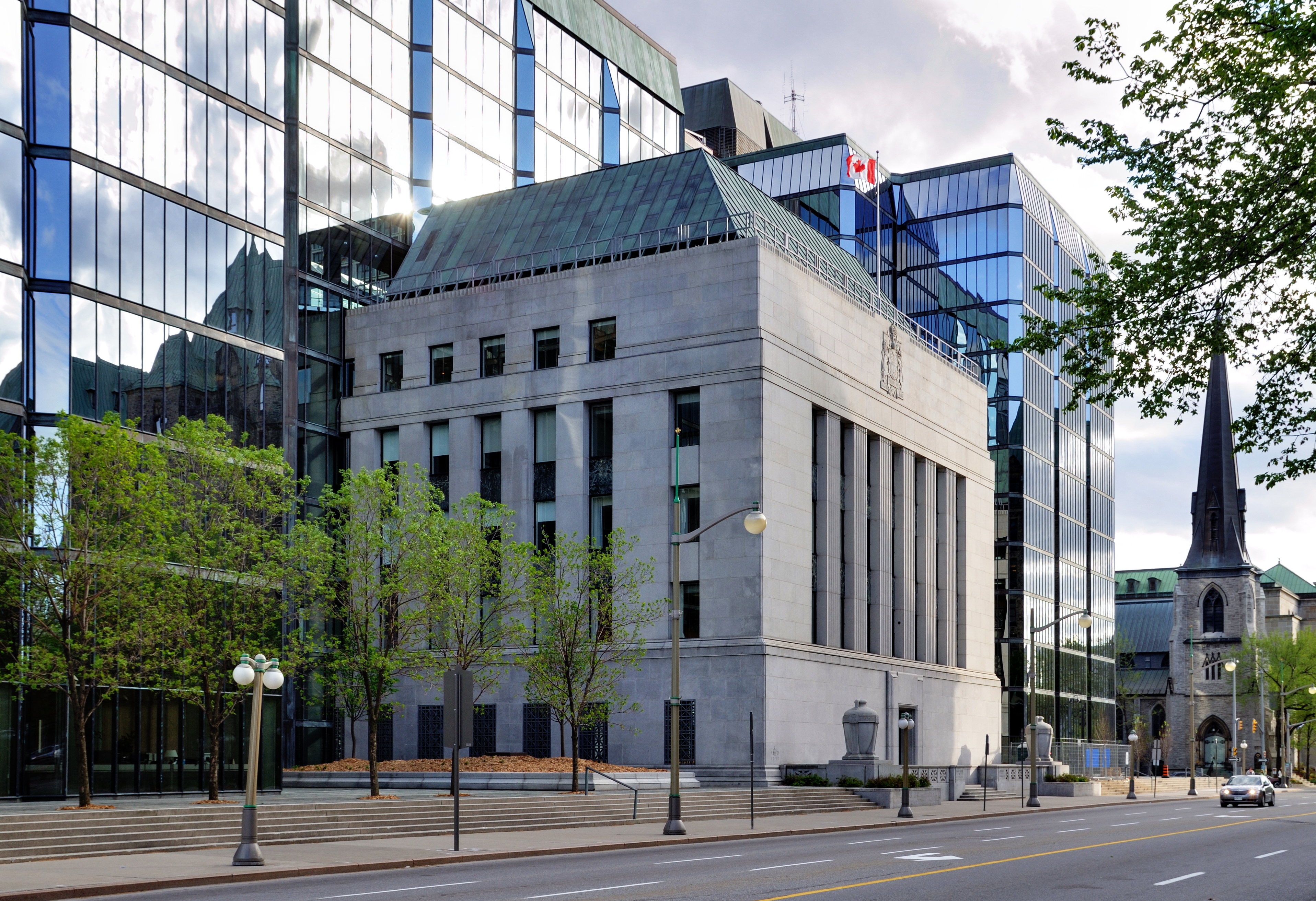
world · Wed, Jul 15, 11:53 AM
Bank of Canada Holds Interest Rate at 2.25%

world · Wed, Jul 15, 11:17 AM
Fed Chair Kevin Warsh Testifies on Monetary Policy

world · Wed, Jul 15, 10:34 AM
Fed Chair Kevin Warsh Testifies on US Monetary Policy
politics · Tue, Jul 14, 5:39 PM
Fed Chair Kevin Warsh Pledges US Central Bank Independence
world · Tue, Jul 14, 5:23 PM
Fed Chair Warsh Defends Central Bank Independence in First Testimony

world · Tue, Jul 14, 1:52 PM
Fed Chair Kevin Warsh Pledges to End Inflation During House Testimony

politics · Tue, Jul 14, 10:48 AM
Fed Chair Kevin Warsh Testifies on US Economy and Inflation

business · Tue, Jul 14, 4:23 AM
Fed Chair Kevin Warsh Signals Hawkish Stance on Inflation
business · Wed, Jul 8, 6:57 PM
Fed Chairman Kevin Warsh Proposes Five Task Forces to Overhaul Policy

world · Wed, Jul 8, 2:42 AM
Reserve Bank of New Zealand Raises Official Cash Rate to 2.5%
tech · Tue, Jul 7, 3:13 PM
Evercore Strategist Predicts No Fed Rate Moves This Year

world · Fri, Jul 3, 7:26 AM
US Job Growth Slows to 57,000 in June

business · Thu, Jul 2, 11:25 AM
US Fed Forms Five Task Forces to Overhaul Monetary Policy
business · Thu, Jul 2, 9:33 AM
Fed Chair Warsh Reaffirms 2% Inflation Goal at ECB Forum

world · Wed, Jul 1, 1:25 PM
US Fed Chair Kevin Warsh Debuts at ECB Forum

world · Mon, Jun 29, 9:49 PM
US Supreme Court Blocks Trump From Firing Fed Governor Lisa Cook
world · Mon, Jun 29, 9:04 PM
US Supreme Court Rejects Trump Bid to Fire Fed Governor Lisa Cook

business · Mon, Jun 29, 5:21 PM
US Supreme Court Blocks Trump From Firing Fed Governor Lisa Cook
More on video
TRT World
Occupied West Bank Violence Escalates as Netanyahu Heads to Washington
Bloomberg Television
Indonesia Central Bank Chief Warjiyo Resigns Abruptly
Samaa TV
State Bank of Pakistan Keeps Policy Rate Unchanged in New Monetary Policy | #shorts | SAMAA TV
ABC News Live
Federal reserve due to make another decision on interest rates
Good Morning America
Federal Reserve due to make another decision on interest rates
Arirang News
European Central Bank keeps rates on hold, leaves room for more hikes
SABC News
Reserve Bank's Monetary Policy Committee to announce interest rate decision
CTV News
Ottawa Food Bank announces new CEO
Moneycontrol
LIVE: Nifty 50, Sensex, Bank Nifty & Midcap Live | Stock Market Today | Rupee Rates Live | July 23
Moneycontrol
Rohit Srivastava's Banking Strategy: Why Smaller Banks Could Outperform
Moneycontrol
Devarsh Vakil's Market Outlook: Top Sectors, Midcap Bets & Banking Strategy Ahead
Moneycontrol
LIVE: Nifty 50, Sensex, Bank Nifty & Midcap Live | Stock Market Today | Rupee Rates Live | July 21
Republic World
LIVE: CM Yogi Adityanath Inaugurates Various Development Projects In Barabanki, Uttar Pradesh | BJP
WION
Macro Roundup: Central Banks, Gold, and the New Oil Energy Surge | World Business Watch | Shorts
Al Jazeera English
Palestinians celebrate Spain’s World Cup victory in Gaza and the Occupied West Bank | AJ #shorts
Global News
Bank of Canada “may well need to raise interest rates” if Iran war continues to raise oil prices
CTV News
Tiff Macklem speaks to reporters after Bank of Canada holds key rate at 2.25%
CTV News
Bank of Canada holds key rate steady at 2.25%, predicts economic rebound
Global News
Bank of Canada holds benchmark interest rate at 2.25% | LIVE
Yahoo Finance
LIVE: Federal Reserve Chairman Kevin Warsh testifies before the Senate Banking Committee