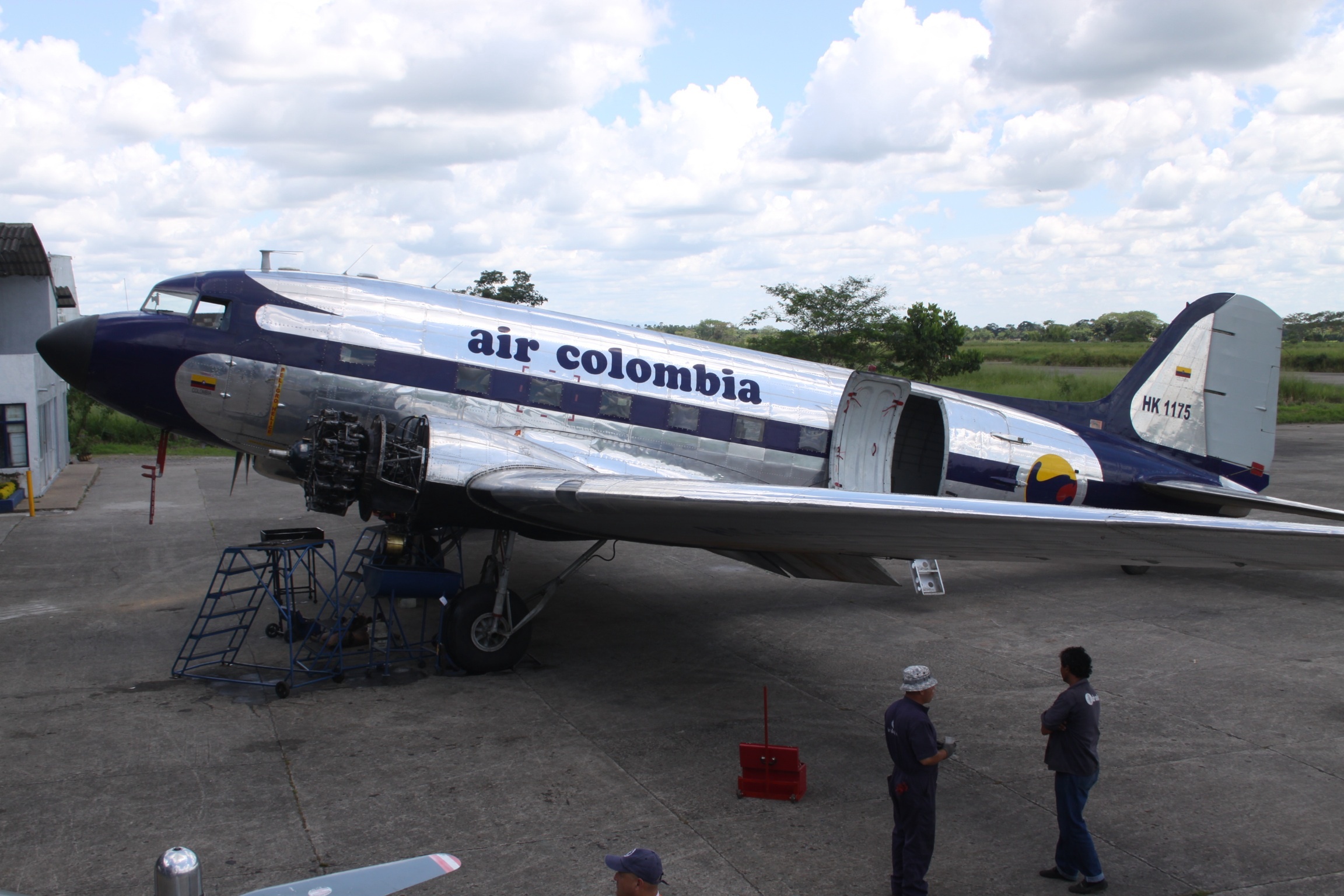
Passengers flew aboard a Douglas DC-3 aircraft over the Amazon jungle in Colombia on July 31, 2026 [1].
The flight highlights the continued operation of historic aviation technology in remote regions where modern infrastructure remains limited. Because these aircraft are among the few remaining examples of their kind, they serve as both functional transport and living museums of mid-century engineering.
The Douglas DC-3 was a primary workhorse of aviation during World War II [1]. Its ability to operate from short, unpaved runways makes it uniquely suited for the challenging terrain of the Colombian Amazon. While most commercial aviation has transitioned to jet engines and computerized flight systems, the DC-3 relies on mechanical systems and pilot intuition to navigate the dense canopy of the jungle [1].
Operating such a vessel requires specialized maintenance and a deep understanding of vintage airframes. The flight provided passengers with a perspective on the landscape that differs from modern high-altitude travel, allowing for a closer view of the river systems and forest density that define the region [1].
Transport in the Amazon often depends on these rugged aircraft to bridge the gap between isolated communities and urban centers. The DC-3 continues to fulfill this role, transporting people across vast distances where roads are nonexistent and water travel is slow. The experience preserves a specific era of flight that defined global connectivity in the 1940s [1].
“The Douglas DC-3 was a primary workhorse of aviation during World War II”
The continued use of the DC-3 in Colombia demonstrates a reliance on 'appropriate technology'—where older, simpler machinery is more reliable and maintainable in extreme environments than complex modern alternatives. This intersection of historical preservation and practical necessity ensures that WWII-era aviation remains a functional part of South American logistics rather than just a museum exhibit.


