
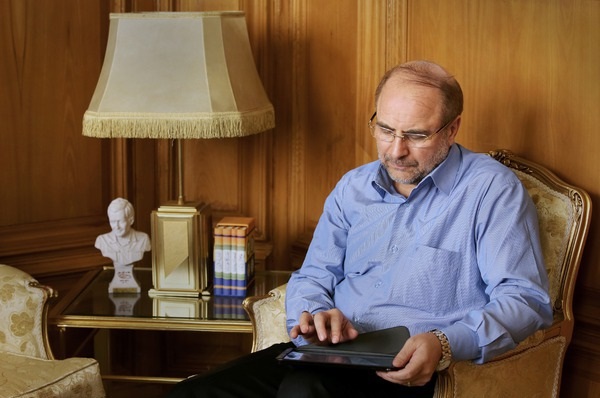
Iranian Parliament Speaker Mohammad Bagher Ghalibaf said Iran does not trust promises from its adversaries and will not endorse agreements without guaranteed rights [1].
The statement signals a hardening of Tehran's diplomatic posture during a period of tension with the U.S. government. By emphasizing military readiness alongside peace talks, Ghalibaf suggests that Iran views diplomacy as a secondary tool to deterrence.
Ghalibaf said he has deep distrust in the reliability of promises made by the enemy [1]. He specifically targeted U.S. President Donald Trump, mocking the administration's approach to negotiations. Ghalibaf said, "Operation Trust Me Bro failed. Now back ..." [2].
Despite the existence of peace talks, the Speaker said the Iranian military remains on high alert. He indicated that negotiation does not imply a reduction in combat readiness. Ghalibaf said, "It is not the case that we think just because we are negotiating, the armed forces are not ..." [3].
According to the Speaker, the primary condition for any future deal is the certainty that the rights of the Iranian people are secured [1]. He said objective results are the only valid metric for success in international agreements, rather than verbal assurances [1].
This rhetoric aligns with internal views that the U.S. aims to use economic pressure to force a surrender from the Iranian government [4]. Ghalibaf's comments serve to project strength to domestic audiences while warning foreign powers that Iran will not succumb to pressure, regardless of the diplomatic channel being used.
“"Iran will not endorse any agreement with the US until it is certain the rights of the Iranian people have been secured."”
Ghalibaf's remarks underscore a strategic 'dual-track' approach where Iran maintains a diplomatic presence to avoid total isolation but refuses to concede on security or sovereignty. The use of mocking language toward President Trump indicates a shift from formal diplomatic caution to a more aggressive rhetorical stance, likely intended to discourage the U.S. from believing that economic sanctions have created a desperate environment for concessions.


