
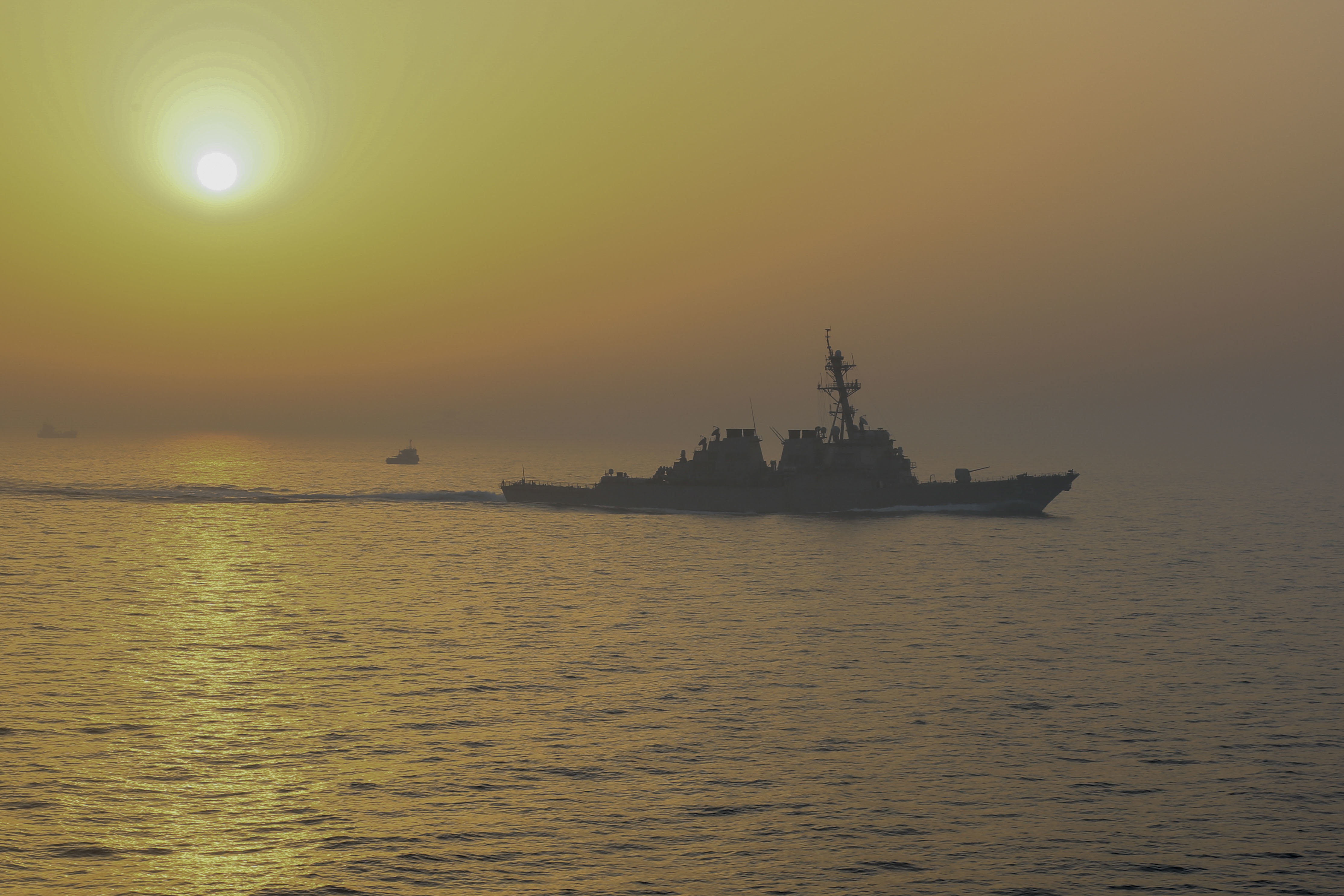
Iran warned the United States that any naval attempt to force passage through the Strait of Hormuz would be met with direct fire.
The escalation threatens the stability of one of the world's most critical oil transit chokepoints, where a single military engagement could disrupt global energy markets.
Iranian MP Manouchehr Mottaki said any US naval attempt to assert passage ‘on its own terms’ will be met with direct fire [1]. The warning comes as the U.S. continues to enforce a maritime blockade and navigate ships through the waterway linking the Persian Gulf with the Gulf of Oman [1, 2].
U.S. Defense Secretary Pete Hegseth said that two commercial ships and two destroyers crossed the Strait of Hormuz on May 5, 2026 [2]. Despite the heightened tensions and the Iranian red-line warning, Hegseth said the truce between Iran and the U.S. is not over [3].
Reports on the nature of the U.S. presence vary. Some sources describe the naval movements as an effort to test a fragile ceasefire, while others state the U.S. military is actively enforcing a maritime blockade on Iran [2, 4].
Iran views these naval movements and the enforcement of the blockade as a violation of its sovereignty [1, 3]. The Iranian government has characterized the U.S. actions as a direct threat to regional security, prompting the latest warnings of kinetic retaliation [1, 3].
“"any US naval attempt to assert passage ‘on its own terms’ will be met with direct fire"”
The confrontation in the Strait of Hormuz signals a precarious phase in US-Iran relations where both nations are testing the boundaries of a fragile ceasefire. By deploying destroyers alongside commercial vessels, the U.S. is asserting its right to freedom of navigation, while Iran's threat of 'direct fire' suggests a willingness to escalate to kinetic warfare to protect its perceived sovereignty over the waterway.


