
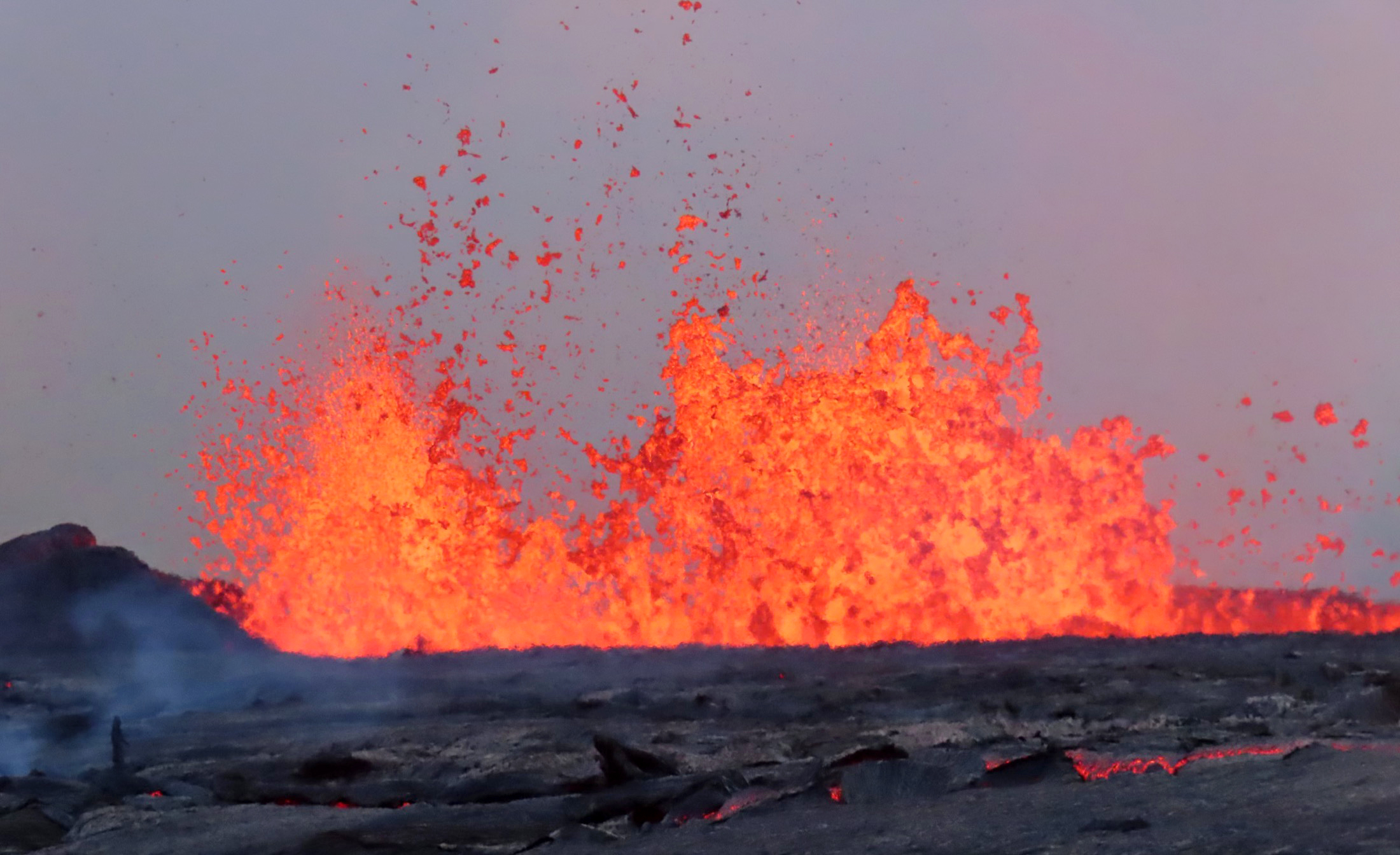
U.S. Geological Survey (USGS) scientists captured footage of a small whirlwind forming around the Kilauea volcano on June 1, 2024 [1].
This rare atmospheric event, often called a "volnado" or "Tephra Devil," provides critical data on how extreme volcanic heat interacts with the surrounding atmosphere. Understanding these vortices helps scientists better predict hazardous conditions for observers and equipment near active vents.
The phenomenon occurred within Hawaii Volcanoes National Park in Hawaii [2]. Scientists said the whirlwind was likely caused by hot lava heating the surface air, which then rises into cooler air above [3]. This process draws surrounding air inward and creates convergence, resulting in a spinning column of air, and volcanic debris [3].
"Scientists say it may be the result of hot lava hitting cooler air," USGS scientists said in a report [4]. The footage shows the vortex swirling above the volcanic landscape, a visual testament to the intense thermal gradients present during an eruption.
Kilauea has undergone numerous eruptive episodes in recent years. While reports on the specific episode number vary across sources, some records indicate the activity was part of a sequence ranging from the 37th to the 47th eruptive episode [5, 6, 7, 8].
The USGS continues to monitor the volcano using a network of cameras and sensors to track these transient weather events. Such whirlwinds are typically small and short-lived, but they illustrate the volatile intersection of geology and meteorology in active volcanic zones [2].
“A small whirlwind, also described as a “volcano tornado,” formed around Kilauea volcano.”
The formation of a 'volnado' highlights the extreme localized temperature differences that occur during volcanic activity. While these whirlwinds are generally small, they demonstrate how convective currents can create sudden, unpredictable weather patterns. For the USGS, documenting these events is essential for mapping the atmospheric risks associated with high-heat eruptions.


