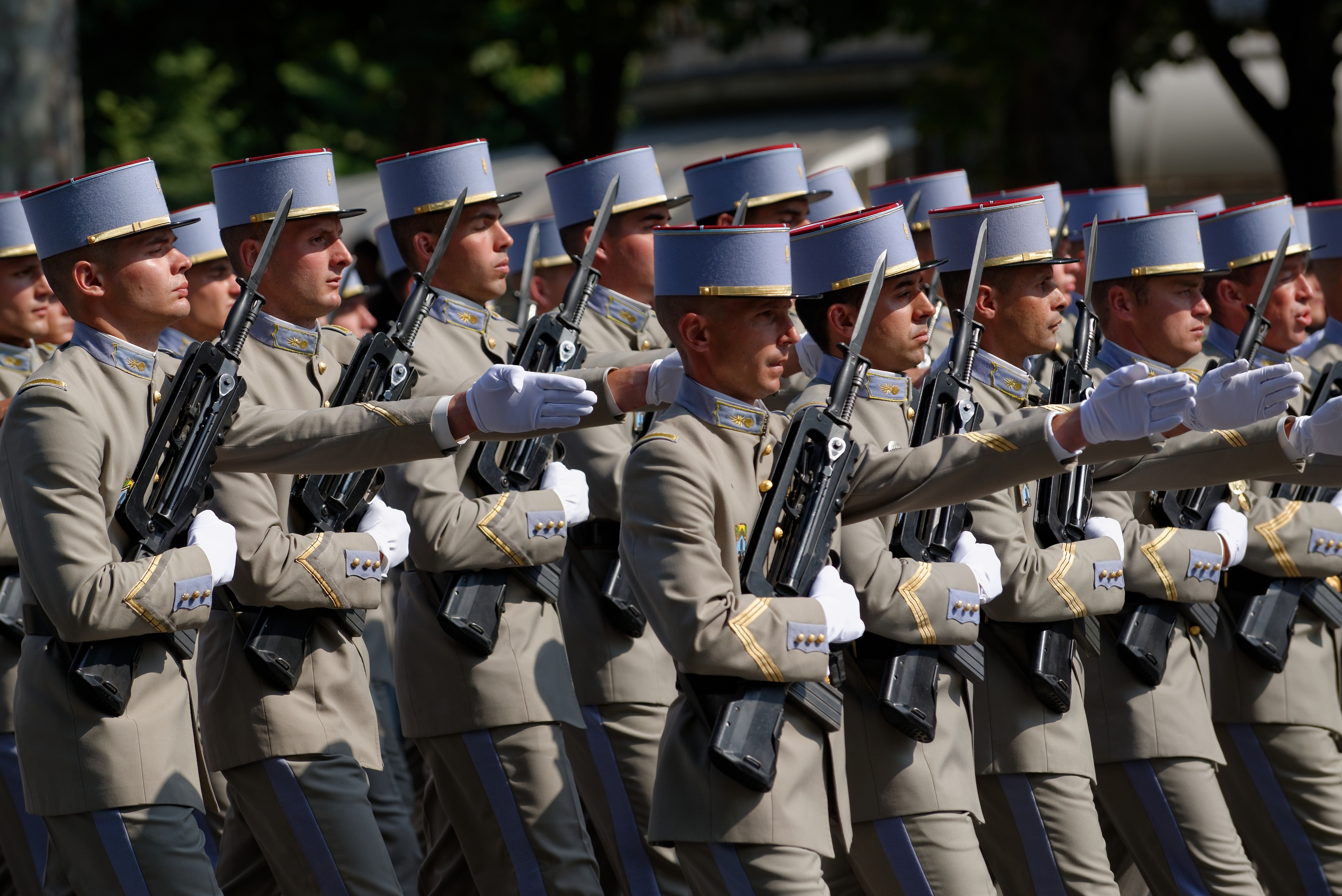
President Emmanuel Macron led the annual Bastille Day military parade along the Champs-Élysées in Paris on Tuesday [1].
The event serves as a high-profile demonstration of European unity and military strength as France reaffirms its support for Ukraine. It also marks the final Bastille Day parade for Macron while in office [1, 2].
This year's display was described as the largest military parade France has hosted since World War II [3]. The procession featured nearly 6,700 French troops [4], alongside a contingent of 500 pro-Ukraine soldiers [2]. These allied forces included troops from Ukraine and Great Britain, as well as other members of the Coalition of the Willing [1].
The scale of the operation extended beyond the infantry. The parade included 315 vehicles [4] and a significant aerial display consisting of 98 aircraft [4]. Additionally, 31 helicopters flew over the route between the Arc de Triomphe and Place de la Concorde [4].
Macron used the occasion to host more than 30 allied world leaders [5]. The gathering emphasized a collective security front among Western allies during a period of continued geopolitical tension in Eastern Europe.
French officials organized the event to highlight the nation's firepower and its integration with international partners [4]. By including Ukrainian forces in the march, the administration signaled a tangible commitment to Kyiv's defense, and the broader stability of the European continent [1, 2].
“The event serves as a high-profile demonstration of European unity and military strength.”
The scale of the 2026 parade—specifically the inclusion of Ukrainian troops and the record number of participants—signals that France views its military identity as inextricably linked to the defense of Ukraine. By hosting this massive display during his final parade, Macron is attempting to institutionalize a more assertive European security posture that persists beyond his own presidency.


