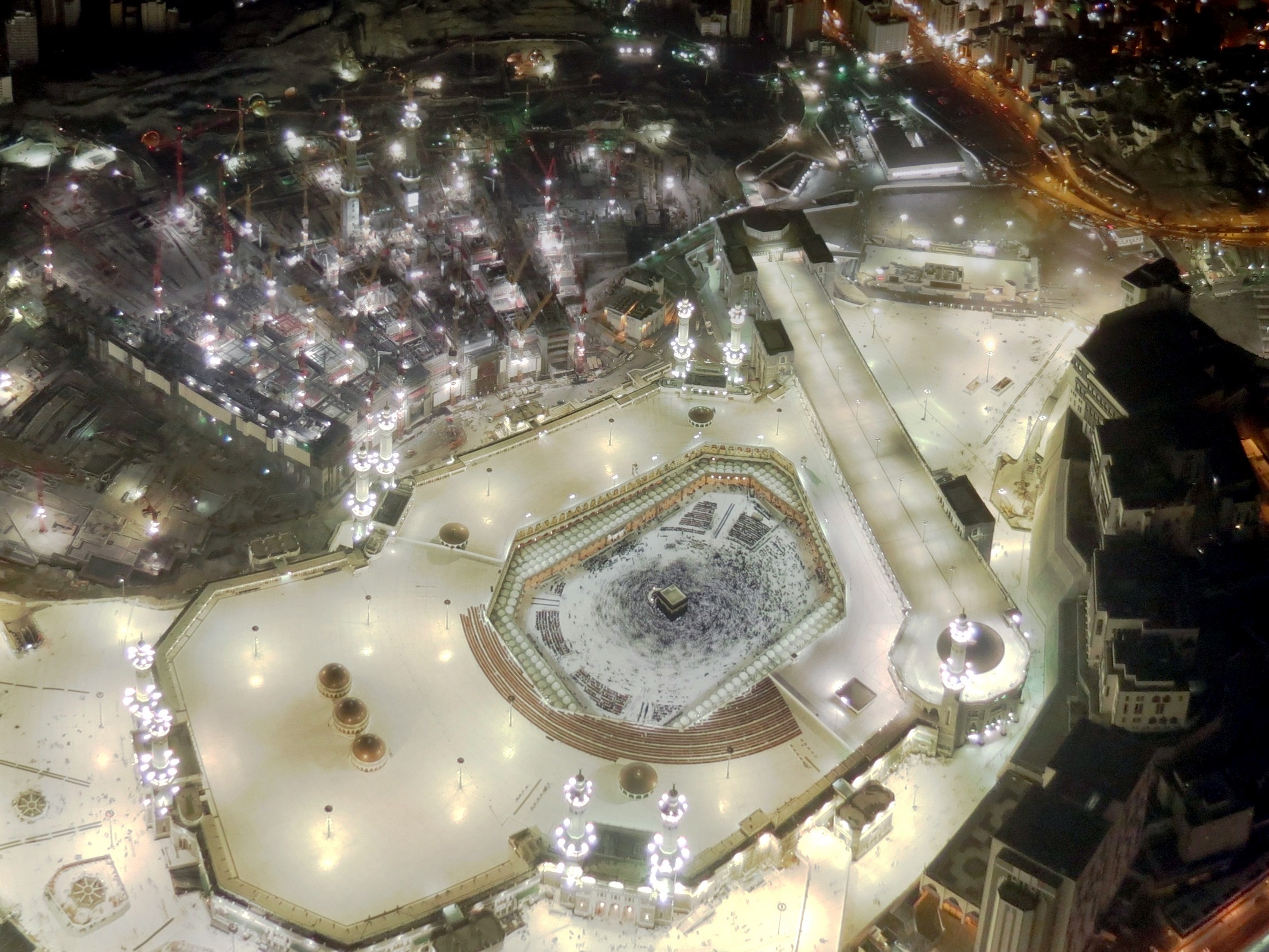
Saudi authorities have completed the third expansion of Masjid al-Haram in Mecca to prepare for incoming pilgrims [1].
This expansion is critical for the management of the Hajj and Umrah seasons, as the holy site must accommodate an increasing global population of worshippers. By increasing the capacity of the mosque, the Saudi government aims to reduce overcrowding and improve the overall safety, and efficiency of services at the site [1].
The project was coordinated by the Ministry of Islamic Affairs and the Ministry of Hajj [1]. This third phase [1] of development focuses on expanding the physical footprint of the mosque to ensure that the infrastructure can support the massive influx of people who visit Mecca annually.
Officials said the site is now fully ready to receive pilgrims [1]. The expansion includes improvements to the facilities and the surrounding areas to streamline the movement of crowds. These updates are part of a broader effort to enhance the religious experience for visitors while maintaining strict operational standards during peak periods.
While some reports have focused on the readiness of other sites, such as the Masjid al-Mash'ar al-Haram in Muzdalifah for the 1445 AH season [2], the primary focus of this specific development remains the central expansion of the Great Mosque in Mecca [1].
The completion of the work allows the Saudi authorities to implement more sophisticated crowd-control measures. These measures are designed to prevent bottlenecks and ensure that pilgrims can perform their rituals with fewer obstructions.
“The third expansion of Masjid al-Haram has been completed and is fully ready to receive pilgrims”
The completion of the third expansion reflects Saudi Arabia's strategic priority to increase the capacity of its holy sites. By expanding the physical infrastructure of Masjid al-Haram, the government is attempting to mitigate the logistical risks associated with extreme crowd density, which has historically been a primary safety concern during the Hajj pilgrimage.