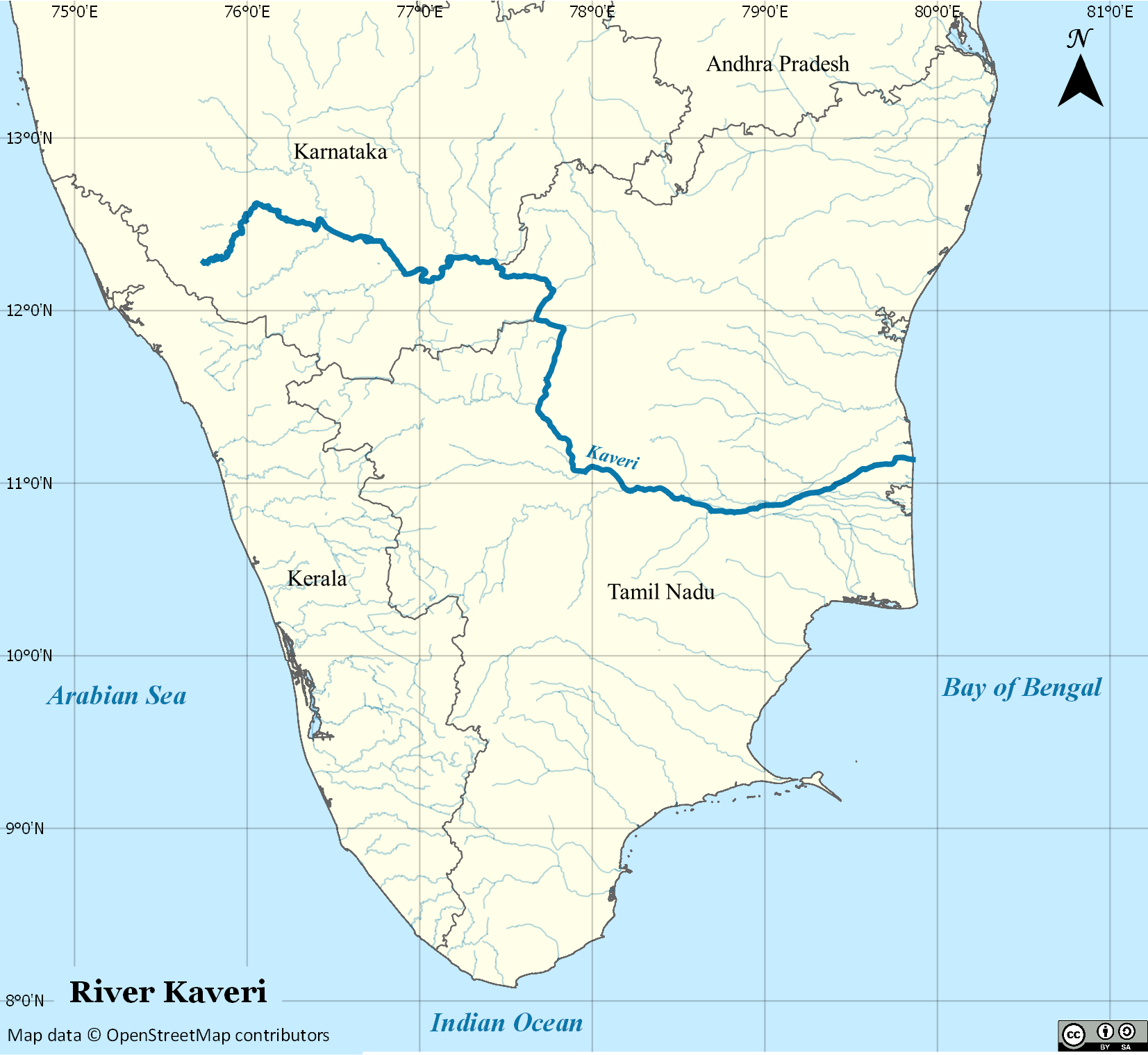
The Karnataka and Tamil Nadu state governments are in a renewed dispute over the construction of the Mekedatu balancing reservoir on the Cauvery River.
The conflict centers on water security for two of India's most populous states. Because the Cauvery River is a vital resource for agriculture and drinking water, any project that alters its flow can trigger severe economic and social instability.
Karnataka recently submitted the project report to the central government to move the reservoir forward. The state government, led by Chief Minister D.K. Shivakumar, said the project is essential for water storage and power generation [3, 4].
Tamil Nadu opposes the project, arguing that the reservoir will reduce its share of Cauvery water [3, 5]. Political leaders in Tamil Nadu, including AMMK chief T.T.V. Dhinakaran and members of the Tamil Nadu Congress, have called for contempt proceedings against Karnataka. They said the state is violating previous Supreme Court orders [2, 3].
Physical tensions have also surfaced at the border. On May 31, 2026, a protest by Tamil Nadu farmers was stopped at the Karnataka border in the Krishnagiri district [1, 4]. The incident highlights the volatility of the water dispute among the farming communities who depend on the river's flow.
Tamil Nadu maintains that the Mekedatu project is a breach of legal agreements. Karnataka continues to push for the reservoir to ensure its own water stability, a move that Tamil Nadu views as a direct threat to its downstream interests [3, 5].
“The conflict centers on water security for two of India's most populous states.”
The escalation of the Mekedatu dispute indicates a breakdown in interstate diplomacy over the Cauvery River. By submitting project reports to the central government, Karnataka is attempting to create a fait accompli, while Tamil Nadu's pursuit of contempt proceedings suggests the battle will move from the border to the Supreme Court. The intersection of agricultural survival and political identity makes this a high-stakes conflict that the central government must mediate to avoid regional instability.


