
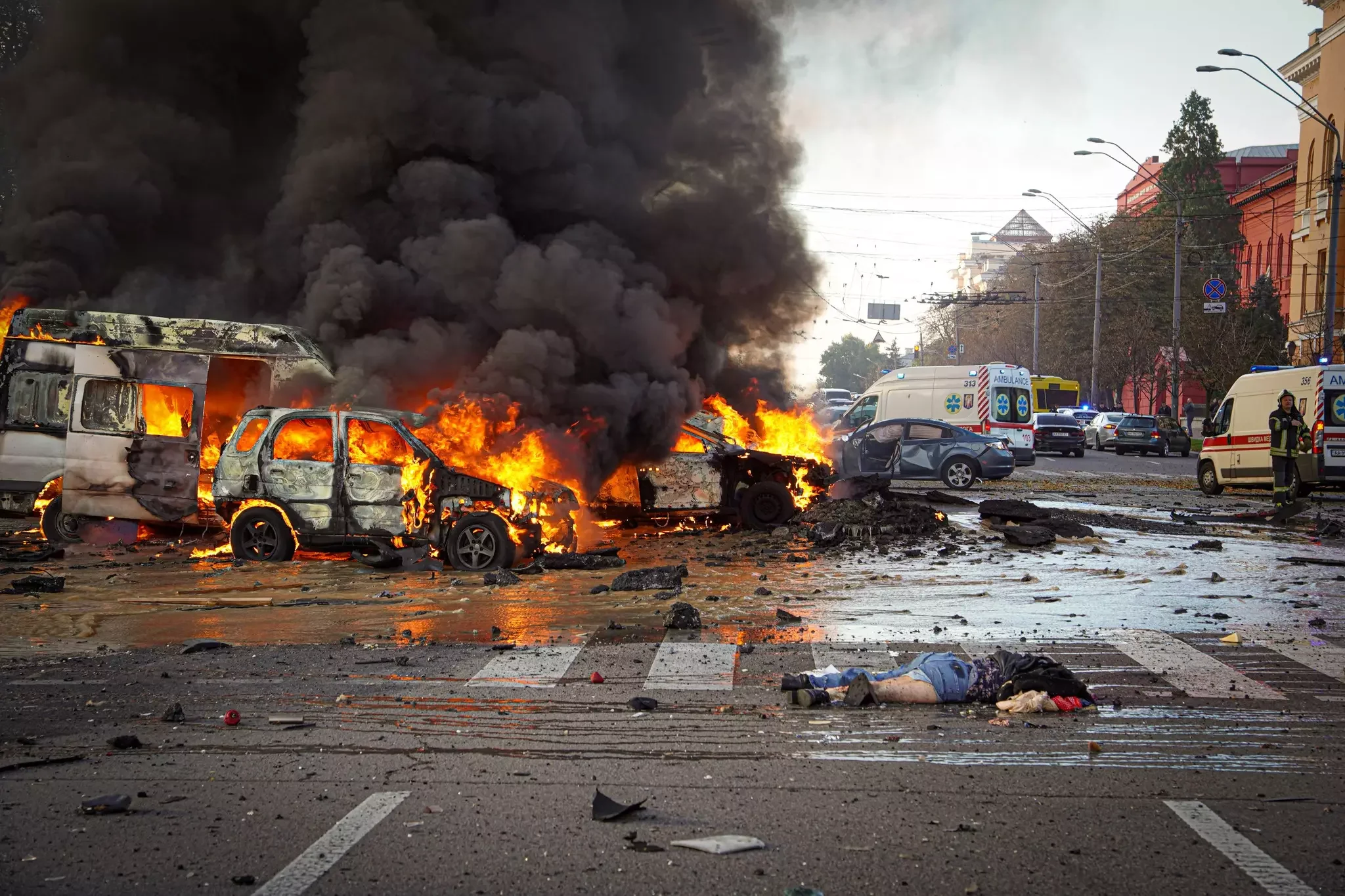
Russian forces launched a missile and drone strike in Kyiv on Friday, resulting in multiple casualties across the Ukrainian capital [1].
The assault represents a significant escalation in the ongoing conflict, with some reports describing it as the largest aerial attack since the invasion began [4].
Casualty figures for the strike remain inconsistent across reporting agencies. The Globe and Mail said that at least four people were killed [1]. Other reports provide varying numbers, with Reuters saying two deaths [2] and Yahoo News saying that more than 20 people died [3].
In addition to the fatalities, 23 people were injured during the attack [4]. The strikes utilized a combination of missiles and drones to target the city, a tactic designed to overwhelm air defense systems.
Local authorities in Kyiv continue to assess the damage to infrastructure and residential areas. The discrepancy in death tolls highlights the difficulty of verifying immediate casualties during active aerial bombardments in urban centers.
Russian forces have maintained a pattern of targeting Ukrainian energy and administrative hubs, though the scale of this specific operation marks a shift in intensity. The use of coordinated drone and missile waves has become a hallmark of recent Russian strategy to saturate defenses.
“the largest aerial attack since the invasion began”
The scale of this attack suggests a Russian effort to degrade Ukrainian air defense capabilities and demoralize the population in the capital. The wide variance in reported casualties—ranging from two to over 20 deaths—indicates a chaotic operational environment where verified data is slow to emerge, often leading to conflicting early reports during high-intensity strikes.


