
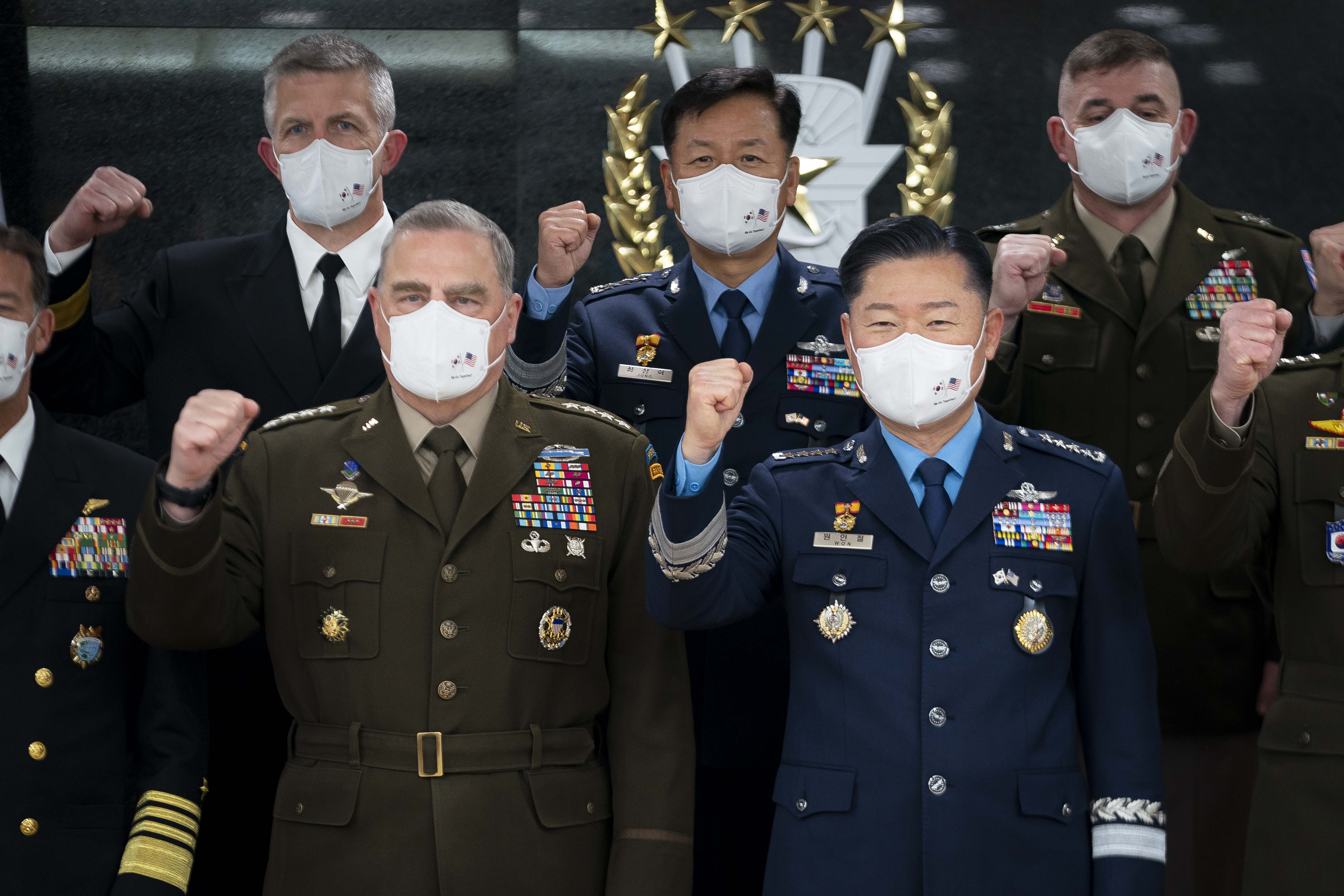
The South Korean government expects it may regain wartime operational control from the U.S. as early as next year [1].
This transition represents a significant shift in the military hierarchy of the Korean Peninsula, where the U.S. Forces Korea commander currently exercises authority during wartime. Moving this power to Seoul would signal greater strategic autonomy for the South Korean military.
Officials from the National Security Office said the government is working to complete a roadmap for the recovery of this control [2]. According to the current schedule, a second-stage verification process is slated for October [1]. A full three-stage assessment of mission capabilities could be completed within approximately one year [1].
If these milestones are met, a full transfer of operational control could be possible by the end of 2024 [1]. However, the government said that military assessments are only one part of the process.
National Security Office Chief Wi Sung-lac said the administration is pursuing the completion of the full operational capability verification [2]. Despite these technical goals, the timing remains flexible based on diplomatic alignment.
A government official said the transfer of wartime operational control is ultimately a matter that both governments must decide politically [2]. This indicates that even if the military meets all technical requirements, the final date depends on the political agreement between Seoul and Washington.
The process involves rigorous evaluations to ensure the South Korean military can independently manage the complexities of a full-scale conflict. While the two nations have differed on some military assessments, they continue to coordinate the verification stages to ensure regional stability.
“the transfer of wartime operational control is ultimately a matter that both governments must decide politically”
The potential transfer of wartime operational control marks a transition from a subordinate military role to a lead role for South Korea in its own defense. While the technical verifications provide a timeline, the emphasis on a 'political decision' suggests that the U.S. and South Korea will weigh the transfer against the current security climate on the peninsula before finalizing the date.

'%2F%3E%0A%20%20%20%20%3Crect%20width%3D'1600'%20height%3D'900'%20fill%3D'url(%23v)'%2F%3E%0A%20%20%20%20%3Cg%20opacity%3D'0.08'%20fill%3D'%23ffffff'%3E%0A%20%20%20%20%20%20%3Ccircle%20cx%3D'1420'%20cy%3D'180'%20r%3D'220'%2F%3E%0A%20%20%20%20%20%20%3Ccircle%20cx%3D'1500'%20cy%3D'760'%20r%3D'120'%2F%3E%0A%20%20%20%20%3C%2Fg%3E%0A%20%20%20%20%3Cline%20x1%3D'80'%20y1%3D'172'%20x2%3D'220'%20y2%3D'172'%20stroke%3D'%23ffffff'%20stroke-width%3D'3'%20stroke-opacity%3D'0.6'%2F%3E%0A%20%20%20%20%3Ctext%20x%3D'80'%20y%3D'140'%20font-family%3D'Inter%2C%20-apple-system%2C%20Helvetica%2C%20sans-serif'%20font-weight%3D'700'%20font-size%3D'28'%20fill%3D'%23ffffff'%20letter-spacing%3D'6'%3EHANNA%20%C2%B7%20NEWS%3C%2Ftext%3E%0A%20%20%20%20%3Ctext%20x%3D'80'%20y%3D'230'%20font-family%3D'Inter%2C%20-apple-system%2C%20Helvetica%2C%20sans-serif'%20font-weight%3D'600'%20font-size%3D'40'%20fill%3D'%23ffffffb3'%20letter-spacing%3D'4'%3EWORLD%3C%2Ftext%3E%0A%20%20%20%20%3Ctext%20x%3D'80'%20y%3D'694'%20font-family%3D'Playfair%20Display%2C%20Georgia%2C%20serif'%20font-weight%3D'800'%20font-size%3D'110'%20fill%3D'%23ffffff'%20letter-spacing%3D'-1'%3ESpecialized%20Teams%20Restore%3C%2Ftext%3E%3Ctext%20x%3D'80'%20y%3D'820'%20font-family%3D'Playfair%20Display%2C%20Georgia%2C%20serif'%20font-weight%3D'800'%20font-size%3D'110'%20fill%3D'%23ffffff'%20letter-spacing%3D'-1'%3ESites%20After%20Crime%20Scenes%3C%2Ftext%3E%0A%20%20%20%20%3Ctext%20x%3D'80'%20y%3D'870'%20font-family%3D'Inter%2C%20-apple-system%2C%20Helvetica%2C%20sans-serif'%20font-weight%3D'500'%20font-size%3D'22'%20fill%3D'%23ffffff66'%20letter-spacing%3D'2'%3Enews.hanna-ai.com%3C%2Ftext%3E%0A%20%20%3C%2Fsvg%3E)

