President Donald Trump said the United States does not care whether negotiations with Iran are over and will continue applying pressure regardless.
This stance signals a potential shift toward more aggressive action if diplomatic channels fail to yield results that satisfy U.S. interests. The rhetoric underscores a willingness to prioritize economic and political leverage over the formal negotiation process.
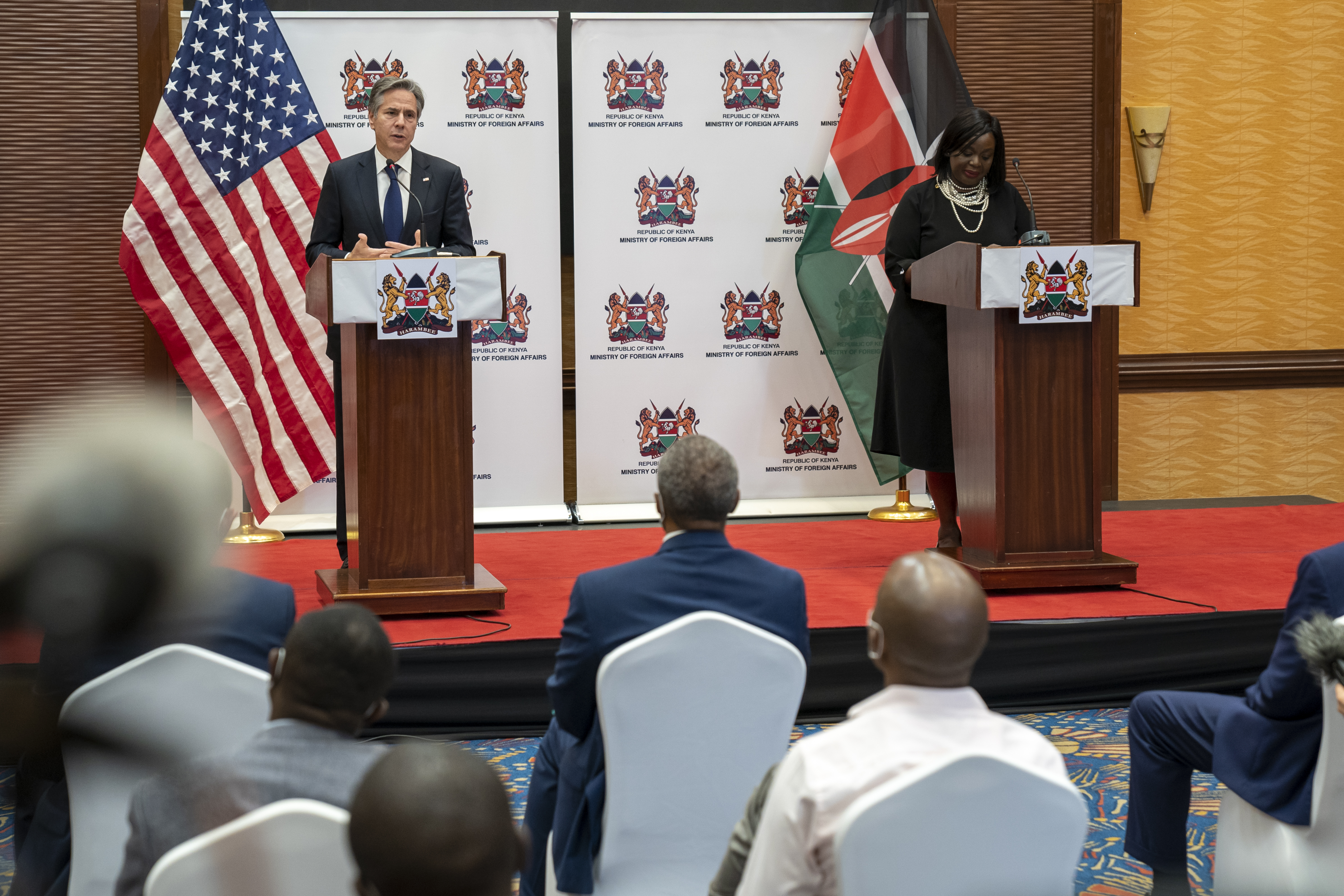
Speaking during a press briefing at the White House, Trump said the U.S. would not wait for diplomatic talks to conclude because he believes Iran is not cooperating [1, 3]. He said that the U.S. must maintain pressure to protect its interests [1, 3].
"We do not care if negotiations are over," Trump said [2]. He further suggested a more decisive conclusion to the conflict, stating, "Maybe we go back and finish it" [1].
These comments followed reports regarding the status of the talks. While some Iranian state media reported convergence in discussions with the U.S., Trump said any claim that Iran had reached an agreement was denied [1]. Additionally, Iran's chief negotiator said that Tehran would not agree to any deal that does not guarantee Iranian rights [1].
Trump also characterized the dynamics of the diplomacy as one-sided. "Iran is begging to make a deal, not me," Trump said [3].
Recent timelines indicate a breakdown in communication. Reports show that Iran halted indirect negotiations on May 31, 2024 [1]. The president's earlier statements on May 27, 2024, preceded this halt, suggesting the administration had already anticipated a diplomatic impasse [1, 2].
“"We do not care if negotiations are over."”
The administration's indifference to the collapse of negotiations suggests a strategic pivot toward 'maximum pressure.' By framing Iran as the party seeking a deal, the U.S. maintains a position of strength that allows it to justify unilateral actions or increased sanctions without the perceived constraint of ongoing diplomatic dialogue.