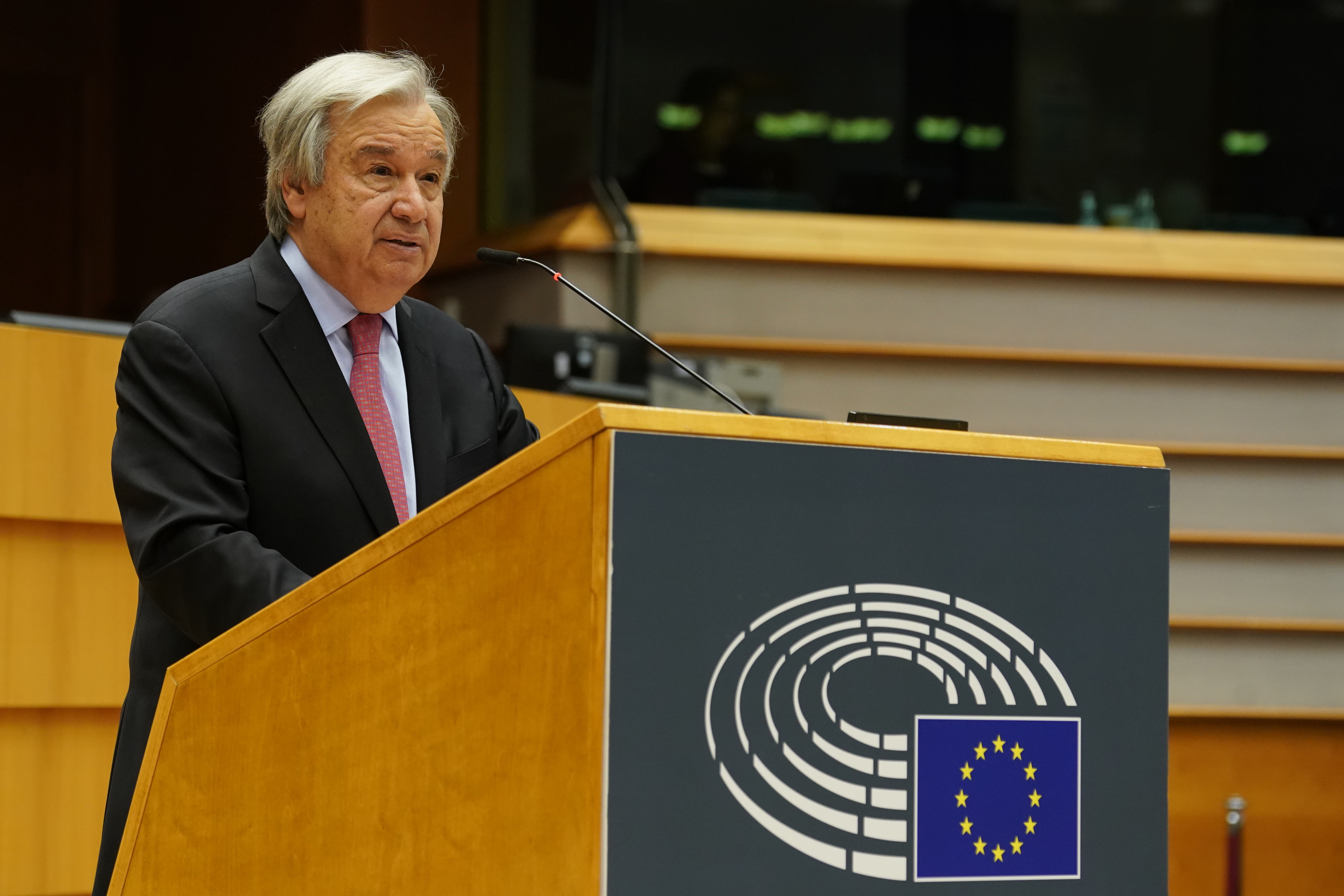
United Nations Secretary-General António Guterres said Tuesday that climate chaos is accelerating and urged countries to rapidly reduce fossil-fuel use [1].
The remarks come as London experiences an unprecedented heatwave, underscoring the immediate physical risks of global warming and the urgency of international climate policy [2].
Speaking during London Climate Action Week on June 23, 2026, Guterres highlighted the intersection of long-term atmospheric changes and immediate weather extremes [3]. He said that the arrival of the El Niño warming phenomenon this summer risks "blowing the house down" as climate chaos is "accelerating before our eyes" [4].
Guterres described the current global situation as a tale of two crises [5]. He said that the world faces the fundamental change of the climate alongside a continued, dangerous dependence on fossil fuels [5].
The UN chief used the extreme weather in the United Kingdom as a focal point for his warning. "London isn’t just calling. It’s cooking," Guterres said [6].
Throughout his address, Guterres called for nations to soften their hard lines in climate negotiations to overcome current deadlocks [7]. He said that the acceleration of climate breakdown requires a faster transition away from carbon-intensive energy sources to avoid catastrophic outcomes [1, 7].
He said the world faces two crises as climate starts to fundamentally change [5]. This duality, Guterres said, complicates the global response as countries struggle to balance immediate energy needs with the necessity of drastic emissions cuts [7].
“"London isn’t just calling. It’s cooking."”
The Secretary-General's timing—aligning a high-level policy plea with a tangible, local weather disaster—is a strategic attempt to move climate change from a theoretical future threat to an immediate crisis. By framing the issue as 'two crises,' Guterres is signaling that the technical challenge of climate change is now compounded by a political deadlock over fossil-fuel dependence, suggesting that diplomatic flexibility is now as critical as scientific innovation.


