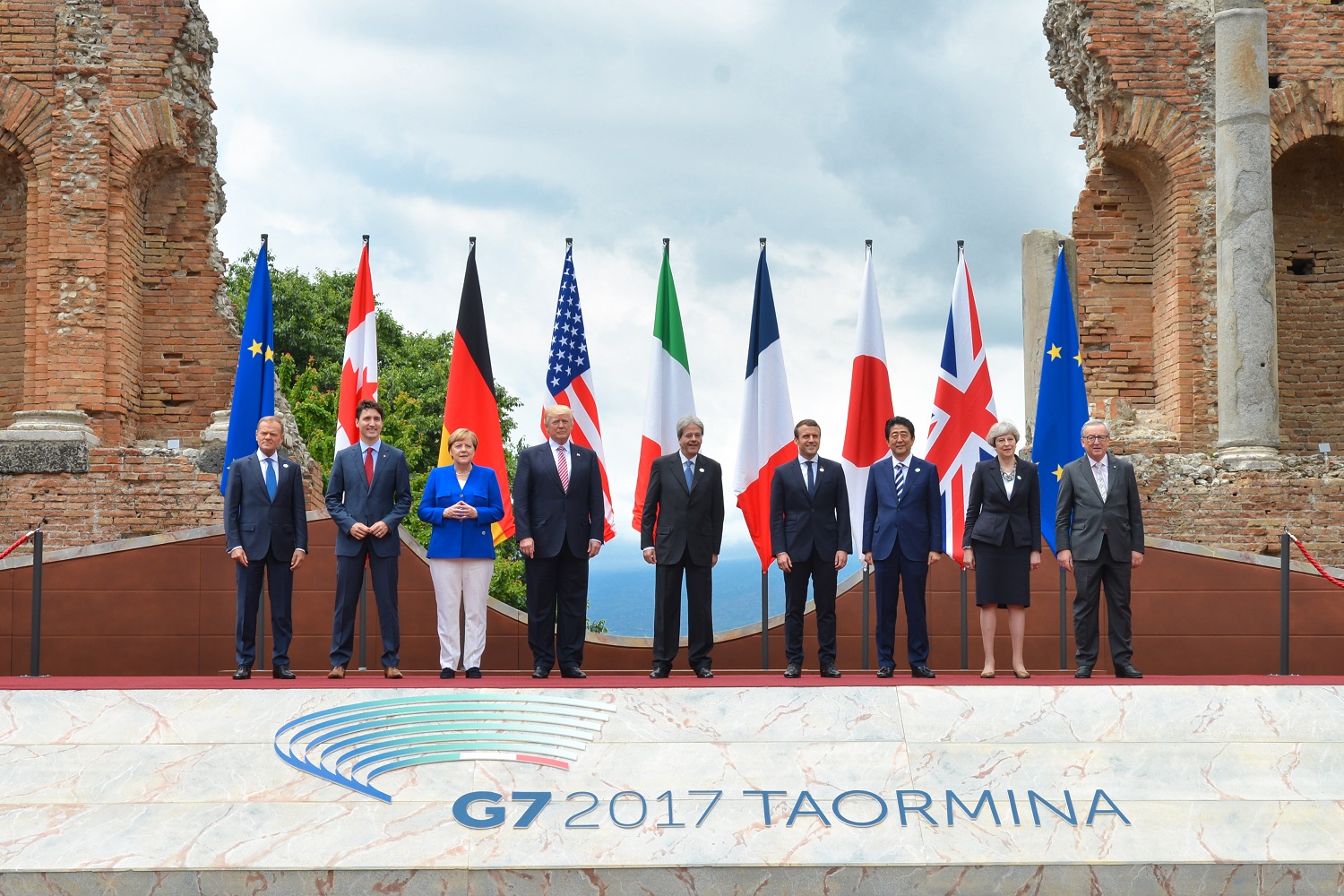
President Donald Trump signaled the U.S. could re-impose sanctions on Russian oil shipments during a G7 summit in Evian, France [1].
This shift suggests a hardening of the Western economic strategy to force a conclusion to the conflict in Ukraine. By targeting oil revenues, the G7 aims to close gaps in the current sanctions regime that have allowed Moscow to continue funding its military operations.
The agreement occurred on June 16, 2024 [1]. G7 leaders met in Evian [1] to coordinate a unified response to the conflict, which has lasted more than four years [1]. Ukrainian President Volodymyr Zelensky joined the discussions to advocate for increased support, and more stringent penalties against the Kremlin [2].
Trump emphasized the need for a diplomatic resolution while maintaining economic leverage. "Moscow should make a deal," Trump said [3]. He further indicated that the U.S. is prepared to act on energy exports to ensure compliance with international goals. "We will re-impose sanctions on Russian oil shipments if necessary," Trump said [4].
The move comes as G7 allies seek to eliminate previous waivers that may have weakened the impact of existing restrictions. While the U.S. has signaled a swift return to these measures, other allies remain cautious. Reports indicate the European Union is prepared to pursue new sanctions if G7 members fail to reach a broader consensus [5].
The summit focused on intensifying pressure to end the war and addressing the instability in the Middle East [2]. The leaders agreed that a coordinated approach to energy sanctions is critical to limiting Russia's ability to sustain its long-term war effort [1].
“"Moscow should make a deal."”
The potential return of U.S. oil sanctions represents a strategic pivot toward maximum economic pressure. By targeting the primary revenue stream of the Russian state, the G7 is attempting to reduce Moscow's financial capacity to wage war, while simultaneously using the threat of these sanctions as a bargaining chip to force a negotiated settlement.
'%2F%3E%0A%20%20%20%20%3Crect%20width%3D'1600'%20height%3D'900'%20fill%3D'url(%23v)'%2F%3E%0A%20%20%20%20%3Cg%20opacity%3D'0.08'%20fill%3D'%23ffffff'%3E%0A%20%20%20%20%20%20%3Ccircle%20cx%3D'1420'%20cy%3D'180'%20r%3D'220'%2F%3E%0A%20%20%20%20%20%20%3Ccircle%20cx%3D'1500'%20cy%3D'760'%20r%3D'120'%2F%3E%0A%20%20%20%20%3C%2Fg%3E%0A%20%20%20%20%3Cline%20x1%3D'80'%20y1%3D'172'%20x2%3D'220'%20y2%3D'172'%20stroke%3D'%23ffffff'%20stroke-width%3D'3'%20stroke-opacity%3D'0.6'%2F%3E%0A%20%20%20%20%3Ctext%20x%3D'80'%20y%3D'140'%20font-family%3D'Inter%2C%20-apple-system%2C%20Helvetica%2C%20sans-serif'%20font-weight%3D'700'%20font-size%3D'28'%20fill%3D'%23ffffff'%20letter-spacing%3D'6'%3EHANNA%20%C2%B7%20NEWS%3C%2Ftext%3E%0A%20%20%20%20%3Ctext%20x%3D'80'%20y%3D'230'%20font-family%3D'Inter%2C%20-apple-system%2C%20Helvetica%2C%20sans-serif'%20font-weight%3D'600'%20font-size%3D'40'%20fill%3D'%23ffffffb3'%20letter-spacing%3D'4'%3EWORLD%3C%2Ftext%3E%0A%20%20%20%20%3Ctext%20x%3D'80'%20y%3D'622'%20font-family%3D'Playfair%20Display%2C%20Georgia%2C%20serif'%20font-weight%3D'800'%20font-size%3D'86'%20fill%3D'%23ffffff'%20letter-spacing%3D'-1'%3EIndia%20Temporarily%20Blocks%3C%2Ftext%3E%3Ctext%20x%3D'80'%20y%3D'721'%20font-family%3D'Playfair%20Display%2C%20Georgia%2C%20serif'%20font-weight%3D'800'%20font-size%3D'86'%20fill%3D'%23ffffff'%20letter-spacing%3D'-1'%3ETelegram%20Over%20Medical%20Exam%3C%2Ftext%3E%3Ctext%20x%3D'80'%20y%3D'820'%20font-family%3D'Playfair%20Display%2C%20Georgia%2C%20serif'%20font-weight%3D'800'%20font-size%3D'86'%20fill%3D'%23ffffff'%20letter-spacing%3D'-1'%3EFraud%3C%2Ftext%3E%0A%20%20%20%20%3Ctext%20x%3D'80'%20y%3D'870'%20font-family%3D'Inter%2C%20-apple-system%2C%20Helvetica%2C%20sans-serif'%20font-weight%3D'500'%20font-size%3D'22'%20fill%3D'%23ffffff66'%20letter-spacing%3D'2'%3Enews.hanna-ai.com%3C%2Ftext%3E%0A%20%20%3C%2Fsvg%3E)

