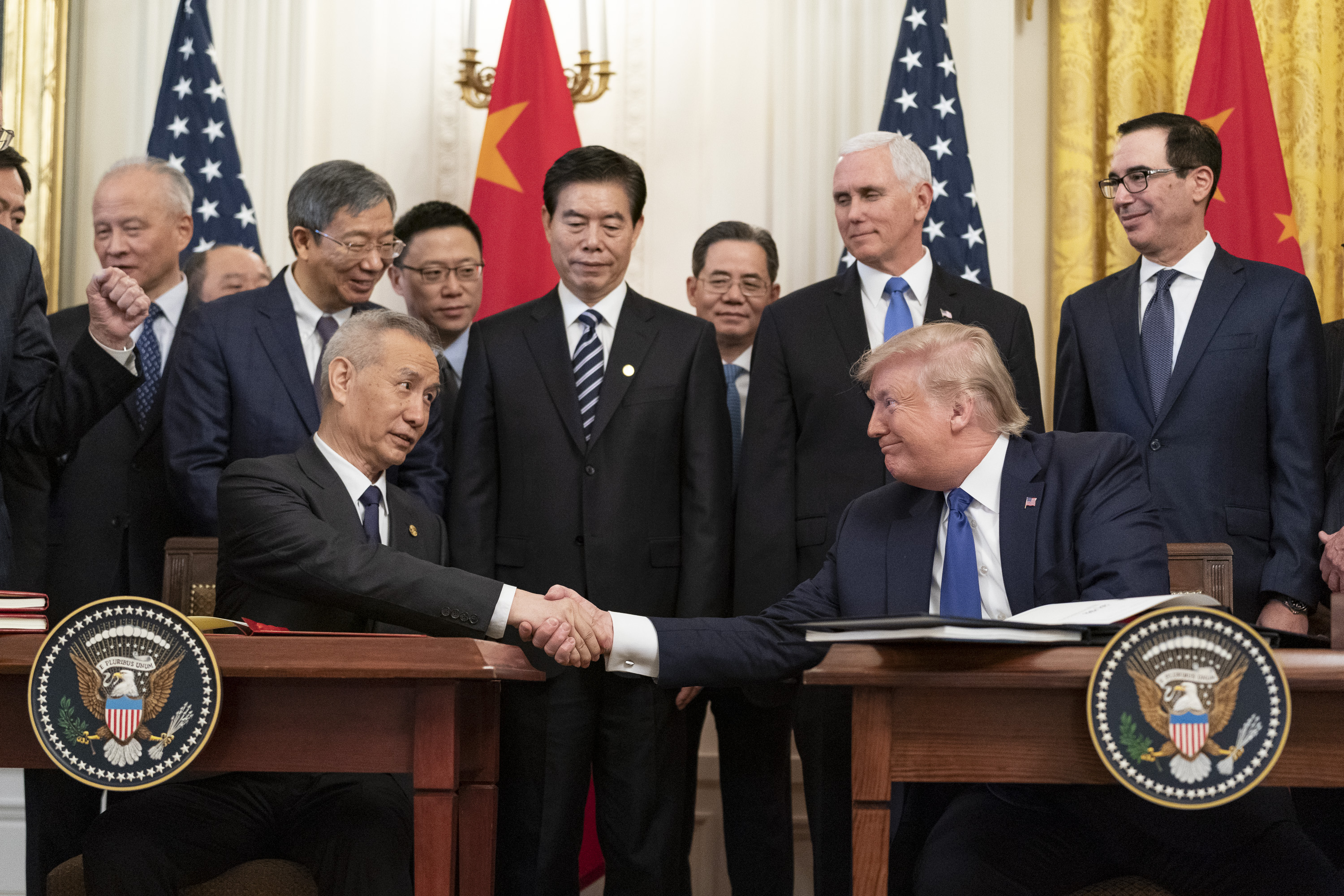
President Donald Trump and Iranian President Masoud Pezeshkian signed a memorandum of understanding on June 18, 2026, to end the U.S.-Iran war [1].
The agreement aims to restore global maritime trade by reopening the Strait of Hormuz, one of the world's most critical oil transit chokepoints.
Senior U.S. officials said, "President Trump and Iran's top negotiator have already remotely signed a memorandum of understanding" [2]. The electronically signed document consists of 14 paragraphs [4] and outlines the terms for ending hostilities between the two nations [1].
A central component of the deal is the institution of a 60-day toll-free shipping period for vessels transiting the Strait of Hormuz [3]. This temporary measure is designed to stabilize shipping lanes, and encourage the return of commercial traffic to the region [3].
Reports also indicate the agreement includes a financial commitment to Iran totaling $300 billion [4]. This payment is part of the broader settlement to cease military conflict and normalize maritime operations [4].
However, the deal has met with immediate contradictions from within the Iranian government. Iranian Foreign Ministry spokesperson Esmaeil Baqaei said that a memorandum of understanding would not be signed [5]. This statement contradicts reports from U.S. officials and major news outlets stating the agreement is already finalized [1, 2].
Despite the conflicting reports from Tehran, the memorandum focuses on the immediate cessation of war and the temporary removal of transit fees to facilitate the flow of goods [1, 3].
“"President Trump and Iran's top negotiator have already remotely signed a memorandum of understanding."”
The agreement represents a high-stakes attempt to prevent a total collapse of energy markets by reopening the Strait of Hormuz. However, the public denial by the Iranian Foreign Ministry suggests significant internal friction within the Iranian leadership or a strategic diplomatic maneuver. The 60-day window serves as a trial period; if the toll-free transit fails to stabilize the region or if the $300 billion commitment is not realized, the fragile ceasefire could collapse.