
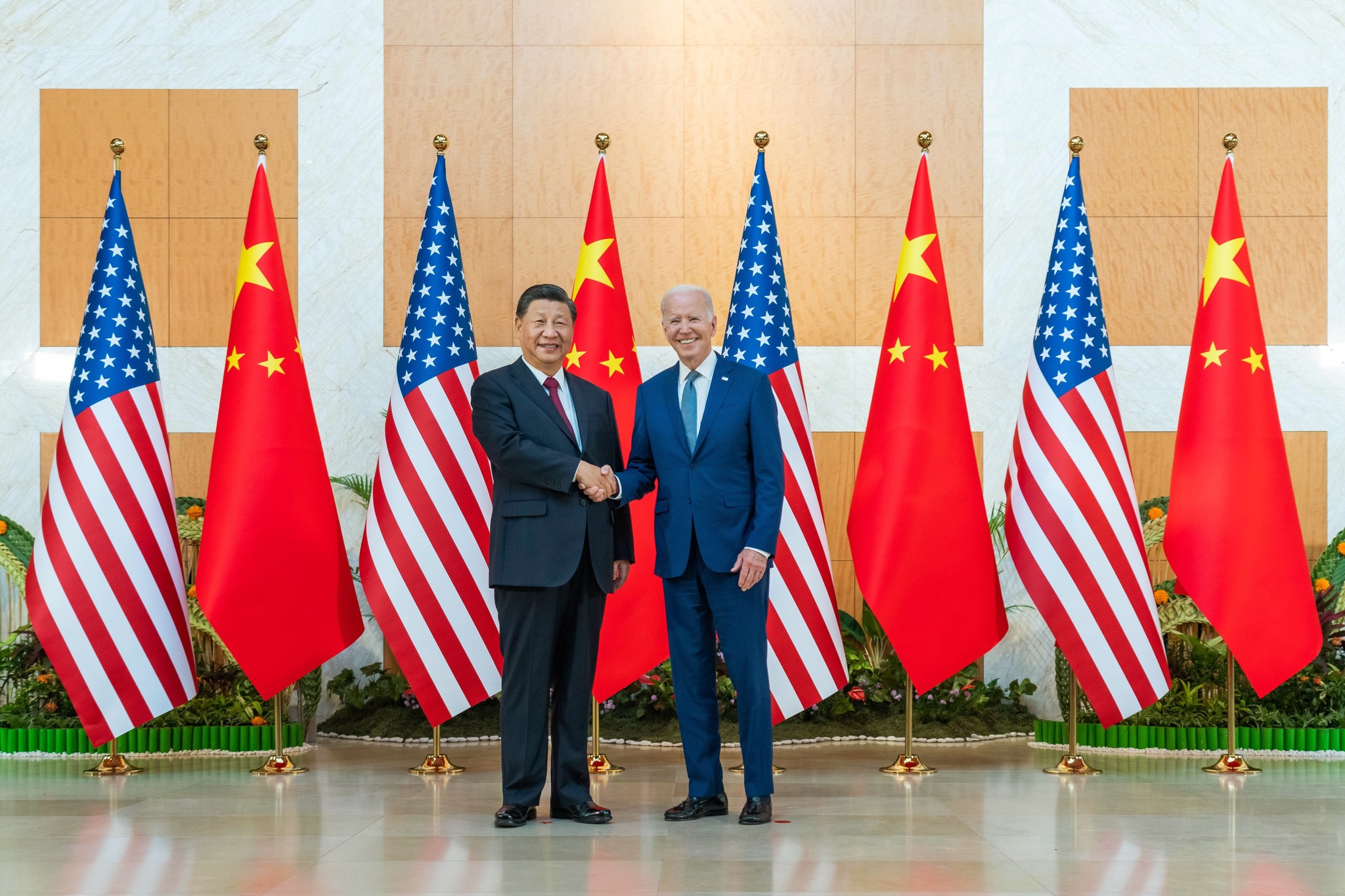
Chinese President Xi Jinping criticized Japanese Prime Minister Takaichi for strengthening Japan's defense capabilities during a summit with the U.S. on May 14, 2026 [1].
The exchange highlights deepening tensions between Beijing and Tokyo over regional security and the role of the U.S.-Japan alliance in East Asia.
During the meeting, Xi targeted the Japanese administration's efforts to bolster its military strength. He described the policy shift as "a revival of militarism" [2], suggesting that Japan's actions are creating instability in the region. Xi said that these developments are "becoming a threat to the region" [3].
U.S. President Donald Trump responded to the criticism by defending the Japanese leader. Trump said Takaichi is a "wonderful leader" [2].
The summit took place amid ongoing disputes regarding territorial claims, and maritime security in the Indo-Pacific. Xi's comments reflect Beijing's long-standing sensitivity toward Japanese military expansion, which China views as a direct challenge to its influence in the region.
While the U.S. and China met to discuss bilateral relations, the focus on Japan's defense posture underscores how third-party security arrangements often complicate direct negotiations between the two superpowers. The disagreement between Xi and Trump over Takaichi's leadership illustrates the divergent views the two nations hold regarding the necessary balance of power in Asia.
“"a revival of militarism"”
This diplomatic clash signals that despite direct communication between the U.S. and China, the security architecture of the Indo-Pacific remains a primary flashpoint. Xi's explicit naming of Prime Minister Takaichi indicates a strategy of pressuring Japan through bilateral channels with the U.S., while Trump's defense of Japan reinforces the strategic importance of the U.S.-Japan security treaty as a counterweight to Chinese influence.


