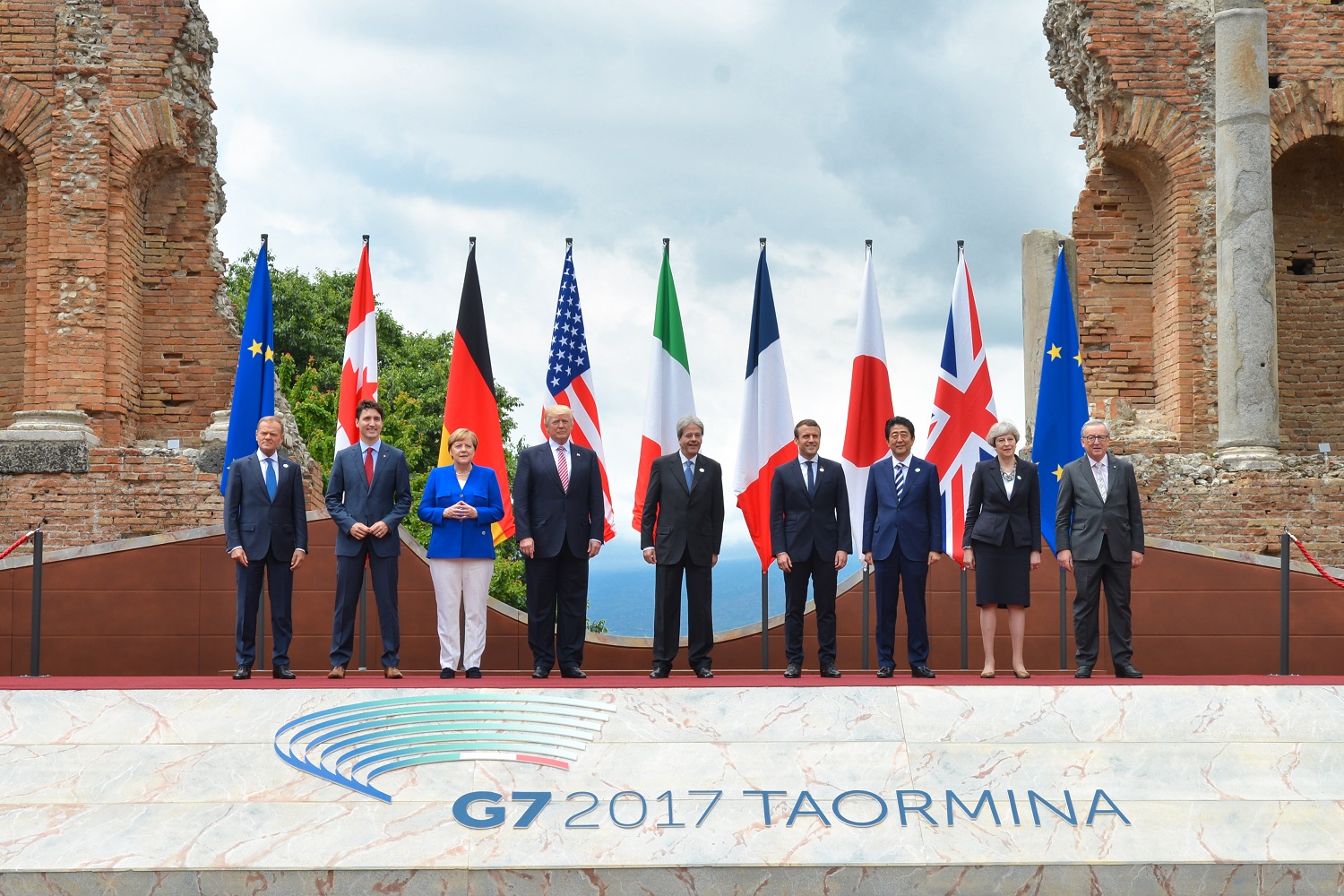
French President Emmanuel Macron welcomed Ukrainian President Volodymyr Zelensky at the opening of the G7 summit in Evian, France [1, 2].
The meeting occurs as global leaders seek a coordinated response to the conflict in Ukraine and broader geopolitical instability. The presence of Zelensky at the summit underscores the continued importance of international military and financial support for Kyiv.
This gathering marks the 52nd G7 meeting [2]. The summit's agenda focuses heavily on the war in Ukraine and related security concerns, prompting several heads of state to hold bilateral discussions with Zelensky [2, 3].
Approximately 20 world leaders attended the opening proceedings [4]. Among those present were U.S. President Donald Trump, UK Prime Minister Keir Starmer, and Indian Prime Minister Narendra Modi [2]. The assembly in Evian serves as a primary venue for the G7 nations to align their strategies regarding the conflict and other pressing international wars [2, 3].
President Macron greeted Zelensky as part of the formal welcoming ceremony for the summit's guests [1, 2]. The interactions between the leaders are expected to center on the current trajectory of the war and the necessary steps for a sustainable resolution.
While the primary focus remains on Ukraine, the summit's broader scope includes discussions on other global flashpoints. The collaboration between the G7 members and the Ukrainian leadership aims to solidify a unified front against aggression in Eastern Europe [2, 3].
“The summit's agenda focuses heavily on the war in Ukraine and related security concerns.”
The inclusion of President Zelensky at the 52nd G7 summit signifies that the war in Ukraine remains a central pillar of Western foreign policy. By hosting the meeting in Evian, France is positioning itself as a key mediator and coordinator among the G7 members, while the attendance of diverse leaders—including those from the U.S. and India—indicates an attempt to maintain a broad international coalition despite varying national interests.


