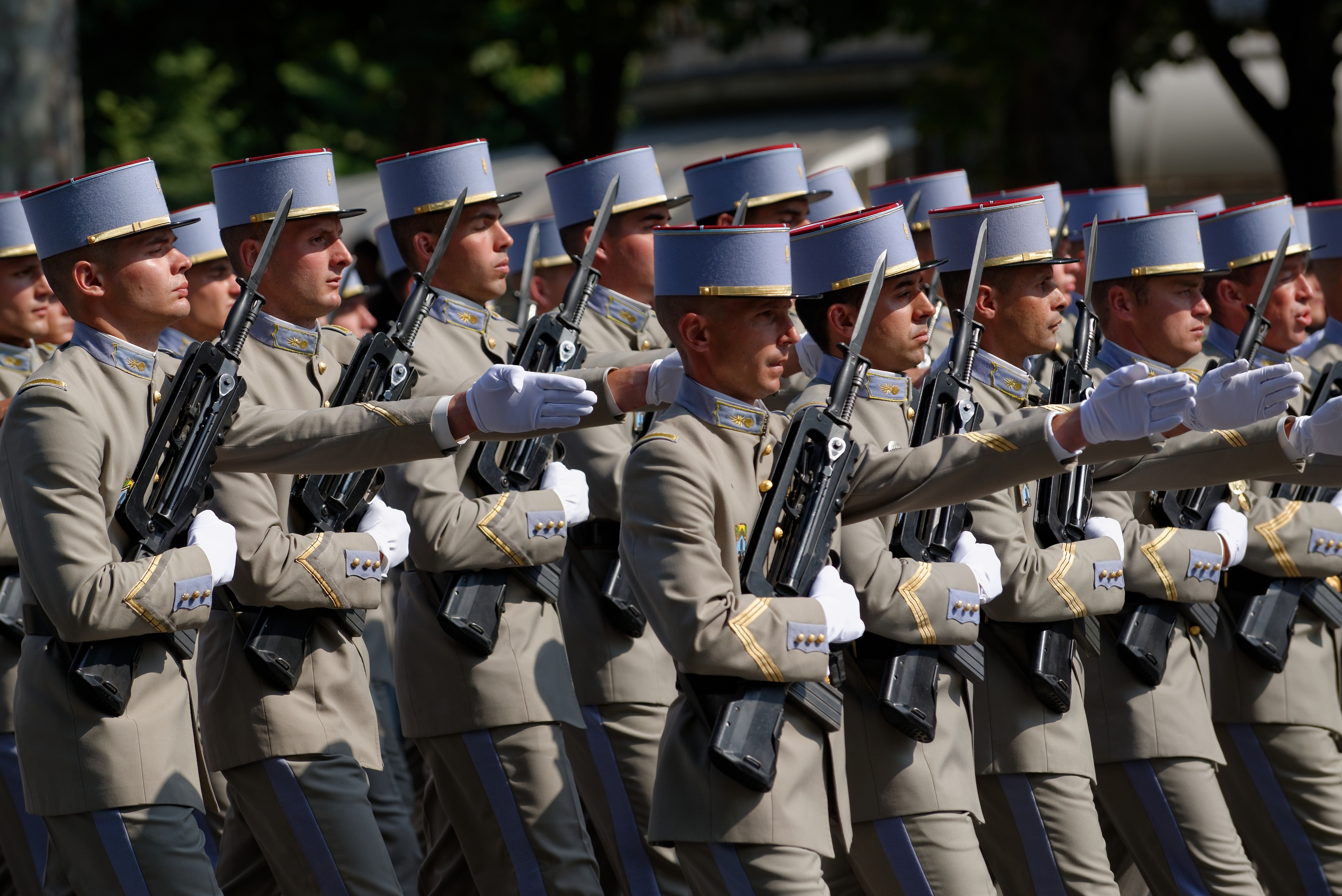
President Emmanuel Macron presided over the July 14 military parade on the Champs-Élysées to celebrate France's national holiday and support Ukraine [1].
The event served as a strategic signal of European unity and a demonstration of military strength amid ongoing geopolitical tensions. By including international allies, France aimed to highlight what it described as the "strategic awakening of Europe" [1, 2].
The 2026 ceremony included a comprehensive review of troops and a large-scale aerial display. Preparations for the air show began as early as June 24, when nearly 100 aircraft conducted rehearsals over the Indre-et-Loire region and the Charles Paoli Air Base [3, 4].
This year's parade featured a significant international presence, with military personnel from 35 countries in the coalition supporting Ukraine participating in the procession [1]. The inclusion of these allies underscored the collective security efforts of the coalition.
Despite the scale of the event, officials spent weeks debunking misinformation regarding the parade's composition. Some reports suggested that the event had been repurposed for Ukraine, alleging the presence of a massive Ukrainian contingent [5]. Loïc Mizon, the military governor of Paris, said on June 18 that 10,000 Ukrainian soldiers were not participating [5].
"Faux," Mizon said when asked about the rumored numbers [5].
Further disinformation circulated via pro-Russian accounts claiming that the traditional national anthem, La Marseillaise, had been replaced by a European hymn [5]. However, official footage of the ceremony confirmed that La Marseillaise was performed at the conclusion of the event [1].
The parade concluded with a display of French air and space force capabilities, reinforcing the national identity of the holiday while maintaining a focus on the broader European security architecture [2].
“"Faux"”
The integration of 35 coalition nations into a traditional French national holiday signifies a shift toward a more integrated European defense identity. By leveraging the Bastille Day platform to showcase the 'strategic awakening of Europe,' the Macron administration is positioning France as the primary coordinator of Western military support for Ukraine, while simultaneously fighting a narrative war against disinformation aimed at undermining French national symbolism.


