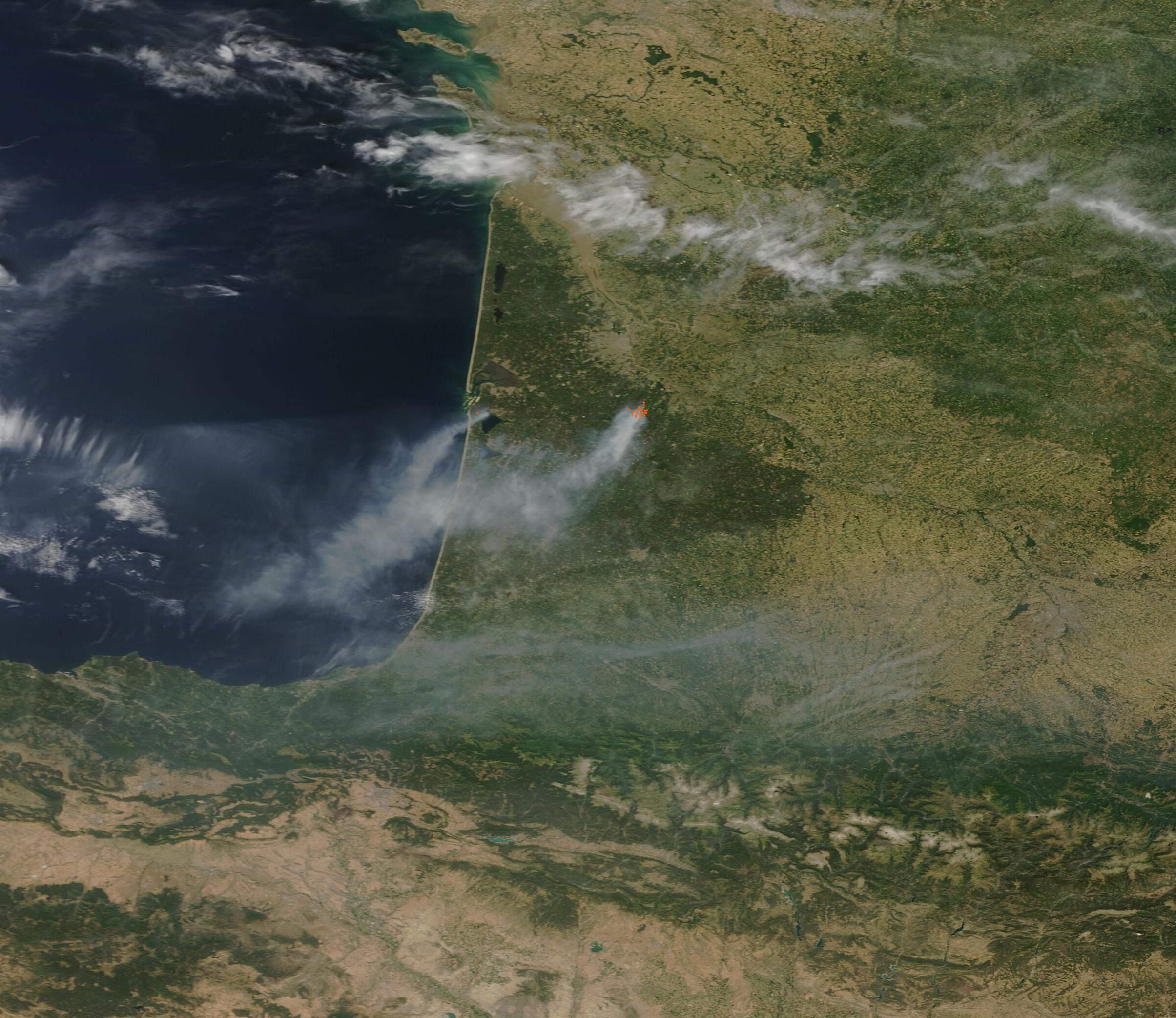
A massive forest fire in Gironde has burned between 2,400 [4] and 3,700 [6] hectares north of the Arcachon Bay since Wednesday.
The scale of the evacuations and the rapid spread of the flames highlight the extreme vulnerability of the region during current heatwaves. Local authorities are struggling to contain the perimeter as drought conditions persist.
Emergency services have focused their efforts around Saumos and Lège-Cap-Ferret, where the fire progressed rapidly [3]. Reports on the total area burned vary across sources, with some agencies citing 3,100 hectares [5] and others stating at least 3,400 hectares [1].
Precautionary evacuations have reached as many as 20,000 people [7], though some reports placed the number as low as 12,000 [11] earlier in the response. These measures were necessary to protect residents as the fire moved through densely wooded areas, a common risk in the Gironde department during the summer months.
Despite the devastation of the landscape, officials said there were zero deaths [12]. The physical damage to infrastructure remains limited, with only one house destroyed [13].
Firefighters continue to battle the blaze under extreme heat and drought conditions [14]. The combination of low humidity and high temperatures has created an environment where fires can jump containment lines quickly, complicating the efforts of the rescue services.
Authorities have not yet determined the cause of the ignition, but the environmental conditions played a primary role in the fire's acceleration. Efforts to reinforce the firefighting fleet are expected to continue through the end of the month [4].
“Nearly 20,000 people were evacuated as extreme heat and drought fueled a massive blaze.”
The disparity in reported hectares and evacuation numbers reflects the chaotic nature of rapid-onset wildfires, where data fluctuates as perimeters shift. This event underscores a growing pattern of extreme weather in southwest France, where prolonged droughts and heatwaves are transforming forest fires from seasonal risks into large-scale humanitarian evacuations.


