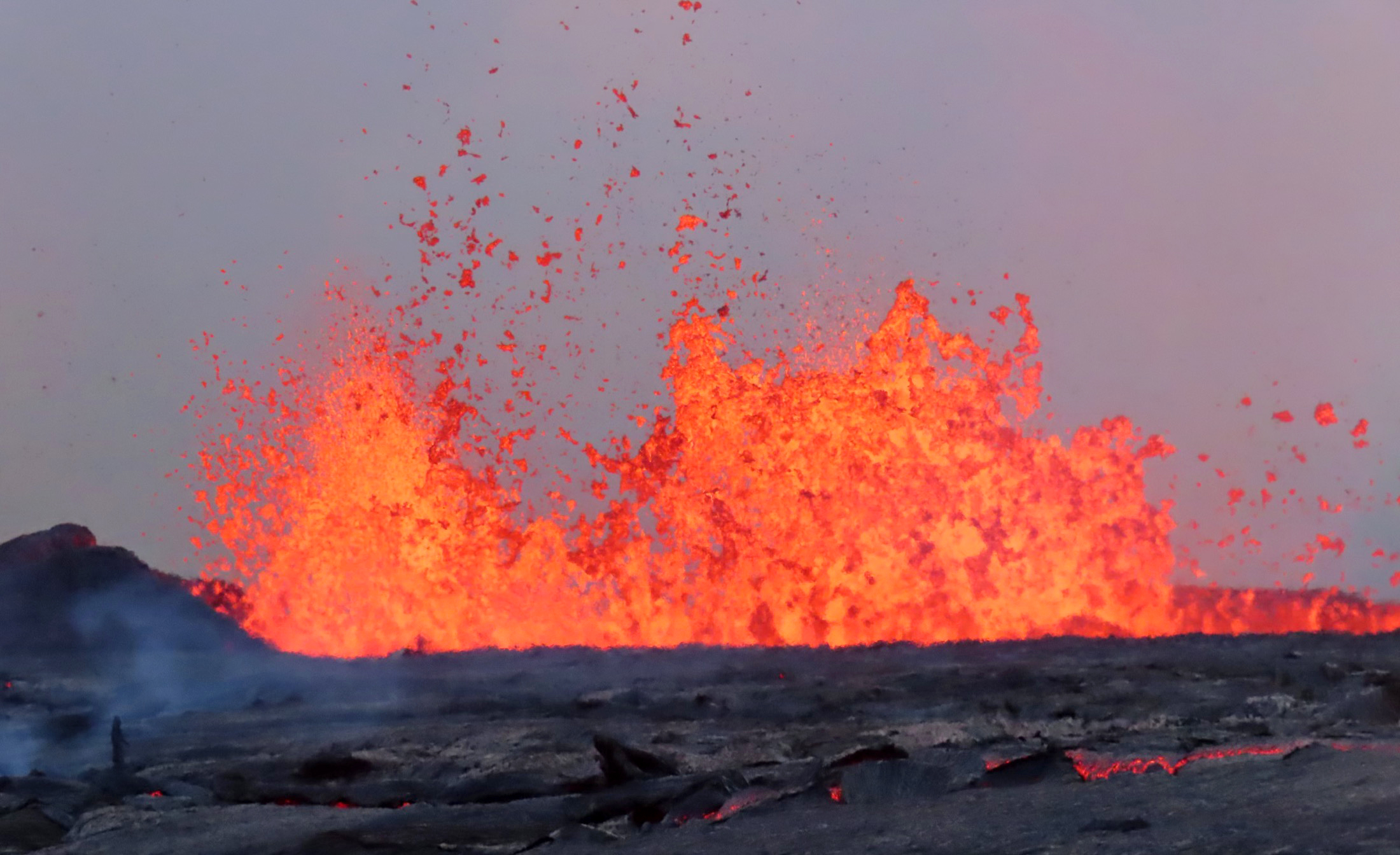
A whirlwind struck a livestream camera during a volcanic eruption at Kilauea on the Big Island of Hawaii this past Sunday, June 14 [1].
The event highlights the volatile atmospheric conditions created by volcanic activity, where extreme heat can generate localized, destructive weather patterns. These phenomena pose significant risks to monitoring equipment and personnel near active vents.
Lava poured from multiple vents across the volcano as the storm hit the camera [2, 3]. Local residents refer to these specific whirlwinds as "puahiohio" [1]. These vortices form when intense heat from lava warms the surrounding air, causing it to rise rapidly and mix with cooler air [1]. This process creates turbulent wind capable of striking and damaging nearby objects [1].
Kilauea has a long history of activity, with some reports identifying this as the volcano's 49th episode [4]. The interaction between the molten rock and the atmosphere continues to provide data on how volcanic eruptions influence micro-climates. The footage of the whirlwind impact was captured by a camera providing a live feed of the eruption [1, 2].
While the camera was targeted by the wind, the broader eruption involved fountains of lava being sent into the air [4]. Such events are common for Kilauea, though the combination of a direct whirlwind strike on monitoring hardware is a rare visual capture [1, 2]. The U.S. Geological Survey and other monitoring bodies typically use these cameras to track lava flow and vent activity without risking human lives.
“A whirlwind struck a livestream camera during a volcanic eruption at Kilauea”
The occurrence of a puahiohio demonstrates the immediate thermal impact volcanoes have on their environment. By creating rapid temperature differentials, eruptions can generate localized wind systems that act independently of regional weather. This underscores the necessity for reinforced, remote monitoring equipment in volcanic zones, as atmospheric turbulence can destroy sensors even when lava flows do not reach the equipment's physical location.


